From the new remake of The Lord of the Rings.
“I wish it need not have happened in my time,” said Frodo.
— Josh RR Jokien (@joshcarlosjosh) August 6, 2021
“lmao" said Gandalf, “well it has.”
From the new remake of The Lord of the Rings.
“I wish it need not have happened in my time,” said Frodo.
— Josh RR Jokien (@joshcarlosjosh) August 6, 2021
“lmao" said Gandalf, “well it has.”
Our 12+ year old dog, Koji, passed today. A wonderful companion, named for Koji Uehara, closer for the 2013 world champion Boston Red Sox. We knew we were getting a Lab puppy that November and decided if the Sox won the World Series she would be named Koji.
A mellow and loving dog, great around children. Diagnosed recently with multiple tumors, which Labs are prone to, and having a couple of seizures, she was rapidly declining. Hard for us to see her go, but it was the right thing to do at the right time.


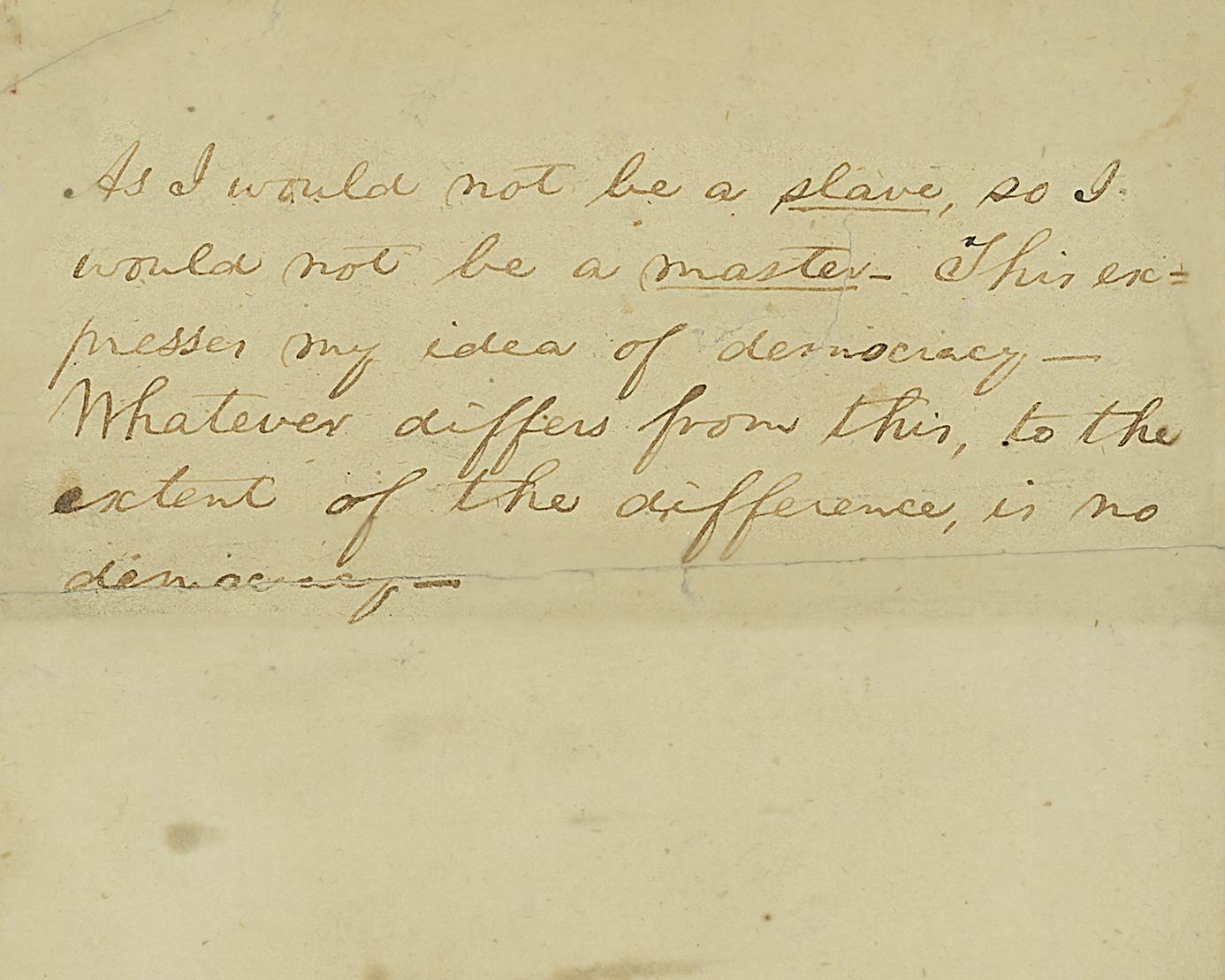
“As I would not be a slave, so I would not be a master. This expresses my idea of democracy. Whatever differs from this, to the extent of the difference, is no democracy.”- Abraham Lincoln, note written to himself, date unknown
I'm currently reading Our Ancient Faith: Lincoln, Democracy, and The American Experiment by Allen Guelzo. So far, I've not run across the quote in the book but have noticed that Guelzo's take echoes some themes that have come up in this blog in recent years. More on that later.
Ran across this site which has a lot of funny takes on home design, construction, and municipal planning.
Out with the old
— Mason Home Builder (@bankertobuilder) March 27, 2026
Our client wanted their old fashioned hallway transformed into a modern corridor
I think we did pretty well pic.twitter.com/meLWC0EbS4
2 car garages aren't large enough for most families
— Mason Home Builder (@bankertobuilder) March 24, 2026
That's why we made the 2 story garage that blends seamlessly with the rest of the house
5 covered parking spots + an elegant parking ramp
Optional upgrade: Add parking meters for your guest parking spots to add some passive… pic.twitter.com/hkQFmCw6GW
Smart, walkable neighborhoods like this are illegal to build in most parts of this country pic.twitter.com/udS8KQ9u9i
— Mason Home Builder (@bankertobuilder) March 24, 2026
Just completed another wildlife bridge
— Mason Home Builder (@bankertobuilder) March 20, 2026
This stunning structure came in well below budget: just $97 million versus our initial estimate of $100 million
This bridge will allow wild cougars with rabies to roam freely around their natural habitat pic.twitter.com/x8Qj03MX6P
To note the recent death of Paul Ehrlich, it seemed appropriate to reference Apeman, a song from The Kinks 1970 album Lola Versus Powerman and the Money Go Round, Part One (for my ridiculously compulsive exploration of a little known period in The Kinks discography read Kinkdom). It was the lyrics in the first two verses that made me think of Ehrlich and gave me an excuse to show the band playing the entire song.
I think I'm sophisticated'Cause I'm living my lifeLike a good homo sapiensBut all around meEverybody's multiplyingAnd they're walking round like flies, manSo I'm no better than the animalsSitting in the cages in the zoo, man'Cause compared to the flowersAnd the birds and the treesI am an apemanI think I'm so educatedAnd I'm so civilized'Cause I'm a strict vegetarianAnd with the over populationAnd inflation and starvationAnd the crazy politiciansI don't feel safe in this world no moreI don't want to die in a nuclear warI want to sail away to a distant shoreAnd make like an apeman
The economist Julian Simon argued in 1980 that overpopulation is not a problem as such and that humanity will adapt to changing conditions. Simon argued that eventually human creativity will improve living standards, and that most resources were replaceable.[50] Simon stated that over hundreds of years, the prices of virtually all commodities had decreased significantly and persistently.[51] Ehrlich termed Simon the proponent of a "space-age cargo cult" of economists convinced that human creativity and ingenuity would create substitutes for scarce resources and reasserted the idea that population growth was outstripping the Earth's supplies of food, fresh water and minerals.[8]
This exchange resulted in the Simon–Ehrlich wager, a bet about the trend of prices for resources during a ten-year period that was made with Simon in 1980.[8] Ehrlich was allowed to choose ten commodities that he predicted would become scarce and thus increase in price. Ehrlich chose mostly metals, and lost the bet, as their average price decreased by about 30% in the next 10 years.
Ehrlich's prognostication failings reminds me of the quote attributed to Nobel Prize winning physicist Wolfgang Pauli after reviewing the paper of a young physicist, "That is not only not right, it is not even wrong".
I never met Ehrlich but did have the opportunity to sit with one of his acolytes (they'd co-authored papers and was involved in setting up the Ehrlich-Simon bet), Paul Holdren, at a small dinner in Cambridge, Massachusetts in 2008. Like his mentor, Holdren has had a distinguished academic career with positions at Harvard and Berkeley and receiving a MacArthur Foundation "genius" Fellowship. In 2009, President Obama appointed Holdren as his chief science advisor and director of the White House's Office of Science & Technology, a role he served in both of Obama's administrations.
While I don't remember most of the details of the dinner discussion, my overall impression was Holdren fit the pattern found in Harvard academics in encounters during my twelve years working in Cambridge and, for a decade after, being a frequent visitor; they tended to be close-minded, provincial, and intolerant of dissenting opinions, not something I would have predicted when I began working in the city in 1980. Most found it incomprehensible that anyone would disagree with their political opinions or general thoughts on the world out of anything other than ignorance and/or bigotry, and automatically devalued the views of anyone lacking the "right" credentials.
In the wake of Ehrlich's death I came across a tweet he'd sent on January 3, 2023 after a 60 Minutes appearance, which explains how he and Holdren maintained their academic reputations. It is quite an indictment of academia:
"60 Minutes extinction story has brought the usual right-wing out in force. If I'm always wrong so is science, since my work is always peer-reviewed, including the POPULATION BOMB and I've gotten virtually every scientific honor."
Notice one of the tactics he, and many other academics, employs is to call any criticism "right-wing" thus casting those criticizing him into the outer darkness where the substance of the criticism can be completely disregarded. The funny thing is I came across the quote in a tweet from Roger Pielke Jr, a traditional liberal and critic of Ehrlich. Pielke wrote a longer piece, Gravediggers of Science, on Ehrlich in his substack, relating his encounter with Ehrlich in 2010, in which Ehrlich and the scurrilous climate scientist Michael Mann engaged in their favorite smearing tactic and making completely false allegations.
Ehrlich and others employ these tactics because in the circles they swim in it works. There is no price to pay for being wrong or for trying to destroy others with false innuendo and worse. In fact, they are rewarded for doing so.
Rereading The Population Bomb and some of Ehrlich's other work one is struck by what a miserable and misanthropic view of humanity he holds.(1) It probably explains his desire of widespread sterilization and a powerful world government to enforce his views.
I'll give the last word to this summary from The Free Press. They are unfortunately correct that his worldview has infected society:
Imagine getting almost everything wrong and still transforming the world with your ideas. That, more or less, is what happened to economist and professional eco-pessimist Paul Ehrlich, who died this week at 93. Ehrlich shot to fame in 1968 with his bestseller The Population Bomb. It predicted an explosion in humankind, draining the planet’s resources and triggering a near apocalypse.
Thankfully, Ehrlich would be proven wrong—stunningly wrong—by events. But even if Ehrlich lost the argument, his Malthusian mindset still won him award after award and, in many ways, became conventional wisdom.
Today, we’re bringing you two pieces on Ehrlich’s ideas and why they matter.
Up first, the British science writer Matt Ridley details the callous policy proposals Ehrlich’s thinking led him to support—including forced sterilization programs that Ehrlich called “coercion in a good cause”—and the policymakers who listened to him.
Up next, Larissa Phillips. She was born to parents beholden to Ehrlich’s theories. In fact, she says, she almost wasn’t born because of them: Her parents were trying to model their own family planning on his prescription for zero population growth. Thankfully, they didn’t quite get it right. Ehrlich’s death caused Larissa to contemplate not just the impact of his ideas on her family but also where the line falls—where idealism becomes pretentious, or pessimistic, or harmful.
----------------------------------------------------
(1) In that regard, Ehrlich reminds me of the leaders of the AI crowd. Though Ehrlich preached scarcity and the AI dudes abundance, at heart they are all anti-humanists. If AI can perform better than humans, of what use are people? The AI leaders have clearly said this and don't care about the implications. In February 2025 I summarized Elon Musk's worldview but it can be said for all of the AI proponents:
Musk and a small group of "creatives" run society, with robots operating our factories, and AI, using Musk-designed algorithms, running everything else. Enough wealth is created to fund a Universal Basic Income for the rest of Americans, who live in a ketamine and cannabis induced haze.
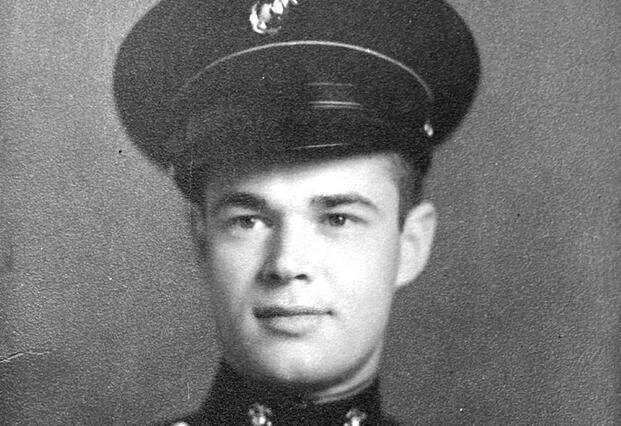
The remains of Pfc. Norton V. Retzsch, who died on New Georgia in the Solomon Islands were recently identified and will be buried on April 13 in Marana, Arizona, a town near Tucson, 83 years after his death.
Retzsch, 25 years of age and recently married, was with the 1st Marine Raider Battalion. On July 9, 1943 he and two fellow Marines were caught in a Japanese ambush and killed. It took decades after the end of WW2 to identify possible remains and have them DNA tested and compared to one of his relatives.
After Norton's death his wife, Margaret, enlisted in the Marine Corps Women's Reserve. She eventually remarried and passed in 2005.
The New Georgia campaign, from June 30 to October 7, 1943 and cost 1,195 American lives, is one of many almost forgotten battles in the U.S. effort to capture the Solomon Islands with most of the fighting occurring between August 1942 and April 1944
The search for remains of the missing continues. The difficulties in this process can be seen in the Military.com article on the search for Norton Retzsch.
After the war, the 604th Quartermaster Graves Registration Company searched the Bairoko Harbor and Enogai Inlet area from November to December 1947 but found no trace of Retzsch. The military declared him non-recoverable in 1949 and inscribed his name on the Tablets of the Missing at the Manila American Cemetery and Memorial in the Philippines.
What the military did not know at the time was that Retzsch's remains had likely already been recovered. In December 1943, unidentified remains buried at the Enogai Cemetery were exhumed and transferred first to a New Georgia cemetery, then to Finschhafen, Papua New Guinea, where they were designated as Unknown X-182. After multiple failed identification attempts, X-182 was interred at the Manila American Cemetery in 1950.
The case remained dormant for decades until DPAA turned its attention back to New Georgia. Agency researchers flagged a group of unidentified remains from the Enogai and Bairoko area as possible matches for missing Raiders, and in January 2019, X-182 was pulled from the Manila cemetery and sent to the DPAA laboratory.
In 2013, I wrote of another missing Marine, Alexander "Sandy" Bonnyman, killed during the attack on Tarawa in November 1943. Bonneyman is the only Medal of Honor recipient photographed during the action for which he received the medal. In 2015, Bonnyman's remains were finally identified and he was returned home.
Nowhere is there warmth to be foundAmong those afraid of losing their groundRain gray town, known for its soundIn places, small faces unboundRound the squares, huddled in stormsSome laughing, some just shapeless forms
Released as a single 60 years ago this month by The Byrds. I'd never heard anything like this on AM radio before. Composed by band members Roger McGuinn, David Crosby, and Gene Clark. A very heavy song for its time, featuring the weirdest, chaotic, atonal lead guitar (inspired by Coltrane according to McGuinn) ever heard on a rock recording, peaking on the last part of the second solo.
Beyond that is Chris Hillman's pounding bass, Crosby's strong rhythm guitar, the harmonies of Clark, McGuinn and, above all, Crosby, and the finest drumming of Michael Clark's career with the group. The song is pulsating and relentless.
Between 1965 and 1968 The Byrds pioneered folk rock, introducing Dylan to a wider audience (Mr Tambourine Man), psychedelic music (Fifth Dimension), and gave many rock fans their first taste of country music (Sweetheart of the Rodeo).
From a 2015 article by Arnold Kling's Askblog.
from Megan McArdle:
1950s health care isn’t expensive; this same regimen would be a bargain at today’s prices. What’s expensive is things that didn’t exist in 1950. You can say that “health care” has gotten more expensive—or you can say that the declining cost of other things has allowed us to pour a lot more resources into exciting new health products that give us both longer and healthier lives.
In Crisis of Abundance, I wrote,
The American middle class can still afford the wonderful health care that was available in 1975–easily. . .as a thought experiment, a return to 1975 health care standards would completely resolve what is commonly described as America’s health care crisis.
My guess is that if you could find a health insurance policy today that only covered diagnostic procedures and treatments that were available in 1958, the cost of that policy would not be much higher than it was then. Much of the additional spending goes for MRIs and other advanced medical equipment, as well as for health care professionals with more extensive specialization and training than what was available 50 years ago.
These observations get at the distinctions between healthcare, health insurance, and health outcomes which too easily get mashed together.
I'd like to have 1950s or 1975 healthcare costs. But I don't want 1950s or 1975 health care.
I've been on Medicare and a supplemental plan since 2016. If I add up what Medicare has paid since then and compare it to what I pay for Medicare each year plus what I paid in Medicare taxes over the years, the government is still way ahead on the deal.
It's still true, even though a year ago today my heart stopped for a bit, I went to another place momentarily, and ended up transported by ambulance to an ICU in Tucson, where I spent the next two days and underwent an emergency procedure. I was informed that most with my condition do not make it to the hospital. I recovered quickly and completely, but the procedure I underwent was not invented until about fifteen years ago. Prior to that time I would have had a lengthier hospital stay and been sent home for extended bed rest until my condition improved, while remaining at risk the entire time, and with a much likelier outcome where, if surviving, I'd have permanent heart damage. The drugs I would have been prescribed also had major side effects.
Instead, the operation went well, I was discharged in 48 hours with no permanent damage, and the new medication for my condition, which only reached the market a decade ago, has had no side effects.
I like today's medicine and the new medication and wrote about it in December.
When I got my Medicare statement a few weeks later, the nominal "cost" for those two days was $194,000 of which Medicare and my supplemental paid $38,000 and I paid $16. The statement informed me that Medicare had "saved" me $156,000. I put "cost" and "saved" in quotes because those words have no meaning in the healthcare lingo we use today. If I go to a car dealer and see a car with a $50,000 sticker price and the dealer accepts my $10,000 offer, that 50K price is not real and I did not save 40K by making the purchase. Healthcare pricing is simply crazy.
The pricing may be crazy, but I'm happy to be here.
My thanks to the doctors, nurses, techs, EMTs, and park rangers who got me through the experience.
One of my favorites from The Temptations from among their cascade of hits from the mid-60s into the early 70s. Composed by Norman Whitfield and Barrett Strong, released in 1969, hitting #1 and ranked by Billboard as the third most popular single of the year. From their appearance on the Ed Sullivan Show in September 1969.

 Twenty years ago on a business trip to Brazil, I arrived in Sao Paolo on a Saturday morning and took a car to spend the weekend in the city of Santos on the coast before beginning my work week in Sao Paolo on Monday.
The initial part of the drive was on the plain on which Sao Paolo and its suburbs sit at about 2500 feet above sea level. Suddenly, we entered a heavily forested area as the descent to the coast began. This was the Rodovia dos Imigrantes with its 44 viaducts, seven bridges, and eleven tunnels on its nearly 40 mile stretch. The startling part of the drive was when I realized we were on an elevated highway high above the coastal rain forest, a beautiful and stunning experience.
Immigrantes Highway — one of the most beautiful in Brazil, during the manacá flower season.pic.twitter.com/e95jcTHEIx
— Massimo (@Rainmaker1973) March 20, 2026
Best comedies of the 2000s - Dodgeball, Tropic Thunder, The Hangover
I'll always remember Chuck Norris as the man who changed the course of dodgeball history by casting the deciding vote that allowed Average Joes to play in the championship of the Las Vegas International Dodgeball Open where they upset the heavily favored Globo Gym Purple Cobras.… pic.twitter.com/X2urhv236o
— Greg Price (@greg_price11) March 20, 2026
And the man who saved Sly Stallone and The Expendables!
Over the past few months I've been reading and listening to Israeli Haviv Rettig Gur. He's active on twitter, YouTube, and with a podcast Ask Haviv Anything which alternates between longer in depth episodes and quick 10-15 minute explainers on a specific issue. I find him thoughtful and able to provide some clarity to complex matters.
I'm not sure how to categorize him politically as he's not clearly on the right or left. This, from two days ago, gives you a flavor for his views.
Y’all know I have my disagreements with Bibi [Netanyahu]. Budget priorities, haredi welfare spending, import reforms, judicial reform, information war, avoidance of accountability, Gaza war - okay, a lot of disagreements, including on big, critical things that affect our lives and the lives of our neighbors. But the man has been planning the ayatollahs’ fall for two decades. He believes it’s why God (inasmuch as he believes in God) put him on this Earth. And damned if he isn’t seeing through this thing he has always believed was his destiny. I’ll keep criticizing the bad stuff. I’m a citizen. He works for me. That’s how the system is supposed to work. And I’ll keep praising and being grateful for this one great big huge thing. I don’t know if he’ll succeed. I can’t think of anyone else who would have been so grimly single-minded and so specifically competent in the specific skillset required to bring us to this point.
I'll also add he's been very critical of corruption involving Netanyahu and his associates.
Some episodes I'd recommend.
Episode 69 - Israel's Great Divide - an insider's look at the judicial reform, with Moshe Koppel. This was the first of Haviv's podcasts I listened to. Prior to 10/7/23 the issue dominating Israeli politics was Netanyahu's proposed reform of the judiciary. From an American perspective, the power grabbed by Israel's Supreme Court over the past four decades would never be tolerated. The lack of a written constitution has enabled the court's actions. However, the proposed reform amounts to a reverse power grab by the executive and the lack of trust between right and left makes compromise impossible (sounds familiar, doesn't it?). Moshe Koppel is an academic, not a politician, who was one of the authors of the reform and sounds like a man with intellectual integrity but comes across as naive about the political process. An excellent overview of both the legal and political aspects of the dispute.
Episode 99 - Are We Winning? Released yesterday about the Iran War. Brings an interesting perspective not often heard in the U.S.
Episode 92 - Why does Israel hate UNRWA? A short episode about the Palestinian relief agency. The best quick answer to this question, which I've touched on before.
Episode 78 - Do You Still Want to Globalize the Intifada? Short episode on the significant difference between the First and Second Intifadas and what the Globalize the Intifada means to Israelis.
Episode 76 - How Elites drive Jew-hatred with Hussein Aboubakr Mansour. A discussion of the situation in Western academia and in the Muslim world and why it has developed in similar ways. Mansour is an Egyptian and Muslim, now living in the U.S.
Episode 65 - The unseen editors rigging the information war with Ashley Rindsberg. Rindsberg has been doing deep dive detective work on how the manipulation of information is occuring in social media, with a particular focus on Wikipedia, in which the current head of NPR played a significant role in its deterioration as a credible source of information.
I first listened to Haviv via the Unpacking Israeli History podcast of Noam Weissman, which I also recommend. There were two particular podcasts featuring Haviv that caught my attention; the first a look back on thirty years after the assassination of Yitzhak Rabin and the other on settler violence in Judea and Samaria, which I think a disgrace with not enough done to prevent and punish the perpetrators.
I know you will not mind my being brutally frank when I tell you that I think I can personally handle Stalin better than either your Foreign Office or my State Department. Stalin hates the guts of all your top people. He thinks he likes me better, and I hope he will continue to.
President Franklin Roosevelt to Prime Minister Winston Churchill, March 18, 1942, from Churchill and Roosevelt: The Complete Correspondence
I think if I give him everything I possibly can, and ask nothing from him in return, noblesse oblige, he won't try to annex anything and will work with me for a world of peace and democracy.
President Franklin Roosevelt to former Ambassador to the Soviet Union, William C Bullitt, January 29, 1943, from For the President: Personal and Secret: Correspondence between Franklin D. Roosevelt and William C. Bullitt

There are many things President Franklin Roosevelt got right in the run up to, and during, the Second World War. He recognized Germany as a threat, not just in Europe, but globally. FDR also had an ability to spot and promote talent. Selecting George C Marshall as Army Chief of Staff in 1939 was not obvious, as he was promoted ahead of more than three dozen more senior officers, yet FDR did so after Marshall disagreed with him in a large meeting (for the full story read Management Lessons). Marshall proved to be a brilliant choice as was Admiral Chester Nimitz, hand picked by FDR to command the Navy in the Pacific. He also had the good sense to keep Marshall in the U.S. and instead agree that Dwight Eisenhower should command Allied forces for D-Day.
FDR also encouraged dissent. The military chiefs and his war cabinet engaged in ferocious arguments at time, particularly from 1939 through 1942. At one point in 1942, Marshall threatened to resign because of his disagreement with the president on the issue of invading North Africa, an issue on which FDR was proven correct - the American army was in no shape to fight the Germans in northwest Europe in 1942, or even 1943. Marshall, who believed military officers should be apolitical and never voted, was initially a doubter about FDR but became an admirer during the course of the war.
Roosevelt exhibited a good strategic sense in the run up and early years of the war, agreeing with the military chiefs that Germany would be the priority in the event of a conflict with both that country and Japan, and with his instincts of where American military priorities should be in the critical eighteen months after Pearl Harbor. He also had top notch instincts as to what issues required his involvement and decision making and what didn't.
As I've noted before, in Harry Hopkins he also had an informal channel through whom the military chiefs could take issues, trusting Hopkins, whom they held in high regard, to decide whether, and how, to make the case to FDR.(1) This stands in stark contrast to LBJ, who in the run up to the Vietnam War, had no such route outside the one official channel controlled by Secretary of Defense Robert McNamara, who prevented dissenting voices from getting to LBJ. For a comparison of FDR with LBJ on this issue read Dereliction of Duty.
On the debit side was FDR's obsession with China in the lead up to the war. The military chiefs constantly admonished him for his public statements and pledges in support of China which amounted to writing checks that could not be cashed, refusing to recognize the weakness of America's position in the Pacific and its very limited ability to do anything practicable to assist China in resisting Japan. They thought his actions ran the risk of precipitating a Japanese attack on the U.S., plunging us into war and running counter to the agreed upon strategy of focusing on Germany first. On this the chiefs proved correct and FDR was only saved by Hitler's unforced error of declaring war on the U.S. on December 11, 1941.
However, the biggest debit item was FDR's failure to understand the Soviet Union and Josef Stalin and what that meant for his vision for the post-war world. Chip Bohlen, a Soviet State Department specialist who, in 1953, would become Ambassador to the Soviet Union said of Hopkins that "Harry was inclined to dismiss ideology" and the same can be said of FDR. Roosevelt had a vague notion that the American and Soviet systems would, over time, converge in some unspecific way.(2) He believed in personal diplomacy and in his ability to charm anyone. The colonial empires of Britain and France offended FDR and he thought the war should spell an end to them. Why he did not understand the same thing about the USSR, which in that respect was merely a continuation of the land-based colonial empire established by the czars is an interesting question.
That's why even into 1944, when the Allies were clearly winning and the first signs of problems with the Soviets were arising, FDR insisted on continuing lend-lease supplies to the Soviets, including shipping materials that had no obvious short-term value to the war against the Nazis and despite increased evidence of Soviet industrial espionage in America. At the Tehran conference in November 1943 and even more so at Yalta in February 1945, FDR went out of his way to ingratiate himself with Stalin while poking fun and, at times, insulting Churchill. The President simply could not fathom that Stalin was an ideologue and had no deep understanding of communism. He completely lacked an understanding of how the Soviets thought.(3)
To illustrate how different the thinking was let's look at Kim Philby, the Englishman turned Soviet agent who ended up in a senior position in Britain's intelligence agency. Philby would thoroughly betray his country (and the U.S.) leading to the deaths of many East Europeans fighting Soviet tyranny after the war.
After Germany's attack on Russia in June 1941, Philby advised his Soviet handlers that Churchill ordered all British espionage efforts against the USSR to cease, causing the Soviets to wrongly suspect Philby had been turned and become a double agent working for Britain because, in their world, suspending espionage operations made no sense (the U.S., both before and during the war, did not conduct espionage against the Soviets). After all Soviet espionage against Britain and America during the war not only continued, but was expanded. After an extensive investigation of Philby the Soviets concluded that his reporting was accurate.
FDR's obsession with the creation of the United Nations, something not a high priority to the Russians, allowed Stalin to winkle more concessions from the U.S. before grudgingly agreeing to its creation.
Unlike Churchill, FDR remained aloof from Stalin's domination of eastern European countries which became evident during the last months of the war. In August 1944, when the Polish Home Army rose up against the German occupation of Warsaw, while Stalin's forces halted their advance to let the Nazis eliminate the Poles, who they saw as a threat to the communist future plans for that country, Churchill pleaded with Stalin to allow British planes to fly over Warsaw to drop supplies and then land in Soviet territory to refuel, a request refused by the dictator. FDR refused Churchill's request to join the British in making the request to Stalin. For more on this episode read Warsaw Does Not Cry. During the remaining months of the war FDR continued to resist Churchill's efforts to create a strong joint opposition to Stalin's plans.
Given Roosevelt's death in April 1945, less than three months into his fourth term, we can only be thankful for the big city Democratic party bosses who, in the summer of 1944, rejected FDR's plan to retain Vice-President Henry Wallace on the ticket. The eccentric and naive Wallace was an unwitting tool of the communists and would have been a disaster as president.(4) Instead Harry Truman joined the ticket, becoming FDR's successor and proving a much better post-war president on foreign policy than Roosevelt would have been.
--------------------------------------------------------------------------
(1) The extent to which Hopkins was also held in high regard by the British is shown in a remarkable incident when Field Marshal Brooke, Chief of the Imperial General Staff, came to Hopkins to ask him to intervene in a dispute the British military chiefs were having with Winston Churchill.
(2) According to Bohlen, on a return flight from Moscow, on Hopkins last mission to Moscow in June 1945, Harry expressed "serious doubts as to the possibility of genuine collaboration with the Soviet Union", predicting "the American belief in freedom might lead to serious differences."
(3) FDR was not alone in his disinterest in, and failure to understand, ideology. It was a common failing across the upper rank of civilian and military leaders at the time. I am a great admirer of George C Marshall but his greatest failure was the year he spent in China as President Truman's special envoy trying to negotiate a settlement between the Nationalist government and its Communist opponents. Marshall simply had no understanding of underlying communist ideology and his actions undermined the Nationalists. By later in 1947, Marshall and Truman had a better understanding of the communist threat and responded aggressively in Greece and in Western Europe but by then it was too late and too difficult to save the Chiang's regime in China.
At the time a common line spun by the USSR about the communists in China and Eastern Europe was that they were not "real" communists but merely "agrarian reformers", and this took in many unsophisticated Americans. At the end of the war, and in its immediate aftermath, Whittaker Chambers was a senior editor at Time, the preeminent weekly news magazine of the era. Chambers, a former communist party member in the 1920s and a commie spy in the 1930s before breaking with the party, engaged in a series of back and forths with Time correspondents in Eastern Europe who would post stories about communists describing them as agrarian reformers at which point Chambers would edit out the characterization, despite protests by the reporters that they were the ones on the scene with local knowledge. Chambers would point out that they did not understand communists.
In September 1939, Chambers met with Assistant Secretary of State Adolf Berle to disclose the existence of a Soviet spy ring within the Roosevelt Administration, providing Berle with a list of names, including Alger Hiss. Berle took the information to President Roosevelt who dismissed it.
(4) In 1948, Wallace ran as the Progressive Party candidate for president. He blamed the U.S. for the start of the Cold War and urged America to give up West Berlin in response to the Soviet blockade (for more read Berlin Divides). Several years later, Wallace acknowledged he had been manipulated during the campaign by the communists who had infiltrated his organization.