. . . leave while you can
A little bluegrass pick me up from Dolly Parton and a group of bluegrass all-stars including Alison Krauss (subject of a future post), members of Union Station, Sam Bush, Brian Sutton and Stuart Duncan. This was a TV appearance from about 10 years ago. Dolly's decided to become a cartoon character in recent years but she can still really sing.
Wednesday, September 5, 2012

Tuesday, September 4, 2012
But Anyway
Fun music from Blues Traveler (1994) featuring the virtuoso harmonica playing of John Popper and the bass playing of the late Bobby Sheehan. The video is from the closing credits of Kingpin, a Farrelly Brothers (Dumb And Dumber, There's Something About Mary) movie starring Woody Harrelson, Randy Quaid and Bill Murray in a moving portrayal of the conflict between professional bowling and the Amish.
Old Masters
Last night on the MLB Network I watched the San Diego Padres play the Los Angeles Dodgers at Chavez Ravine. I like baseball, but that's not the reason I watched the game. It was for the pleasure of listening to Vin Scully's voice. If you think you don't know Vin Scully's voice, you're wrong. You know it.
Vin Scully is 84 now and has been announcing Dodger games since 1950 (starting under the tutelage of the great Red Barber).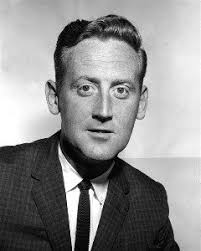 His voice is a little thicker now and with age he now limits himself to Dodger home games and when they are on the road in California, Arizona or Colorado but he is as sharp as ever when it comes to baseball. He still works the game alone, as he's done since Barber left the booth in 1953 - which is unique among today's sports broadcasters.
  And he still gets excited - last night it was about the Padres rookie pitcher, Andrew Werner, who came out of the Frontier League and was making his third major league start. Werner threw first pitch strikes to 20 of the first 22 batters and Vin made sure to let us know how well the kid was doing. (Werner went 6 innings and struck out 8; the Dodgers rallied to win 4-3 in 11 innings)
It's wonderful to listen to Scully on the TV but his voice is best appreciated on radio (preferably in a car). His tone and cadence are immediately recognizable. Always measured and in control, it fits with the pace of baseball. He knows when to talk and when not to. Joe Posnanski captured it best in a 2010 profile (can't find the full interview on the internet so no link):
This is one of Scully's best known moments - calling the 9th inning of Sandy Koufax's perfect game on Sept 9, 1965 - "there's 29,000 people in the ballpark and a million butterflies" (this video also includes some added background on the game by Scully in a 1995 interview).
Vin Scully is 84 now and has been announcing Dodger games since 1950 (starting under the tutelage of the great Red Barber).
And he still gets excited - last night it was about the Padres rookie pitcher, Andrew Werner, who came out of the Frontier League and was making his third major league start. Werner threw first pitch strikes to 20 of the first 22 batters and Vin made sure to let us know how well the kid was doing. (Werner went 6 innings and struck out 8; the Dodgers rallied to win 4-3 in 11 innings)It's wonderful to listen to Scully on the TV but his voice is best appreciated on radio (preferably in a car). His tone and cadence are immediately recognizable. Always measured and in control, it fits with the pace of baseball. He knows when to talk and when not to. Joe Posnanski captured it best in a 2010 profile (can't find the full interview on the internet so no link):
Like water out of a shower head. No announcer in the history of sports has used crowd noise more musically than Scully. Can it be a coincidence? Sinatra used to say that his musical instrument was not his voice, it was the microphone. Scully uses crowd noise as his orchestra. When Henry Aaron hit his 715th home run, Scully was there, and he called the home run, and then he took off his headset, walked to the back of the room, and let people listen to the crowd cheer. Like water out of a shower head. “What could I have said that would have told the story any better?” he asks. And he pauses: “You know what? I still love listening to the sound of a crowd cheering. Don’t you? Don’t you just love that sound?”Listening to him today takes me back to my childhood - that he is still doing this and I'm now retired is astonishing.
This is one of Scully's best known moments - calling the 9th inning of Sandy Koufax's perfect game on Sept 9, 1965 - "there's 29,000 people in the ballpark and a million butterflies" (this video also includes some added background on the game by Scully in a 1995 interview).
Sunday, September 2, 2012
The Man In The Long Black Coat
There are no mistakes in life some people say
And it's true sometimes you can see it that way
But people don't live or die, people just float
She's gone with the man in the long black coat.
Believe it or not Bob Dylan did some decent tunes after the mid-70s. This one is from 1989:
And, of course, there is a Dylan song from 2000 from whence the title of this blog is taken.
Walking Across Switzerland
If you're sitting at home wishing you were a world traveler here's a blog you might want to check called Walking Across Switzerland. It's by an older American guy who is, well, walking across Switzerland right now via the Alpine route. Wonderful pictures and commentary. If you take a look scroll back to the start of his journey.

Saturday, September 1, 2012
Presidential Knife Fight
No, I'm not referring to the 2012 presidential election. I'm referring to something that had not previously occurred to me:
The question was posed over at the HistoricalWhatIf forum at Reddit.com by someone with too much time on their hands (sounds familiar).
In the interests of ensuring authenticity several conditions were established:
Here's a little sample:
Lincoln may have been the strongest president, with lots of experience with blades and fighting as a younger man and he certainly had the advantage of a long reach which is a critical advantage in a knife fight. His only problem would be if he got into one of his introspective and brooding moods.
Jackson may have been the toughest, most brutal and vengeful president. As a younger man he fought a duel against an expert marksman, allowing him the first shot. Jackson was hit in the chest, near the heart, after which he shot and killed his opponent. The bullet, deemed too dangerous to remove, remained in his chest for the rest of his life. A few years later he was involved in a tavern brawl (which he provoked) against the Benton brothers, Jesse and Thomas Hart (later a five term US Senator from Missouri) in which he was shot twice more. While in the White House, he narrowly escaped death when an assassin's pistols misfired at pointblank range and Jackson then beat the man with his cane. A powerful combination of rage and skill which would be great assets in the knife fight.
Teddy came to the presidency only three years after leading the Rough Riders charge up San Juan Hill in the Spanish-American war. As a youngster he overcame physical disabilities, becoming a real cowboy and he remained in splendid physical condition as President. Even after the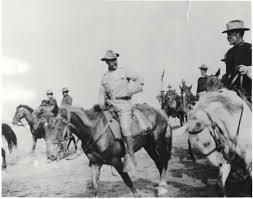 presidency he led an expedition down the River Of Doubt in Brazil (called that because no one knew, before Roosevelt, its origins) and a year long safari in Africa where he faced personal danger numerous times. And, as far as dealing with pain - during the 1912 Presidential campaign he was shot in the chest in Milwaukee just prior to a scheduled speech. Despite the protests of his aides he insisted on giving the speech, which lasted for more than an hour as blood seeped through his shirt, before agreeing to go to the hospital.
In a mass knife fight to the death between every American President, who would win and why?
The question was posed over at the HistoricalWhatIf forum at Reddit.com by someone with too much time on their hands (sounds familiar).
In the interests of ensuring authenticity several conditions were established:
- Every president is in the best physical and mental condition they were ever in throughout the course of their presidency. Fatal maladies have been cured, but any lifelong conditions or chronic illnesses (e.g. FDR’s polio) remain.
- The presidents are fighting in an ovular arena 287 feet long and 180 feet wide (the dimensions of the [1] Roman Colosseum). The floor is concrete. Assume that weather is not a factor.
- Each president has been given one standard-issue [2] Gerber LHR Combat Knife , the knife [3] presented to each graduate of the United States Army Special Forces Qualification Course. Assume the presidents have no training outside any combat experiences they may have had in their own lives.
- There is no penalty for avoiding combat for an extended period of time. Hiding and/or playing dead could be valid strategies, but there can be only one winner. The melee will go on as long as it needs to.
- FDR has been outfitted with a [4] Bound Plus H-Frame Power Wheelchair, and can travel at a maximum speed of around 11.5 MPH. The wheelchair has been customized so that he is holding his knife with his dominant hand. This is to compensate for his almost certain and immediate defeat in the face of an overwhelming disadvantage.
- Each president will be deposited in the arena regardless of their own will to fight, however, personal ethics, leadership ability, tactical expertise etc., should all be taken into account. Alliances are allowed.
Here's a little sample:
3) Thomas Jefferson. I’d like to say he’d make a good show of it, but he was a bit of dandy… Middle of the pack, but his dying words would be incredibly quotable.I think his picks for the final three, Andrew Jackson, Abraham Lincoln and Teddy Roosevelt, are pretty solid. Who would you pick?
4) James Madison. He’s just too short. I’m sorry: You need reach in a knife fight. The bravado of the philosophy behind Manifest Destiny only gets you so far. He’ll die early, and his small corpse will be one of the least important tripping hazards as the battle wears on.
Lincoln may have been the strongest president, with lots of experience with blades and fighting as a younger man and he certainly had the advantage of a long reach which is a critical advantage in a knife fight. His only problem would be if he got into one of his introspective and brooding moods.
Jackson may have been the toughest, most brutal and vengeful president. As a younger man he fought a duel against an expert marksman, allowing him the first shot. Jackson was hit in the chest, near the heart, after which he shot
Teddy came to the presidency only three years after leading the Rough Riders charge up San Juan Hill in the Spanish-American war. As a youngster he overcame physical disabilities, becoming a real cowboy and he remained in splendid physical condition as President. Even after the
Subscribe to:
Posts (Atom)