Composed in 1932 by Harold Arlen (music) and Ted Koehler (lyrics). Arlen and Koehler also together wrote Get Happy, I've Got The World on a String, and Stormy Weather. With other lyricists, Arlen wrote the music for Over The Rainbow (as well as the other songs featured in The Wizard of Oz), The Man That Got Away, That Old Black Magic, It's Only A Paper Moon, and One For My Baby (And One More For The Road). Louis Armstrong puts his unique stamp on this version with his horn and voice.
Showing posts with label 40s Music. Show all posts
Showing posts with label 40s Music. Show all posts
Friday, August 28, 2026

Thursday, August 28, 2025
Dyin' Crapshooter Blues
How you want to go?
Eight crapshooters to be my pallbearersLet 'em be veiled down in blackI want nine men going to the graveyardEight men coming back
Blind Willie McTell (1898-1959) recorded his version of Dyin' Crapshooter Blues in 1949, but it was only released with some of his other recordings in 1972 on the album Atlanta Twelve String. The song features his distinctive voice and playing.
Thematically, Crapshooter Blues, bears some resemblance to St James Infirmary Blues. In turn, Bob Dylan adapted the melody of St James for one of his finest songs, Blind Willie McTell, with its refrain, "No one can sing the blues, like Blind Willie McTell", interspersed with vivid imagery in the verses.
Blind Willie McTell was born William Samuel McTier in 1898 or 1901 at Thomson, Georgia. As a youngster he was part of the Great Migration
of African-Americans to the north, growing up in Detroit. Along the
way he learned to play the blues on a 12-string guitar. Like many of the bluesmen of the era, he had trouble finding a
market for his music, as well as his own personal troubles, and
by the 1950s was reduced to playing for spare change on Atlanta street
corners.
His best known song today is Statesboro Blues which was for decades a staple of Allman Brothers shows.
His best known song today is Statesboro Blues which was for decades a staple of Allman Brothers shows.
Tuesday, July 15, 2025
Gee Baby, Ain't I Good To You
A lot of us are most familiar with this song from The Mask (1994), where it's "sung" by Tina (Cameron Diaz in her movie debut) at the Coco Bongo Room. Diaz is lip synching, it's Susan Boyd doing the singing.
Gee Baby, Ain't I Good To You was composed in 1929 by Andy Razaf and Don Redman but didn't become a hit until recorded by the Nat King Cole Trio in 1943. Redman was a well-known arranger who contributed to the development of swing music.
Razaf is a fascinating character. His birth name was Andriamanantena Paul Razafinkarefo. Andy was was the son of Henri Razafinkarefo, nephew of Queen Ranavalona III of Madagascar, and Jennie Razafinkarefo (née Waller), daughter of John L Waller, the first African American consul to Madagascar. When Henri was killed in the French invasion of the kingdom, the pregnant Jennie fled to the U.S. where Andy was born in Washington DC in 1895 and raised in Harlem. Razaf collaborated extensively with Fats Waller and wrote the lyrics for many songs, including Ain't Misbehavin', Honeysuckle Rose, and (What Did I Do To Be So) Black and Blue (all of which have been featured on THC).
Wednesday, July 10, 2024
Nature Boy
There was a boy
A very strange enchanted boyThey say he wandered very farVery farOver land and sea
A little shyAnd sad of eyeBut very wise was he
And then one day
A magic day he passed my wayAnd while we spoke of many thingsFools and kings
This he said to me
The greatest thingYou'll ever learnIs just to loveAnd be loved in return
A surprise million-selling hit, his first, for Nat King Cole in 1948. Composed by Eden Ahbez, a world class eccentric. The recorded version below. You can watch a differently arranged live performance here.
Saturday, October 23, 2021
All That Sphinx Jazz
Louis Armstrong (a frequent THC subject) and his wife, Lucille, in Egypt (1961).

UPDATE: Armstrong's Egyptian visit was part of an African tour arranged by the State Department and he made many other tours during the 50s and 60s sponsored by the US government. In September 1957, Armstrong leveraged his reputation and State's desire to use him as a representative of America, to threaten not to do further tours unless action was taken to integrate schools in Little Rock, Arkansas, a tale I wrote about here and here.
Thursday, July 4, 2019
The 4th
Equality, rightly understood, as our Founding Fathers understood it, leads to liberty and to the emancipation of creative differences. Wrongly understood, as it has been so tragically in our time, it leads first to conformity and then to despotism. —Barry Goldwater
Saturday, November 10, 2018
Revisiting Bing
This morning's Wall St Journal contained an interesting assessment of Bing Crosby, of whom I wrote yesterday, commenting that his emotional remoteness limited his appeal to me. Today's Book Review section of the Journal (which is wonderful every Saturday) contains a review of Bing Crosby: Swinging On A Star: The War Years, 1940-46 by Gary Giddins. Ted Gioia's review provides a counterpoint to my comment, quoting a 1945 letter from an unnamed U.S. military commander to Bing, in which the officer informs Crosby his music possesses the:
From 1944, Out Of This World, composed by Harold Arlen and Johnny Mercer:
"power to soften the hearts of the man who so shortly after goes back to shoot down his brother man . . . [yet keeps] our boys from turning into the beasts they are asked to be . . . [because his voice] strikes to the bottom of the hearts of men. I have watched it happen, often, not just in the rare case but in many many thousands of men - sitting silent, retrospective, thoughts flying back to home and loved ones . . . [as his voice tapped into the] power of music, put into humble, throbbing words, as these fellows want it, need it, bow to it."Gioia goes on to write:
"Gary Giddens . . . calls this aspect of his singing 'a zone of emotional safety' You could even claim that Bing Crosby invented emotional restraint in popular music. As leader of the first generation of singers to take advantages of the improved microphones of the late 1920s and early 1930s, Crosby grasped better than anyone the potential of conversational delivery."It was during the war years that Crosby's recording of White Christmas became the best-selling record of all time (and remains so) and won an Oscar for his first serious film role, as a priest in Going My Way. He also devoted enormous time to traveling and entertaining troops in the U.S. and abroad. In a public opinion poll, conducted at end of the war, to pick the most admired man alive, Bing easily won, beating President Truman, and Generals Eisenhower and MacArthur.
From 1944, Out Of This World, composed by Harold Arlen and Johnny Mercer:
Thursday, August 31, 2017
Put The Blame On Mame
From the film Gilda, starring Rita Hayworth and Glenn Ford. Rita sings a soulful version of Put The Blame on Mame. Hubba hubba! Below the embed you can find a link to another version of the song from the same film (which also played a role in The Shawshank Redemption).
Cabaret version of Put The Blame On Mame.
Cabaret version of Put The Blame On Mame.

Wednesday, January 25, 2017
Sister Rosetta Tharpe
I hadn't heard of Sister Rosetta Tharpe until the THC Sister brought her to my attention. How could I have missed her? Sister Rosetta is really something. A pioneer in gospel and blues music, an inspiration to many of the early rock n rollers and a fine guitarist as well as singer, she was born in Cotton Plant, Arkansas in 1915. Raised by her parents in the gospel tradition, she began recording in 1938 and was popular through the early 1950s, before seeing her career briefly revive during the early 1960s in the wake of the British fascination with American blues. Sister Rosetta died in 1973.
From 1938, her first gospel hit, This Train.
That's All was also from Sister Rosetta's first recordings. This version is probably from the 1950s.
In 1944 she recorded the old standard, Down By The Riverside. This version is probably from the 1950s (catch the guitar solo!).
And finally, from her British tour in 1964, this is Sister Rosetta on a British TV show, singing and playing Didn't It Rain, in the rain.
From 1938, her first gospel hit, This Train.
That's All was also from Sister Rosetta's first recordings. This version is probably from the 1950s.
In 1944 she recorded the old standard, Down By The Riverside. This version is probably from the 1950s (catch the guitar solo!).
And finally, from her British tour in 1964, this is Sister Rosetta on a British TV show, singing and playing Didn't It Rain, in the rain.
Sunday, September 28, 2014
It Don't Mean A Thing
Since we're still in a Louis Armstrong mood, let's start a relaxing Sunday with Louis and Duke Ellington collaborating on It Don't Mean A Thing (If It Ain't Got That Swing):
Tuesday, December 24, 2013
Baby, It's Cold Outside
Vocals by Ella Fitzgerald and Louis Jordan. Ella gets my vote for best vocalist of the 20th century. Incredible tone control no matter where she is in the register and she makes it seem so smooth and effortless. THC has featured her once before doing a stunning version of Summertime on German TV in 1968 and it's an incredible performance even with the crummy YouTube sound. UPDATE: The version of Summertime linked to in the prior post does not work. You can find an active version here.

Louis Jordan is not well-known today but was a very popular singer and bandleader in the 1940s and early 1950s and was one of the first black artists to have crossover hits with a white audience. From 1942 through 1950 he had 36 Top 3 singles on the Billboard R&B charts along with 12 Top 10 on the Billboard US and Country charts, including three number 1s. He's credited as one of the key originators of the R&B style that evolved into Rock n Roll in the early 1950s and was cited as an inspiration by Chuck Berry, Little Richard and James Brown.

Baby, It's Cold Outside was written by Frank Loesser, who also wrote the lyrics and music for Guys and Dolls and How To Succeed In Business Without Really Trying. He wrote it in 1944 for a house party and performed it as a duet with his wife. It made its first commercial appearance in the 1949 film, Neptune's Daughter, where it was performed twice, once by Ricardo Montalban and Esther Williams and then by Red Skelton(!) and Betsy Garrett. Loesser won the Academy Award for Best Original Song.
The song was immediately recorded by many artists with seven versions being released just in 1949 and it is still often covered today (including by Zooey Deschanel and Will Ferrell in Elf). The Ella/Louis version was part of that first wave in 1949.
Louis Jordan is not well-known today but was a very popular singer and bandleader in the 1940s and early 1950s and was one of the first black artists to have crossover hits with a white audience. From 1942 through 1950 he had 36 Top 3 singles on the Billboard R&B charts along with 12 Top 10 on the Billboard US and Country charts, including three number 1s. He's credited as one of the key originators of the R&B style that evolved into Rock n Roll in the early 1950s and was cited as an inspiration by Chuck Berry, Little Richard and James Brown.
Baby, It's Cold Outside was written by Frank Loesser, who also wrote the lyrics and music for Guys and Dolls and How To Succeed In Business Without Really Trying. He wrote it in 1944 for a house party and performed it as a duet with his wife. It made its first commercial appearance in the 1949 film, Neptune's Daughter, where it was performed twice, once by Ricardo Montalban and Esther Williams and then by Red Skelton(!) and Betsy Garrett. Loesser won the Academy Award for Best Original Song.
The song was immediately recorded by many artists with seven versions being released just in 1949 and it is still often covered today (including by Zooey Deschanel and Will Ferrell in Elf). The Ella/Louis version was part of that first wave in 1949.
Monday, November 26, 2012
Why Don't You Do Right
Peggy Lee with Benny Goodman on clarinet along with his orchestra. This was Peggy's breakout hit in 1942, reaching #4 on the charts and selling over one million copies. Composed by Kansas Joe McCoy.
Wednesday, July 4, 2012
Pops: The Louis Armstrong Story
Louis Armstrong always said he was born on July 4, 1900, the date he used when he registered for the draft in 1918. In 1988, seventeen years after Armstrong's death, a researcher discovered his actual birth date was August 4, 1901. But we're sticking with the July 4 birth date in accordance with the official policy of this blog and because Louis Armstrong is a quintessentially American figure 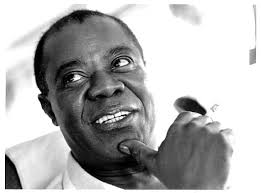 - if he thought he was born on the 4th of July as far as this blog is concerned that's when he was born - July 4th is a great day for a birthday for a great American.
I rediscovered Armstrong a couple of years ago by reading Pops by Terry Teachout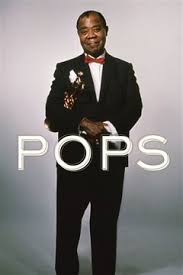 . Teachout is the drama critic of the Wall Street Journal and worked as a jazz bassist before becoming a writer, giving him a unique perspective for his biography of Armstrong.
Pops is a wonderful book about a man who, as Teachout says, "lived life in a major key".
I rediscovered Armstrong a couple of years ago by reading Pops by Terry Teachout
Pops is a wonderful book about a man who, as Teachout says, "lived life in a major key".
Wednesday, May 9, 2012
God Bless The Child
On May 9, 1941, Billie Holiday recorded this song which she co-wrote with Arthur Herzog Jr. Take a minute and give it a listen.
Wednesday, May 2, 2012
Summertime
Ella Fitzgerald in Berlin (1968). Sound quality is not ideal but this is her best version of a song she recorded dozens of times and sang thousands of times (and you can find most of them on YouTube!). Spare instrumentation, incredible voice control, tone and emotion.
Subscribe to:
Posts (Atom)