Showing posts with label Books. Show all posts

Monday, June 8, 2026

The Bookshelf

Substack has become a valuable resource for me.  While already familiar with some authors, I've also discovered many others writing on a wide variety of topics.  Highly recommended are the book reviews at Mr and Mrs Psmith's Bookshelf.  Some of the reviews are jointly authored, others by either Mr or Mrs.  What makes them particularly valuable is that, along with reviewing the book, the reviews often serve as the launchpad for deep, interesting, and provocative discussions.

Some of my favorites:

Xenophon's Anabasis and The Education of Cyrus

An Amish Paradox: Diversity and Change in the World's Largest Amish Community 

Further Arguments Against Jared Diamond (author of Guns, Germs, and Steel)

The Greatest Knight: The Remarkable Life of William Marshal

Leap of Faith (about the Iraq War and a book I've also written about) 

The Wizard and the Prophet

The Verge

Sick Societies 

Boyd: The Fighter Pilot Who Changed The Art of War 


Friday, April 10, 2026

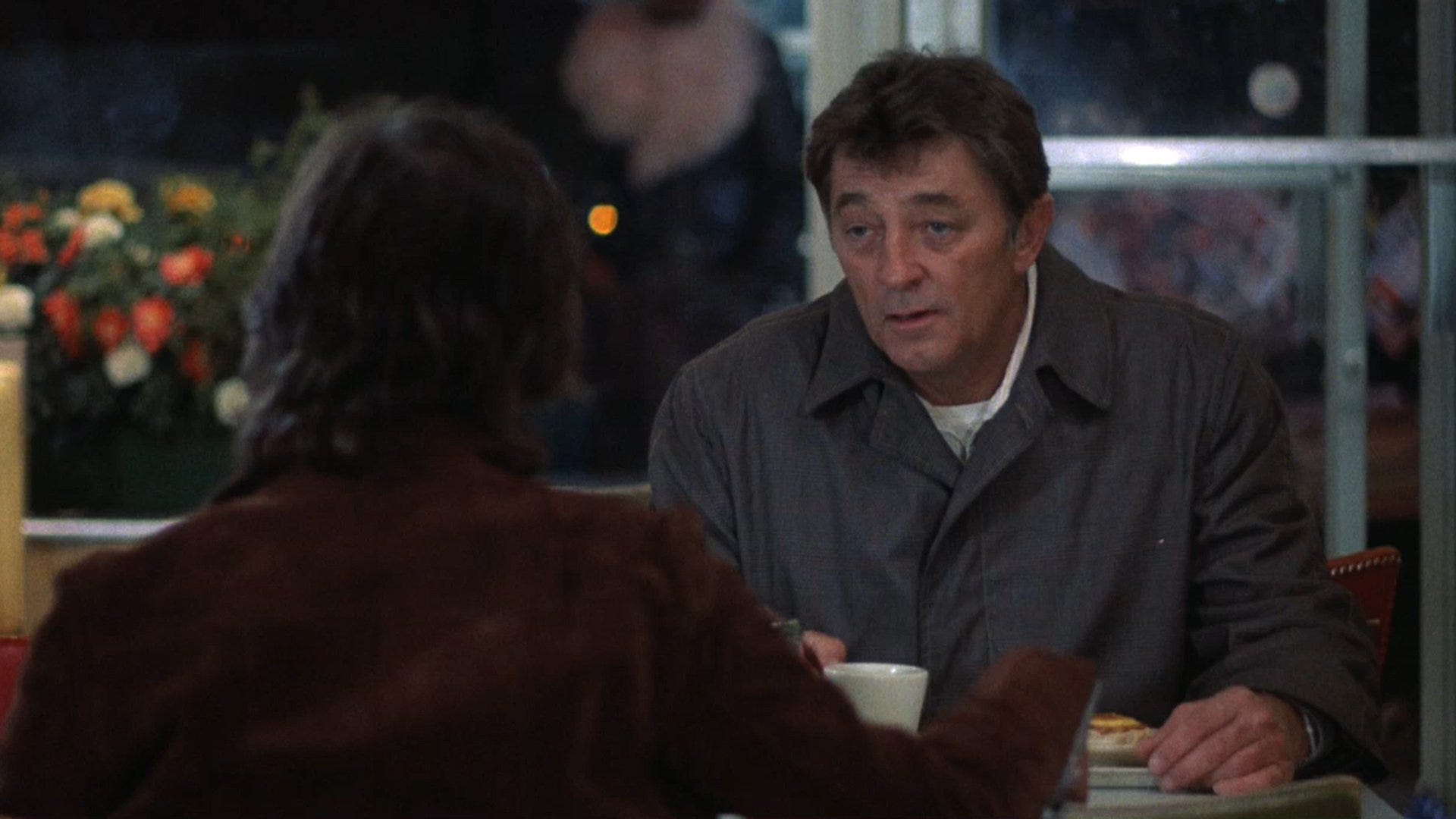
The Friends Of Eddie Coyle

An introduction and appreciation of the gritty 1973 movie set in Boston starring Robert Mitchum from Turner Classic Movies.  Watch the clip, watch the movie.  And here's a link to NY Times critic AO Scott on the film.  Eddie Coyle was the first novel of George V Higgins to be published, and he went on to write twenty more over the following two decades before dying in 1999.  THC has read them all.

THC has written on the book and movie before in The Workingman's Eddie Coyle and Missing George V Higgins, along with his magnum opus on Higgins and his work, Eddie Coyle's Friend, which includes a description of the author's technique:

A Higgins novel relies on dialogue in which the characters converse about what had happened, or was about to happen, or about things that had nothing to do with what had or was going to happen, though sometimes it would dawn on you towards the end of the book that that thing, you know, which the guy talked about way back that didn't seem to have anything to do with the story, did.  

That technique found its most exquisite execution in Bomber's Law:

Nominally, Bomber's Law is about Detective Sergeant Brennan of the Massachusetts State Police, who is following a mob enforcer, Short Joey Mossi, in an attempt to build a case against him.  After tailing Mossi fruitlessly for years, Brennan is saddled by his boss, Brian Dennison, with a new partner, Harry Dell'Appa, an idealistic and impatient young state cop, who is puzzled why Brennan and Dennison's predecessor, the retired and now very dead Bomber Lawrence, have failed to get the goods on Short Joey after all these years.  Most of the novel, which is 95% dialogue, consists of Brennan, Dell'Appa and Dennison telling each other lengthy, and occasionally deliberately distracting, yarns in the course of which we learn a lot about Short Joey and his younger, mentally disabled brother, and eventually the secret of Bomber's Law along with embarking upon many entertaining excursions which have nothing to do with the plot, that is, if there is, in fact, a plot.  The story telling is wonderful but dazzlingly complex often requiring the reader to double back and make sure they understand just whom the speaker is referring to or who is actually speaking.  

Tuesday, December 30, 2025

Reading 2025: Non-Fiction Part 2

King George, Lords North and Germain, Generals Clinton, Cornwallis, Howe, Burgoyne, the Earl of Sandwich, and Admiral Rodney are The Men Who Lost America according to Andrew Jackson O'Shaughnessy (now that's a catchy moniker!).  The book is both a biography and a chronology of the key British figures in the prosecution of the war against the American rebels.  Lots of interesting information: I had not realized how quickly many of the players discovered the war unwinnable.  However, the structure of the book leads to a lot of repetition and the writing is pedestrian.

I've written a couple of prior posts about my readings on slavery (here's one) and this year read Atlantic Cataclysm: Rethinking the Atlantic Slave Trades by David Eltis, described by Henry Louis Gates Jr of Harvard as "a tour de force by the world's leading scholar of the slave trade".  It is the reflection of a life's work by the author and he reaches some surprising conclusions.  I'd previously read The Rise of African Slavery in the Americas by Eltis, covering the period from the early 1500s to the early 18th century.

Slavery in part of the Old World is the subject of Justin Marozzi's Captives and Companions: A History of Slavery and the Slave Trade in the Islamic World.  Though covering a longer period (1,000 years compared to 350) the number of Africans trafficked in the respective trades are similar.  I will be writing a longer piece reflecting on the Eltis and Marozzi books in 2026.  Both are highly recommended. 

Not surprisingly, I did a lot of Civil War related reading in 2025, particularly as I often purchase books by our Roundtable speakers. 

The Great Partnership: Lee, Jackson, and the Fate of the Confederacy by Christian Keller, professor at the U.S. Army War College in Carlisle, Pa. was a very interesting study of the close relationship forged between the two over the eleven months between the Seven Days and Jackson's death at Chancellorsville.  I thought I knew everything already about that relationship but Keller brings out details, particularly about Lee and Jackson's shared religious faith, that explains their unique bond. 

Alex Rossino's investigation of the Calamity at Frederick: Lee, Special Orders No. 191, and Confederate Misfortune on the Road to Antietam was a revelation.  His methodical research process identifies the leading suspect responsible for the loss of Lee's Order 191, which when discovered by Federal soldiers revealed the position of Lee's scattered army to General George McClellan. 

I'd always found the two-week Battle of Spotsylvania Court House in May 1864 to be confusing.  Chris Mackowski's book, A Tempest of Fire and Lead, brought some needed clarity to those events.  Chris has an engaging writing style that is accessible to the non-specialist. 

Everyone has heard of Jesse James. While Jesse James: Last Rebel of the Civil War covers his entire life, author TJ Stiles explains how Jesse's fighting experience during the Civil War shaped the remainder of his life.  There's some myth busting in this book, as Stiles shows how post-war Missouri politics assisted James in his escapades. 

In 1862, slave Robert Smalls was sent by his master to Charleston Harbor to work on a Confederate naval boat.  Smalls managed to steal the boat, smuggle his wife and two children on board and, with the help of fellow slaves, sailed it out to join the Union fleet blockading the harbor.  That story and more is the subject of Be Free or Die by Cate Lineberry.  Smalls went on to become the first black commander of vessel in the history of the U.S. Navy.  After the war, Smalls was elected to the U.S. Congress during reconstruction and purchased his former owner's house.

Was President Franklin Roosevelt effective in ending the Great Depression?  That's the topic of False Dawn: The New Deal and the Promise of Recovery 1933-47 by George Selgin. I grew up thinking that the answer was "of course he was!" but over the years there has been a growing controversy about the right answer.  Selgin approaches the question analytically, making a distinction between FDR's policies intended to provide relief, or to institute longer-term reforms, versus those designed in whole, or in part, to end the economic downturn.  Too much of the literature on FDR has been polemical, both pro and con, and it was helpful to have a more analytical approach. Selgin's verdict is mixed but the topic is important and complex enough that I plan on a post devoted to the book. 

I've read a good deal on the Spanish Civil War, both histories and personal accounts.  The latter have all been from the Republican perspective (including Alan Furst's outstanding historical novels).  Mine Were of Trouble by Peter Kemp is the first from someone who fought on the Nationalist side.  Kemp was a British law student who volunteered to fight in the conflict because he was an anti-communist and heard about the atrocities committed at the start of the war.  His account is very well written and while explaining why he fought and the details of battles, it does not shy away from sordid acts committed by some of Franco's units, and provides insight into the factional disputes among groups forming the Nationalist coalition.  Kemp was badly wounded and returned to Britain; with the advent of World War II, he joined the Special Operations Executive and was infiltrated into Albania to help the partisans fight the Germans, and later into Poland, events he recounted in No Colours or Crest: The Secret Struggle for Europe, which I have also read. No Colours or Crest is quite good but Mine Were of Trouble is definitely the one to read if you have a choice.

James Holland and his partner Al Murray run one of my favorite podcasts, We Have Ways Of Making You Talk, all about World War Two.  He is also a prolific author (see here for an example) and his latest is Cassino '44, covering the Italian campaign from January 1944 through the liberation of Rome in early June of the same year.  Something I particularly appreciate about Holland's books is that he uses documents written at the time, not accounts from years later, which gives his books an immediacy.  He also nicely balances strategic discussions with the personal intimate accounts by soldiers on the ground in that grinding campaign.  Northwest Europe with Normandy and the Bulge gets more attention and celebration but we owe a lot to the Allied soldiers in the Italian campaign.

I'm currently reading Vietnam's American War by Pierre Asselin.  In Dereliction of Duty (HR McMaster's indictment of the process by which American ground forces became engaged in Vietnam)  I referenced a previous book by Asselin, Hanoi's Road to the Vietnam War: 1954-65.  Asselin speaks and reads Vietnamese and has access to the archives of the Vietnam government, which have become available to researchers over the past thirty years.  His work focuses on the perspective of the Vietnam communists, and often upsets the neat story told by Western academics.  His new book takes us back into the ancient history of Vietnam, along with its colonization by France before America's involvement begins in 1954.  That background is essential because Asselin's thesis is that Vietnam was engaged in a civil war between communists/nationalists and anticommunists/nationalists into which America got dragged, rather than a conflict between patriotic Vietnamese (who happened to be commies) and the Americans and their Vietnamese puppets.  Another book I will be writing more on.

Sunday, December 28, 2025

Reading 2025: Non-Fiction, Part 1

Ancient History 

What happens if you are a Greek mercenary, deep in Mesopotamia, and the guy you hired you gets killed in battle and his cause collapses?  Read Anabasis by Xenophon to find out.  Also called The March of The Ten Thousand, Anabasis is the story of those mercenaries, hired by Cyrus the Younger in 401 BC to help seize the Persian throne from his brother Artaxerxes II.  This is one of those books I'd read about countless times but had never read until this year.  Xenophon, one of the mercenary commanders, wrote Anabasis about thirty years after the events.  Before reading I'd been under the impression that the core of the book covered the fighting retreat of the Greeks after the battle of Cunaxa until they reached the Black Sea but that's only half the story.  Quite an adventure and a reminder of how different and violent the Classical world was.  

Cato the Younger was Caesar's great enemy at the end of the Roman Republic.  Fred Drogula's study attempts to reconstruct Cato's life and motives and provides a convincing explanation for his ultimate ineffectiveness and inability to help forge a compromise that might have saved the Republic.

Peter Brown is considered the leading historian of late antiquity and Through The Eye of A Needle: Wealth, the Fall of Rome, and the Making of Christianity in the West, 350-550 AD, is a masterwork.  I had some hesitation before starting the book, worried it might be dry and too scholarly.  It is certainly scholarly but not dry and extremely well-written and engaging.  The title is from the words of Jesus as recounted in the New Testament, "It is easier for a camel to go through the eye of a needle than for someone who is rich to enter the kingdom of God."  Avoiding cynicism, Brown provides a sympathetic study of how a struggling church, embraced by a minority of the population in 350, becomes the dominant and wealthiest player in the formerly Roman west two centuries later as it tries to reconcile the words of Jesus with the conditions of the disintegrating empire.  Making the reader rethink some of the common assumptions about that era, Brown focuses on individuals like Augustine, Ambrose, Pelagius, Jerome, Ausonius and others to help the reader understand the arguments over the appropriate role of wealth and the wealthy within the Church.  In other books and articles I've found it difficult to understand the nuances of early Christian theological arguments, but Brown provides admirable clarity in this work. A very rewarding read.

A decade ago THC wrote about the history of Rome after the 4th century (Belisarius Enters Rome)  relying greatly upon Richard Krautheimer's classic work from 1980, Rome: Profile of a City, 312-1308.  The last few decades have seen an upsurge in archaeological activity in Rome focused on the post-Empire history of the city and this year I read two books by Hendrik Dey incorporating the new information; The Aurelian Wall and the Refashioning of Imperial Rome, AD 271-855 and his most recent work, published in 2025, The Making of Medieval Rome: A New Profile of the City, 400-1420.  Building upon the work of Krautheimer and the recent archaeology, Dey's books provide an update portrait and way of thinking about the city during its "dark ages".  I will be writing more about both books in 2026.

Israel

The Old City of Jerusalem is, as the name states, "Old" and contains the Temple Mount.  However, it is only in the past three decades that close to, but not within, the Old City is the City of David, dating back to King David around 1000 BC.  When The Stones Speak by Doron Spielman tells the story of its discovery and excavation and the political storms ignited by the archeological work.  Spielman has worked on the project and the discovery part is quite exciting, particularly finding the passageway between the City of David and the Temple Mount.  Because the area of the City of David is adjacent to an Arab settlement and given the Palestinian strategy to deny any historical Jewish connection with Jerusalem, each step of the excavation process has triggered controversy.

In The War Of Return, Einat Wilf argues the hypothesis that the highest aspiration of the Palestinian people is to have their own state has been proven to be incorrect as they have repeatedly demonstrated that the destruction of the Jewish state is a higher priority.  She writes that the actions of the United Nations, and of Western Nations, and the peculiar nature of the United Nations Relief and Works Agency for Palestine Refugees in the Near East (UNRWA) has contributed to the inability to resolve the conflict.  UNRWA created a unique category of refugee for Palestinians, unlike that of the tens of millions of other refugees around the world created in the wake of WW2.  UNRWA has become a facilitator of Palestinian rejectionism and the only hope to resolve the conflict is the dissolution of UNRWA.  I previously wrote about Wilf and her hypothesis in An Irreconcilable Conflict of Principles.

Music

I read the first two volumes of Ricky Riccardi's trilogy on the life of Louis Armstrong, Stomp Off, Let's Go: The Early Years of Louis Armstrong and Heart Full of Rhythm: The Big Band Years of Louis Armstrong.  Riccardi is director of research collections at the Louis Armstrong House Museum in the borough of Queens, NYC (worth a visit!) and himself a musician.  This is an incredibly well researched and almost day by day account of Armstrong's life and brings a lot of previously unknown information to light.  Riccardi is a great admirer of the man but does not shy away from giving us a portrait of the man in full.  If you like Armstrong's music you'll find some new cuts to enjoy and be overwhelmed by the man's drive and talent.  It remains a miracle to me that a young man could come from such a trying and terrible background and grow to display not just enormous talent but such a positive disposition and view of life. It's why I've written many times about Armstrong.

Inspired after watching A Complete Unknown, I read Elijah Wald's, Dylan Goes Electric!: Newport, Seeger, Dylan, and the Night that Split the Sixties.   Dylan Goes Electric gave me a much better understanding of the folk music revival of the 50s, Pete Seeger's key role, and why Dylan's rejection to being annointed the savior the folkies had been searching for was so significant.  The movie and the book also inspired my recent visit to the Dylan museum in Tulsa.

Saturday, December 27, 2025

Reading 2025: Fiction

My favorite novel of the past year is Lonesome Dove by Larry McMurtry.  It only took me 40 years to get around to reading, finally prompted to do so by this article by David Polansky in The Hedgehog Review.  I'd read the other book Polansky writes about, Cormac McCarthy's Blood Meridian, about twenty years ago.  Although admiring McCarthy's writing I much prefer Lonesome Dove.

Lonesome Dove is an epic tale, and much more hard and grim than I'd anticipated.  With its two compelling main characters, equally compelling side characters, and intersecting story lines it employs some of the sentimental tropes of traditional Westerns but tells an unsentimental, unyielding and, at times, brutal story.  It took about 75 pages to fall into its rhythm but since the novel is more than 800 pages that's an acceptable admission fee.

Woodrow Call and Augustus McCrae remind me of the characters played by John Wayne in John Ford's The Searchers and The Man Who Shot Liberty Valance, half-barbarous men needed to tame the frontier but who are unsuited to live there once it is civilized.  As Gus says to Woodrow, "Me and you done our work too well. We killed off most of the people that made this country interesting to begin with".

It had been many years since reading PD James crime novels featuring Inspector Adam Dalgliesh.  The Children of Men is not a crime novel, instead set in a near future England where children are no longer born.  Though full of action it is quite a reflective and pensive novel.  In some ways the future it predicts has already happened.  

Finding a new series of well-written historical novels is always a joy.  Alfred Duggan, an Englishman born in 1903, wrote 15 novels between 1950 and his death in 1964, and I read six this year.  While some are still in print, a couple I could only find secondhand as Ace Paperbacks, sold for 50 cents back in the 1950s!  Duggan's novels are all set in the classical or medieval eras.  The ones I particularly enjoyed were Conscience of The King, a speculative life of the founder of the Kingdom of Wessex in the sixth century, The Little Emperors, the story of the final chaotic years of Roman rule in Britain during the early fifth century, told from the perspective of a bureaucrat, and Knight With Armour, the tale of an ordinary English knight on the First Crusade.  Duggan is excellent in conveying the mental framework of his characters as reflecting the eras they lived in.  

Sink The Rising Sun is the debut novel by my friend Jon Gabriel.  Set in southwestern Australia in the opening months of America's involvement in World War Two, it is the tale of a submariner trying to stop the advance of Japan into the waters of Southeast Asia.  Well-researched and written, it's a gripping tale that accurately portrays the balance between boredom and action in the naval life.  Jon was a nuclear reactor technician on a submarine and brings his experience to this adventure.  

The High Crusade is 1960 science fiction by Poul Anderson, in which English knights and villagers during the Hundred Years War encounter an alien spaceship which they seize but then, in turn, find themselves hijacked and off to adventures in a distant galaxy.  How they cope and whether they succeed or fail in their new environment makes for an amusing tale.

Thomas Perry is a crime and mystery novelist.  Pro Bono, set in California with an well imagined and engaging plot, is the first Perry novel I've read. While writing this post I looked up his bio and found that he died in September 2025.  With thirty novels published I have a lot more ahead of me. 

Another historical novelist I enjoy is Robert Harris.  Precipice is set in the summer of 1914 when a British intelligence officer is assigned to find out how secret government communications were disclosed and stumbles across the affair between Prime Minister Asquith and the young Venetia Stanley.  A good read, but not his best.  If you haven't read Harris before I recommend starting with Fatherland; Act of Oblivion; Pompeii; or An Officer and a Spy.  His 2026 release is about Marcus Vipsanius Agrippa, the right hand man of Augustus, a great subject for a historical novel.

Finally, I read the latest installments by three crime novelists who I've collectively read more than 50 times.

The Lincoln Lawyer, Mickey Haller, features in Michael Connelly's The Proving Ground, involving a case in which artificial intelligence plays a role in the murder of a young woman.  Another solid entry from Connelly.

The 20th novel by Robert Crais starring Elvis Cole and Joe Pike, The Big Empty, is one of his best.  A mystery with some very unexpected twists.

Martin Walker's Bruno, Chief of Police series is set in the Vezere and Dordogne River valleys of France, a frequent destination for us over the years. I enjoy the settings for the novels, but the 18th in the series, An Enemy In The Village, continues the recent trend of a decline in quality in the stories.  If I had not enjoyed the earlier books so much I would stop reading the series.

Saturday, March 8, 2025

The Workingman's Eddie Coyle

The Friends of Eddie Coyle (1973)

(Robert Mitchum as Eddie Coyle)

Back in 2014, I wrote Eddie Coyle's Friend, about a novelist I greatly admire, George V Higgins.  I probably worked harder on that post than on anything else I've written, figuring Higgins deserved it.

I just came across an appreciation of the novel and movie, The Friends of Eddie Coyle by Daniel Moran, writing on Substack and found it quite perceptive and worth a read. Here are some excerpts:

This kind of dialogue may seem easy to write, but anyone who has ever tried knows it’s almost impossible. Here, we get everything we need to know about these two guys and the rules of their worlds in a handful of near-grunts.

I was an English major—sure, things like Eddie Coyle were fun to read, but shouldn’t I be reading more Keats, James, and Shakespeare? I didn’t know that the music found in the works of these writers could also be heard (if faintly) in a book like this one. I’ve since read it several times and I’m always amazed by how the book carries its reader along in a series of conversations that move so quickly yet reward close-reading. The book reads itself to you like a criminal nanny.

Everyone loved the realism, but a more accurate word is “realism.”(1) I have no idea if actual gunrunners are as interesting as the people in these pages or if their dialogue is worth overhearing. I’d bet that it’s not. What’s absolutely realistic, however, about Eddie Coyle is how everybody in it—just like the reader—is constantly negotiating to just get to the next step of what he needs by the end of the day. . . His story—the real realism—is about going to work and being someone in middle management who has to answer to all kinds of people and wants to just get his part of the process complete so he can move on to the next thing. It’s about the guy in Purchasing who won’t sign the form you need so that you can tell the client that yes, everything is in motion, because that guy in Purchasing thinks that you’ve cozied up to the Senior Vice President of Acquisitions for a job that he’s had his eye on for months. It’s about having to speak in a conciliatory tone when trying to wrangle a favor from the guy in the next cubicle.

Peter Yates’s 1973 film is an object lesson in how to faithfully adapt a novel to the screen. It stands with John Huston’s The Maltese Falcon and the Coens’ True Grit as an example of a screenwriter (in this case, Paul Monash) sitting with the novel propped open on his desk so he can type the dialogue word-for-word in screenplay format. Huston’s version of Falcon was the third attempt to adapt it for the screen and the Coens’ True Grit was the second; both of their versions are superior to their predecessors because they knew what was great about the novels and transferred that greatness to the screen.     

I have not seen the earlier versions of the Maltese Falcon, but as much as I enjoyed John Wayne in True Grit, the Coen's True Grit is superior.

Coming across this post led me to read more of Moran's work and it is quite good.  He's got that thing.

---------------------------------------

(1)  In my Higgins post I wrote:

The dialogue Higgins wrote was realistic but it wasn't real.  Very few people actually talk like that, or at least they don't talk like that for so long and, at times, he could venture dangerously near Damon Runyon territory.  But mostly, Higgins had a knack for cadence, ambiance and simplicity that rang true even if it wasn't actually true. 

Saturday, December 14, 2024

The Beauty Of Reading

How true.  How many books have I read and re-read over the years. How many more will I in the future.  And, as I get older, I take different things from your favorite books upon each reading.

You can read more about Umberto Eco here.

Monday, November 11, 2024

Chasing Bright Medusas

Now I know that nothing really matters to us but the people we love.  Of course, if we realized that when we are young, and just sat down and loved each other, the beds would not get made and very little of the world's work ever get done.

- Willa Cather (1874-1947) in a 1945 letter to a friend

Just finished reading Benjamin Taylor's new biography of Willa Cather, Chasing Bright Medusas.  It's a literary biography, well-written, and clocks in at less than 200 pages, a relief in an era where door-stopper biographies are more common.

Over the past year I've read two Cather novels, My Antonia, and Death Comes For The Archbishop.  Cather is a wonderful, vivid, yet subtle writer, with powerful descriptive abilities when it comes to settings, landscape, and character.  My Antonia set in the central Nebraska prairie lands in the late 19th century, where Cather grew up, portrays the struggles and everyday lives of a multicultural cast - mostly immigrants from northern, central, and eastern Europe.  Death Comes For The Archbishop is a masterpiece, beautifully written and moving, one of the finest novels I've ever read and one I will return to.  The roughness of mid-19th century New Mexico is the setting for an unusual tale.  Told in episodic vignettes over the years, with settlers, renegades, and native Mexicans and Indians, along with guest appearances by the Navajo elder Eusebio, and Kit Carson, the story centers on the first bishop of the new diocese, Father Latour and his vicar Father Vaillant, both native Frenchmen, who set out to build a cathedral in Santa Fe.

It is a moving portrayal of faith and friendship.  At one point, Latour says to Vaillant,  "One might almost say that an apparition is human vision corrected by divine love.  I do not see you as you really are, Joseph, I see you through my affection for you."

Taylor quotes a Catholic critic writing of the book when it was published in 1927:

Her book is wonderful proof of the power of a true artist to penetrate and understand and to express things not a part of the equipment of the artist as a person.  Miss Cather is not a Catholic, yet certainly no Catholic American writer that I know of has ever written so many pages so steeped in spiritual knowledge and understanding of Catholic motives . . . 

In our modern era when to write of something beyond your personal experience is dangerous and may even lead to the failure to be published, it is refreshing to read this perspective from a century ago.

Cather was a phenomenon even as a child.  She was class valedictorian in 1890 (though, to be sure, it was a class of three!) and can you imagine hearing this from a 16-year old:

There is another book of God than that of scriptural revelation, a book written in chapters of creation upon the pages of the universe bound by mystery.
She would end of spending most of the rest of her life in the East; Pittsburgh, Boston, New York, Maine, and the Maritime Provinces of Canada.  Taylor tells of her two great loves, both women, one of whom she lived with for the last four decades of her life, though he notes that sexuality and sexual matters seemed to play a small role in her life.

According to Taylor, Cather was "a cosmopolitan while she was still a provincial", her "deeper theme: the nation as a gathering of peoples from elsewhere, adding Americanness to some earlier identity".

He goes on:

What sets her apart from her younger contemporaries - Hemingway, Faulkner, Fitzgerald, Dos Passos - is that her idealism about American possibility was unironic.  What makes her the greatest of anti-modernists is that ideals were what were most real to her.

Cather expressed it best in a 1922 address:

There is such a thing in life as nobility, and novels which celebrate it will always be the novels which are finally loved.

Saturday, November 2, 2024

Recent Reading

 Some selected books from recent months:

I learned about The Trigger by Tim Butcher while listening to the Rest is History podcast on the assassination of Archduke Franz Ferdinand, the spark that ignited the first World War in 1914.  Butcher was a correspondent in Bosnia during the Bosnian War of 1992-5.  In the trigger revisits Bosnia in 2012, going to the isolated village where the assassin Gavrilo Princip was born and raised.  He mostly walks as he retraces Princip's footsteps to Sarajevo, where he went to school, and then on to Belgrade in Serbia and his return journey to the fateful rendezvous with Franz Ferdinand in Sarajevo.  Along the way, Butcher discovers some previously unknown documentation on Princip.  But this book is more than about 1914.  Butcher draws the common threads between Princip's motivation for the shooting and what he witnessed in the 1990s, along with reflecting on the scars still visible on the land and in the people when he returned in 2012.  Butcher is a terrific writer, very perceptive and thoughtful.  Highly recommended.

In a August post I referenced TG Otte's July Crisis, also discovered listening to the Rest is History, covering the period from the assassination to the outbreak of the war.  A detailed blow by blow account, a bit drier than Butcher's book but good reading about appalling events in which some duplicitous diplomats deserve blame for the tragic outcome.  My description of those weeks from the earlier post:

The period from the morning of June 28 to July 31 leaves one with the same feeling as watching a "by the numbers" horror movie where find yourself thinking "don't open that door!", "don't go in that room!!", and "splitting up is a really bad strategy!!!", yet the characters proceed to go ahead, nonetheless.

Twilight at Monticello by Allen Pell Crawford covers Thomas Jefferson's 17 year retirement beginning in 1809 when he left the presidency.  Fascinating reading of what seems like a time of much sadness for Jefferson.  A famous figure, deluged by letters and visitors, but seeing Monticello in continuing financial distress, with quarrels breaking out within his family, failing to address slavery at the most personal level (unlike George Washington), and plagued by increasingly poor health.

The First Congress: How James Madison, George Washington, and a Group of Extraordinary Men Invented the Government by Fergus Bordwich is the first book I've read about the inner workings of the House, Senate, and Executive Branch from 1789-91.  As the title says, they were inventing everything, making it up as they went along, guided by the often vague language of the Constitution.  The first problem was how hard it was to get the new representatives and senators to even show up, as it took weeks after the the official start of the government to reach a quorum.  The Supreme Court held its opening session and then disbanded for months because it had no cases to hear.  And Washington felt his way into his new role.  Lots of depth to the research and I learned quite a lot.

Moving ahead to the Second World War, we have The Washington War: FDR's Inner Circle and the Politics of Power That Won World War II by James Lacey.   This was an uneven book; the best parts on the little known White House and sub-cabinet officers who had to mobilize America's industrial base to produce the staggering amount of armaments to win the war and the bureaucratic infighting along the way.  Other parts are a rehash of military and high policy issues that I was already familiar with.  A mixed verdict but worth it for the best parts.

The Peacemaker: Ronald Reagan, The Cold War, and the World on the Brink by William Inboden is a masterpiece.  The book focuses exclusively on Reagan's foreign policy.  Inboden grew up with a generally unfavorable view of Reagan which he revised after doing the research for the book.  Reagan was at his best with his large strategic view and his adherence to it, throughout his administration.  He did win the Cold War with a very different view of it than his predecessors.  His assessment of the Soviet Union's financial stability proved more accurate than that of the intelligence and academic communities.(1) Although portrayed as dunce by the media and Democrats, he actually did read his briefing books (unlike some other presidents), while also horrifying a large number of conservatives when they realized he wanted to abolish nuclear weapons and began making deals with Gorbachev, over whom he'd attained psychological dominance.

The book is not a hagiography, going into the president's failures in Lebanon and in Iran-Contra, and pointing out that while a superb strategist and mobilizer of public opinion through his eloquence, he was a terrible day to day manager which created its own set of problems.  The book also conveys what it was like to make decisions given the enormous pressures and uncertainties faced by those in the administration.  Whether the decisions proved good or bad we understand how they looked to those making them at the time.  A big book but worth the investment of time to understand how the world changed so dramatically in his administration.

I was disappointed in the most recent installments of two of my favorite fiction series; The Waiting by Michael Connelly and Martin Walker's A Grave In The Woods.  I've always enjoyed the setting, Dordogne, and the characters in Walker's series on Bruno, a local police chief and the charming cast of characters revolving around him, but the plots have gotten increasingly outlandish and the writing sloppier.  I will continue to read the books because of my past enjoyment but would only recommend the first ten to new readers.  Connelly is a better writer than Walker and his Harry Bosch and Mickey Haller novels are great reads, well plotted and compellingly written.  But Bosch has gotten older, retired, and only appears as a bit player in his new novel which centers on LAPD's Renee Ballard, who is just not as interesting a character as Bosch or Haller.

Morning After the Revolution: Dispatches from the Wrong Side of History by Nellie Bowles is the tale of a journey.  A journalist of the progressive persuasion, she joined the New York Times.  She eventually left the Times for two reasons.  She started dating Bari Weiss, another progressive working as an editor at the Times.  Because Weiss believed in platforming views that occasionally dissented from progressive thought she came under constant assault from her fellow journalists.  Bowles recounts being out to dinner with her editor and colleagues, when the editor, in all seriousness, questioned why Nellie was dating Bari, saying of her, "She's a Nazi. She's a fucking Nazi.", to which all her colleagues eagerly agreed.

The other reason was what she saw in her reporting.  In her words:

When I started this, I was a little angry.  After I wrote some of these chapters, I quit the paper. . . . I traveled to Portland's late-night Antifa rallies and spent days in the no-cop autonomous zones of Seattle and Minneapolis, looking for utopia.  I looked at the attempts to atone for our collective sins, visiting homeless encampments run by BMW-driving socialists and taking courses led by America's leading anti-racist educators, who happen to be mostly middle=aged white women.  When the revolution made a turn from race to gender, I followed it, exploring why so many children were being born into the wrong bodies, their genders so far from their flesh. 

The book is best suited for readers who don't know already know the truth about the stories Bowles covered.  Since I already did, I found of most interest the earliest sections which recount the inside working of the New York Times, another of our once-great institutions that has self-destructed.

The good news is that after Weiss was expelled as a heretic from the Times, and Bowles resigned, they started a new social media company, The Free Press, which is thriving, both as journalism and financially because it turned out there was a mass audience for journalism not designed to push predetermined narratives.

The Morning After ends with on a cautionary note, writing that the first phase of the revolution was ending as she finished her book:

Black Lives Matter was in disgrace.  All the autonomous zones had shuttered.  The police were re-funded.  The Tavistock pediatric gender clinic in England where children would be assessed and begin their transitions?  That's shutting down.  

But did the quieter streets mean it was done? Hardly.  The ideas became the operating principle of big business, the tech company handbook, the head of HR, the statement you have to write to get a job in a university.(2)  The movement fell apart because of how fully it succeeded.  It didn't need to announce itself so loudly anymore.  We didn't need to notice it anymore.  . . .  There are a thousand tiny changes we've just grown accustomed to.

On my Kindle awaiting reading:

Chasing Bright Medusas, a biography of Willa Cather, of whom I became a fan after recently reading Death Comes for the Archbishop and My Antonia.

Foucault's Pendulum by Umberto Eco.  I anticipate a challenging read.  Hope it is worth the effort.

The Line of Splendor by Salina Baker.  A historical novel about Nathanael Greene, the outstanding and little known Revolutionary War general who saved the South from the British.

The Coming of the Terror in the French Revolution by Timothy Tacket.  How a bunch of mild-mannered reformers ended up chopping off heads, including their own.

--------------------------------------------------------------------------

(1) Ah, if only we could have had some brave bureaucratic soul like Alexander Vindman become a whistle blower to Congress, denouncing the President for defying "the consensus" of the foreign policy establishment. 

(2) And these ideas became the top domestic priority of the Biden administration, implemented through two Executive Order, embedding them throughout the federal government and even looking ahead to require that any AI used by the government must embed within the racial and general biases of this ideology.

Tuesday, August 20, 2024

A Library Of The World

I'd read The Name Of The Rose, Umberto Eco's first novel, when it was published in English in 1983, and have since reread it. Over the years, I've read interviews with, and some pieces by, the professor and semiotician, but not any of his subsequent novels.

Last night, we watched a charming, imaginative, and provocative movie done as a tribute to Eco, who passed in 2016, Umberto Eco: A Library Of The World; trailer below, and you can find the whole thing on YouTube.  It starts in Eco's home library, consisting of more than 31,000 volumes, including many rare books, arranged in his idiosyncratic classification system.  Along the way we are introduced to other libraries, various characters and colleagues, and clips of interviews with the professor who, it is clear, knows his role is also to be an entertainer.  It is also a visually creative film, an asset that Eco would appreciate.

The theme can be stated with a couple of quotes from Eco in the film; "Libraries are mankind's common memory" and that, "without memory it is impossible to build a future".  From Eco and the other characters we get thoughts of the transition from the print era to the digital world; how in the print world there was a limited amount of information one could be exposed to, while the digital world presents the opposite situation.  In contrast to the print world, one has to be selective in what to be absorb in the digital.  Eco did not ignore technology; after all, he carried a cellphone - he just did not turn it on.

There is a lot more, including explanations of what Eco believes about knowledge and reality, and always done in a fun way, which the professor would have wanted.

We learn that Eco, and many others in the movie, are obsessed with Athanasius Kircher (1602-80), a German polymath and Jesuit who wrote many lengthy, and profusely illustrated books, on a range of subjects, including hieroglyphics, religion, geology, sinology, medicine, biology, technology, and the Bible.  He's described as incredibly interesting and, often incredibly wrong.

Umberto Eco enjoyed his life and he invites you to enjoy this tribute to him.

Saturday, April 13, 2024

Recent Reading: Fiction

A shorter list than my non-fiction one.

My Antonia by Willa Cather.  

Last year I read Death Comes For The Archbishop by Cather which was simply wonderful and a book I will reread.  My Antonia was very enjoyable, if not at quite the level of Death Comes.  Set in the late 19th century farmlands and small towns of Central Nebraska where Cather grew up, the book deftly captures memorable characters and the physical settings.  Never thought I'd be a Willa Cather fan but now I'm deciding which of her books I should read next. 

A Chateau Under Siege by Martin Walker.  

Set in the Dordogne region of France, I look forward to each installment of the Bruno, Chief of Police series.  This is the latest and while a good read, I fear the overall quality has begun to decline.  I still enjoy the settings, many of which I am familiar with, and the characters but if you haven't read the books, I suggest starting from the beginning and going through the first dozen and avoiding this one.

The Possessed by Fyodor Dostoevsky.  

I'm still making my way through this one.  It's slow going.  Maybe it is the translation.  I now know where Norm Macdonald got the inspiration for his version of The Moth Joke.  I hear Norm's voice in my head when reading the book.

Night Soldiers by Alan Furst 

One of my favorite authors, this was a book I reread.  Furst wrote about 15 novels all set in Europe during the years leading up to WW2 and during the war itself.  Night Soldiers, the first in the series, and its successor, Dark Star, are more sprawling in scope, time and geography than the later books, but essential as they set the framework for Furst's world.  His characters are Russians, Eastern Europeans, Poles, French, and sometimes British, caught in the murky world between the Soviets and the Nazis, where every other group has its own agenda, where alliances and motives shift quickly.  As history, the settings and dilemmas are very accurate.  Night Soldiers and Dark Star provide as good a background on those times, and the terrible choices faced by so many, as any academic history.

Night Soldiers held up well upon rereading.  The story of a Bulgarian in his late teens, living in a Danube river town, who witnesses his younger brother beaten to death by fascist thugs, and is then recruited by the Russians and set to Moscow for training as an intelligence agent.  Over the course of the book he is in Spain and France, before coming full circle to return to the Danube.  The novel covers 1934 to 1945.  After Dark Star, Furst's later books are set in a tight time frame from 1937 to 1941 with a number of recurring characters.  The writing is captivating and precise until the last two books in the series which fall off in quality.

Resurrection Walk by Michael Connelly

Another favorite.  Connelly has three different series of crime novels built around the characters of (now retired) LAPD detective Harry Bosch, current detective Rene Ballard, and Mickey Haller, the Lincoln Lawyer.  All are worth reading.  Resurrection Walk is his most recent, featuring both Bosch and Haller who are half-brothers.

L.A. Confidential by James Ellroy

I've seen the movie four or five times and it is a great film, on my top 10 list.  You can read my full take on the novel here, but I summed it up this way:

The 500 page book makes for intense and compelling reading, I couldn't put it down.  It is also completely bonkers, an insane fever dream . . .

No Country For Old Men by Cormac McCarthy

Quite a book, deserving of being on your must read list.  Reflecting upon it led me to some thoughts in Carryin' Fire and What Is To Come.


Recent Reading: Non Fiction

Another in a series of occasional posts on my reading.

We'll start with two books by recent speakers at the Scottsdale Civil War Roundtable.

When Hell Came to Sharpsburg: The Battle of Antietam and Its Impact on the Civilians Who Called It Home by Steven Cowie

There are plenty of books about the military aspects of Civil War battles but few about what happened to civilians caught in those violent clashes.  Steven Cowie spent, when he wasn't working his day job, 18 years researching and writing about the people in and around Sharpsburg, Maryland, the site, in September 1862, of Antietam, the bloodiest day in American history.  For the civilians it was not just about the day of battle, terrible as it was, but about the six weeks following when the Army of the Potomac was based in, and around, the town.  Most homes that weren't destroyed were converted into hospitals to care for more than 10,000 wounded soldiers and home and farms were looted, crops and stock confiscated, even the fence posts that separated pastures and properties were taken.  Disease outbreaks took dozens of lives and then it took decades to get any compensation for the destruction (the last case wasn't resolved until 1915 and many received nothing).  Incredibly well-researched and documented, it also provides much insight into mid-19th century farming.

A Worse Place Than Hell: How the Civil War Battle of Fredericksburg Changed a Nation by John Matteson 

If you come to this book expecting a detailed study of Fredericksburg and how it changed the nation you won't find it.  Instead, despite a title probably insisted upon by the publisher to boost sales, A Worse Place Than Hell is a finely written, engaging, and touching study of five Civil War figures (only two of them soldiers) and how their lives intersected at Fredericksburg in December 1862.  Four of the subjects are from the North - Oliver Wendell Holmes Jr, Louisa May Alcott, Walt Whitman, Arthur Fuller, and one Southerner, John Pelham.  Alcott and Whitman both started their nursing duties in the wake of the battle and Matteson writes of how that experience shaped their lives and writing.  Holmes was a soldier, wounded annually; shot in the chest at Ball's Bluff in 1861, in the neck at Antietam the following year, and in the foot at Chancellorsville in '63.  He was at Fredericksburg but saw no action because of debilitating illness.  Fuller is the figure readers are most likely to be unfamiliar with.  A Massachusetts clergyman, chaplain to a regiment from the state, and meeting a tragic end in the streets of Fredericksburg. Pelham was the young and charismatic commander of Jeb Stuart's mobile artillery unit.  A courageous, gallant, and innovative leader he played a key role at Bull Run, Antietam, and Fredericksburg before dying in a skirmish in March 1863.  Despite some errors on the military history side, this book is highly recommended. 

I Can't Tell a Lie by James Bish.

"Father, I can't tell a lie.  I chopped down the cherry tree".  Supposedly said by young George Washington to his father as related by Parson Weems in his early 19th century book.  Since Weems was an itinerant preacher and huckster who just made stuff up, the story is obviously nonsense and has been regarded as such by historians since the late 19th century.  But is it really nonsense?

Jim Bish is a historian, an expert genealogical researcher, and has lived in Virginia for many years (he's also a friend).  I Can't Tell a Lie makes the argument that it is very possible that the tale related by Weems is true.  The story is in two parts.  The first is a careful examination of what Weems wrote versus what we all think he wrote, because what he really wrote is key to the case that what he wrote might be true.  The second is the genealogical and historical research about the linkages between the families living on the narrow neck of land between the Potomac and Rappahannock Rivers in the 18th century.  While Parson Weems may have been itinerant, he was also connected to the Washington family.  I came away convinced that it is very possibly a true story.  For a detailed analysis of the historiography on the Weems story you can also read this article by Bish and a co-author.

De Gaulle by Julian Jackson

One of the great figures of 20th century Europe.  He drove Churchill and FDR crazy during WW2 but he ended up getting his way.  A remarkable man and Jackson shows us how great, how frustrating, how inspired, and how wrong he could be at times.  His political resurrection in 1958 in the midst of the Algerian crisis was something I knew little about and Jackson tells it well.  De Gaulle was a very undemonstrative and private man but I learned that when he and his wife had a daughter with severe down's syndrome (she never learned to speak) they insisted upon raising her with the rest of the family when the common practice at that time was to institutionalize.  De Gaulle doted on her, often singing songs and spending hours with her at his home, expressing his emotions in a way that the public never saw.

Commanches: The History of a People by TR Fehrenbach

Learn about the origins of the tribe in Wyoming, their move to the Plains, the century and a half domination of the Southern Plains, subduing other tribes, and holding off the Spanish, Mexicans, and Americans until the 1870s.  The greatest Indian horsemen, Fehrenbach's book describes in detail the culture and lifestyle of the Commanche with a sense of both understanding and sympathy and of the inevitability of their ultimate fall.  I was a bit puzzled that Fehrenbach spends so much time in the last part of the book on the history of the Texas Rangers and the frontier strategies that finally conquered the tribe and also saw some commentary and reviews mentioning the same thing.  It was only when I realized that the original title was Commanches: The Destruction of a People, that I understood why that material was included.

The Year That Broke Politics by Luke Nichter

This book was a revelation.  It's about the 1968 presidential election.  Well-documented, it overturns several myths about that campaign.  Most startling to me was the extent of communication, including meetings, between Richard Nixon and LBJ, and the president's preference that Nixon win the election. LBJ was concerned about his legacy, both on civil rights and Vietnam, and did not trust Hubert Humphrey on the latter.  Nixon reassured LBJ about his support for civil rights and led LBJ to believe he was more in touch with his views on Vietnam than Humphrey.  Lots of other interesting material make this book worth reading.

The Savage Storm by James Holland 

I've already written about this book about the war in Italy from September through December 1943 in Incident at Bari.  Looking forward to the next installment on the Anzio and Cassino campaigns due this fall. 

To Hell And Back by Audie Murphy

As a kid I only knew about Audie Murphy because I saw him in some cheesy Western movies.  Though I later learned he was the most decorated American soldier in WW2 and had written an autobiography, I ignored it thinking it probably wasn't very good.  I changed my mind after listening to James Holland describe, on his We Have Ways Of Making You Talk podcast, how he initially thought Murphy's recounting of an incident in the Italian campaign was probably inaccurate, but upon walking the terrain realized it was 100% correct and went on to describe his book as one of the best of WW2 memoirs.  Murphy used a ghostwriter so there are some literary touches, some dialogue invented, and the names of his fellow soldiers changed, but in preparation for the writing Murphy and the writer traveled to Sicily, Italy, France and Germany to revisit the battle sites and, from what I've been able to find out, is accurate. The book is written in the present tense.  Murphy does not describe himself in heroic terms.  Almost every one of his fellow soldiers is killed or wounded as he relates in detail what combat was like.  When Audie describes his state of mind at the end of the war, you realize he had what today would be called PTSD.  Reading up on his life after the war we learn that indeed he had difficulties, taking sedatives to help him sleep and sleeping with a gun under his pillow.

Charlie Hustle by Keith O'Brien

Just published biography of Pete Rose.  The author interviewed many of those, including family members, who knew Rose.  O'Brien even spent several days with Pete in 2021 until Rose cut him off.  The book is about the rise and fall of the all-time baseball hit leader and the choices he made that led to his current pariah status.  Well done.

Malintzin's Choices by Camilla Townsend

I became aware of this book while listening to the Rest Is History 8-part podcast on Cortez's conquest of Mexico.  The podcast, with Tom Holland and Dominic Sandbrook is the best of all the history podcasts.  Malintzin.  It is about the young Indian woman, probably in her late teens, who had been taken from her tribe and given to the Aztecs, whom she hated.  Upon encountering her and realizing she knew the Aztec language and was very quick to pick up Spanish, she became Cortez's trusted translator upon whom he relied in his negotiations with the Aztec (or Mexica, if you prefer).  She also became Cortez's mistress and bore him a son, whom he recognized and made an heir.  Townsend's book tells the story of the conquest and its aftermath from Malintzin's perspective, which makes for compelling reading about a world-changing event.

Tuesday, February 13, 2024

Great Moments In History

Going through my old books I came across Great Moments in History by Samuel Nisenson and Alfred Parker.  Published in 1932, Great Moments had been my mother's book (her maiden name is inscribed) and I remember reading, and loving, it as a child of 9 or 10.  It consists of 150 "Moments" described in one page, illustrated, and vividly written vignettes, beginning with The Exodus from Egypt (1285-1250 BC) and The First Olympic Games (776 BC) and concluding with Lindbergh's Transatlantic Flight (1927).  It is heavily weighted towards American history.

Samuel Nisenson wrote a series of similar books, primarily in the 1930s but continuing into the 1950s with titles like Minute Biographies, Minute Sketches of Great Composers, Great Moments in Catholic History, Great Moments in Baseball, History's 100 Greatest Events, and a 1934 biography of Franklin Roosevelt.

Written for general audiences and published by Grosset & Dunlap, one of the big publishing houses of the day, the books provide an insight into the America of that era.  I thought it would be interesting to see how and whether events related to race in America are portrayed almost a century ago.

One of the "Great Moments" is "The Introduction of Slavery in America: The Beginning of the Powerful Institution that was Nearly to Disrupt America" (August 1619), pictured below.  The narrative provides a pretty good summary of the origin and growth of slavery in the Western Hemisphere and concludes:

The spread of the institution of slavery had far-reaching and disastrous effects on the social history of the United States.  It created a sharp line of division between the northern manufacturers who did not need slaves and the southern planters who depended on them, a division that ultimately precipitated the American War Between the States in 1860.

Doesn't appear the authors had any doubts about the cause of the Civil War.

The next relevant Moment is in 1793, "The Invention of the Cotton Gin: The Remarkable Machine that Changed the History of America", pictured below.  We are given an account of the invention by Eli Whitney along with its impact on the economics of cotton.  This page concludes:

Between 1791 and 1801, the exports of cotton, now a cheap commodity, instead of a luxury, increased 100-fold, and slavery became an important industrial factor in the Southern states.  The South was soon a country of vast cotton plantations, while the slave system grew into a powerful institution that threatened to disrupt the Union and ultimately brought on the Civil War.

 The Capture of John Brown: The End of the Raid that Startled the Country! (Oct 18, 1859) is next up.

With the coming of the Civil War the next entry on the subject is"The Freeing of the Slaves: The Proclamation that made All Men Free and Equal in America!" (January 1, 1863), pictured below.

Unlike the prior entries, this narrative has serious flaws.  It states that Lincoln "freed all the slaves by his Emancipation Proclamation".  The effect of the Proclamation was much more limited, being restricted to slaves still held in areas controlled by the Confederacy on that date.  Non secessionist slave states, and slave holding areas already occupied by Union troop were not included.

The narrative concludes:

"Although the liberation of the Negroes at first threw the South into chaos, the gradual readjustment, after the war, placed the Negro on an equal footing with the White man and fulfilled the words of the Declaration of Independence that 'All Men are Created Equal'"

That is not what happened and, in the former slave states, the "readjustment" took the form of Jim Crow laws which began to be adopted in the final two decades of the 19th century.


The final Moment dealing with race in America is "The Reconstruction of the South" (1867-1876) and it goes badly awry.  We read of Northern "carpetbaggers", the Southern white "scalawags" who joined in their corrupt schemes, and government "completely into the hands of the Negroes".  It only ends when "the people finally rose and drove them out".  Once the states were readmitted "the Union was once more intact and a new industrial South replaced the broad plantation with its black slaves."

We find no mention of the Black Codes, instituted by southern states in 1865-66, or of the spree of violence by Whites against newly freed Blacks, actions which triggered the 1867 Reconstruction Act.


Great Moments in History was published in 1932 at the height of the influence of the Dunning School interpretation of the Civil War and Reconstruction.  William Dunning was a professor of history and political philosophy at Columbia University.  Extremely influential, Dunning taught and wrote that Reconstruction was a disaster, that freedmen were incapable of self-government, Blacks should not be allowed to vote or hold office, and segregation necessary; the military occupation of the South had been a mistake; and that the Reconstruction state governments had been corrupt and incompetent, a gross mischaracterization, particularly given the armed resistance they faced from recalcitrant Whites.  This caricature of reconstruction governments was prevalent for decades - I remember references to this in my middle school history book in the early 1960s, though by high school I think it was gone.

It is interesting that the greatest diversion between the text and the real history is in its most recent entry, illustrating the failure of post-Civil War America to find a way to assimilate Blacks at the same time it was successfully assimilating millions of immigrants.

This book was written during a period that some historians consider the nadir of the post-Civil War experience for Black Americans, the era between the World Wars (see Strange Fruit for more details), and it is a reflection of its times.

Thursday, January 11, 2024

Incident At Bari

Air raid on Bari - Wikipedia(Bari, Italy)

"On the afternoon of 2 December [1943], Air Marshal 'Mary' Cunningham held a press conference in Bari, in which he told reporters that the Luftwaffe had lost the air war in Italy.  'I would consider it a personal insult', he told them, 'if the enemy should send so much as one plane over the city'.  Cunningham was a brilliant and inspired air commander, yet there was a touch of hubris about his comments because that same afternoon a lone Messerschmitt Me 210 twin-engine reconnaissance aircraft flew over Bari, spotting a mass of Allied merchant vessels crammed into the harbour."

- The Savage Storm: The Battle for Italy 1943 by James Holland

The Allies had invaded Italy in early September, the British Eighth Army landing on the toe and advancing north, while the Fifth Army, containing both American and British divisions, came ashore at Salerno, south of Naples (the Americans landing by the ancient Greek temples of Paestum). By the beginning of December, the Allied advance slowed to a bloody crawl north of Naples, and along the Adriatic coast.  However, the important ports on the Italian heel, Taranto, Brindisi, and Bari had been captured and were handling the massive amount of supplies required to support the armies and the new air force bases around Foggia.  Cunningham was correct in his assertion that the Allied air forces dominated the sky.  But that was almost all, but not all, of the time. 

In this instance, the reconnaissance report prompted the Luftwaffe commander in Italy to send 105 bombers to the port that very evening.  They were able to foil radar, no fighter defense was scrambled, and anti-aircraft fire was ineffective.  The result was disaster for the tightly packed merchant ships.  Twenty seven merchant ships were sunk and another twelve damaged.  One of the first hit was an ammunition ship which resulted in a massive explosion breaking windows seven miles away.  A thousand seamen and another thousand civilians were killed.  The port was not back in full operation until February 1944. As bad as the toll in ships, supplies, and people, there was another aspect of the raid initially covered up by the Allies.

Among the ships sunk was the John Harvey, an American vessel carrying 2,000 mustard gas mortar bombs.  The Allies always maintained a supply of chemical weapons to be used in retaliation if the Germans used such weapons first.  Tight security was maintained regarding the cargo and neither the Bari harbormaster and any local military personnel knew about the presence of the mustard gas (the ship's captain and those of its crew who knew about the contents were killed in the explosion).  American Heritage gives this account of the dramatic explosion:

"The explosion of the John Harvey shook the entire harbor. Clouds of smoke, tinted every color of the rainbow, shot thousands of feet into the air. Meteoric sheets of metal rocketed in all directions, carrying incendiary torches to other ships and setting off a series of explosions that made the harbor a holocaust. Jimmy Doolittle, still standing by the shattered window of his office, was staggered by the terrific blast. Huddled on the east jetty, Heitmann and other survivors from the ships in the harbor were bathed in the bright light momentarily and then bombarded by debris, oil, and dirty water. The inhabitants of old Bari who had rushed to the harbor to escape the flames within the walls of the ancient section were gathered along the shore when the John Harvey exploded. There was no time to run, no time to hide, no time for anything. One moment they were rejoicing in their good fortune in escaping from the flames of the old city; the next they were struck by the unbearable concussion of the blast. Some were blown upward, their broken bodies flying twenty-five to thirty feet high. Some were hurtled straight back the way they had come. "
  James Holland reports what followed:

". . . as the John Harvey was hit a large amount of these mustard gas mortar shells leaked liquid sulphur mustard into water already slick with oil.  A number of sailors leaping from stricken vessels then found themselves in the sea and exposed to the poison, much of which mixed with the oil, caught fire, and produced noxious fumes.  Within a day, 628 patients fished out the harbour were suffering from blindness and chemical burns."

Hundreds of Italian civilians, injured by the cloud of mustard sulphur vapor that spread over the city, also presented themselves to medical facilities.  Baffled medical personnel had no clue as to the source of the injuries.  By the end of the month 83 of the military patients had died along with an unknown number of civilians and others permanently injured.  If medical personnel had known at the time about the presence of mustard gas, many injuries caused by prolonged exposure to low concentrations of mustard might have been reduced by bathing or a change of clothes.  Instead the initial victims were only thought to be suffering from shock and immersion, wrapped in blankets, and left for 12 to 24 hours to recover.

Within a few days, the mysterious symptoms caused Lt Colonel Stewart Francis Alexander, a doctor with experience in chemical warfare, to be sent to Bari. Alexander quickly concluded that mustard gas was the source, although the military command refused to confirm, and convinced medics to treat for those symptoms which saved many lives. 

In February 1944, the U.S. issued a short statement acknowledging the presence of mustard gas in Bari, but the entire incident received little attention at the time.  General Eisenhower approved Dr Alexander's report and the U.S. declassified documents related to the incident in 1959.  However, the British destroyed many documents and did not acknowledge the presence of mustard gas until 1988, at which time it amended the pension payments of those still living.

Tissue samples taken by Dr Alexander were later used in the development of the initial type of chemotherapy based on a mustard derivative.

The quote that begins this post is from James Holland's recently published account of the first four months of the Italian campaign.  Holland, co-host of the popular WW2 podcast We Have Ways Of Making You Talk, gives us a well written account of that misbegotten campaign, which the Allies began with too high expectations and too little logistical support and infantry, ending up mired in the mountains of south Italy from November 1943 until well into May 1944.  A miserable and deadly time for soldiers on both sides and a horror for the civilians caught in the middle.  Holland provides plenty of strategic overview and background but the strength of the book are the contemporaneous accounts taken from letters and diaries of American, British, Canadian, and German soldiers and of Italian civilians.  They provide an immediacy to the account.  Holland does not use later interviews or memoirs.  His approach provides an immediacy, as we see human reactions at the time of the events when no one knew what the outcome would be.

Memorial in Bari to those killed and injured in the air raid

File:Bari - Nel Porto Nuovo.jpg

Thursday, December 28, 2023

The Gulag Archipelago At 50

 Fifty years ago today The Gulag Archipelago was published by a French outlet.


On February 12, 1974 KGB agents came to the Moscow apartment of Alexander Solzhenitsyn and took him to the notorious Lefortorvo prison where he was strip-searched and interrogated.  The next day, he was bundled onto a plane and sent to Frankfort, West Germany.  The day after that he was charged with treason and stripped of his Soviet citizenship.

These events were triggered by the French publishing house issuance on December 28, 1973 of The Gulag Archipelago 1918-1956: An Experiment in Literary Investigation.  The publication was an electrifying event in the West and set off a panicked reaction by the Soviet government.

While some memoirs of prisoners of the Gulag had previously been published, including by Solzhenitsyn during the Khrushchev-era thaw in the early 1960s (which ended with his overthrow in 1964), and Khrushchev himself had given his famous secret speech in 1956 (the text of which was obtained by Israeli intelligence and disseminated in the West) denouncing Stalin's excesses, there was still no comprehensive picture of what had happened in the Soviet Union under Lenin and Stalin, while Vasily Grossman's towering novelistic portrayal and comparison of Communism and Nazism, Life and Fate, had not yet been smuggled to the West.  In the West, Robert Conquest had published his seminal work, The Great Terror, on the purges of the late 1930s but he, and the book, came under sustained attack from American academic "experts" on the Soviet Union.  It was not until the Soviet archives became available in the 1990s that Conquest's view was proved accurate, prompting the mocking suggestion that the next edition of The Great Terror should be retitled I Told You So, You F**k**g Fools (this has been inaccurately attributed to Conquest himself; the British author Kingsley Amis was the real perpetrator).

Even Khrushchev's 1956 speech was only the Soviet version of a "modified limited hang out".  It attributed all crimes to Stalin, focusing on his persecution of fellow Communist Party members, and did not provide an accounting of the sufferings of millions of designated "class enemies".

What was stunning about The Gulag Archipelago was its definitive linking of the creation of the terror state to Lenin and his henchmen like Nikolai Krylenko, Chairman of the Revolutionary Tribunal (1918-22) and later Chief State Prosecutor at innumerable show-trials, who stated "in regard to convicted hostile-class elements . . . correction is impotent and purposeless" and in a more recent book by another author, is quoted exclaiming "We must execute not only the guilty.  Execution of the innocent will impress the masses even more!" (in 1938, Krylenko was arrested in one of Stalin's purges and after a 20-minute trial was immediately shot; no one was impressed).  Stalin merely inherited and then perfected what Lenin created.  And the book contained voluminous documentation along with witness testimony.  The American diplomat, George Kennan, called it:
"the most powerful single indictment of a political regime ever to be levied in modern times"
The author, a decorated WWII veteran, had been imprisoned in the Gulag in 1945 for making disparaging remarks about Stalin in a letter.  Released in 1956 (Stalin died in 1953 and over the next three years the Gulag camps were mostly emptied), he secretly, and at great personal risk, set to compiling his history of the Gulag, completing it in 1968. Because of the danger of discovery and confiscation he never worked on the entire manuscript at once, storing it in sections with trusted friends at various locations in and around Moscow.  The manuscript was eventually copied onto microfilm and was smuggled to France.  Meanwhile, the KGB became aware of the book and began frantic attempts to seize it to prevent publication (not yet being aware that the microfilm version had already reached the West).   There were still three typewritten versions of the manuscript in the Soviet Union and in the summer of 1973 the KGB found one of them after interrogating one of Solzhenitsyn's trusted typists.  The distraught typist hung herself a few days after being released.

For the Soviet leadership, Solzhenitsyn's book questioned the very legitimacy of the Soviet state and its founding, but one thing had changed by 1974.  Under Stalin and Lenin, Solzhenitsyn would have been quickly imprisoned and then shot. By the 1970s the choices were mostly reduced to imprisonment, internal exile or expulsion (though untraceable murder was still occasionally employed on dissidents).  Solzhenitsyn posed a difficult dilemma.  In 1970 he had received the Nobel Prize for Literature for his novel One Day In The Life Of Ivan Denisovich, an account of life in a Gulag camp published during the Khrushchev thaw.  Deciding that imprisonment or internal exile would turn him into a martyr and constant source of Western pressure for his release, the regime decided expulsion was the better course.

The Gulag Archipelago is not a dry history.  It is brimming with passion, anger, contempt, caustic wit and acerbic asides.  The accretion of detail on person after person, on trial after trial, on lawless and arbitrary decrees and on the squalid dehumanizing world of the camps is relentless and overwhelming and the translation by Thomas P Whitney captures it all.

To give you a flavor for its power, below is an excerpt  from The Gulag Archipelago Two (in the U.S the book was published in two volumes, each about 700 pages).  It's from a chapter is entitled "The Archipelago Metastasizes", which tells the sorrowful tale of the building of the White Sea-Baltic canal in the early 1930s.  Stalin demanded the building of a canal that would allow the passage of Soviet naval vessels from one sea to the other in order to avoid the Arctic Ocean, setting a 20-month deadline for completion.  Hundreds of thousands of prisoners were assigned to its construction.  The canal was dug by hand without any mechanical equipment under terrible physical conditions and brutal oversight from abusive guards. 250,000 prisoners died during its construction.  The canal was poorly designed and never functioned as planned. Solzhenitsyn is unsparing in his portrayal of this debacle, near the end of the chapter recounting a visit he made to the canal in 1966 and of the official tour he took:
"It's so shallow", complained the chief of the guard, "that not even submarines can pass through it under their own power, they have to be loaded on barges, and only then can they be hauled through."
And what about the cruisers?  Oh, you hermit-tyrant!  You nighttime lunatic!  In what nightmare did you dream up all this?

And where, cursed one, were you hurrying to?  What was it that burned and pricked you - to set a deadline of twenty months?  For those quarter-million men could have remained alive.  Well, so the Esperantists stuck in your throat, but think how much work those peasant lads could have done for you!  How many times you could have roused them to attack - for the Motherland, for Stalin!

"It was very costly", I said to the guard.

"But it was built very quickly!", he answered me with self-assurance.

Your bones should be in it!
The chapter ends with this summing of accounts:
My Lord!  What canal is there deep enough for us to drown that past in?
(Building the canal)
From West Germany, Solzhenitsyn emigrated to the United States moving to Vermont where he lived for many years.  In the summer of 1975 he was invited to speak by George Meany, President of the AFL-CIO, to speak at the organization's dinner in Washington DC where he said:
I have tried to convey to your countrymen the constrained breathing of the inhabitants of Eastern Europe in these weeks when an amicable agreement of diplomatic shovels will inter in a common grave bodies that are still breathing. I have tried to explain to Americans that 1973, the tender dawn of détente, was precisely the year when the starvation rations in Soviet prisons and concentration camps were reduced even further. And in recent months, when more and more Western speechmakers have pointed to the beneficial consequences of détente, the Soviet Union has adopted a novel and important improvement in its system of punishment: to retain their glorious supremacy in the invention of forced-labor camps, Soviet prison specialists have now established a new form of solitary confinement -- forced labor in solitary cells. That means cold, hunger, lack of fresh air, insufficient light, and impossible work norms; the failure to fulfill these norms is punished by confinement under even more brutal conditions.  
While in DC,  Meany and others tried to arrange a meeting between Solzhenitsyn and President Gerald Ford. Ford, with the concurrence of Henry Kissinger, refused to invited the author to the White House, for fear of endangering the emerging detente with the Soviet Union.

In 1990, Solzhenitsyn's Soviet citizenship was restored in the waning days of that country's existence and he returned to Russia in 1994, dying in 2008 at the age of 89. 
 
The Gulag Archipelago is both a factual and rhetorical attack on Soviet communism.  It is also a tract of powerful moral reflection on humanity.  The author reflected on what he learned during his decade in the Gulag:
"Gradually it was disclosed to me that the line separating good and evil passes not through states, nor between classes, nor between political parties either - but right through every human heart - and through all human hearts.  This line shifts.  Inside us, it oscillates with the years.  And even within hearts overwhelmed by evil, one small bridgehead of good is retained."