Showing posts with label Forgotten Americans. Show all posts

Tuesday, June 9, 2026

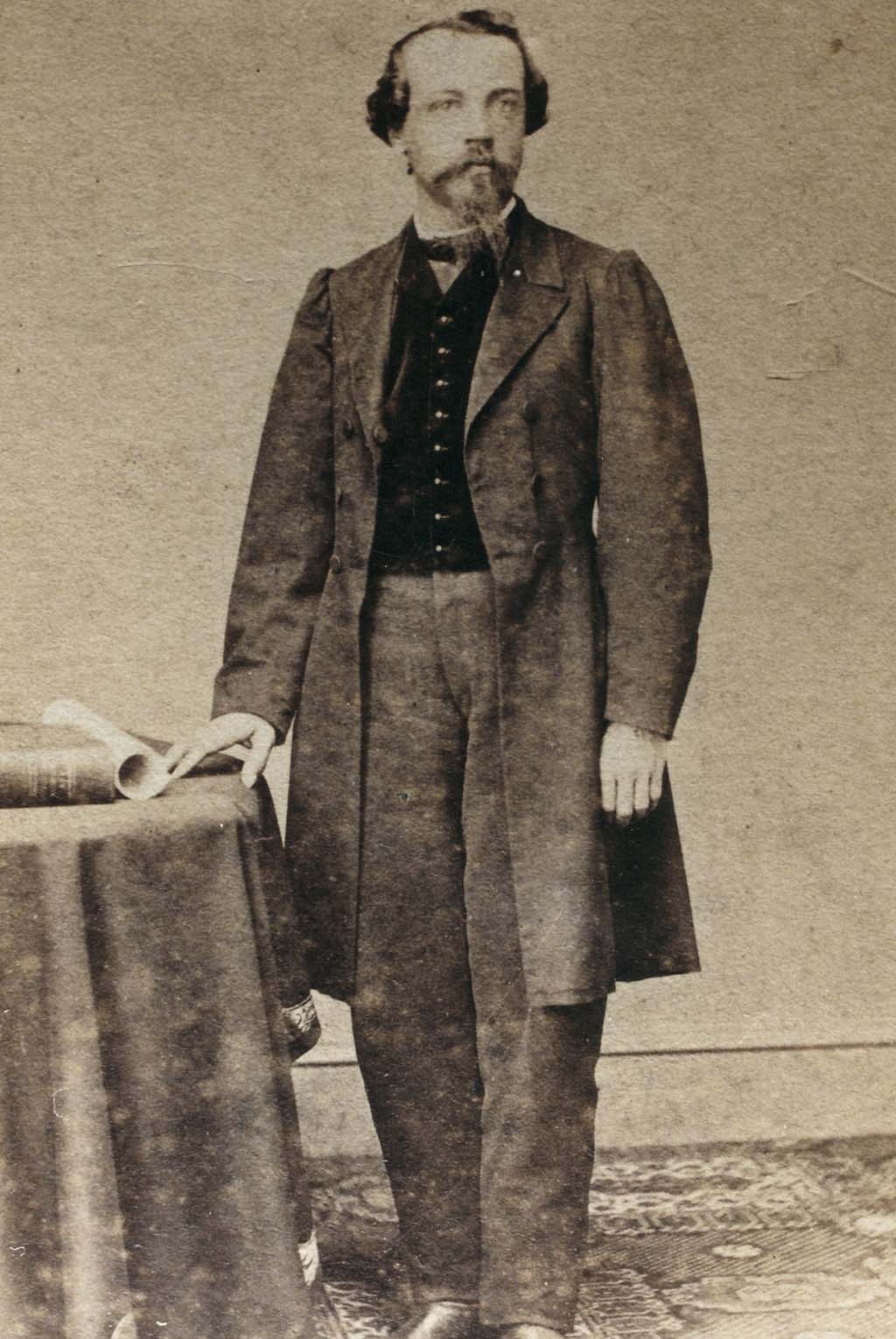
Forgotten Americans: William Wirt


The Constitution established the structure of the federal government, but the implementation and development was a different matter.  The Office of Attorney General was created by Congress on September 24, 1789 in the Judiciary Act (the Department of Justice was not established until 1870). The AG's role was to advise the President and represent the United States in cases at the Supreme Court.  Wirt would transform the Office of Attorney General.

William, born in 1772, was the youngest son of Swiss and German immigrants who ran a tavern in Maryland.  In a pattern common in those times, by the time the young boy was eight he was an orphan and he got some schooling by assistance from an uncle and family friend.  He took up the study of law as a teenager, moving to Virginia where he was admitted to the bar, shortly thereafter marrying the daughter of Thomas Jefferson's physician and moving to the Charlottesville area where he also became acquainted with James Monroe.

After his wife's death in 1799, William moved to Richmond, first coming to prominence in 1800 by defending the notorious James Callendar, a Jefferson supporter (and later critic) against prosecution under the Alien and Sedition Act.  Marrying for a second time in 1802, five years later President Jefferson asked Wirt to serve a prosecutor in former Vice-President Aaron Burr's trial for treason.

In 1817, Wirt was nominated by President Monroe as Attorney General and he was confirmed by the Senate.  The Office he inherited was nothing like it is today.  In a Spring 2001 article from Duke Law School, H Jefferson Powell noted in "William Wirt & the Invention of the Public Lawyer":

Wirt stood at the intersection of a number of cross-cutting forces in the development of American law and American society more generally.

“[W]hen I had the honor of receiving the appointment,” he wrote the chairman of the House Judiciary Committee a few months later, “I asked for the documents belonging to the Office … but my inquiries resulted in the discovery that there  was not to be found … any trace of a pen indicating, in the slightest manner, any one act of advice or opinion which had been given by any one of my predecessors, from the first foundation of the federal government to the moment of my inquiry.”

It was under Wirt that the Office of the AG began to systematically organize opinions and briefs for future reference and he regularized the representation provided by the office.  The prestige of the AG rose in concordance with these improvements.

Powell also notes "Wirt's mature view of the role of law in American society" as;

. . . encapsulated in a letter he wrote to President Monroe in 1823, urging that the Republican Monroe consider appointing the distinguished New York judge – and well-known Federalist – James Kent to the United States Supreme Court. Wirt conceded that Kent’s appointment “would, at first, produce considerable excitement” (by which he plainly meant protest by Republicans offended at the choice of a Federalist) but argued that the short-term cost was far outweighed by the long-term advantage to the nation of appointing a judge of Kent’s stature and character to the high Court. “The Constitution is the public property of the United States,” Wirt reminded Monroe, not the instrument of a political faction, and in addressing issues of constitutional moment “a President of the United States should look to the good of the whole country, to their great and permanent interests.” This concern for the law as a means
of expressing and safeguarding political community pervades Wirt’s legal opinions as Attorney General as well and distinguishes his understanding of public law from the more adversarial views that seem predominant today. 

Along with his reforms of the AG's Office, Wirt participated in most of the major Supreme Court cases of his era including McCulloch v Maryland, Dartmouth College v Woodward, and Gibbons v Ogden.  In 1824, Wirt issued an opinion holding the South Carolina Negro Seaman Act of 1822 to be unconstitutional as an infringement on the federal government's exclusive power to regulate interstate and foreign commerce.  The South Carolina statute had been enacted in the wake of Denmark Vesey's plan to initiate a slave uprising (there is some debate as to what extent this plan actually existed).  It required that any free black seaman on a ship coming into a South Carolina port was to be imprisoned until such time as the ship left port.  Despite Wirt's opinion and federal court rulings against the act, South Carolina continued to enforce it until the Civil War.

Wirt is recorded as owning several slaves at various points in his life.  There is an intriguing passage in John P Kennedy's 1850 book, Memoirs of the Life of William Wirt, Attorney General of the United States: 

"To test the theory that there was no natural inferiority of intellect in the negro, compared with the white man, he had one of his own servant boys and one of his nephews both educated exactly alike. I believe, however, that neither of them did much credit to their teacher." 

The Attorney General's reputation as an orator, in an age when that skill was much prized, was such that the House of Representatives selected him to give the principal address at a service in memory of John Adams and Thomas Jefferson shortly after they both passed on July 4, 1826. 

After leaving office, Wirt's last great legal battle was representing Cherokee Nation against federal and state attempts to remove them from lands granted to the tribe by treaty with arguments in state and federal courts, including the Supreme Court.  From the Wikipedia summary: 

. . . before the US Supreme Court Wirt argued, in Cherokee Nation v Georgia, that the Cherokee Nation was "a foreign nation in the sense of our constitution and law" and was therefore not subject to Georgia's jurisdiction. Wirt asked the Supreme Court to void all Georgia laws extended over Cherokee territory on the grounds that they violated the US Constitution, United States–Cherokee treaties, and United States intercourse laws. Although the Court determined that it did not have original jurisdiction in this case, the Court held open the possibility that it yet might rule in favor of the Cherokee. Wirt therefore waited for a test case to again resolve the constitutionality of the laws of Georgia. On March 1, 1831, Georgia passed a law aimed at evicting missionaries, who were perceived as encouraging the Cherokee resistance to removal from Cherokee lands. TheAmerican Board of Commissioners for Foreign Missions, an interdenominational missionary organization, hired Wirt to challenge the new law. On March 3, 1832, the decision in Worcester v Georgia authored by Chief Justice Marshall, held that the Cherokee Nation was "a distinct community, occupying its own territory, with boundaries accurately described, in which the laws of Georgia can have no force, and which the citizens of Georgia have no right to enter but with the assent of the Cherokees themselves or in conformity with treaties and with the acts of Congress".  
Despite the legal victories, the Jackson Administration and State of Georgia prevailed as a practical matter. 

Powell's article reflects on the toll Wirt's years as AG took on him as well as the fact that today, unlike the 19th century, he remains little remembered despite his contributions to the young Republic:

Wirt’s preoccupation with his career subjected his marriage and his family to extraordinary stress: the Five years he lived after leaving Office were largely devoted to what was in effect a reconciliation with Elizabeth. Furthermore . . .  the fame for which Wirt sacrificed so much time and energy proved ephemeral: despite his historical significance, Wirt has no place in twenty-first-century Americans’ general picture of our past, and scarcely any greater prominence among contemporary lawyers. That is a matter for regret, and not merely because we know that it would disappoint Wirt: both in his life and through his legal views Wirt helped to create the legal universe in which we still live.

He was an affectionate, empathetic and sociable person who prized the creation and maintenance of warm human relationships. Wirt’s inability to undertake sustained political activity was in large measure due to his deep dislike of personal conflict and animosity. At the bar, in contrast, Wirt usually found it possible to remain on friendly terms even with lawyers against whom he litigated.

One of the things Wirt left behind when he took on the AG role was a thriving literary career.  Where in legal matters, Wirt prized dispassionate objectively, he was considered a passionate and engaging writer.  His works include Letters of the British Spy (1803), The Old Bachelor (1812), and Sketches of the Life and Character of Patrick Henry (1817).  This last volume constitutes much of what we know about the text of Henry's speeches, no record of which was kept during his lifetime.  Wirt interviewed those still alive who knew Henry and witnessed his speeches, through which Wirt attempted to reconstruct the text.  His efforts remain controversial among historians. 

Saturday, September 13, 2025

Man Down

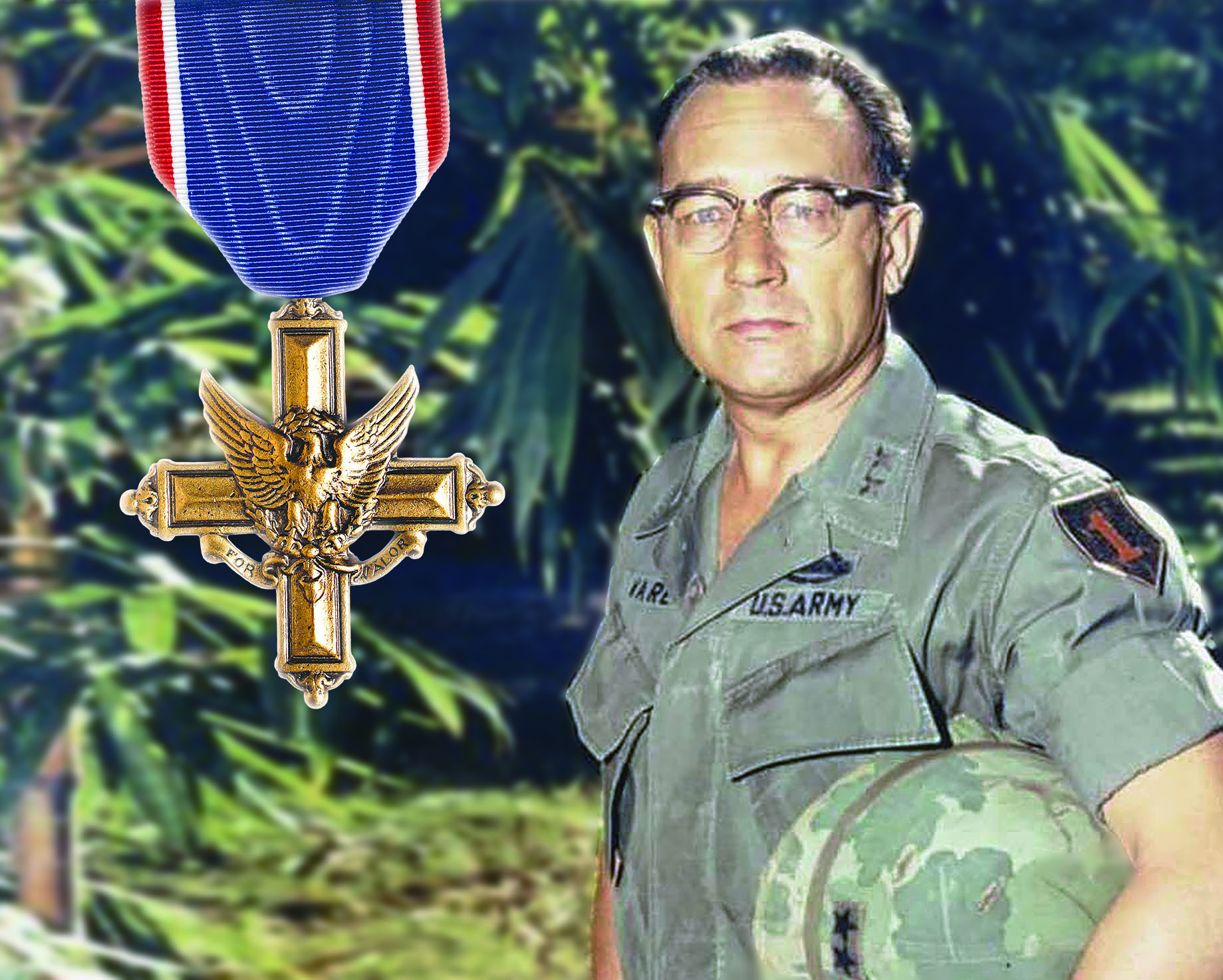
Fighting General Killed in Action: Keith Ware

On September 13, 1968, Major General Keith Ware, commander of the 1st Infantry Division, was killed at Loc Ninh, Vietnam when his helicopter was shot down. Along with Ware, his three command staff and the four-man crew also died. Ware, 52, was the highest ranking American officer to die during the Vietnam War.

Ware was the first WW2 draftee to become an Army general and received the Medal of Honor in recognition of his actions in 1944. 

The 25-year old Ware was drafted in July 1941.  Sent to Officer Candidate School he initially served as a squad leader, seeing action in the 1942-3 Tunisian campaign, the July 1943 invasion of Sicily, the January 1944 assault at Anzio, and in the August 1944 landings in southern France.

His leadership qualities were quickly recognized and he was promoted several times, eventually commanding the 1st Battalion, 15th Infantry Regiment, 3rd Division.  He received the Medal of Honor for his actions on December 26, 1944 at Sigolsheim, a small town, near Colmar in the Alsace region of France.  The most decorated American soldier in the war, Audie Murphy, served under Ware, receiving the Medal of Honor for his actions in January 1945.

Ware decided to stay in the military after the war, eventually rising to be assistant commander of the 2nd Armored Division and then becoming, in the mid-60s, the army's Chief of Information.  He volunteered for service in Vietnam, arriving in early 1968, just in time to face the Tet Offensive. 

According to an article in HistoryNet, at the Battle of Loc Ninh, though Ware knew the North Vietnamese Army "had anti-aircraft weapons on the ground but ordered his helicopter to fly at low altitude despite the risk to allow him to pinpoint enemy positions and more effectively coordinate the battle".

Medal of Honor citation:

Commanding the 1st Battalion, 15th Infantry, attacking a strongly held enemy position on a hill near Sigolsheim, France, on 26 December 1944, found that 1 of his assault companies had been stopped and forced to dig in by a concentration of enemy artillery, mortar, and machinegun fire. The company had suffered casualties in attempting to take the hill. Realizing that his men must be inspired to new courage, Lt. Col. Ware went forward 150 yards beyond the most forward elements of his command, and for 2 hours reconnoitered the enemy positions, deliberately drawing fire upon himself which caused the enemy to disclose his dispositions. Returning to his company, he armed himself with an automatic rifle and boldly advanced upon the enemy, followed by 2 officers, 9 enlisted men, and a tank. Approaching an enemy machinegun, Lt. Col. Ware shot 2 German riflemen and fired tracers into the emplacement, indicating its position to his tank, which promptly knocked the gun out of action. Lt. Col. Ware turned his attention to a second machinegun, killing 2 of its supporting riflemen and forcing the others to surrender. The tank destroyed the gun. Having expended the ammunition for the automatic rifle, Lt. Col. Ware took up an M-1 rifle, killed a German rifleman, and fired upon a third machinegun 50 yards away. His tank silenced the gun. Upon his approach to a fourth machinegun, its supporting riflemen surrendered and his tank disposed of the gun. During this action Lt. Col. Ware's small assault group was fully engaged in attacking enemy positions that were not receiving his direct and personal attention. Five of his party of 11 were casualties and Lt. Col. Ware was wounded but refused medical attention until this important hill position was cleared of the enemy and securely occupied by his command.

Keith Lincoln Ware (1915-1968) - Find a Grave Memorial 

Thursday, July 17, 2025

Cool

On this date in 1902, Willis Carrier completed the drawings for what became the world's first modern air conditioning system.  Carrier, born in 1876 in upstate New York and a graduate of Cornell, was working at the Buffalo Forge Company as a research engineer.

The Sackett-Wilhelms Lithographic & Publishing Company in Brooklyn, a Buffalo Forge customer, was having paper quality problems due to high summer humidity.  Carrier's device was designed to address this problem, though it was not until January 1906 that he was granted a U.S. patent for an Apparatus for Treating Air.

In 1915, Carrier and six other engineers formed the Carrier Engineering Corporation.  Today the Carrier business is part of United Technologies.

Having been a resident of south Florida for eight years and residing in Arizona since 2017, I give my heartfelt thanks to Mr Carrier for making these places habitable.

For a more culturally oriented discussion of cool, read Cool And Uncool. 

Sunday, September 18, 2022

Forgotten Americans: Revisiting Patrick Cleburne

In the Forgotten American series, I've profiled people who were never publicly prominent or were prominent once but now are mostly unknown except perhaps to niche audiences.  In each instance they made valuable contributions to our country.

Those profiled:

Nathan B Abbott & Edmund De Smedt
E Arnold Bertonneau
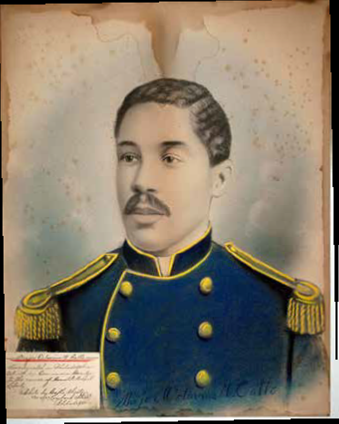
Octavius Catto
John Dickinson
Henry Lafayette Dodge
George Sears Greene
Gail Halvorsen
Elbert Hubbard
Johnnie Hutchins
Reverdy Johnson
John Laurens
Ralph Lazo
Helen Dortch Longstreet
Cumberland Posey Jr & Sr 
Otto Frederick Rohwedder
Elihu Root
Bayard Rustin
Juan Seguin
Henry Waskow
One of the first pieces in the series was about Patrick Cleburne, a name well-known to Civil War buffs like myself, but obscure to most Americans,  While the Irish native was considered the best Confederate division commander west of the Appalachians, I wrote about him because of his remarkable proposal, made in January 1864, to free all slaves in the Confederacy.  Recently, I got around to reading Craig Symonds excellent 1997 biography of Cleburne, The Stonewall of the West and doing some additional research on the man and the background to his proposal, so decided to update my earlier recounting of his story.
 
------------------------------------------------------------------------
 
For many years, ever since the agitation of the subject of slavery commenced, the negro has been dreaming of freedom, and his vivid imagination has surrounded that condition with so many gratifications that it has become the paradise of his hopes.  To attain it he will tempt dangers and difficulties not exceeded by the bravest soldier in the field.  The hope of freedom is perhaps the only moral incentive that can be applied to him in his present condition.  It would be preposterous then to expect him to fight against it with any degree of enthusiasm, therefore we must bind him to our cause by no doubtful bonds; we must leave no possible loop-hole for treachery to creep in. The slaves are dangerous now, but armed, trained, and collected in an army they would be a thousand fold more dangerous; therefore when we make soldiers of them we must make free men of them beyond all question, and thus enlist their sympathies also.  We can do this more effectually than the North can now do, for we can give the negro not only his own freedom, but that of his wife and child, and can secure it to him in his old home.  To do this, we must immediately make his marriage and parental relations sacred in the eyes of the law and forbid their sale.  The past legislation of the South concedes that a large free middle class of negro blood, between the master and slave, must sooner or later destroy the institution.  If, then, we touch the institution at all, we would do best to make the most of it, and by emancipating the whole race upon reasonable terms, and within such reasonable time as will prepare both races for the change, secure to ourselves all the advantages, and to our enemies all the disadvantages that can arise, both at home and abroad, from such a sacrifice.
- General Patrick Cleburne, Army of the Tennessee, January 2, 1864
An earlier installment of Forgotten Americans told the story of John Laurens, a South Carolinian who proposed freeing slaves who enlisted in the Continental Army to fight the British, a proposal rejected three times by his state legislature.

Eighty years later, another Southerner, this time from Arkansas, made an even more radical wartime proposal to emancipate every slave in the Confederacy and it came from Patrick Cleburne, the man considered the best division commander in the Confederacy outside of the Army of Northern Virginia.  The proposal, and its reception, illustrated the chasm that existed between what Cleburne thought the Confederacy was fighting for and what, in reality, it was actually fighting for.
Patrick Cleburne - Wikipedia(Cleburne)

Pat Cleburne was an Irish Protestant immigrant to the U.S.  Born in 1828, he enlisted in the British Army, serving as a corporal in the 41st Regiment.  In 1849 he purchased his release from the army and came to America with his two brothers and sisters, ending up in Helena, Arkansas where he eventually became a lawyer and co-owner of a local newspaper.  When secession came, Cleburne, who was never a slave owner, went with his adoptive state believing wholeheartedly in states rights and that the North was trying to assert its sectional superiority, threatening the liberties of Southerners (one of his brothers who settled in Ohio, joined the Union Army).  Perhaps most of all, he was understandably grateful to a community that had accepted him and given him a chance to succeed.

Well regarded by his neighbors and respected for his military experience he was elected Captain of a local militia company and then appointed Colonel of the 15th Arkansas Regiment.  By March 1862 he was a Brigadier-General in what later became the Army of the Tennessee, the Confederate force charged with defense of the expanse of the Confederacy running from the Appalachian Mountains to the Mississippi River.  Over the next two years Cleburne led a brigade and then a division in battle after battle; Shiloh, Perryville, Stones River, Chickamauga, and Missionary Ridge among them.  In every battle he gained laurels for the performance of his troops as well as for his personal bravery, resulting in his nickname of "Stonewall of the West" in homage to Stonewall Jackson and to praise from Robert E Lee as "a meteor shining from a clouded sky".

The problem was that in most of the battles the Army of the Tennessee lost despite the efforts of Cleburne and his troops.  For some perspective, think about the American League in the 1950s and the relative status of the New York Yankees and the Kansas City Athletics; one was the perennial world champion, the other a doormat and derogatorily considered the "farm team" of the Yankees.  The relationship between the Army of Northern Virginia and the Army of the Tennessee was similar.  Lee's army got the glory, often defeating and always, till the end, at least stalemating the Unionists, while the western army continually took its licks at the hands of a series of Union generals, including U.S. Grant.

Nothing demonstrated both Cleburne's abilities and the incompetence of the leadership of the Army of the Tennessee than the Battle of Missionary Ridge on November 25, 1863.  The Confederates were besieging the Union Army at Chattanooga.  U.S. Grant had devised a plan to lift the siege which involved General Sherman leading an assault on the right of the Confederate line along Tunnel Hill, so-named because of the  railroad tunnel running through it.  Meanwhile a diversionary attack under General Thomas was to be launched against the center of the Confederate line along the highest part of Missionary Ridge.

Sherman's attack failed despite a 4:1 superiority in numbers due to mishandling of his forces and Cleburne's brilliant leadership in opposing him.  Meanwhile, under circumstances that still remain controversial today, General Thomas' troops ascended Missionary Ridge against the main part of the Army of the Tennessee which collapsed, fleeing the scene, and only being saved from total destruction by Cleburne's rearguard action.

By the end of 1863 it was clear, at least to Patrick Cleburne, that the Confederacy was in grave danger of collapse and was simply running out of soldiers (see Civil War Demographics for more background).  He'd been talking to a few trusted people about the possibility of freeing the slaves since the spring of 1863, but it was only after the disaster at Missionary Ridge that he finally sat down and worked diligently to proceed a lengthy written proposal.

Cleburne believed that slavery was not the prime reason for secession (for how mistaken he was see Forever Free: Why?).  Though he may have been naive in this belief, he clearly gave much thought to laying out a sophisticated argument in support of his proposal which he set forth in a letter that he read to the assembled leadership of the Army of the Tennessee, including its new commander, Joseph E Johnston, on January 2, 1864 in its winter camp in northern Georgia.  The proposal was not based on sympathy for the plight of slaves, but rather as a practical solution to the manpower problem faced by the Confederacy.  It follows a train of logic to its conclusions, resembling a lawyer's brief sans legal citations. THC urges you to read the entire letter.

He had also taken care to have the letter co-signed by thirteen fellow officers, including three generals and the commanders of regiments from Arkansas, Mississippi, Alabama, Tennessee and Texas.

Cleburne started by summarizing the dire circumstances:

Through some lack in our system the fruits of our struggles and sacrifices have invariably slipped away from us and left us nothing but long lists of dead and mangled.  Instead of standing defiantly on the borders of our territory or harassing those of the enemy, we are hemmed in to-day into less than two-thirds of it, and still the enemy menacingly confronts us at every point with superior forces.
 After spelling out the consequences of defeat he went on to say:

In touching the third cause, the fact that slavery has become a military weakness, we may rouse prejudice and passion, but the time has come when it would be madness not to look at our danger from every point of view, and to probe it to the bottom.  
In the final part of his proposal Cleburne raised arguments that, intended or not, called out its recipients to come to grips with what they were really fighting for:

As between the loss of independence and the loss of slavery, we assume that every patriot will freely give up the latter — give up the negro slave rather than be a slave himself.  If we are correct in this assumption it only remains to show how this great national sacrifice is, in all human probabilities, to change the current of success and sweep the invader from our country. 
It would remove forever all selfish taint from our cause and place independence above every question of property.  The very magnitude of the sacrifice itself, such as no nation has ever voluntarily made before, would appal [sic] our enemies, destroy his spirit and his finances, and fill our hearts with a pride and singleness of purpose which would clothe us with new strength in battle. 
It is said slavery is all we are fighting for, and if we give it up we give up all.  Even if this were true, which we deny, slavery is not all our enemies are fighting for.  It is merely the pretense to establish sectional superiority and a more centralized form of government, and to deprive us of our rights and liberties.  
In addition to the audacity of the substance of his proposal, in the process Cleburne also challenged two tenets of white Southern belief about slavery; that the slaves were happy in their relationship with their masters and were incapable of demonstrating courage.  Cleburne stated directly that slaves were dissatisfied with their status, capable of being brave, courageous soldiers if motivated by freedom and imbued with moral agency:

For many years, ever since the agitation of the subject of slavery commenced, the negro has been dreaming of freedom, and his vivid imagination has surrounded that condition with so many gratifications that it has become the paradise of his hopes.  To attain it he will tempt dangers and difficulties not exceeded by the bravest soldier in the field.  The hope of freedom is perhaps the only moral incentive that can be applied to him in his present condition.  

Most threateningly he advocated not just freeing of those slaves who fought for the Confederacy, but also their families and, carrying his proposal to its logical conclusion, all slaves held under any circumstances.

After Cleburne finished reading the letter, there is no direct account of the reaction of those hearing the proposal for the first time but privately the reaction was different, as Symonds describes. General William B. Bate called it “infamous”, “hideous”, and “objectionable,”  and implied that Cleburne was an abolitionist. General James Patton Anderson said that it was “monstrous” and “revolting to Southern sentiment, Southern Pride, and Southern honor.’ General W.H.T. Walker asserted the proposal was nothing less than treason.

General Clement Stevens, speaking to an associate, said that while Cleburne was a "skilled army officer, and true to the Southern cause", he did not have "a proper conception of the Negro, he being foreign born and reared", adding that "if slavery is to be abolished then I take no more interest in our fight.  The justification of slavery in the South is the inferiority of the Negro.  If we make him a soldier, we concede the whole question."

Symonds describes Cleburne as a "true believer" that the South was fighting for liberty and if forced to chose between it and freeing the slaves, it would free the slaves, so the general was "astonished" at the negative reception to his proposal.  Symonds attributes this to his Irish background and relative newness to America.  He points out that Cleburne failed to understand that "many Southerners viewed the loss of slavery as virtually synonymous with the loss of their own liberty", going on to observe:

. . . his misunderstanding of the South's emotional and psychological commitment to the peculiar institution marked him unmistakably as an outsider.  For all his effort to become fully integrated into the culture of his adopted land, he never fully grasped the complicated role of slavery in Southern society.

Though General Johnson forbade any further discussion, Walker decided to send the proposal to Jefferson Davis, feeling it his duty as a patriot to make the President aware of this treasonous document. Walker asked Cleburne for a copy and he agreed to provide one because he wanted his proposal heard in Richmond.  The copy Cleburne provided had one difference from the original, omitting the names of the officers who supported it because Cleburne did not want to expose them to any risk.  After President Davis reviewed the proposal, he wrote General Johnston that there must be no further discussion of the proposal and ordered all copies collected and destroyed, including Cleburne's, which was done, though the general continued to speak about it to select people for at least a few months.

Cleburne suffered no direct repercussions in the aftermath, which can be attributed to his reputation as an outstanding commander, with no one doubting his bravery or commitment to the Confederacy.  Indeed, President Davis' suppression order, conveyed through Secretary of War Seddon stated, "no doubt or mistrust is for a moment entertained of the patriotic intents of the gallant author of the memorial".  Unlike many other general officers, he was not a self-promoter, did not engage in personal feuds, and did not spend time denigrating others in an effort to obtain promotion.  Nor did he, with the exception of the January 1864 proposal, ever seek out controversy, so he was well-respected by his peers.  And by all accounts, the soldiers in his division loved him.

Patrick Cleburne continued to loyally lead his division, seeing extensive action during the battles around Atlanta from July into early September 1864.  After abandoning Atlanta, the army began advancing north into Tennessee.  On November 30, 1864, General John Bell Hood ordered the Army of the Tennessee to make a frontal assault over open ground against an entrenched Union force at Franklin.  Hood insisted on the attack despite the objections of several of his officers, among them Cleburne.  The attack involved a larger force than that in Pickett's Charge across a much longer stretch of open ground and, unlike  Gettysburg, unsupported by artillery.  When one of Cleburne's commanders (who survived) remarked to the General that the charge would be suicidal, Cleburne responded "if we are to die, let us die like men". It was a disaster.  More than six thousand Confederate soldiers were killed, wounded or captured, and six generals killed, including Patrick Cleburne, whose horse was killed under him, and was last seen advancing on foot towards the Union line waving his sword and urging his men on.

Six months later, with the war over, Cleburne dead, the few knowledgeable about his proposal keeping their mouths shut, and all copies thought to be destroyed, it looked like no one would ever know anything more about it.  But it turned out one copy survived.

Cleburne's chief of staff as division commander was Major Calhoun Benham.  Born in Ohio in 1824, the son of Joseph Benham, then the U.S. Attorney for the District of Ohio, Calhoun moved to Kentucky as a young adult, and then joined the U.S. army for the Mexican War, where he served with distinction.  In 1849 he joined many other young Americans in going to California, settling in San Francisco.  He quickly became prominent in state politics, during the mid-1850s serving as U.S. Attorney for the District of California.  Benham was a vocal proponent of slavery and became the friend and ally of David Terry, Chief Justice of the California Supreme Court, also an ardent pro-slavery politician.  Terry lost his bid to be renominated Chief Justice, blaming it on U.S. Senator David Broderick, who also happened to be an abolitionist and had agitated against the party's pro-slavery wing.  Amid mutual accusations and slanders the two agreed to a duel which occurred on September 13, 1859, at which Terry shot and killed the Senator; there are also accusations that Terry rigged the pistols used in the duel, at which Calhoun Benham served as Terry's second.  When the Civil War began, Benham left California to offer his services to the Confederacy.  For Terry, the duel was not his last violent incident.  In 1889, Terry assaulted U.S. Supreme Court Justice Stephen Field, who years before had succeeded Terry as Chief Justice in California and with whom Terry had been feuding, the incident ending when Field's bodyguard shot Terry dead.

Benham loyally served Cleburne and the two got along well, but Calhoun was appalled when Cleburne asked him to read a draft of his proposal to free the slaves. After failing to persuade Cleburne to shelve the proposal, he asked for a copy so he could prepare a rebuttal.  Cleburne, desiring a full and open discussion, agreed to do so.  Benham received a copy and prepared a strong, but respectful, response, which he read at the January 1864 meeting.

After the fall of Atlanta, a discouraged and despondent Benham left the army to go to Mexico.  With the end of the war, Benham returned to San Francisco.  When he died in 1884, the copy of Cleburne's proposal was found in his belongings.  Several years later it was forwarded to a Washington DC office which was collecting Confederate documents and in the 1890s it was published for the first time and that is why the text of the proposal was saved for us.


John Laurens and Patrick Cleburne were both brave men.  They believed in leading their troops from the front and some characterized their behavior as reckless.  Both died leading their troops in the waning days of a war.  Laurens' proposal was based on moral sentiments, while Cleburne's motive was pragmatic, but perhaps their willingness to rethink slavery and the courage to make proposals that seemed reckless to many of their contemporaries stemmed from the same personal characteristics exhibited in their battlefield behavior.  While one fought to make the declared independence of the new United States a reality, and the other fought to dismember it, both deserve to be remembered. 

Thursday, August 25, 2022

The Petition

(Arnold Bertonneau)

On the afternoon of March 3, 1864, two Creole mixed-race Louisianians from New Orleans, Jean Baptiste Roudanez and E Arnold Bertonneau, entered the White House to meet with President Abraham Lincoln.  Their purpose was to present a petition seeking enfranchisement of "all the citizens of Louisiana of African descent, born free before the rebellion".  Both the 46 year old Roudanez and 27 year old Bertonneau had French fathers and African mothers.

Thirteen years later, Bertonneau filed the first federal lawsuit seeking desegregation of public schools (Bertonneau v School District).  The circuit court's ruling dismissing the case was later cited by the Supreme Court in support of its decision in Plessy v Ferguson (1896).

In 1912 when Bertonneau, then living in California, died, his death certificate listed him as white. (1)

Bertonneau's life encapsulates the tortured nature of how race was handled in his lifetime, and the crushing disappointment of his hopes, and those of the black population, during the post Civil War era.

Bertonneau came to my attention because he appears in two books I've recently read; A House Built By Slaves: African American Visitors to the Lincoln White House by Jonathan W White, and The Black Man's President: Abraham Lincoln, African Americans, & the Pursuit of Racial Equality by Michael Burlingame (2).  Both authors are noted scholars of the era; White is a professor of American Studies at Christopher Newport University, while Burlingame is Chair in Lincoln Studies at the University of Illinois.

The topic of both books is Lincoln's relationships with African Americans, with a focus on the White House years, though Burlingame spends more time on Lincoln's experiences in Illinois where he had free black neighbors.  While I knew about some of these events, such as Lincoln's three meetings with Frederick Douglass, and his controversial August 1862 meeting with black ministers about colonization, the sheer number and variety of encounters between the president and blacks during his time in the White House was surprising to me.(3)  It truly was revolutionary, a revolution ended in the wreckage of Reconstruction.

Prior to Lincoln, we know of only two occasions when black Americans were invited to the White House.  The first, in 1812, was when James Madison and Secretary of the Treasury, Albert Gallatin, met with Paul Cuffe, a wealthy black merchant, ship builder, and fascinating figure in his own right, at which Cuffe successfully appealed to the president to overrule a customs decision to seize cargo on one of his vessels.  The second, John Tyler's invitation to minister Daniel Payne to preside at a funeral for the president's body servant.  Twenty years later, Payne had the opportunity to meet with Lincoln, later writing that he:

 "was a perfect contrast with President Tyler . . . President Lincoln received and conversed with me as though I had been one of his intimate acquaintances or one of his friendly neighbors".

There was also one other noteworthy interaction with an American president, though it took place in Philadelphia, the year before the White House was completed.  In 1799, a black diplomat from Santo Domingo dined with John Adams and Secretary of State Timothy Pickering.

One of my favorite incidents, occurred on July 4, 1864.  In late June a delegation of black Catholics met with Lincoln.  Barred from the sanctuary of the Catholic church in the city, and their children barred from public school, they sought to raise funds for a chapel and school, for which they sought the President's approval to use the White House grounds for a fund-raising picnic.  Lincoln granted their request, apparently the first time any group had used the White House grounds for  private fund-raising.  The picnic was a great success, in attendance and financially, and a month later a black Baptist church held a similar event at the White House.  These events triggered horrified reactions in the Democratic press.

Reading about Lincoln over the years, I've become more aware of his flaws and his mistakes.  Yet, even with that, my appreciation for his greatness and humanity has only grown, as well as my appreciation for how good a politician he was.  

While the books shed much light on Lincoln, they also reveal the world of free blacks as it existed in mid-19th century America, what they thought about Lincoln at the time, and the conditions and limits under which they had to navigate within white America.  Learning about their stories was what led me to do more reading on E Arnold Bertonneau.


Bertonneau and Roudanez sprang from a unique American community, the Creoles of southern Louisiana and, more specifically, the Creoles of Color.  Creoles were the descendants of French settlers prior to the American acquisition in 1803, as well as the French and mulattoes fleeing the turmoil in Santo Domingo and the Haitian Revolution in the early 1800s.  Within the category of Creoles were a significant number of mixed race persons who, in contrast to the rest of the country, were free, educated, and played a role in the general society of New Orleans.  In fact, many of these Creoles played a prominent role in the region, often large property owners, merchants, and sometimes owning slaves.  By the beginning of the Civil War there were 11,000 free blacks in Louisiana (predominantly Creole) and, in order to maintain their position in an increasingly race-conscious South, where the prior three decades had seen increasing restrictions not just on slaves, but also on free blacks, they emphasized their difference from other Africans.  Burlingame quotes an 1864 article in the New Orleans Tribune, the paper of the Creoles of color, to the effect:

". . . while we are of the same race as the unfortunate sons of Africa who have trembled until now under the bondage of a cruel and brutalizing slavery, one cannot, without being unfair, confuse the newly freed people with our intelligent population which, by its industry and education, has become as useful to society and the country as any other class of citizens."

This was also reflected in the views of whites.  In 1859, the New Orleans Picayune observed in an editorial:

"Our free colored population form a distinct class from those elsewhere in the United States.  Far from being antipathetic to the whites, they have followed in their footsteps, and progressed with them, with a commendable spirit of emulation, in the various branches of industry most adapted to their sphere.  Some of our best mechanics and artisans are to be found among the free colored men.  They form the great majority of our regular, settled masons, bricklayers, builders, carpenters, tailors, shoemakers . . . whilst we count among them in no small numbers, excellent musicians, jewelers, goldsmiths, tradesmen and merchants."

When the war began, almost 800 free blacks in New Orleans volunteered for the Native Guards, including Bertonneau who was appointed  captain, forming a regiment to protect the city from federal forces.  Bertonneau later wrote of this action, "Without arms and ammunition, or any means of self-defense, the condition and position of our people were extremely paralyzed; could we have adopted a better policy?".  Colored Creoles had been members of the Louisiana militia in the past, with several hundred fighting in the Battle of New Orleans in 1815, of whom twenty eight survivors were signatories to the petition presented to Lincoln in March 1864.

At the time, Bertonneau, then 24 and very light skinned with blue eyes, was already a prominent member of the Creole community, a prosperous wine merchant, member of La Societe d'Economic d'Assistance Mutuelle, and supporter of La Societe Catholique pour L'Institution des Orphelins dan L'Indigence (known also as the Couvent School, the first community school dedicated to education of black children in the Deep South).

Although Confederate authorities allowed the Native Guards to drill, they were not provided with arms or uniforms and so did not participate in the defense of New Orleans when the Federals successfully attacked in April 1862.  After the city's capture Union general, Benjamin Butler, urged the Native Guards to join the Union Army, which many did, along with escaped slaves, eventually forming three regiments.  Bertonneau was among these, being reappointed as a captain.

In early 1863, after General Nathaniel Banks replaced Butler, Banks decided to weed out black officers and Bertonneau resigned in protest stating:

"When I joined the Army I thought that I was fighting for the same cause, wishing only the success of my country would suffice to alter a prejudice which had existed.  But I regret to say that five months experience has proved the contrary."

In mid-summer 1863, when a Confederate attack on New Orleans seemed possible, Bertonneau reenlisted for a sixty day stint.

In the latter part of 1863 President Lincoln began putting pressure on Generals Banks and Shepley (the military governor of Louisiana) to hold elections for civilian officials and to convene a constitutional convention, in order to begin the process of bringing the state back into the Union.  Shepley responded by calling for elections and enfranchising white Union soldiers.  The colored Creole community sent petitions to Shepley and Banks asking for the right to vote, but neither responded.  It was decided to appeal directly to President Lincoln.

In January 1864, Roudanez and Bertonneau drafted the petition requesting enfranchisement for all of African descent, born free before the Civil War.  The petition was eventually signed by about 1,000 free blacks.

Accompanied by Pennsylvania Congressman William D Kelly, one of the founders of the Republican Party, the two met with the President on March 3, and presented their petition. (4)  The meeting is described by all sources as cordial.  

Author White summarizes Lincoln's reaction at the March 3 meeting:

If giving black men the right to vote became "necessary to close the war, he would not hesitate," he said, for he saw "no reason why intelligent black men should not vote".  But black suffrage was "not a military question" and he believed it had to be handled by the constitutional convention in Louisiana.  As president, Lincoln said that he "did nothing in matters of this kind upon moral grounds, but solely upon political necessities."  Since the petition based its claim "solely on moral grounds" it "did not furnish him with any inducement to accede to their wishes."

According to one observer of the meeting, Lincoln said "I regret, gentlemen, that you are not able to secure all your rights, and that circumstances will not permit the government to confer them upon you".

The president then went out to suggest that the petition be amended, and then sat down with his visitors to write out the suggested modifications, shocking some of the white observers in the room.

It is not known what changes the president suggested, but Roudanez and Bertonneau rewrote the petition over the next few days to include poor, uneducated, and newly freed blacks and it was resubmitted to Lincoln.  Ultimately, the change was not just tactical, as we can follow Bertonneau's own thinking and the realization that the fate of the free Creoles of color and those of the newly freed former slaves were linked.

The meeting apparently encouraged Lincoln to take an additional step.  On March 13, 1864 he wrote a letter congratulating Michael Hahn, who had just been elected governor of Louisiana.  It was brief, but pointed:

I congratulate you on having fixed your name in history as the first-free-state Governor of Louisiana. Now you are about to have a Convention which, among other things, will probably define the elective franchise. I barely suggest for your private consideration, whether some of the colored people may not be let in---as, for instance, the very intelligent, and especially those who have fought gallantly in our ranks. They would probably help, in some trying time to come, to keep the jewel of liberty within the family of freedom. But this is only a suggestion, not to the public, but to you alone.
Yours truly
A. LINCOLN
 After Lincoln's letter became public, journalist Whitelaw Reid (5) noted it was written at a time:
when negro suffrage was a thing to speak of in bated breath, and with many of shudder.  Even then, in advance of almost every leading man of the party which supported him, Mr Lincoln was found inquiring - in a quarter where he knew inquiry to be almost equal to command.
Even prior to the March 1864 meeting, Lincoln was taking cautious steps towards black suffrage.  In August 1863, Secretary of War, with the president's approval, directed military governor Shepley to register "all the loyal citizens of the United States" as eligible voters, omitting the qualifier of white; Shepley ignored the hint.(6)
 
Governor Hahn showed the president's letter to many constitutional convention delegates, all of whom were white, urging the enfranchisement of at least some blacks.  The delegates rejected doing so, but under pressure from Hahn and General Banks (who Lincoln directed to lobby for suffrage), they added a provision to the constitution allowing a future legislature to grant the vote to black men based on military service, intellectual merit, or payment of taxes.  Lincoln also showed the letter to Congressmen in DC as he lobbied unsuccessfully for approval of reconstruction in Louisiana.

It was only toward the end of the war that, for the first time, Lincoln spoke publicly about the enfranchisement of some black men (with specific reference to the situation in Louisiana), on April 11, 1865, in an impromptu talk from the balcony of the White House.  In the crowd that night was John Wilkes Booth, who, enraged by the prospect, told his fellow conspirators David Herold and Lewis Powell, "That means n ---- citizenship.  Now by God I'll put him through" and "That is the last speech he will ever make."  Three days later Booth fulfilled his vow.

From Washington, Roudanez and Bertonneau traveled to Boston where they were guests of honor at a banquet hosted by the governor of the state and attended by Frederick Douglass and William Lloyd Garrison at which Bertonneau delivered a plea for equal rights.
We ask that, in the reconstruction of the state government there, the right to vote shall not depend on the color of the citizen; that the colored citizen shall have and enjoy every civil, political and religious right that white citizens enjoy; in a word, that every man shall stand equal before the law. To secure these rights, which belong to every free citizen, we ask the aid and influence of every true loyal man all over the country. Slavery, the curse of our country, cannot exist in Louisiana again.

In order to make our state blossom and bloom as the rose, the character of the whole people must be changed. As slavery is abolished, with it must vanish every vestige of oppression. The right to vote must be secured; the doors of our public schools must be opened, that our children, side by side, may study from the same books, and imbibe the same principles and precepts from the Book of Books, learn the great truth that God “created of one blood all nations of men to dwell on all the face of the earth”; so will caste, founded on prejudice against color, disappear.

You can read the entire speech here. 

Bertonneau continued to play a role in lobbying for equal treatment, joining protests in 1866 of President Johnson's reconstruction plan allowing readmission of states without enfranchisement of blacks.  He was at the 1866 constitutional convention in New Orleans, as part of a group urging black suffrage, when it was attacked by a white mob which killed more than 30 blacks.

That attack and other violent incidents in the South, led Congress to impose a harder path towards reconstruction which resulted in another constitutional convention at which blacks, including Bertonneau, were delegates, and led to provisions allowing blacks to vote.  Bertonneau also helped establish integrated Masonic lodges in the state.

In the 1870s, Bertonneau held a position at the Customs House in New Orleans but the gains of the late 1860s were already starting to erode as Northern support for reconstruction began to fade.

In 1877 the Orleans Parish school board decided to resegregate New Orleans schools.  Bertonneau, by now the father of four children, filed his lawsuit in Federal District Court (you can find the case file here and the circuit court decision here) though two prior suits in state court had already failed.  As recounted above, his suit also failed.

Bertonneau's first wife died in 1888.  He remarried in 1891, had three more children, and opened a dry cleaning business (this photo shows Bertonneau, on the left, and two of his sons at his cleaning establishment).  His once active community involvement declined, perhaps because times for blacks were becoming much grimmer as Jim Crow took hold.  The 1896 case, Plessy v Ferguson, had its origin in the efforts of the black community in New Orleans to stem the tide of exclusion and repression.  Two years later the Louisiana legislature effectively disenfranchised most black voters, and two years after that riots in New Orleans destroyed many black businesses.  These events prompted many colored Creole families to leave.

In 1902, Bertonneau and his family joined the exodus, moving to California, where he died in Los Angeles in 1912.  His eldest son, Arnold John Bertonneau went on to a very successful business career in southern California, in the grocery and hotel business and becoming an organizer of a bank in Pasadena.

For Creoles of color, the 19th century was progress moving in reverse.  Their maximum period of rights peaked before the acquisition of New Orleans in 1803.  Until the Civil War they had to struggle to maintain those rights under a more rigid racial regime, that was tightening in the decades leading up to secession.  The return of the racial regime under Jim Crow led to even harsher repression, made even worse by the knowledge that the events of the 1860s had shown promise of a world where equal rights might be attainable, a promise that proved false. 

-----------------------------

(1)  Bertonneau is not unique in changing race.  Homer Plessy, the litigant in the famous 1896 Supreme Court case, was 7/8 white, but considered black in Louisiana.  In the 1910 census he is listed as black, but in 1920 is shown as white.

(2)  The title of Burlingame's book is taken from Frederick Douglass' speech on June 1, 1865 at Cooper Union in New York City, where he proclaimed Lincoln as:

"emphatically the black man's President, the first to show any respect for the rights of a black man, or to acknowledge that he had any rights the white man ought to respect"

Burlingame also points out that in December 1864, a Democratic opposition newspaper also called Lincoln "emphatically the black man's president" along with being "the white man's curse".

At different times, Douglass gave different perspectives on Lincoln.  In 1876, at the dedication of the Freedman's Monument, he called Lincoln "preeminently the white man's President".  Douglass was quite astute in tailoring his messages for his audience.  The 1865 speech was given to a black audience, while the 1876 talk was to a mixed audience, but with a message clearly designed for whites, including President Grant who was in attendance.   For more on the Freedman Monument speech you can read my 2016 post linked here.

(3)  One of those who met the president was Robert Smalls, a young man who escaped slavery by seizing a Confederate warship in Charleston Harbor and sailing it out to the blockading Union fleet.  Smalls eventually became the first black commander in the Union navy and, after the war, served five terms in Congress as a South Carolina representative.  His incredible saga is told in Be Free or Die by Cate Lineberry.

(4)  To my frustration, I've been unable to locate a full text of the petition.

(5)  Reid later become editor of the New York Tribune after the death of Horace Greeley.  A Republican, he was later appointed ambassador to Britain and France and was the party's vice-presidential nominee in 1892.

(6) The prior year, Attorney General Bates issued an official opinion "that the free man of color, if born in the United States, is a citizen of the United States", repudiating the Supreme Court's Dred Scott decision of 1857.

Saturday, February 19, 2022

Standing Up

On February 19, 1942 President Roosevelt issued Executive Order 9066 authorizing military commanders to designate "military areas" at their discretion, "from which any or all persons may be excluded."  The following month, the removal of Japanese-Americans began on the West Coast.  Italians and Germans were also interned under the Executive Order, but for those groups it was limited to non-citizens present in the U.S., while the majority of Japanese internees were American citizens.

I recently became aware of the story of Ralph Lazo, pictured on the right in the photo below.

r/HistoryPorn - Ralph Lazo - The only known American who voluntarily relocated to the Japanese American internment camps in solidarity with his friends (1943) - [1024x841]

Ralph is the only non-spouse white person known to have been interned.  He did so voluntarily.  A 17-year old California high school student, when Lazo learned that his Japanese-American friends were going to be interned he was outraged, and joined them on the train to the Manzanar internment camp (after telling his father he was going to summer camp!).  Ralph, interned for more than two years, was elected Senior Class President at Manzanar High School, despite graduating at the bottom of a class of 150.  He left the camp in August 1944 when he entered the U.S. Army, serving in the Pacific Theater, where he received the Bronze Star for heroism in combat while in the Philippines, and being discharged with the rank of Sergeant.  Returning to the U.S., he obtained his college degree and became a teacher.  Ralph, of Mexican and Irish ancestry, was also active in encouraging Hispanics to go to college and vote.  He also helped to raise funds for the reparations lawsuit filed by Japanese-Americans against the federal government which resulted in Congressional action granting reparations, along with a formal apology, in 1988.

Ralph Lazo passed in 1992.  A life well lived.

Thursday, February 17, 2022

The Candy Bomber Passes

13131

Yesterday Gail Halvorsen died at the age of 101.  I wrote about Halvorsen (though I misspelled his first name) in a post on the Berlin Airlift of 1948-9:

One specific event had a profound impact on both Germans and Americans during the blockade. On July 18, 1948, while on approach to Templehof Airport in Berline, C-54 pilot Gil Halvorsen, wiggled his wings and dropped chocolate bars attached to a handkerchief parachute to children waiting below.  The prior day while at Templehof, Halvorsen while walking around encountered the children who were watching the planes land and asked him questions about the aircraft.  He gave them gum and promised he'd drop them candy the next day after wiggling his wing.  Halvorsen continued his daily candy runs and when news reached the airlift commander he organized Operation Little Vittles; soon American children sent candy for the drops and eventually U.S. candy manufacturers made donations; 23 tons of candy were dropped in toto, and Halvorsen became known as The Candy Bomber, giving title to Cherny's book.  The candy drops became a symbol of America's willingness to help and of the perseverance of Berliners.

Halvorsen went on to do a lot more in his life.
After the Berlin Airlift, Halvorsen, a Utah native, stayed in the Air Force and went on to obtain a master's degree in Aeronautical Engineering.  Gail was assigned to the Air Force Space Systems Division where he was involved with the development of the Titan III launch vehicle and later worked on plans for advanced manned reusable spacecraft and the Manned Orbital Laboratory Project.  In 1970 he found himself back at Tempelhof Airport in Berlin as commander of the 7350th Air Base Group.  Retiring from the military in 1974, he served for a decade as Assistant Dean of Student Life at Brigham Young University.  During the 1980s and 1990s Halvorsen and his wife served as Mormon missionaries in England and Russia.

For his continued humanitarian efforts Gail Halvorsen received much recognition in the U.S. and Germany.  In 2014 he received the Congressional Gold Medal and in 1974 he was decorated with Germany's highest honor, the Order of Merit of the Federal Republic of Germany.

Halvorsen remained active and healthy until recently and spent his winters here in the Phoenix area.

Thursday, February 3, 2022

Elihu Root And 21st Century America

Part of the Forgotten Americans series.  This is a reedited and revised version of a post previously published.  I decided to republish the post because of developments in recent years.  Senator Elizabeth Warren of Massachusetts recently wrote an op-ed calling for the packing of the Supreme Court after denouncing current justices for voting against "widely held public opinion"(1), an echo of Teddy Roosevelt's views during the campaign of 1912, views which prompted his friend and long time political ally Elihu Root to break with him and support Taft.  Until recently I was confident that Root's argument remained applicable today, but though I would like to think it does, for the first time in my life I am questioning it.  Will his view of America's general principles survive?  Or, are they no longer relevant in our current circumstances?

“Democratic absolutism is just as repulsive, and history has shown it to be just as fatal, to the rights of individual manhood as is monarchical absolutism.“ - Elihu Root (1913)

"No anecdotes are told of Elihu Root" - James Morrow (1914)

Today Elihu Root is a Forgotten American, but in the early 20th century he was one of America’s most prominent public figures. The story of his political split with his friend Theodore Roosevelt in 1912 remains relevant to understanding the political conflicts of 21st century America and the danger of the recent ascendancy of viewpoints contrary to traditional American principles that would spell the end of our republic and our democracy should they triumph.


Born in 1845, Elihu Root became a successful New York City lawyer with clients including Jay Gould, Andrew Carnegie and Chester A Arthur (who appointed him US Attorney for the Southern District of New York after becoming President in the early 1880s).

Active in the Republican Party, he served as Secretary of War from 1899 to 1904 under Presidents McKinley and Theodore Roosevelt, during his tenure restructuring the National Guard, enlarging West Point, creating the Army War College, while overseeing the suppression of the Filipino insurrection and establishing the governance structure for this new American acquisition.

After briefly returning to law practice Root rejoined the second Roosevelt Administration in 1905 as Secretary of State, supporting the building of the Panama Canal, and negotiating 24 international arbitration treaties for which he received the Nobel Peace Prize in 1912.

With the end of the Roosevelt administration in 1909, Root was appointed as Senator from New York, serving until 1915. During and after his term he was also the first president of the Carnegie Endowment for International Peace, leading it until 1925. After WWI he helped design the World Court and was one of the founders of the Council for Foreign Relations. Root died in 1937. And James Morrow was correct, I found no anecdotes about him.

But what prompted me to write this post was Root's political split with Teddy Roosevelt in 1912,  the resulting chaos at the Republican Convention that year, and the underlying reasons for that split.  Edmund Morris wrote about this episode in the third, and final, volume of his entertaining Roosevelt biography: Colonel Roosevelt. Morris is wonderful at capturing personalities along with their actions and adventures (his recounting of Roosevelt's African safari and the daring, life altering, expedition down the River of Doubt in Brazil are worth the price of the book). He's also enthralled by political machinations, but has little interest in political theory, ideas, philosophy, or governance, which is what prompted the Roosevelt-Root dispute and gets short shrift in his book, leaving readers with little understanding of why Roosevelt provoked such opposition (it also explains the great failure of his biography of Ronald Reagan who was, above all, a man of ideas, while having a difficult to penetrate personality).

Roosevelt and Root had been political allies and friends. Root shared Roosevelt's political progressive beliefs and supported his legislative program, but between the end of his presidency in 1909 and the presidential nominating campaign in 1912, Teddy had come to believe that the next stage of the progressive legislative program could only succeed if linked with a progressive constitutional reform program including the broad use of referendums, initiatives, recall of judges, and popular vote overriding of judicial decisions. At its core was the desire to replace indirect republican representative government with direct democracy or, as Roosevelt put it, "people themselves must be the ultimate makers of their own Constitution". Elihu Root believed this change would be devastating to the American political system because it meant the majority could change the fundamental meaning of the Constitution, avoiding the amending procedures of Article V, and endangering the minority protections embedded in its provisions. For Root it was one thing to advocate for progressive legislation consistent with the Constitution, it was another to attempt to radically change the constitution itself.

It was for the same reason that Root opposed the proposed 17th Amendment providing for the direct election of Senators, arguing the Constitution's framers had grasped that "the weakness of democracy is the liability to continual change; they realized that there needed to be some guardian of the sober second thought; and so they created the Senate" with longer terms and indirect election. A Senate directly elected by the people, would be less likely to "protect the American democracy against itself".

In the view of Root, the essentials of human nature remained unchanged, and the insight of Classical philosophers regarding the tendency of all forms of government to degenerate over time:

Monarchy to Absolutism

Aristocracy to Oligarchy

Democracy to Tyranny

- remained a valid critique. Root recognized that the mechanisms of the Constitution were designed to try to correct these defects in the newly created democratic republic.

Roosevelt's decision to challenge his protege and the sitting president, William Howard Taft, for the 1912 Republican nomination forced Root to make a hard choice. At the time, he remarked to a friend:

"I care more for one button on Theodore Roosevelt's waistcoat than for Taft's whole body."

Nonetheless, he felt compelled to support Taft because of the principles involved. It was a wrenching personal decision (and even more so for Senator Henry Cabot Lodge who had been a very close friend of Teddy since college days). Root was elected Chairman of the Convention in a hotly contested election and oversaw its tumultuous course, helping to ensure the renomination of President Taft. In his convention keynote speech he reminded delegates that the Republican Party was "born in protest against the extension of a system of human slavery approved and maintained by majorities."

After losing the nomination, Roosevelt ran on the Progressive Party ticket, losing the election to Woodrow Wilson but ensuring that Taft would not be reelected. Despite Taft's defeat, Root (and Lodge) were satisfied that Roosevelt had not taken over the Republican Party:

"This has not seemed to me to make any difference in our duty to hold the Republican Party firmly to the support of our constitutional system. Worse things can happen to a party than to be beaten."

The following year, Root gave two lectures at Princeton University, subsequently published as Experiments In Government And The Essentials Of The Constitution. Only thirty pages in length it is worth reading today because the views Root expresses are timeless and not dependent on the specific historical circumstances of the early 20th century.

Root starts by reaffirming his belief in the need for new laws to meet modern industrial conditions:

"It is manifest that the laws which were entirely adequate under the conditions of a century ago to secure individual and public welfare must be in many respects inadequate to accomplish the same results under all these new conditions"

 "Many interferences with contract and with property which would have been unjustifiable a century ago are demanded by the conditions which exist now and are permissible without violating any constitutional limitation."

He then makes an important distinction between the process of devising new laws to meet new conditions and modifying the principles upon which government is based.

According to Root, we must recognize (echoing Madison's sentiments in Federalist 51) that

"Human nature does not change very much. The forces of evil are hard to control now as they always have been. It is easy to fail and hard to succeed in reconciling liberty and order."

In order to achieve this the Constitution provides for limits on government power in order to preserve individual rights. America was the first polity to take this approach as "The ancient republics, however, put the state first and regarded the individual only as a member of the state . . . they did not think of individuals as having rights independent of the state, or against the state".

Root goes on to say that "It is impossible to overestimate the importance of the consequences which followed from these two distinct and opposed theories of government". The theory of the ancient republics was behind the French Revolution of 1789 and its heirs which:

"followed the French Declaration of the Rights of Man, with the negation of those rights in the oppression of the Reign of Terror, the despotism of Napoleon, the popular submission of the second empire and the subservience of the individual citizen to official superiority which still prevails so widely on the continent of Europe."

Or, as Margaret Thatcher more pungently put it, the French Revolution produced "a pile of corpses and a tyrant" while the American Revolution gave us George Washington and the Constitution. One wonders what Root would have said in the wake of the European rise of Fascism, Communism and National Socialism?

According to the theory of American constitutionalism:

"it is the very soul of our political institutions that they protect the individual against the majority. [The inalienable rights cited in the Declaration] are not derived from any majority. They are not disposable by any majority. They are superior to all majorities. The weakest minority, the most despised sect, exist by their own right. The most friendless and lonely human being on American soil holds his right to life and liberty and the pursuit of happiness, and all that goes to make them up by title indefeasible against the world, and it is the glory of American self-government that by the limitations of the constitution we have protected that right against even ourselves. That protection cannot be continued and that right cannot be maintained except by jealously preserving at all times and under all circumstances the rule of principle which is eternal over the will of majorities which shift and pass away."

"Democratic absolutism is just as repulsive, and history has shown it to be just as fatal, to the rights of individual manhood as is monarchical absolutism."

Root asks for humility in considering what government can, and cannot, accomplish pointing out that:

"A very large part of the litigation, injustice, dissatisfaction, and contempt for law which we deplore, results from ignorant and inconsiderate legislation with perfectly good intentions."

"Law cannot give to depravity the rewards of virtue, to indolence the rewards of industry, to indifference the rewards of ambition, or to ignorance the rewards of learning . . . We know all this, but when we see how much misery there is in the world and instinctively cry out against it, and when we see some things that government may do to mitigate it, we are apt to forget how little after all it is possible for any government to do . . ."

"The chief motive power which has moved mankind along . . . has been the sum total of intelligent selfishness in a vast number of individuals, each working for his own support, his own gain, his own betterment. It is that which has cleared the forests and cultivated the field . . . made the discoveries and inventions, covered the earth with commerce, softened by intercourse the enmities of nations and races . . . gradually, during the long process, selfishness has grown more intelligent, with a broader view of individual benefit from the common good and gradually the influences of nobler standards of altruism, of just and human sympathy have impressed themselves . . . but the complete control of such motives will be the millennium. Any attempt to enforce a millennial standard now by law must necessary fail."

Moreover, an unbridled democratic government will ultimately undermine that which it seeks to protect:

"When government undertakes to give the individual citizen protection by regulating the conduct of others towards him in the field where formerly he protected himself by his freedom of contract, it is limiting the liberty of the citizen whose conduct is regulated and taking a step in the direction of paternal government. While the new conditions of industrial life make it plainly necessary that many such steps shall be taken, they should be taken only so far as they are necessary and effective. Interference with individual liberty by government should be jealously watched and restrained, because the habit of undue interference destroys that independence of character without which in its citizens no free government can endure . . . Weaken individual character among a people by comfortable reliance upon a paternal government and a nation soon becomes incapable of free self-government and fit only to be governed."

A nation governed by referendum, initiative and the ability to overrule judicial rulings by popular vote cannot sustain itself because:

"If there be no general rules which control particular action, general principles are obscured or set aside by the desires and impulses of the occasion. Our knowledge of the weakness of human nature and countless illustrations from the history of legislation in our own country point equally to the conclusion that if governmental authority is to be controlled by rules of action, it cannot be relied upon to impose those rules upon itself at the time of action, but must have them prescribed beforehand"

The Constitution attempts to do this by limiting the powers of government, distributing those limited powers among the three branches of government, establishing a federal system, and allowing for the validity of laws to be judged by the courts.

With his defeat in 1912, the reforms proposed by Teddy Roosevelt and other progressives did not come to pass as Root and others feared, but a version of the progressive vision was put into place starting with the New Deal Supreme Court which effectively modified the principles of our government without Constitutional amendment by narrowing the definition of liberty, tearing down the walls separating the branches of government, and allowing the growth of the administrative state. The modern progressive cult of The Living Constitution would further erode remaining constitutional protections, converting the courts into just another legislative body for enacting policy preferences.

In the 21st century, the Progressive move towards majoritarian rule has taken a new turn with the movement towards a national popular vote and the effective political elimination of the states, a movement more recently intertwined with identity politics and other academic theories, along with a growing scorn for, and desire to repress, any speech they find objectionable, in a way earlier Progressives would have found repulsive and un-American, raising the possibility of a hybrid majoritarian state in which certain groups, elevated under the rules of intersectionality and with the guidance of an Elite Vanguard, would hold the trump cards.

This raises a fundamental question.  America works to the extent the large majority of its citizens, no matter how they may differ, generally accept common process outcomes or "sometimes you win, sometimes you lose, sometimes it rains" (yes, I'm quoting Bull Durham).  This aspirational belief in neutral processes, supported by freedom of conscience and speech, along with equality under the law and due process rights, is the only way Root's vision can be sustained.

I use the term "aspirational" because none of the elements described above will ever work perfectly, but without those aspirations, what is there to guide us?  If, as the dominant institutions are now telling us, these beliefs are really artifacts by which white supremacy is maintained and that power, not ideas, are all that matters, where does that leave us?  What is the future of a country with more than 300 million citizens, of varied races, ethnic groups and religions if everything is based on the power relationships of those groups?

Moreover, the idea of common accepted neutral processes, only works if it rests upon a bed of common accepted values.  Those values may be very broad but as long as they are generally accepted, disputes about how to best achieve and preserve those values can fit within a process driven system.  But what happens when those common accepted values disappear, as may have happened in today's America?  At that point do those neutral processes potentially become weapons?

Can we confront and defeat the enemies of liberal democracy merely by using the traditional Constitutional tools to achieve the aspirations set forth in that document?  Do we now face the scenario written of by Frank Herbert in Children of Dune:

When I am Weaker than you, I ask you for Freedom because that is according to your principles; when I am Stronger than you, I take away your Freedom because that is according to my principles.

Having effectively used our concept of tolerance (as something we owe each other) to seize control of institutions, these forces now seek to destroy the mutuality inherent in that concept and return to the older, medieval meaning of tolerance, as something bestowed by rulers and revocable at their discretion.(2) 

Can we effectively oppose them using these long standing general principles, neutral processes and reliance on the Constitutional protections enunciated by Root or does that strategy lead to inevitable defeat if large portions of society refuse to play by the same rules?  Does it mean adopting the same techniques in order to defeat those who seek to embed these dangerous principles into our government and culture?  If so, how does one ensure that in doing so, we do not become what the enemies of American principles have become?  A decade ago, I never thought this question would arise and would certainly have objected to straying from those principles.  I underestimated what was happening within those institutions and am no longer certain as to the right answer; an answer that will determine if we will govern ourselves or be governed by others.


For a thorough discussion of Roosevelt's intellectual background and the extent to which it deviated from the views of the Founders and Lincoln, see Jean Yarbrough's book Theodore Roosevelt And The American Political Tradition.

----------------------------------------------------------------------------------------------------

1.  The reality is that when Senator Warren refers to "widely held public opinion" what she is referring to is public opinion in her hometown of Cambridge, Massachusetts.  Having worked in Cambridge for twelve years and lived in the Boston area for two decades, I can assure you that public opinion in that city bears no resemblance to opinion in most of the United States.  What Warren is counting on is that the new judges appointed to pack the Court, trained in law schools that have become increasingly ideological (including, unfortunately my alma mater), and imbued with the notion that judges should act as legislators, devoted to enacting their favorite policies in support of social justice, will vote exactly the way she would.

2.  The perplexing aspect of our current situation is that those pushing the New Racism and an authoritarian society are not supported by the majority of Americans (at least according to every public poll I've seen).  Yet they have an inordinate impact because of the private and public institutions they control, and their methods, which are designed to disguise what their ultimate goals are and their tactics to cut off any discussion by labeling dissenters as racist, fascist, transphobic et.  When it is made clear, they inevitably lose, but they've made the costs of opposition in terms of endangering educational and job opportunities enormous.  An example: in 2020 the California ballot included a proposition to remove the provision of the state constitution banning discrimination.  The proposition was supported by Progressives, the tech oligarchs, and public employee unions which outspent opponents of the proposition 17-1.  Yet the same California voters who by 2-1 supported Biden over Trump, voted 57-43 against the ballot proposition, because they knew it was simply wrong.  That result is just one of many reasons the authoritarians are seeking to repress opposition speech in a desperate search for a way to obtain a permanent majority.  And a permanent majority is what they seek and what they need.  King Abdullah of Jordan told of a meeting with President Erdogan of Turkey, at which Erdogan told him, "Democracy is like a bus, when it gets to my stop, I get off".  That is what we face; and many liberals, progressives, and even socialists recognize that danger and are warning against it.

Monday, January 17, 2022

Catto

One of the phases of my explorations into baseball history took me back into the origins of professional baseball in America (I wrote about the origins of the game itself in Madame Blatavsky and the Birth of Baseball).   The still-amateur game exploded in popularity in the Northeast and Midwest in the years after the Civil War with clubs being established in many cities and towns.  In my reading I came across a discussion of the Pythian Base Ball Club of Philadelphia, a black ball team led by Octavius Catto, which mentioned that Catto died at the age of 32 in 1871.  The references to the Pythians and Catto piqued my curiosity and found his biography had been completed by the Society for American Baseball Research (SABR) Bioproject, a reading of which revealed Catto had been a significant figure, known for much more than his baseball career.  More recently I've been making my way through a very long and very detailed biography of Catto, which exhaustively investigates his family background and race relations in Philadelphia, "Tasting Freedom: Octavius Catto and the Battle for Equality in Civil War America".  Catto's life and death are a reminder that while the white post-war South may have legally instituted (de jure) discrimination and introduced a reign of terror to control the newly freed people, the more de facto discrimination in the Northern states also proved effective in resisting the attempts at assimilation by blacks, sometimes with deadly consequences.

Octavius Catto

(Right, Catto from SABR Bioproject)

Catto was born in Charleston, South Carolina; his mother a free black woman and his father, born a slave later freed by his master and becoming a Presbyterian minister.  Reverend Catto moved his family to Philadelphia, the northern city with the largest black population, in 1848 and during the 1850s young Octavius attended the Institute for Colored Youth (ICY), the city's only high school for blacks where he was class valedictorian. In 1859 he was hired as a teacher at ICY in English, mathematics, Latin, and Greek.

During the Civil War, Catto actively led recruitment drives that raised several regiments of U.S. Colored Troops for the Union and with the end of the war he plunged into a leadership role, campaigning for passage of the 13th, 14th and 15th amendments, as well as undertaking direct action such as a campaign to allow black to ride on Philadelphia streetcars, which ultimately, with the help of his wife, succeeded.  The SABR biography provides a detailed, but concise account of his impressive efforts to obtain full civil rights for blacks.

Even in baseball, he was a pioneer, co-founding the Pythians in 1866 and becoming the team's star infielder.  According to the SABR biography:

". . . many of the players belonged to the Knights of Pythias Lodge, and thus they became the Pythians (derived from a mythical priestess at the Greek Temple of Apollo). Besides Catto, the Pythian leadership included other prominent blacks who emerged from Underground Railroad families. Club president James W. Purnell worked with abolitionists John Brown and Martin Delany, and vice president Raymond W. Burr was descended from American revolutionary Aaron Burr and was the son of a prominent black activist."

Catto saw baseball as both an activity for black self-improvement and an opportunity to press for integration.  Though in 1869 the Pythians played the first game between black and white teams, and continued to do so, the Pythian application to join the National Association of Base Ball Players was voted down.  While black ball players were to occasionally play in the professional leagues, a firm color line was established by the late 1880s which remained in place until 1947.

Active politically, Catto led another campaign to get black voters to the polls in the Philadelphia mayoral election in 1871, despite white intimidation.  The night before the election, two blacks were beaten and shot (one fatally), by whites.  The next day Catto purchased a six-shot revolver and was on his way home to get the ammunition he had purchased when confronted by two white men who had been looking for him.  One of the men, Frank Kelly, pulled a revolver and shot Catto three times, killing him.  Kelly was eventually tried for murder but despite the testimony of six eyewitnesses (three white and three black), all of whom stated Kelly shot Catto, he was acquitted by the all-white jury.

W.E.B. DuBois later wrote of Catto, 

"And so closed the career of a man of splendid equipment, rare force of character, whose life was so interwoven with all that was good about us, as to make it stand out in bold relief, as a pattern for those who have followed after.”

According to the SABR biography:

Even whites were outraged at Catto’s murder in his quest for civil rights. His funeral procession was the largest since Lincoln’s assassination and unprecedented for a black man. Over the three-mile route, tens of thousands of black and white Philadelphians watched in reverence for a fallen hero, as more than 125 carriages paraded by, containing Congressmen, military leaders, local politicians, students, colleagues, soldiers, ballplayers, and fellow civil rights activists.

Catto and his legacy were remembered initially but faded over the years.  Over the past twenty years, he has received renewed recognition for his pioneering efforts.  In 2017 a 12-foot bronze statue of Catto was dedicated and erected in front of Philadelphia City Hall.