From Revolver on, John Lennon, who disliked his voice, insisted it be processed or altered, primarily through compression (called ADT), most famously on Tomorrow Never Knows when he instructed George Martin to make him sound like the Dalai Lama singing from a mountaintop. As someone who appreciated Lennon's vocals on the early Beatles albums, I did not like the production treatment of his vocals on the later records, which stripped out the fullness and warmth in his voice. Cry Baby Cry is from the White Album in 1968, a song I liked on a double album of uneven quality. However, this is Take 1 before Lennon's voice was altered and additional instruments added to the track and the vocal is superior to the final version.
Showing posts with label 60s Music. Show all posts
Showing posts with label 60s Music. Show all posts
Wednesday, July 15, 2026

Wednesday, June 24, 2026
End Of The Line
Dr John's take on the Traveling Wilbury's hit from 1989. The original was primarily composed by George Harrison though the other Wilbury's, Dylan, Petty, Orbison, and Lynne, also received writing credit.
Dr John's version was released in 2022 on his final album, Things Happen That Way, recorded just before his death in 2019. Also featured on vocals for End Of The Line are the Dr's fellow contemporary New Orleans musician Aaron Neville and young Katie Pruitt, a Nashville singer-songwriter. Willie Nelson appears on another album track.
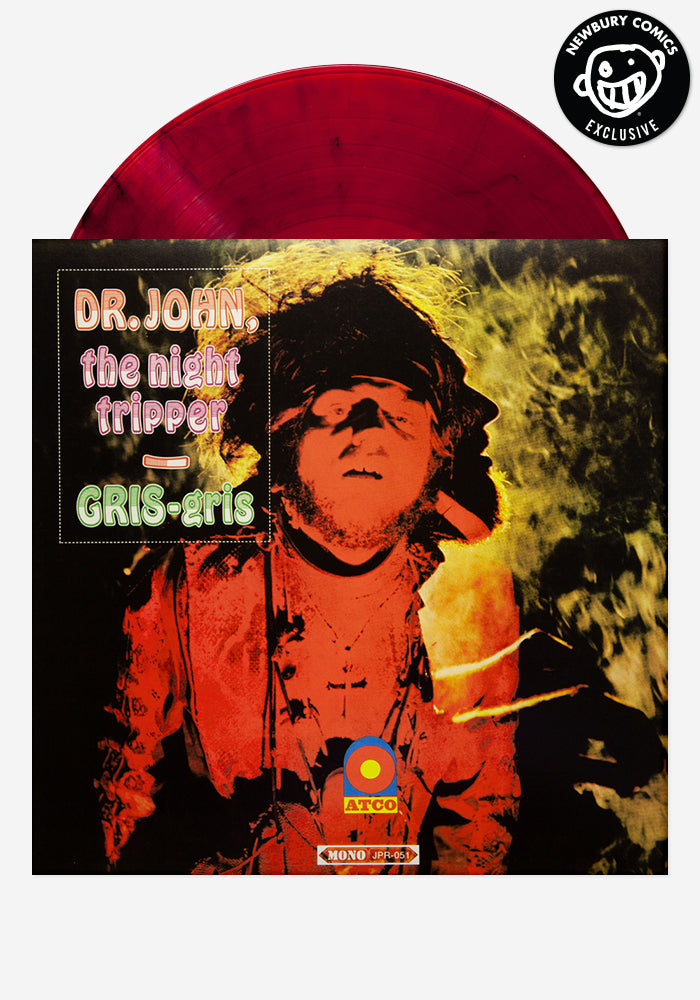
New Orleans musician Mac Rebennack Jr, reinvented himself as Dr John The Night Tripper, in connection with the release of his first album, Gris-Gris, in 1968. Gris-Gris included the songs Gris-Gris Gumbo Ya Ya along with the hallucinatory and mesmerizing I Walk On Guilded Splinters. This 17-year old had never heard anything like it.
In the early 1970s, Dr John achieved mainstream popularity with singles like Iko Iko, Right Place Wrong Time, and Such A Night (this version from The Last Waltz with The Band). Dr John released more than 30 studio albums and appeared as a guest artist on a slew of other records.

Aaron Neville, now 85, broke out as an artist in 1966 with the gorgeous Tell It Like It Is, featuring his smooth, gentle tone with his trademark vibrato. He's had a successful career as a solo artist, in multiple collaborations, most notably with Linda Ronstadt, and as along with brothers Art, Charles, and Cyril as part of the Neville Brothers. Aaron has also twice performed the national anthem at the Super Bowl, the second time accompanied on keyboards by Dr John.
Well it’s all right, even if they say you’re wrongIt’s all right, sometimes you gotta be strongIt’s all right, as long as you got somewhere to layWell it’s all right, every day is Judgment DayMaybe somewhere down the road aways (End of the line)You’ll think of me, wonder where I am these days (End of the line)Maybe somewhere down the road somebody plays (End of the line)Purple Haze
Thursday, June 11, 2026
Shakin' All Over
First heard this song on Live At Leeds, the 1970 album from The Who. Great tune with remarkable bass playing by John Entwhistle. Knew it was a cover of an older song which I assumed was American and from the late 50s. To my surprise I recently discovered it was by a British band in 1960 and was a #1 song in the U.K. and a flop in the U.S.
The band was Johnny Kidd and the Pirates. The song was written by Johnny Kidd and the slinky guitar by Joe Moretti. Very cool sounding song for its time. Johnny Kidd died in a nightime head on car collision in 1966 at the age of 30. Moretti was a session guitarist through the 1960s and 70s, before moving to South Africa in the late 70s where he became a house musician at a Sun City Casino. He passed in 2012.
Monday, May 11, 2026
Machines
I really liked this song in 1968. From the debut album, Presenting . . . Lothar and the Hand People. the first band to use a theremin. Lothar was the name of the theremin while the Hand People were the five band members, who are sharp looking guys! A unique sound, particularly for its time. Enjoy:
Friday, April 17, 2026
Cold Sweat - Part 1
Considered by some to be the first funk song, 1967's Cold Sweat by James Brown runs for seven minutes, with Part 1 as the A side single. Whether it is or not, it's a penetrating groove. You can find both parts here. At the beginning of Part 2 you can hear James call out "Maceo", a reference to tenor saxophonist Maceo Parker. Also featured on the track are Bernard Odum on bass and drummer Clyde Stubblefield.
Monday, April 6, 2026
Tomorrow Never Knows
On this date sixty years ago, The Beatles began recording Tomorrow Never Knows, the revolutionary and groundbreaking track from the album Revolver, released in August 1966. Though it was the last song on the second side of that album, it was the first song recorded in the sessions for the record, something I was surprised to discover decades later. At the time, we'd never heard anything remotely like this before, and thought its placement as the closing song was a signal that big musical changes were coming for The Beatles. As with A Hard Day's Night, the title is from an off hand remark by Ringo. Before settling on Tomorrow Never Knows was called The Void and Mark 1.
Tomorrow Never Knows is primarily a one-chord song with a droning tone, interspersed with weird, swirling snippets from something strange, and backwards guitar bits. Behind it is Ringo's drum pattern, which remains unchanging throughout. I've seen recent commentary from younger listeners thinking that because the drum pattern is so unerringly accurate Ringo must have played a small part that was then digitally repeated. However, the technology did not exist at the time and it really is Ringo from start to finish. George Harrison plays sitar or tamboura, depending on the analysis, on the track.
Topping it off are Lennon's lyrics, "turn off your mind, relax and float downstream/ All play the game
Existence to the end, of the beginning". John's instruction to George Martin was to make his voice sound like he was the Dalai Lama singing from a mountaintop, which, with some studio ingenuity, Martin accomplished by feeding the vocal through a revolving Leslie speaker inside a Hammond organ (the effect starts 87 seconds into the song).
The most innovative aspect was the use of tape loops This description is from The Beatles Recording Sessions: The Official Abbey Road Studio Session Notes by Mark Lewisohn (1988):
Perhaps the most striking sound on Tomorrow Never Knows is one of tape loops [the sound achieved by tape saturation, by removing the erase head of a machine and then recording over and over on the same piece of tape]. . . . The seagull-like noise on Tomorrow Never Knows is really a distorted guitar. (According to studio documentation, other loops used included the sounds of a speeded up guitar and a wine glass.) "We did a live mix of all the loops," says George Martin. "All over the studios we had people spooling them onto machines with pencils while Geoff [Emerick] did the balancing. There were many other hands controlling the panning." . . . "It was done totally off the cuff. The control room was as full of loops as it was people". "I laid all of the loops onto the multi-track and played the faders like a modern day synthesizer" says Emerick.
You can watch a video about the recording here which contains additional details and differs in some respects from the Lewisohn book. You can listen to the isolated tape loops here.
Friday, April 3, 2026
Godspeed
ARTEMIS II AS SEEN BY THE OFFICIAL NASA CESSNA
— Chris Combs (iterative design enjoyer) (@DrChrisCombs) April 3, 2026
THIS IS THE BEST LAUNCH VIDEO AND IT ISN'T CLOSE pic.twitter.com/ikLxSYbHKW
It's good to see America returning to the moon with the launch of Artemis II, after an absence of more than a half-century. Though this mission only entails a fly around, future missions will be landing.
Twenty four Apollo astronauts flew around or landed on the moon between December 1968 and December 1972. Of the twelve who remained in the command module, only one still survives; Fred Haise (92). Of the twelve who walked on the moon, four are living; Buzz Aldrin (96), David Scott (93), John Young (87) and Harrison Schmitt (90).
The astronauts were selected in part, because of their good health, and it is reflected in their longevity. All were born between 1923 and 1936 and were in their 30s and 40s at the time. Even in a worst case assumption that all of five living moon astronauts die this year, the average age for the moon walkers would be 82.7 years and for the circumnavigators 82.3. Under the same assumptions the median age for moon walkers is 86 and for orbiters 89. Ten of the 24 made it to 90, with one more possible, and another five between 87 and 89.
Godspeed and may the mission be a success.
We'll close with The Byrds' tribute to Armstrong, Alden, and Collins; "The team below, that gave the go, they had God's helping hand"
Monday, March 23, 2026
Eight Miles High
Nowhere is there warmth to be foundAmong those afraid of losing their groundRain gray town, known for its soundIn places, small faces unboundRound the squares, huddled in stormsSome laughing, some just shapeless forms
Released as a single 60 years ago this month by The Byrds. I'd never heard anything like this on AM radio before. Composed by band members Roger McGuinn, David Crosby, and Gene Clark. A very heavy song for its time, featuring the weirdest, chaotic, atonal lead guitar (inspired by Coltrane according to McGuinn) ever heard on a rock recording, peaking on the last part of the second solo.
Beyond that is Chris Hillman's pounding bass, Crosby's strong rhythm guitar, the harmonies of Clark, McGuinn and, above all, Crosby, and the finest drumming of Michael Clark's career with the group. The song is pulsating and relentless.
Between 1965 and 1968 The Byrds pioneered folk rock, introducing Dylan to a wider audience (Mr Tambourine Man), psychedelic music (Fifth Dimension), and gave many rock fans their first taste of country music (Sweetheart of the Rodeo).
Saturday, March 21, 2026
I Can't Get Next To You
One of my favorites from The Temptations from among their cascade of hits from the mid-60s into the early 70s. Composed by Norman Whitfield and Barrett Strong, released in 1969, hitting #1 and ranked by Billboard as the third most popular single of the year. From their appearance on the Ed Sullivan Show in September 1969.
Monday, February 16, 2026
Prodigal Son
Ry Cooder has been playing slide guitar since the mid-1960s with the Rolling Stones, Linda Ronstadt, Taj Mahal, Randy Newman, Van Morrison, the Doobie Brothers and about a thousand others. This is Ry in the late 60s on Randy Newman's first album with the spooky Let's Burn Down the Cornfield, and with Mick Jagger on Memo From Turner from the bizarre, hallucinatory film Performance. Here he is 2017 sounding just as good as ever.
Wednesday, January 28, 2026
Take Five
I've always enjoyed Take Five by the Dave Brubeck Quartet. Recorded in 1959, the song with its distinctive 5/4 time signature went on to become the best selling jazz single of all time after the album was rereleased in 1961. The Quartet consisted of Brubeck on piano, Paul Desmond on the smooth sax, Eugene Wright (bass), and Joe Morello on drums. One thing I thought weak on the recorded version was Brubeck's repetitive piano pattern which continued throughout the tune except during the drum solo.
I just came across this 1964 video of a live performance on Belgian TV which is much superior to the recorded version. Brubeck performs a terrific solo, followed by Morello's remarkable drum solo which is very different from the recorded version. The whole performance avoids the static aspects of the recording.
Friday, January 2, 2026
Becoming Led Zeppelin
On the recommendation of the THC Daughter (a huge Zep fan) I watched Becoming Led Zeppelin, a recent documentary covering the founding of the band and its first two album and initial tours. The Daughter gets A+ for her recommendation.
Becoming features recent interviews with Jimmy Page, Robert Plant, and John Paul Jones, as well as a previously unheard late 1970s interview with John Bonham (who died in 1980) along with incredible footage of early Zeppelin gigs which I'd never seen before.
We get the origin stories for the band members, including Bonham and Plant who were friends before Zeppelin. I knew about Page's background as a studio musician and Yardbird but little about the others and found it quite interesting - Plant was studying to be a chartered accountant! I also hadn't been aware of the extent to which putting the band together and its initial recordings were a Jimmy Page driven project.
The performance footage shows Zeppelin as a overpowering sonic powerhouse right from the start and Bonham sure hits those drums hard. The documentary is also a reminder that the rock critics, particularly the influential Rolling Stone, hated Led Zeppelin, but despite that the band quickly built a huge following.
Page, Plant, and Jones were engaging in their Old Guy interviews and watching them listening to the Bonham interview (which they'd never heard) was touching.
I was also happy to see Page give a public nod to Jake Holmes as the inspiration for Dazed and Confused. You can read about the specifics of how Page was "inspired" by Holmes here.
Tuesday, December 23, 2025
Wednesday, December 17, 2025
Forever Young
Bob Dylan recorded Forever Young in December 1973 and it appeared the following month on the album Planet Waves. One of his best known songs, he released another version in 2023 on the album Shadow Kingdom. Dylan was 32 when he wrote and recorded the song. He was 82 when he recorded it for the second time. It hits differently. I know it did for me listening to it at 72. The original is a song of aspiration and hope for his young ones. Fifty years later he knows how it turned out and it shows in his voice and informs how we react.
Dylan married Sarah Lownds in 1965 and four children were born between 1966 and 1969 (3 boys, one girl), while Bob also adopted his wife's daughter from a prior marriage. He had last toured in 1966, using the excuse of his injuries from a motorcycle accident that fall to stop his hectic recording and touring schedule. While releasing several albums in the following years he only played a couple of one-off concerts and become a mysterious, remote figure.
In his eccentric and revealing autobiography, Chronicles Vol. 1, Dylan describes the reasons for his withdrawal in two passages. The first in a conversation with The Band's Robbie Robertson while driving around Woodstock:
He says to me, 'Where do you think you're gonna take it?" I said, "Take what?". "You know, the whole music scene." The whole music scene! . . . No place was far enough away. I don't know what everybody else was fantasizing about, but what I was fantasizing about was a nine-to-five existence, a house on a tree-lined block with a white picket fence, pink roses in the backyard. That would have been nice. That was my deepest dream.
The second in which he writes of moving several times to avoid the plague of reporters seeking him out:
Even if these reporters had been allowed in the house, what would they find? A whole lotta stuff - stacking toys, push and pull toys, child-sized tables and chairs - big empty cardboard boxes - science kits, puzzles and toy drums.
Whatever the counterculture was, I'd seen enough of it. I was sick of the way my lyrics had been extrapolated, their meaning subverted into polemics and that I had been annointed as the Big Bubba of Rebellion, High Priest of Protest [etc] . . . What the hell are we talking about? Horrible titles any way you want to look at it . . . What mattered to me most was getting breathing room for my family.(1)
The lyrics, written for his young children:
May God bless and keep you always
May your wishes all come true
May you always do for others
And let others do for you
May you build a ladder to the stars
And climb on every rung
May you stay forever young
Forever young, forever young
May you stay forever young.
May you grow up to be righteous
May you grow up to be true
May you always know the truth
And see the lights surrounding you
May you always be courageous
Stand upright and be strong (Chorus)
May your hands always be busy
May your feet always be swift
May you have a strong foundation
When the winds of changes shift
May your heart always be joyful
And may your song always be sung (Chorus)
Bob and Sarah divorced in 1977 (she is now 86 and has never spoken publicly about the marriage). I don't know anything about their children, but son Jacob said in a 2005 interview, "My father said it himself in an interview many years ago: 'Husband and wife failed, but mother and father didn't.' My ethics are high because my parents did a great job." (2)
Forever Young also reflects a different viewpoint than that expressed in some of his earliest recordings. From 1962 through 1964 Dylan developed a reputation as a "protest singer", a label he bitterly resented and ultimately rebelled against. Though he is still sometimes called the "voice of his generation", Dylan never spoke publicly about the Vietnam War, either in opposition or support, despite it being the rallying point of protest in the second half of the 60s into the early 70s.
The song that marked that transition was My Back Pages from Another Side of Bob Dylan, released in August 1964, with lyrics acknowledging that issues and life were more complicated than he had previously portrayed.
Half-wracked prejudice leaped forth
"Rip down all hate, " I screamed
Lies that life is black and white
Spoke from my skull, I dreamed
Romantic facts of musketeers
Foundationed deep, somehow
Ah, but I was so much older then, I'm younger than that nowIn a soldier's stance, I aimed my hand
At the mongrel dogs who teach
Fearing not I'd become my enemy
In the instant that I preach
My existence led by confusion boats
Mutiny from stern to bow
Ah, but I was so much older then, I'm younger than that now
A self-ordained professor’s tongue
Too serious to fool
Spouted out that liberty
Is just equality in school
“Equality,” I spoke the word
As if a wedding vow
Ah, but I was so much older then
I’m younger than that now
Yes, my guard stood hard when abstract threats
Too noble to neglect
Deceived me into thinking I had something to protect
Good and bad, I define these terms
Quite clear, no doubt, somehow
Ah, but I was so much older then, I'm younger than that now
Bringing It All Back Home (March 1965) would be his first album containing no songs that could be classified as "protest".
When Dylan sings "may you stay forever young" he circles back to the chorus of My Back Pages, "I was so much older then, I'm younger than that now". In Back Pages, he is saying that he is dropping the posed sophistication of someone pretending to be a wiser and older man in exchange for becoming the young man with still a lot to learn. Ironically, Dylan is wise enough to know he needs to be younger, or perhaps, as young as he actually is, a lesson many of his compatriots failed to learn.
Eight years later, with four young children, when he sings "may you stay forever young" it means always being open to learning and gaining wisdom, not closing themselves off or thinking that they know it all. What Dylan is driving it is revealed in this lyric, "May you have a strong foundation/ When the winds of changes shift". He knows that things change (as does THC), in October 1963 having recorded The Times They Are-a-Changin'. But that powerful anthem contains these lyrics:
And you better start swimmin'Or you'll sink like a stoneFor the times they are a-changin'Your old road is rapidly agin'Please get out of the new oneIf you can't lend your handFor the times they are a-changin'
The song was written at the time of a great moral crusade, the need to admit black Americans to the full panoply of rights afforded to other American citizens. But moral crusades are few and far between, though many mistake other issues for crusades. In Times They Are-a-Changin', Dylan warns everyone to support the change or be swept away.
Ten years later, a wiser Dylan sings of the importance of a "strong foundation" because all "winds of change" are not necessarily good, each requiring careful evaluation against a moral framework, recognizing it takes great internal moral strength to withstand those winds. Lacking a strong foundation leaves one vulnerable to manipulative charismatic leaders, too easily swayed by peers, public opinion, or media, or blindly willing to follow the lead of credential wielding experts.
--------------------------------------------------------
(1) While rereading some of Chronicles in preparation for writing this post I came across another passage which explained something else I've written about - how terrible Dylan was in concert with Tom Petty during the 80s, the only time I've ever seen him perform in person:I'd been on an eighteen month tour with Tom Petty and The Heartbreakers. It would be my last. I had no connection to any kind of inspiration. . . . Tom was at the top of his game and I was at the bottom of mine. . . My own songs had become strangers to me. I didn't have the skill to touch their raw nerves, couldn't penetrate the surfaces. It wasn't my moment of history anymore. There was a hollow singing in my heart and I couldn't wait to retire and fold the tent. One more big payday with Petty and that would be it for me. I was what they called over the hill. If I wasn't careful I could end up ranting and raving in shouting matches with the wall.
I had written and recorded so many songs, but it wasn't like I was playing many of them. I think I was only up to the task of about twenty or so. The rest were too cryptic, too darkly driven, and I was no longer capable of doing anything radically creative with them. It was like carrying a package of heavy rotten meat. I couldn't understand where they came from. The glow was gone and the match had burned right to the end. I was going through the motions.
(2) Dylan wrote at least two songs about his marriage; Sad Eyed Lady of the Lowlands from Blonde On Blonde (1966) and Sara from Desire (1977), the latter as his marriage was collapsing, and which includes the lyric "Staying up for days in the Chelsea Hotel/Writing "Sad Eyed Lady of the Lowlands' for you". Sara is searing and emotionally wrenching. On the other hand, Dylan makes a lot of stuff up, so did he really write Sad Eyed Lady for Sara, or did he make it up as part of his last ditch appeal to his wife?
Friday, December 12, 2025
24 Hours Back From Tulsa
Have a friend here in Phoenix who is a fellow music lover and also a fan of Bob Dylan. We'd talked about visiting the Bob Dylan Center in Tulsa (Dylan's archives are in Tulsa because that's where Woody Guthrie's archive and museum is). Earlier this year he found out that Billy Strings (another mutual favorite) was playing a Tulsa concert on December 10 so we decided to make a road trip.
Fortunately, Southwest Airlines has direct flight to Tulsa, so on the afternoon of the 10th we flew there and attended Billy's concert that night. I'd seen him once before and have watched endless live videos on YouTube. Billy and his band don't have a warm up act. They start at 8 and end around 11, with a 20 minute break in the middle. One of the things I like best about his music is though I only recognized about a 1/3 of the songs, everything they played was incredible. The rest of the group; mandolin, bass, banjo, and fiddle are as talented as Billy. We, like most of the audience, spent most of the concert on our feet.
We were in the 12th row of seats but in front of us was an area without seats where fans can stand for the entire concert. At the end of the show, Billy slid off the stage and hung out with the folks in that area.
His shows are a magical experience. Will see him again. Upon returning to AZ realized the concert marked exactly 4 years since I first heard Billy Strings (read Away From The Mire).
One of the last songs Billy played was Don't Think Twice, It's Allright. Appropriate since we visited the Dylan Center the next morning.
The exhibits at the Dylan Center take you through Bob's career and are set up in an entertaining fashion. It includes previously unavailable photos, recording takes, letters, and drafts of lyrics, along with videos from Dylan interviews.
The special exhibit was Dylan Goes Electric, sparked by the movie A Complete Unknown and Elijah Wald's excellent book Dylan Goes Electric!, by itself worth visiting. The highlight was a film about the 1965 Newport Folk Festival, the first part of which consists of interviews with some of the surviving key players (and their conflicting memories) and culminates with Dylan's entire performance that night which consisted of three electric tunes (Maggie's Farm, Like A Rolling Stone, It Takes a Lot To Laugh It Takes a Train to Cry) and the two acoustic tunes he came back out to play to calm the audience down, It's All Over Now Baby Blue, and Mr Tambourine Man.
All the interviewees recount that the Newport sound system was awful and Dylan's vocals were inaudible during the electric set. However, in the film the sound has been remastered so you can clearly hear the vocals and, it turns out, Dylan was in fine form.
Listening to Baby Blue when Dylan returned to the stage, it's unmistakeably meant as a warning to the hardcore folkie contingent who disdained his turn to electric that The Times They Are a-Changin'.
Leave your steppingstones behind thereSomething calls for youForget the dead you've left, they will not follow youThe vagabond who's rapping at your doorIs standing in the clothes that you once woreStrike another match, go start anewAnd it's all over now, Baby Blue
We had enough time before our flight to make a brief visit to the Guthrie Center which is next door to Dylan.

 Billy plays most of his solos with eyes closed.


 Lyrics from Mr Tambourine Man with Dylan's handwritten changes inserting "in the jingle-jangle morning). Below is the Cash Box Top 100 for the week in September 1965 when Like A Rolling Stone displaced The Beatles Help! at Numero Uno. The Top Ten also includes another Dylan song, It Ain't Me Babe by The Turtles at 7.
 Below: Pete Seeger is often portrayed as strongly objecting to Dylan's turn to electric. Pete's contention is that his objection to Dylan at Newport was that the electric music was so loud it drowned out Dylan's lyrics. This is a 1968 letter from Pete to his father about the recent release of Dylan's album John Wesley Harding. I really like the last paragraph: "Maybe Bob Dylan will be like Picasso, surprising us every few years with a new period. I hope he lives as long." He has done so. If you are in any doubt listen to Oh Mercy (1989), Time Out Of Mind (1997), Love and Theft (2001), and Rough and Rowdy Ways (2020).

Tuesday, December 9, 2025
Thursday, October 9, 2025
40,000 Headmen
40,000 headmen couldn't make me change my mind . . .
Traffic. 1968. Music - Steve Winwood (and vocals). Lyrics - Jim Capaldi (and drums). Woodwinds - Chris Wood. Maybe - Dave Mason (guitar).
Monday, August 25, 2025
I See You
I know youMet before, seventh floorFirst World WarI know you
From Fifth Dimension, the third album by The Byrds, released in July 1966. The album was the second of the three pioneering musical ventures the band was to undertake during its career. The first, in the spring of 1965, was the creation of folk rock, with Dylan's Mr Tambourine Man.
Fifth Dimension heralded the advent of psychedelic music in the year before the Summer of Love, with songs like Eight Miles High, 5D (How is it that I could come out to here/ and be still floating?), Why, What's Happening ?!?!, and I See You. Though the album was somewhat of a mishmash, also including traditional folk tunes like Wild Mountain Thyme and John Riley, along with the novelty tune, Mr Spaceman, it was clear we were entering a new musical era.
The third twist was with the band's sixth studio album, Sweetheart of the Rodeo, released in August 1968. Though The Byrds and some other American bands had flirted with country music, Sweetheart of the Rodeo was the first album by a rock band to fully embrace the country sound and was the launching pad for the emergence of country rock with groups like the early phase of The Eagles.
At 15 I thought I See You, with its far out lyrics and McGuinn's weird guitar, was pretty cool.
Friday, July 25, 2025
The Boxer
Still a man hears what he wants to hear, and disregards the rest
I didn't care for this Simon & Garfunkel song when it came out in the late 60s. I do now. Heavy hitting lyric, strong melody, and stirring arrangement. Listen carefully to the instrumental outro; so much going on.
Thursday, July 10, 2025
Wicked Messenger
The soles of my feet, I swear they're burning
For the first track on their first album, released in 1969, The Faces decided to cover Bob Dylan's Wicked Messenger. The Small Faces were reconstituting themselves after lead singer Steve Marriott left to form Humble Pie, so the three remaining members joined with two refugees from the Jeff Beck Group, Rod Steward and Ronnie Woods, and christened themselves The Faces.
Wicked Messenger, from Dylan's 1967 album, John Wesley Harding, was a dramatic change from his previous albums, Blonde On Blonde and Highway 61 Revisited. Harding, recorded in Nashville, was a sedate and reflective record, with Biblical references strewn throughout, including I Dreamed I Saw St Augustine, All Along The Watchtower, and Dear Landlord, along with Wicked Messenger. The Faces version is a lot more raucous. Wicked Messenger is one of three memorable rock covers from the Harding album, the others being Watchtower (Jimi Hendrix) and Dear Landlord (Joe Cocker).
And remember:
If you cannot bring good news, then don't bring any
Subscribe to:
Posts (Atom)