(a reworking of a post from a few years ago)
I think for each of us who love music there is a particular time and place where it most connects with us. While putting together a mix of some favorite tunes from the 60s, I realized many were released in a very short time from October 30, 1967 through February 21, 1968.
There were many fine singles on the charts during those months, including
Dock of The Bay (Otis Redding);
Dance To The Music (Sly & The Family Stone);
What A Wonderful World (Louis Armstrong); and
Chain Of Fools (Aretha takes it to another level with
her alternate take), but I'm going to focus on 15 albums released in that period.
It's a bit surprising but we can ignore
The Beatles and
The Rolling Stones. In October The Beatles released their weakest album,
Magical Mystery Tour, while the Stones were wandering in the desert, releasing the ridiculous
Their Satanic Majesties Request. Hardcore Stones fans are still pretending it never happened. They were not to return to the Promised Land until the summer of '68 under the captaincy of
Jumpin' Jack Flash.
October 30, 1967
Buffalo Springfield Again
November 1967
Forever Changes (
Love)
Disraeli Gears (
Cream)
Days Of Future Passed (
The Moody Blues)
After Bathing At Baxter's (
Jefferson Airplane)
December 1967
Axis: Bold As Love (
Jimi Hendrix Experience)
Mr Fantasy (
Traffic)
Pandemonium Shadow Show (
Harry Nilsson)
Earth Music (
The Youngbloods)
The Who Sell Out
John Wesley Harding (
Bob Dylan)
Songs of
Leonard Cohen
January 1968
Born To Be Wild (
Steppenwolf)
Gris-Gris (
Dr John)
February 21, 1968
Child Is Father To The Man (
Blood, Sweat & Tears)

I still listen to
Buffalo Springfield Again featuring the writing, singing and guitar playing of
Stephen Stills,
Neil Young and
Richie Furay. Their debut album,
Buffalo Springfield, had terrific songs but was horribly produced. This was their next try and both songs and production are excellent. The tensions that were to break up the band later in 1968 were already evident as the production notes inform you that the band members were often not even recording in the same studio. Every song is good, some are great. The best:
Mr Soul. Blazing guitar from Neil; "
she said you're strange, but don't change and I let her".
Rock n Roll Woman. Perfect pop. Featuring soaring harmonies, a blown-out Hammond B3 and some of Stills' best vocals.
Expecting To Fly. Ethereal. Another Young penned song. "
There you stood on the edge of your feather, expecting to fly".
Bluebird. By Stills, with sparkling guitar work by he and Neil.
 Forever Changes
by
Love. A wonderful record that remains a favorite of mine. The band started in 1965 with a proto-punk sound on songs like
7 And 7 Is. For this album they adopted a more mellow and smoother tone. Beautifully produced and sounding which is a wonder because reportedly most of the band members were so under the influence of drugs that the individual songs had to be cobbled together in bits and pieces from various recording sessions (Arthur Lee, the vocalist and co-composer of many of the songs eventually spent more than a decade in prison on gun and drug charges). The
lyrics are preciously psychedelic as are the song titles, capturing the silliness of 1967:
Alone Again Or
Andmoreagain
A House Is Not A Motel
Maybe The People Would Be The Times Or Between Clark And Hillsdale
The Good Humor Man He Sees Everything Like This
But put aside the silly titles and give it a listen.
 Disraeli Gears
, the second album from
Cream and the one that made them as a big act in the U.S. Contained their first American hit single
Sunshine Of Your Love and a series of strong tunes featuring the music of bassist Jack Bruce along with Peter Brown's insane lyrics;
Tales of Brave Ulysses;
SWLABR,
Dance The Night Away and
We're Going Wrong (
a concert highlight from their 2005 reunion tour), and Albert King's
Born Under A Bad Sign. I saw them play in a half-empty high school auditorium during their early 1968 tour in support of the album.

I was not a big fan of
The Moody Blues but there is no doubt that
Days Of Future Passed is is a classic rock album.
Tuesday Afternoon or
Nights In White Satin, anyone?
 After Bathing At Baxter's.
The followup to
Jefferson Airplane's Surrealistic Pillow album which launched the hits
White Rabbit and
Somebody To Love. With Baxter's, the Airplane deliberately avoided coming up with another hit single, instead opting for a woozy smorgasbord of sound and lyrics. Good at the time but it's aged badly. Best songs:
The Ballad Of You And Me And Pooneil,
Watch Her Ride (from
a Perry Como Special!),
Two Heads ("
Two heads can be put together, And you can fill both your feet with sand, No one will know you've gutted your mind but what will you do with your bloody hands?" - someone actually let them do this
on TV) and their celebration of hippiedom,
Won't You Try/Saturday Afternoon (
here at Woodstock, appropriately).
Saw the Airplane at the Fillmore East in November 1968. They sounded much heavier live mostly due to Jack Cassidy's thundering bass lines.
 Axis: Bold As Love
by
The Jim Hendrix Experience. Contains two of his most beautiful songs,
Little Wing and
Bold As Love, along with
If 6 Were 9 and
Castles Made Of Sand ("
fall in the sea, eventually"). No one sounded like Jimi. Links all removed from YouTube, but if you can find the live version of Little Wing from the Albert Hall concert, listen to it.
 Mr Fantasy
from
Traffic featuring
Steve Winwood. Another psychedelic pop record featuring their biggest hit
Dear Mr Fantasy on which Winwood, who normally played keyboard, lets rip with some memorable guitar riffs. Other strong (and quirky) tunes include
Coloured Rain,
Paper Sun and
Heaven Is In Your Mind along with
Smiling Phases which later became a hit for the post-Al Kooper version of Blood Sweat & Tears.
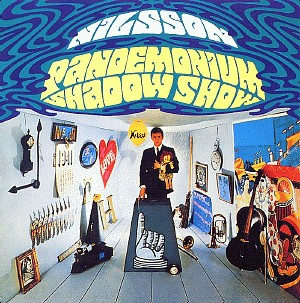 Pandemonium Shadow Show,
Harry Nilsson's quirky debut album, was released to critical acclaim and low sales.
Without Her (with its distinctly non-rock orchestration) and
1941 (with orchestration sounding like a mashup of Pet Sounds and Sgt Pepper) are the best known tunes. Nilsson went on to write Three Dog Night's smash hit, One (Aimee Mann's version is the one I prefer). Harry is also the only person to record with all four Beatles individually. The album title comes from
Ray Bradbury's Something Wicked This Way Comes which is what Nilsson wanted to title the album but when he could not obtain the rights in time, named it after the novel's mysterious carnival that arrives in a small 1920s Illinois town - Cooger & Dark's Pandemonium Shadow Show.
Reading the Bradbury novel at 12 or 13 years old I thought it wonderful. Rereading it a few years ago I loved it just as much but realized it was really about something different than I thought all those years ago. Funny how your perspective changes with age.
 Earth Music
by
The Youngbloods. An underrated band, even at the time. Best known, even today, for their worst song and only hit,
Get Together. Though their finest song is 1969's
Darkness, Darkness, Earth Music is their best album, featuring Jesse Colin Young's warm and pure vocals. Included are a cover of Tim Hardin's
Reason To Believe, the jug band influenced
Euphoria and best of all,
All My Dreams Blue.
 The Who Sell Out
. Contains
I Can See For Miles,
Tattoo (
Live At Leeds version), an ode to
Mary Anne With The Shaky Hands, the beautiful
I Can't Reach You ("
you're so alive and I'm nearly dead") and
Rael ("
the wretched in their millions, will overspill their borders and chaos will reign in our Rael") with riffs that would later be incorporated into Tommy. Finally got to see them in concert twice during 1969.
 John Wesley Harding
.
Bob Dylan's first comeback album. Dylan disappeared from public view shortly after his tour following the May 1966 release of
Blonde On Blonde, allegedly because of injuries suffered in a motorcycle accident, but given the elusive nature of Bob no one has ever really been certain why. A double album,
Blonde On Blonde was the culmination of an astonishing 15 month period of creativity after Dylan went electric which also saw the release of
Bringing It All Back Home (March 1965) and
Highway 61 Revisited (August 1965). On those albums were songs like Mr Tambourine Man;
It's Alright Ma (I'm Only Bleeding); It's All Over Now, Baby Blue;
Maggie's Farm; Subterranean Homesick Blues,
Just Like Tom Thumb's Blues; Like A Rolling Stone;
Ballad Of A Thin Man; Queen Jane Approximately;
Just Like A Woman; I Want You;
Rainy Day Women #12 & 35 and Stuck Inside Of Mobile With The Memphis Blues Again. Maybe he just needed a rest.
Harding was different; quiet and restrained with lyrics pared down from the increasingly ornate style he'd deployed in the earlier albums. Most of the songs were backed only by Dylan's acoustic guitar and harmonica. My picks (no links to originals as they are gone from YouTube):
All Along The Watchtower. Haunting.
Covered by
hundreds of musicians. Listen to the best cover (by Mr Hendrix)
here.
I Dreamed I Saw St Augustine/ Alive with fiery breath/ And I dreamed I was amongst the ones/ That put him out to death/ Oh, I awoke in anger/ So alone and terrified/ I put my fingers against the glass/ And bowed my head and cried
I'll Be Your Baby Tonight. "
Bring that bottle over here". Wacky and relaxed. He evens rhymes "
moon" and "
spoon"!

I'm not a big fan but
Songs of Leonard Cohen was his influential first album so attention must be paid! If you listened to early FM radio you heard
Suzanne a lot. And then he goes wild (at least for Leonard Cohen) with
So Long, Marianne.
 Steppenwolf
, the debut album from, who else,
Steppenwolf! Not a strong album, but listed here because it contained the monster hit, perennial rock anthem and persistent movie soundtrack standard,
Born To Be Wild (not linked here, just because), the birth of "
heavy metal thunder", along with the overwrought Hoyt Axton saga,
The Pusher. Axton went on to write the awful
Joy To The World, a smash hit for Three Dog Night, and to star as the dad in the movie
Gremlins.
 Gris Gris
, the debut album from
Dr John, the alias of Louisiana musician Mac Rebennack who's gone on to a long and storied career as a living historian and performer of New Orleans music. A dreamy stoner's delight with the help of a magic gris-gris man who's just emerged from the swamp. Featuring
Gris Gris Gumbo Ya Ya and the hypnotic and indescribably weird (even by the standards of this very weird record)
Walk On Guilded Splinters; "
Walk through the fire, fly through the smoke, see my enemy at the end of a rope". If you are not in a stupor when you start listening you will be by the end.

One of the best sounding records of the era (it still sounds great today),
Child Is Father To The Man was Blood Sweat & Tears debut record. From Rolling Stone's review:
"This album is unique. More precisely, it is the first of its kind — a music that takes elements of rock, jazz, straight blues, R&B, classical music and almost anything else you could mention and combines them into a sound of its own that is "popular" without being the least bit watered down."
It was not until the release of their second album in late 1968 that they achieved big record sales, but
Child remains the best work done by the band. BS&T was the brainchild of Al Kooper, founder of The Blues Project and session man (and self-promoter) extraordinaire - that's him playing the swirly organ on Dylan's
Like A Rolling Stone.
Kooper recruited top notch jazz horn players to add to a traditional rock band lineup. Working with John Simon, one of the best producers of the 60s, Kooper wrote most of the songs for the album and also demonstrated a great ear for new, and little known, talent choosing to do covers of songs by Randy Newman and Harry Nilsson. He was also responsible for the creative arrangements for each song. Al's one weakness is also apparent on the record. He insisted on being the lead singer, and he was lousy at it. His refusal to relinquish that role lead to the rest of the band turning on him and he was forced to leave, being replaced by David Clayton-Thomas for the second album.
My Days Are Numbered
I Love You More Than You'll Ever Know (listen to how the arrangement builds throughout the song)
I Can't Quit Her
So Much Love/Underture
