Showing posts with label Hot Streaks. Show all posts

Sunday, September 4, 2016

The Hottest Streak?

As any regular reader of THC knows, we are a bit obsessed with hot streaks by major league baseball teams and players so we did a little research to try and find the hottest sustained individual batting performance.

A hot streak is different than a hitting streak.  During Joe DiMaggio's 56 game hitting streak he batted only .408.  THC is looking for absolute barrages of hits over a period of at least 20 games.*
http://cache2.asset-cache.net/gc/517358930-george-sisler-of-the-st-louis-browns-gettyimages.jpg?v=1&c=IWSAsset&k=2&d=X7WJLa88Cweo9HktRLaNXmk5imFhbrTDRyjhpnt4Tn4BU24RoHFtqnvqOCjkdntFZtaYU9rK9UhAzLllYvNExA%3D%3D(George Sisler)

We took a look at some seasons when great hitters hit for very high averages and it was while researching George Sisler's 1920 and 1922 seasons that we found what we were looking for.  In 1922, the St Louis Browns star, hit .420, while batting .407 in 1920.

Although he averaged over .400 both years, Sisler's hitting pattern was different.  In 1922, his average was relatively consistent throughout the season, with no big slumps or hot streaks (although hitting .420 might itself be considered a year long hot streak).  He even had a 41 game hitting streak that season, during which he hit only .355.  Things were different in 1920 with Sisler batting .474 at home, compared to .341 on the road, indicating he must have had some real hot streaks (in 1922, George's home/road differential was only .052).  The Browns star went hitless in only 8 of 78 home games, failing to get a hit only once in his last 40 games at friendly Sportsman's Park.

Sure enough, that's what we found.  In fact, George had two torrential downpours of hits during 1920.  The first stretched over 27 games from May 31 (starting in the second game of a doubleheader) through June 28, in which Sisler hit .565! **  Here's the breakdown:

G        27
AB    108
H        61
2B      10
3B       3
HR      4
RBI    27
BB     11
SO       0
BA    .565
OBP  .597
SLG  .824
OPS   1.423
NOTES:  23 of 27 games at home.  Did not strike out in 119 plate appearances. Had four 4-hit games and nine 3-hit games, averaging over 2 hits a game, and went hitless on three occasions.  Liked hitting against Sox, averaging .667 (8 for 12) against the White Sox and .632 against the Red Sox (12 for 19).  Batting average was .333 at start and .434 at end.
Sisler wasn't done yet as he ended the season with a 25 game burst during which he hit .486:

G       25
AB   109
H       53
2B       9
3B       7
HR      3
RBI    29
BB     12
SO       4
BA    .486
OBP  .537
SLG  .753
OPS   1.290
NOTES: 22 of 25 games at home, batting .500 in the home games.  One 4-hit game, ten 3-hit games and held hitless twice. Averaged more than two hits a game.  Average was .391 at beginning of streak and .407 at end.
Sisler's 257 hits in 1920 set a record that remained unbroken until Ichiro Suzuki's 262 in 2004***.  In the 54 games of his two streaks, George accumulated 114 hits, batting .525.  In his remaining 110 games he had 143 hits, with a .346 average.
http://media.gettyimages.com/photos/seattle-mariners-ichiro-suzuki-extends-his-season-hits-record-by-his-picture-id51387109(Ichiro gets his 261st hit)

George Sisler was also considered a top-notch fielder at first base and a good baserunner, leading the league three times in stolen bases (1918, 21 and 22).  He was the 10th player elected to the Hall of Fame, with a lifetime BA of .340, but might very well have had an even greater career.  Following the 1922 season, a sinus infection caused him severe eye problems and he missed the entire 1923 season.  Upon his return in 1924, he was good, but not great, retiring after the 1930 season.  As of the end of the 1922 season, he was 29 years old, averaging 240 hits a year, with a .400 average over the prior three seasons, and career average of .361.  In the high offense context of the 1920s and early 1930s, it's very possible he would have ended up with a final career average in the .355-.360 range and over 3,500 hits.


* For a shorter hot streak, how about this one from Rogers Hornsby's 1924 season with the St Louis Cardinals, in which he went 34-for-51 (.667), over 14 games from August 20 through 29? The streak may have been stopped by what looks like an injury in the August 29 game, as Hornsby only had two plate appearances and then did not play again until September 7.  He also put on quite a power display during those 14 games, whacking 10 doubles, a triple and 6 home runs - 64 total bases!

http://www.nndb.com/people/046/000085788/rogers-hornsby-1.jpg While looking at Hornsby's season (he hit .424), I also saw what can happen when a batter and pitcher meet at the peak of their careers.  In the game prior to Rogers streak, he'd whiffed twice, one of only three occasions on which that happened all season.  In fact, Hornsby fanned only 32 times in 642 PAs.  But he struck out three times in one game on June 14 against the Brooklyn Robins.  The box score revealed the pitcher was Dazzy Vance, who went 28-6 with 262 K's that year (twice as many as the next highest total in the league).  In 1924, Dazzy went 4-0 against the Cards, and in three of the games, Hornsby only gathered 2 hits (both singles) and struck out five times in 14 at bats facing Vance.  It was probably even worse.  One of the victories was a 4-inning relief stint, in which Dazzy gave up only one hit and fanned six, before picking up the win in the 12th.  There is no play by play available, but he might have rung Hornsby up at least once more.  Vance may have always given Rogers trouble.  Though we don't have full pitcher/batter matchup information prior to 1930, from 1930-37 Hornsby went only 1-for-10 against Dazzy.  For more on Dazzy's career, read Dazzy Koufax.

** A Note on Methodology.  Searches for highest batting average over X games cannot be done on Baseball-Reference.  You can do a search to find the highest batting averages during hitting streaks, but, as I found with Sisler and others, these high average spurts over long periods always had one or more hitless games.  What I did, however, was run the hitting streak data on BR, and then looked before and after the start of each streak to see if I could find a cumulative average exceeding Sisler's and did not.  I also randomly looked at high average seasons by many great players (limiting my search to seasons since 1900).  My conclusion is therefore only tentative.  And I'm sure someone has done more exhaustive research on this topic.

My methodology does not take into account season and park context.  Sisler's barrage occurred in the very high offense context of the 1920s.  Was his .565 in 27 games better than Ichiro's .514 in 32 games in 2004 (for more, see below), or George Brett's .500 over 28 games in 1980, when he hit .390 for the season (and .432 over his final 85 games)?

*** During his record-setting 2004 season, Ichiro went on a 32 game rampage from July 19 through August 21 during which he batted .514 with 76 hits, raising his average from .319 to .372.  Nine 3-hit games, four 4-hit games and two games with 5 hits.


Monday, August 22, 2016

Joey & Jose

Two ball players, who've been remarkably hot for long periods this season are Joey Votto of the Cincinnati Reds and Jose Altuve of the Houston Astros.  Yes, I've read Bill James and know hot streaks aren't real, but I like pretending.

Votto has always engendered controversy over his refusal to swing at pitches outside the strike zone, regardless of circumstances (see Skynet Is Activated), but consistently hit for high average, on-base and slugging percentages.
http://www1.pictures.zimbio.com/gi/St+Louis+Cardinals+v+Cincinnati+Reds+5GwTSG7xvgfl.jpg(Votto, not swinging, zimbio)

This year he seemed to make the argument moot.  Joey was horrible for the first 50 games, hitting only .207 on May 29, with an on base percentage (OBP) of .330, and slugging a miserable .367.  This was coupled with an erosion in his control of the strike zone.  In his last two full seasons, Joey walked in 20% of his plate appearances (PA) and struck out in 19%.  As of May 29, he'd walked in only 14% of his PA and was striking out 27% of the time.

But in the 69 games since then, Votto has played like a alien visitor from another galaxy with superhuman capabilities, hitting .378, with an OPB of .507 (that's Ted Williams, Babe Ruth territory), and slugging .622, raising his season average to .307, and his stats now look like a normal Joey Votto year.  During this run, he's been walking in 21% of his PA and striking out in 17%.
https://espngrantland.files.wordpress.com/2014/09/jose-altuve-tri.jpg
(Altuve, from espn grantland)

Jose Altuve, the diminutive second baseman for the 'Stros, has played well since the beginning of the season.  On May 27, he was hitting .311, and an OPS of .939, with more power and walks than he'd had in prior years.

And then he got really hot.  Over his last 73 games, Altuve's batting .402 (raising his average to .366), with an OPS of 1.042, and propelled himself into the American League MVP discussion.

It'd be fun to see both of them continue at this pace until the end of the season.

Thursday, August 18, 2016

Finishing The Season Strong: The 1908 Pennant Races


Hi! If you are stopping by via SABR, I hope you'll take some time and look around.  For more baseball history, just hit the tag at the bottom of this post. Or look at the website full version and in the left or right columns you may find some things of interest.  Thanks again for stopping by.

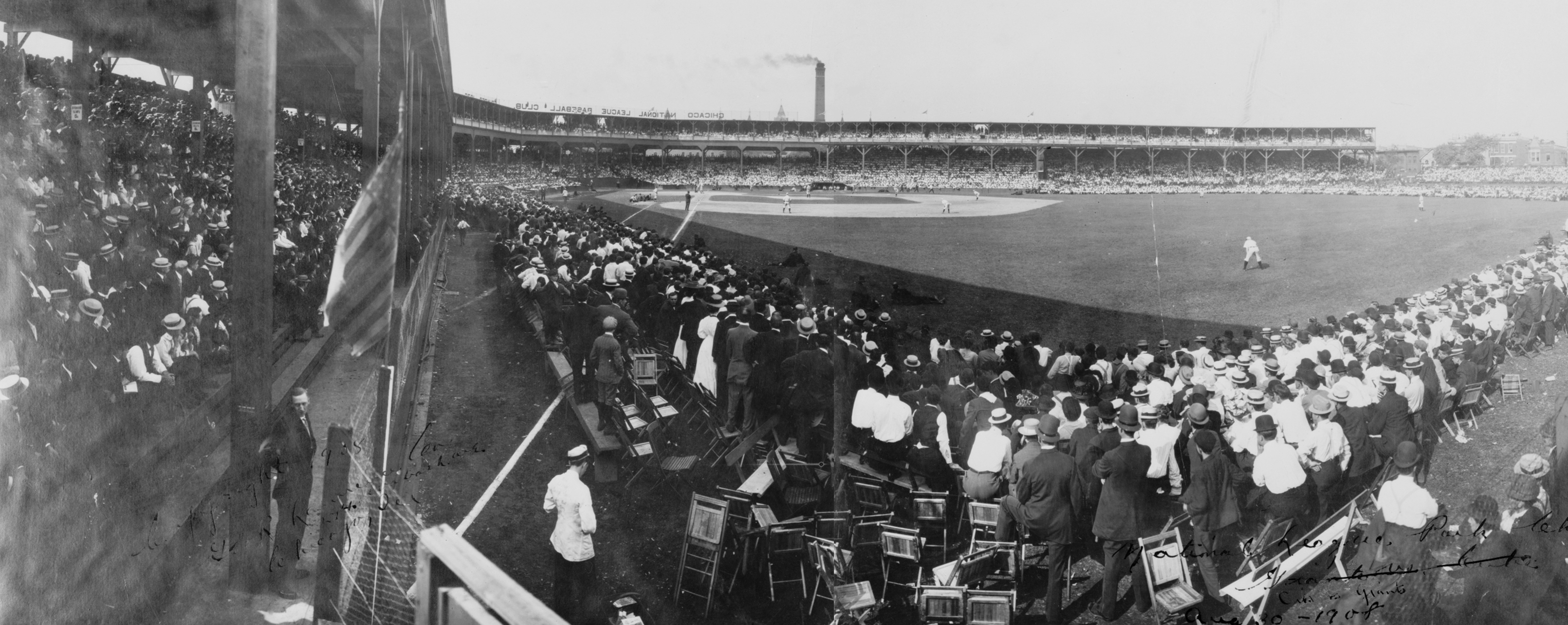
(West Side Park, home of Chicago Cubs, game with NY Giants, August 30, 1908, from chicagology)

On the evening of August 18, 1908, the Pittsburgh Pirates, led by their great shortstop, Honus Wagner, sat atop the National League with a record of 64 win and 40 losses.  They finished the season even stronger, winning 34 of their last 50 games, a .680 winning percentage.  The Pirates did not win the pennant.

The New York Giants were in second place that night, sitting 2 games behind Pittsburgh.  Over the next seven weeks, they'd outdo the Pirates, winning 36 of their last 50, a winning percentage of .720.  The Giants also failed to win the pennant.

On that same evening, the Chicago Cubs were in third, 5 1/2 games behind Pittsburgh and only a half game ahead of the Philadelphia Phillies.  But the Cubs would win 40 of their last 49 (including 9 of 11 against the Pirates and Giants), scoring 232 runs and yielding only 94, to win the race by one game.  Remarkably, it was only the second hottest streak by the Cubs in their historic run from 1906 to 1910, during which they captured four pennants.  In 1906, they'd won 37 of 39 games from mid-August to mid-September and ended the season going 48-6 (for more, see Cubs Hot Streak Ends).  The 1909 club won 37 of its last 51 contests.  Coincidentally, that adds up to 154 games, giving them a 125-29 record over their three season ending streaks.

What a thrilling and nerve wracking time it must have been to be a fan of any of those clubs as they remained so tightly bunched, for so many weeks.

I'd been familiar with the great pennant races of 1908, and its most famous contest, the Merkle game, as well the dramatic replay of that contest on October 8 between the Cubs and Giants to end the season.  What I had not been aware of was the torrid collective pace of the three contending clubs over the last seven weeks; 110 wins against only 39 losses!  Apart from their 19-19 record against each other (with the one tie that forced the playoff), they went 91-20 against the other five National League teams.
https://upload.wikimedia.org/wikipedia/commons/3/34/Merkles_Boner_game_Polo_Grounds_Sept23_1908.jpg(According to Wikipedia, this is a photo of the Merkle game, September 23, 1908, at the Polo Grounds)

It was while rereading The Unforgettable Season, GH Fleming's 1981 chronicle of the National League race of 1908, that I realized what these teams had accomplished.  Fleming uses daily newspaper accounts, mostly from New York City papers, to tell the story, and includes a weekly summary of the standing.  The book contains no mention of this amazing collective hot streak, and it was only while looking at the weekly standing summary that Fleming includes that I was prompted to look more closely and figure it out.

That remarkable seven week sprint to the finish line breaks down into two parts.  The first lasts precisely one month, ending with the games of September 18, which left the Giants with a 4 1/2 game lead over the Cubs, and five up on the Pirates.  During those 30 days, the Giant won 25 of 29, the Cubs 26 of 33 and the Pirates went 21-9, a collective record of 72 wins and 20 losses, including winning 59 of 66 games against the rest of the league!
1908 Chicago Cubs Vs. Pittsburgh Pirates Vintage Panoramic Photograph 39 Long
(Cubs vs Pirates, 1908, from terapeak

Then came a scheduling oddity unlike to happen in today's game. As of September 18, the Cubs and Pirates had played 138 and 139 games respectively, while the Giants had played only 133, so over the last 20 days of the season, the Giants had to play 21 times, while the Cubs and Pirates had only 16 and 15 contests, respectively, giving them more time to rest pitchers and players.  The schedule may be reflected in the results, as the Cubs won 14 of their last 16, the Pirates 13 of 15, while the Giants only managed 11 wins in their final 21 contests.

One other aspect jumped out for me when checking the day by day performances in the book, Baseball Reference, and Retrosheet, was the usage pattern of pitchers by the Giants and Cubs, specifically Christy Mathewson, Three Finger Brown and Jack Pfiester (who started both the Merkle game and the replay, as did Mathewson).  As best I can tell (unfortunately, box scores for the 1908 season are yet available on Retrosheet) here's the story.

Mathewson went 37-11 that season, appearing in 56 games, starting 49, completing 34, throwing 390.2 innings (a career high), racking up 5 saves, and posting an ERA of 1.43, leading the league in each category.

On August 29, Christy lost 3-2 to the Cubs, with Brown picking up the win.  Including that contest, during the 43 games the Giants played over the last 41 days of the season, Mathewson started 13 times and made two relief appearances, accounting for 9 wins (including 3 shutouts), 4 losses, one save and one tie.  My estimate is he pitched at least 119 innings.  Matty threw twice on three days rest, seven times on two days, three on one day and once on consecutive days.  The only time he had four days rest was prior to the final game, against the Cubs on October 8.  His average rest during that period was 1.8 days, and he made nine appearance between September 15 and October 3, with no more than two days rest between any of them, an average of 1.44 days.

Chicago ace Three Finger Brown went 29-9 that year, pitching 312 innings, starting only 31 games and relieving on 13 occasions.  Including the August 29 matchup against Mathewson, Brown made ten starts through the end of the season, twice on five days between starts, and twice on four (though I can't determine if he made relief appearances), with the Cubs winning 7.  When he relieved Jack Pfiester in the first inning of the final game, won by the Cubs 4-2, he was pitching on three days rest.
One-game playoff between the New York Giants and the Chicago Cubs, Polo Grounds, 1908(Cubs vs Giants, October 8, 1908, Polo Grounds, from greatbigcanvas)

Pfiester is a very interesting figure.  He went 12-10 in 1908, starting 29 games, only relieving four times and pitching 255 innings.  After the Cubs lost two of his starts to the Giants early in the season, they won three times against the Giants in games Jack started against them in August, and he pitched well in the Merkle game, a 1-1 tie.  Even with the Cubs in the midst of a pennant race, he didn't start again until the last game two weeks later!

The pitcher who came out of nowhere to really kill the Giants was 22 year-old Harry Coveleski, who started only five games for the Philadelphia Phillies that year.  From September 28 though October 3, the Giants and Phillies played eight games in six days.  The Giants won five, but Coveleski started the other three (on Sept. 29, Oct. 1 and 3, the first two in the second game of doubleheaders), beating the New Yorkers 7-0, 6-2 and 3-2 .

During the seven weeks, the Pirates were in first place on six days and tied for first on four occasions, the Cubs led on nine days, with five ties and the Giants held first on 27 days with nine ties.

---------------------------------------------------------------------------------------

The American League race wasn't too shabby either that year, with a four team race as late as September 25:

Cleveland   83-62
Detroit        81-61
Chicago      81-62
St Louis      79-63

Although the Browns faded quickly, the other three battled it out till the final day.  In a mini-version of the long National League collective hot streak by the top three teams, the Naps - named after Cleveland star second baseman and manager, Napoleon Lajoie - (9-2), Tigers (7-2) and White Sox (7-2) went 23-6 over the next two weeks, winning 19 of 21 against the other five teams.

The Tigers finished only a half-game ahead of the White Sox and 1 1/2 games up on the Naps, winning their second consecutive pennant with young Ty Cobb (for more on him, see my review of Ty Cobb: A Terrible Beauty).  In another oddity of the 1908 season, only the White Sox played 154 games to a decision.  Detroit had only 153 and the Naps 152.  If they'd had to each play 154 games, a three way tie might have occurred.

The highlight of the two weeks was the extraordinary pitching duel in Cleveland on October 2, in which the Naps bested the White Sox by a score of 1-0.  Played in front of 10,598 fans in Cleveland, the game took between 1:29 and 1:40 to play, depending on which account you read.

                                                                                                     (Big Ed, from sabr)


Pitching that day for the Sox was Big Ed Walsh, in the midst of a season in which he'd toss 464 innings (on top of 422 in 1907), start 49 games, completing 42, and go 40-15.  Walsh was starting on two days rest, having started both ends of a doubleheader won by the Sox on September 29.  In turn, he had pitched the doubleheader on only one day's rest.  And prior to that, he'd made seven starts between September 11 and 27, throwing 4 times on two days rest and twice with one day of repose.(Addie Joss from pinterest)

On October 2, Ed was superb against the Naps, striking out 15, yielding only 4 hits and walking one.  It wasn't good enough, as the masterful Addie Joss, who went 24-11 that year with a league leading 1.16 ERA, threw a perfect game using, according to one report, only 74 pitches to do so (he struck out three and induced 16 ground ball outs).

The only run scored in the third.  After Joe Birmingham singled, Walsh tried to pick him off.  On the throw, Birmingham took off for second and first baseman Frank Isbell's toss hit the runner, carooming into the outfield with Birmingham ending up on third.  He then scored on a wild pitch by Big Ed.

After the game, Joss praised his teammates, saying "the boys played grandly behind me".

In 1909, Big Ed Walsh would reduce his workload and hurl only 230 innings, but from 1910-12 he'd average 377 innings before his arm finally gave out.

Addie Joss became ill during the 1910 season and died in early 1911, at the age of 31.  Both Joss and Walsh are in the Hall of Fame, joining Mathewson and Brown.

The Cubs beat the Tigers in five games to win the World Series.  It was the last time the Chicago Cubs were the champions of major league baseball.


Friday, September 18, 2015

Cubs Hot Streak Ends

https://upload.wikimedia.org/wikipedia/commons/a/af/Chicago_Cubs_team_picture,_1906.jpg(From wikimedia)

On this date in 1906 the last place Boston Braves beat the league leading Chicago Cubs and their ace pitcher Mordecai "Three Finger" Brown 6-4.

We've written of baseball hots streaks before, most notably of 1914's epic turnaround in The Boston Braves Are In Last Place, when that woebegone franchise found itself in last place on July 4 before rallying to take 68 of their last 87 contests to win the pennant and then sweep the defending champion Philadelphia Athletics in the World Series.

What was unusual about 1906 was that the Cubs lost at all.  It was the year the Chicago team set a baseball record by winning 116 games and losing only 36.  They were dominant both at home (56-21), and the road (60-15) where they outscored opponents by more than 2 to 1, but embedded within that triumphant season was an even hotter streak.

On August 4, Chicago pitcher Jack Taylor lost to Giants ace Christy Mathewson leaving the Cubs with a 68-30 record and a lead of 4 1/2 games over the New Yorkers.  The Cubs then won 37 of 39 games before the loss on September 18, bringing their record to 105-32 and expanding their lead over the second place Giants to 17 1/2 games.  During that stretch the team had winning streaks of 11, 14 and 12 games.

Before stumbling across this streak, THC believed the best 40 game streak in the majors since 1901 was by the Detroit Tigers who started the 1984 season winning 35 of their first 40 games.  We also checked the 1916 New York Giants who set a major league record with 26 consecutive wins but found they went 6-8 in the proceeding fourteen games and at the end of the streak lost 4 of the remaining five games in the season, finishing in 4th place.  Since the Cubs lost a game at either end their 40 game record was 37-3.
https://unsportsmanlikecomment.files.wordpress.com/2008/07/mordecai.jpg(Mordecai Peter Centennial "Three Finger" Brown from unsportsmanlikecomment)
http://sports.cbsimg.net/images/visual/whatshot/three-finger.jpg(Why his nickname was "Three Finger" from cbs)

During the 39-game span the Cubs outscored opponents 195 to 68 and their hurlers threw twelve shutouts, held the opposition to one run on eight occasions and two runs in ten games.  Chicago used six starting pitchers, Brown (9 starts and 26-6 for the year), Taylor (9 and 12-3), Ed Ruelbach (8 and 19-4), Jack Pfeister (7 and 20-8)), Orval Overall (5 and 12-3) and Carl Lundgren (1 and 17-6).  On August 9, Taylor threw the last of his record 187 consecutive complete games, a streak that started in 1901.  Not that the Cubs used many pitchers at any point in the season, having only eight on their roster most of the year.  It helped that the starters threw 125 complete games, or perhaps THC has cause and effect reversed.

In that era teams didn't use many position players either with only 14 making appearances for the Cubs that year and even that is misleading because three players had only 5 at-bats collectively so effectively the team used only eleven position players.  Of course those players were pretty good.  The double play combo was Joe Tinker (SS), Johnny Evers (2B) and player-manager Frank Chance (1B) along with catcher Johnny Kling, Harry Steinfeldt at third and an outfield of Jimmy Sheckard, Jimmy Slagle and Fred Schulte.
https://vintagebaseballimages.files.wordpress.com/2013/06/frank-chance_thompson.jpg(Frank Chance; 1B & Manager, "The Peerless Leader" from vintage baseball)

Most of those position players are little known today and their stats may not look impressive by the standards of 2015 but in the context of 1906 this was a terrific lineup.  Arguably, four of the eight regulars could be considered the best in the league at their positions; Chance, Evers, Kling and Sheckard while Tinker wasn't the best only because the incomparable Honus Wagner played shortstop for the Pirates.  The lineup led the league in runs scored and by modern measures their defensive efficiency was substantially better than any other team that year.

By golly, wouldn't you know it there's a YouTube video introducing the team and its home park (Wrigley Field had not yet been built).

Oddly, one of the Cub wins was by forfeit in a game with the New York Giants.  The circumstances were certainly strange so we'll let Paul Doherty who wrote an article on forfeits for the SABR Research Journal explain:
The second forfeit game that didn't start was scheduled for the Polo Grounds August 7, 1906 with the Chicago Cubs the visitors.  During the game of the day before, umpire Jimmy Johnstone had made some decisions that aroused both teams against him.  When Johnstone and Bob Emslie reached the ball park Johnstone was told he could not enter the grounds  The Giants didn't want him as an umpire after his performance of the day before.  Emslie's entrance was not barred so he went inside a short distance then retreated, refusing to take part in the game if his partner was refused admittance.  Then Johnstone forfeited the game to the Cubs.

Inside the grounds McGraw wanted the game run his way with each team picking a player to form an umpire team.  He talked this over with Frank Chance the Chicago manager.  McGraw picked his utility man, Sam Strang, to be one of the arbiters, but Chance, after talking to Charles Murphy, president of the Chicago Cubs, who was in the stands, declined to appoint a Cub player to work with Strang.  He said the forfeit had already been announced and he took his players off the field to the clubhouse.

Strang, McGraw's umpire, forfeited the game to the Giants on McGraw's orders.  Now both teams claimed the forfeit.  The next day, National League President Harry Pulliam upheld Johnstone's forfeit decision giving the game to the Cubs because the New York club wouldn't let the umpire in the park.  The Giants appealed this decision, but it was a waste of time.
Baseball was certainly different in 1906!

The only Cub losses during this period were on August 19 when Taylor lost to Hooks Wiltse of the Giants (a day after Three Finger Brown beat Christy Mathweson) and on September 2 with Jack Pfeister getting bested by the St Louis Cardinals.  During the streak the Cubs beat every one of the other teams in the league though they played the last place Boston Braves only three times in those 39 games, and going 7-0 against both Brooklyn and Cincinnati.

The entire season is full of ridiculously good Cubs streaks.  The team split its first 12 games and then  went 110-30 thereafter and also won 86 of their last 107 games.  Chicago had one ineffective pitcher, Bob Wicks, who managed to go 3-5 before being traded on June 2 so the Cubs were 113-31 in games in which he did not get a decision.  Chicago also won 11 of 12 games against the two other 90-win teams in the league, New York and Pittsburgh during their 39 game blitz.

Even with the loss on September 18 the Cubs still finished the season playing well, winning 48 of their last 54 games.  Unfortunately it didn't carry over to the World Series which they entered as heavy favorites but lost to their crosstown rivals the Chicago White Sox, also know as The Hitless Wonders, in six games.
http://www.baseball-almanac.com/images/1906_World_Series_ProgramHD.jpg(Baseball-almanac)

Their regular season dominance didn't end with the 1906 season.  In 1907 the Cubs started off 47-12 giving them 95 wins in their last 113 regular season games and went on to win the World Series.   The Chicago team's best consecutive 154 games performance during 1906-7 resulted in a 122-32 record!  The 1908 and 1909 Cubs squads also put on strong closing runs finishing their seasons 40-9 and 37-14 respectively while the pennant winning 1910 team had a mid-season burst in which it won 66 of 90 contests.  The windy city team went to the World Series every year except 1909.

A good case can be made that the 1906-10 Chicago Cubs, with an average season record of 106-47, were the best team in National League history.  You can read the case for it in this interesting piece at SABR.

Thursday, August 7, 2014

Hot Streaks: Ted Williams

THC likes to peruse Baseball-Reference.com.  Recently while looking for the best hitting hot streaks for several players he stumbled across an amazing performance by Ted Williams.

When the 1957 season began Ted was 38 years old (and turning 39 in August) and by any conventional standard in the downhill phase of his glorious career which began in 1939.

He got off to a fine start that year.  When the All-Star break came on July 8 he was hitting .343 with an On-Base Percentage (OBP) of .476, a Slugging Percentage of .645 along with 20 homers and 45 RBIs.  A terrific performance for any player of any age. 

It's what happened next that makes the season remarkable.  After the All-Star break, in 172 at bats (along with 60 walks) Williams hit .453, slugged 18 homers, with an OBP of .594, Slugging .858 and ended up hitting .388 for the year, the highest average in the majors since he'd hit .406 in 1941 (and only exceeded since when George Brett hit .390 in 1980 and Tony Gwynn .394 in 1994).

Within that second-half performance is embedded yet another incredible feat.  On September 1, 1957 Ted pinch hit, striking out and the next day was out of the line up with what was reported as a bad chest cold, not playing again until September 17 when he hit a home run as a pinch hitter.  The next day, pinch hitting again, he walked.  After a day off the Red Sox began a series with the Yankees at Yankee Stadium.  In the 9th inning of the first game, Ted hit a pinch hit homer off Yankees ace Whitey Ford.  On the 21st he finally started a game, bashing a grand slam in his first at bat against Bob Turley and then walking three times on 12 pitches.  The following day he walked in his first at bat and then whacked another homer against Tom Sturdivant.  In nine plate appearances Williams hit four homers and walked five times going on set a major league record by reaching base in 16 consecutive plate appearances.

In 32 plate appearances after returning to the lineup on September 17 through the end of the season, Ted hit .667, including five homers, with a OBP of .812 and Slugging % of 1.629.  Not too bad for a guy who was 39 years old by then.

After looking at the 1957 season, THC became curious about the What If? of the career of Ted Williams.  Ted lost three years in his prime (1943-5) during WWI; missed almost half of the 1950 season after breaking his elbow making a catch in the All-Star game and then after playing a few games at the start of the 1952 season (and hitting a homer in his last at bat) was recalled to active duty during the Korean War, becoming the only major league player to serve in both conflicts.  During WWII, Ted had trained as a naval aviator but never saw action; Korea was to be different.  As a Marine Corps jet pilot Williams flew 39 combat missions, on one occasion crash landing his plane after it was damaged by enemy fire.  On many of his missions Ted flew as wingman for John Glenn, the future astronaut and U.S. Senator.

Returning to baseball in August 1953, Ted appeared in 37 games (starting only 25), hitting .407 with thirteen homers in only 91 at bats.  By the end of 1953 Williams had missed the equivalent of five full seasons during what is considered a players prime; the twelve years from 23 to 34 years old.  Then, on the first day of spring training in 1954 he broke his collarbone diving for a line drive missing the first 18 games of the season and then being out of the lineup for 20 more games in June. That was followed by missing the first 41 games of the 1955 season to attend to personal matters as his marriage fell apart. 

THC decided to pull together an equivalent Williams season during that period by combining Ted's 1952, 1953 and 1954 seasons along with his first 14 games in 1955 to come up with a nominal complete season of 708 plate appearances.  Here is his stat line:


 AB
 H
 2B
 3B
 HR
 RBI
 BB
 BA
 OBP
SLG%
 540
 196
 34
 4
 49
 139
 168
 .363
 .514
 .713
 
For some context let's compare Ted's imaginary full season with the major league leaders in key categories for 1952, 1953 and 1954 [note: in 1954 for OBP and OPS the second place finishers are shown since Williams led the league even with his truncated season].


HR
RBI
AVG
OBP
SLG
OPS
WAR
Williams
49
139
.363
.514
.713
1.227
11.0
1952
37
Kiner/Sauer
121
Sauer
.336
Musial
.440
Robinson
.541
Doby
.970
Musial
8.5
Robinson
1953
47
Mathews
145
Rosen
.345
Furillo
.437
Musial
.627
Snider
1.046
Snider
10.1
Rosen
1954
49
Kluszewski
141
Kluszewski
.345
Mays
.441
Ashburn
.667
Mays
1.078
Mays
10.6
Mays
 
The reconstituted Williams season would have led the majors in all of those three seasons in Batting Average, On-Base %, Slugging %, On-Base + Slugging % and Wins Above Replacement (WAR), tied for first in home runs with Kluszewski's 1954 performance and third in RBIs.   Williams was also older than most of his top competitors.  He was 32 to 34 during these seasons while most of the leaders were under thirty - the only exceptions being Stan Musial, two years younger than Ted, 33-year old Jackie Robinson and the one-dimensional slugger, Hank Sauer, 35.

Using a conservative extrapolation, Williams lost 60 home runs and 200 RBIs due to his service in Korea.  If you add in the WWII years he's missing 165 home runs which would have given him 686, second only to Ruth at the time, and 560 RBIs, a career total of 2399 which would still be the major league record.