Monday, June 30, 2025

Sun On A House

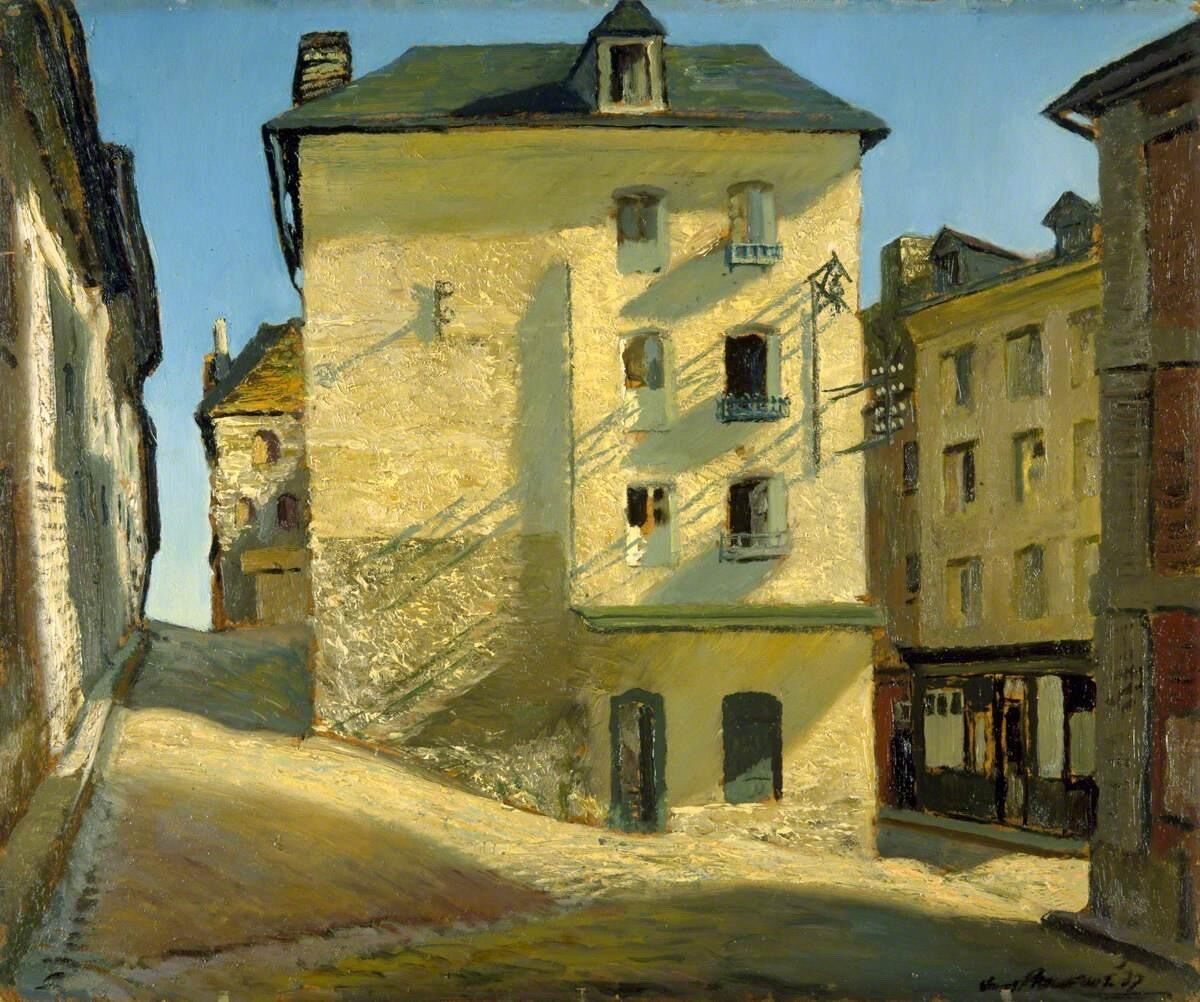
Sun On A House, Dieppe (1937) by Scottish painter James Proudfoot (1908-71) I really find his use of light here captivating.  However, unlike a couple of other artists I've come across recently, John Atkinson Grimshaw and Joseph Wright, I've not found any of Proudfoot's other work appealing.

Image 

Sunday, June 29, 2025

Stagecoach

John Ford's 1939 film, Stagecoach, made John Wayne a star and got Ford an Academy Award nomination for Best Director.  It's also the first of Ford's many films set in Monument Valley on the Navajo Reservation along the Arizona-Utah border.  This shot from the movie captures the spectacular setting, which I have visited twice and plan on returning to again.


(2019)


Saturday, June 28, 2025

Mark It 8, Dude

Image 

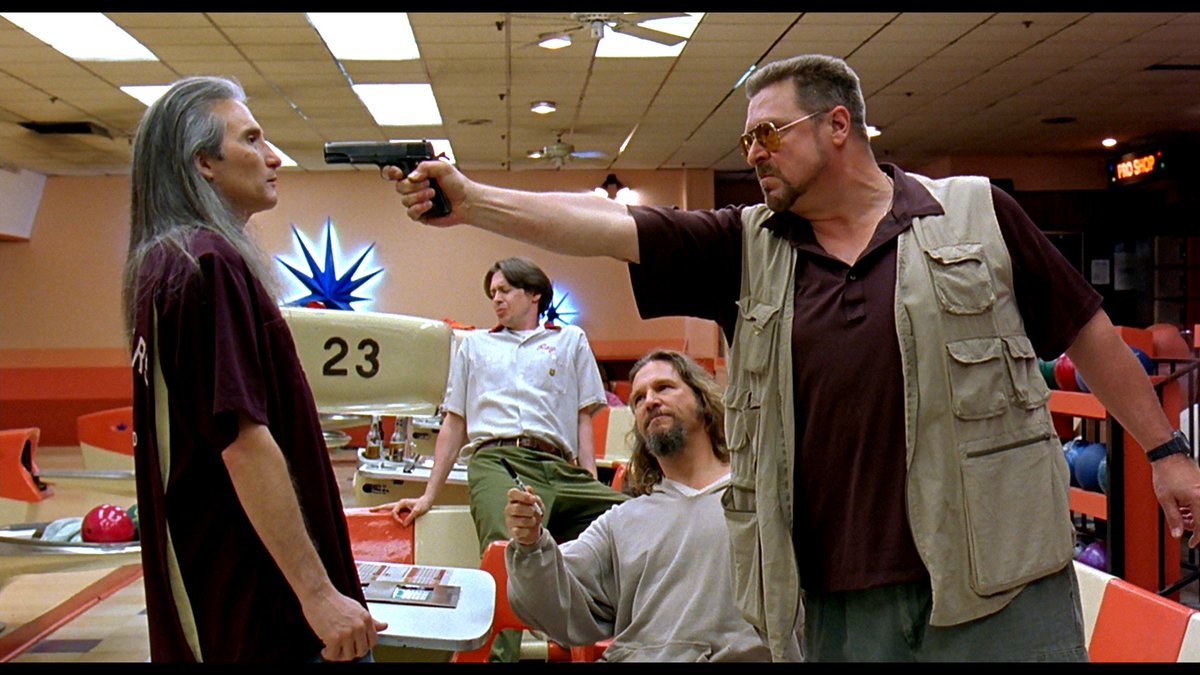
I missed it when Smokey turned 80 on May 6 (hat tip to Traces of Texas).  Smokey is Jimmie Dale Gilmore, a singer-songwriter from Texas who has been performing with the Flatlanders since 1972 and been nominated for three Grammys.

For most of us, however, Jimmie is best known as Smokey in The Big Lebowski, his only acting role (other than playing himself in a couple of films).  Playing an aging, pacifist bowler he is drawn into a dispute with Walter Sobchak about whether his foot slipped over the line.  Smokey's request that the Dude mark his score as 8 triggers a response from Walter, in which the latter prevails and the Dude marks it zero.  It is Jimmie's only scene in the movie and it is quite memorable. 

Friday, June 27, 2025

Polo Grounds

The Polo Grounds in upper Manhattan was the home of the New York Giants from 1891 through 1957 and of the New York Mets in 1962 and 1963.  I only saw one game there, on June 3, 1962, the day Willie Mays returned with the San Francisco Giants to play the Mets, three days before I met Willie at Wrigley Field during batting practice.

Baseball History Nut recently featured a day devoted to the Polo Grounds from which the depictions below are taken.  Here's a piece I did on Mel Ott, the great Giant slugger in the 30s and 40s.

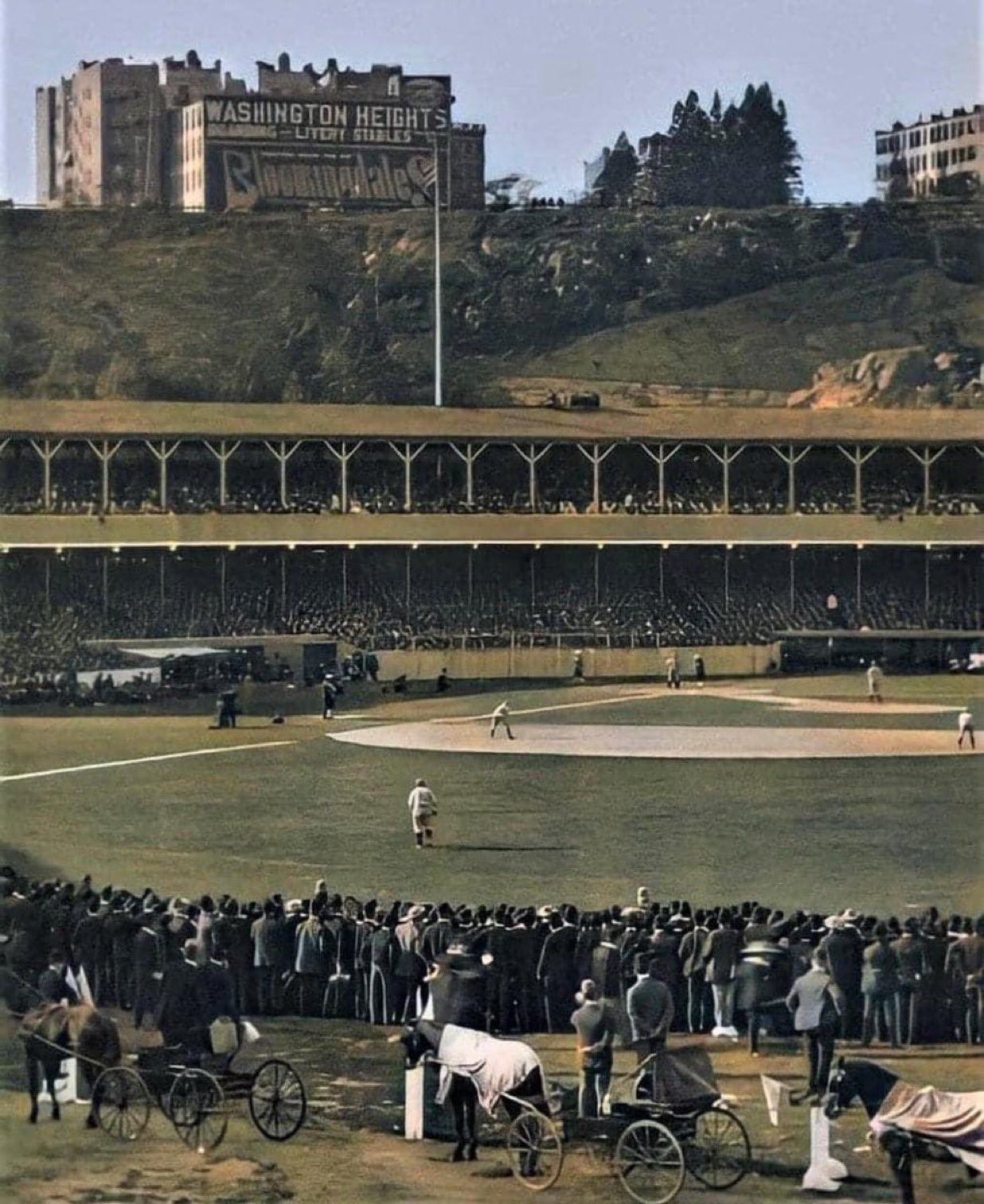
This colorized photo is from before 1920 and shows Coogan's Bluff looming above the park.  There was an elevated subway station atop the bluff, at which you would disembark and walk down to the stadium.
Image 

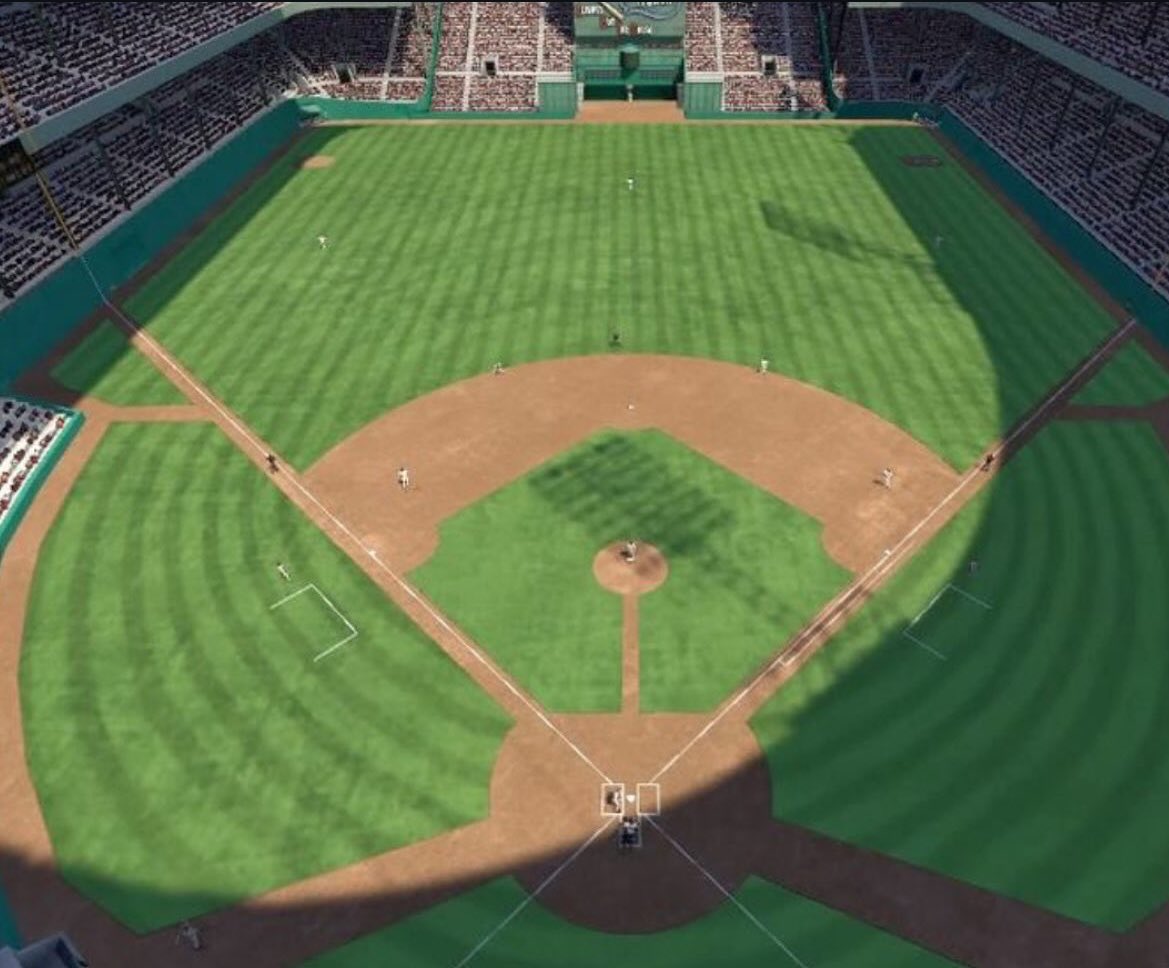
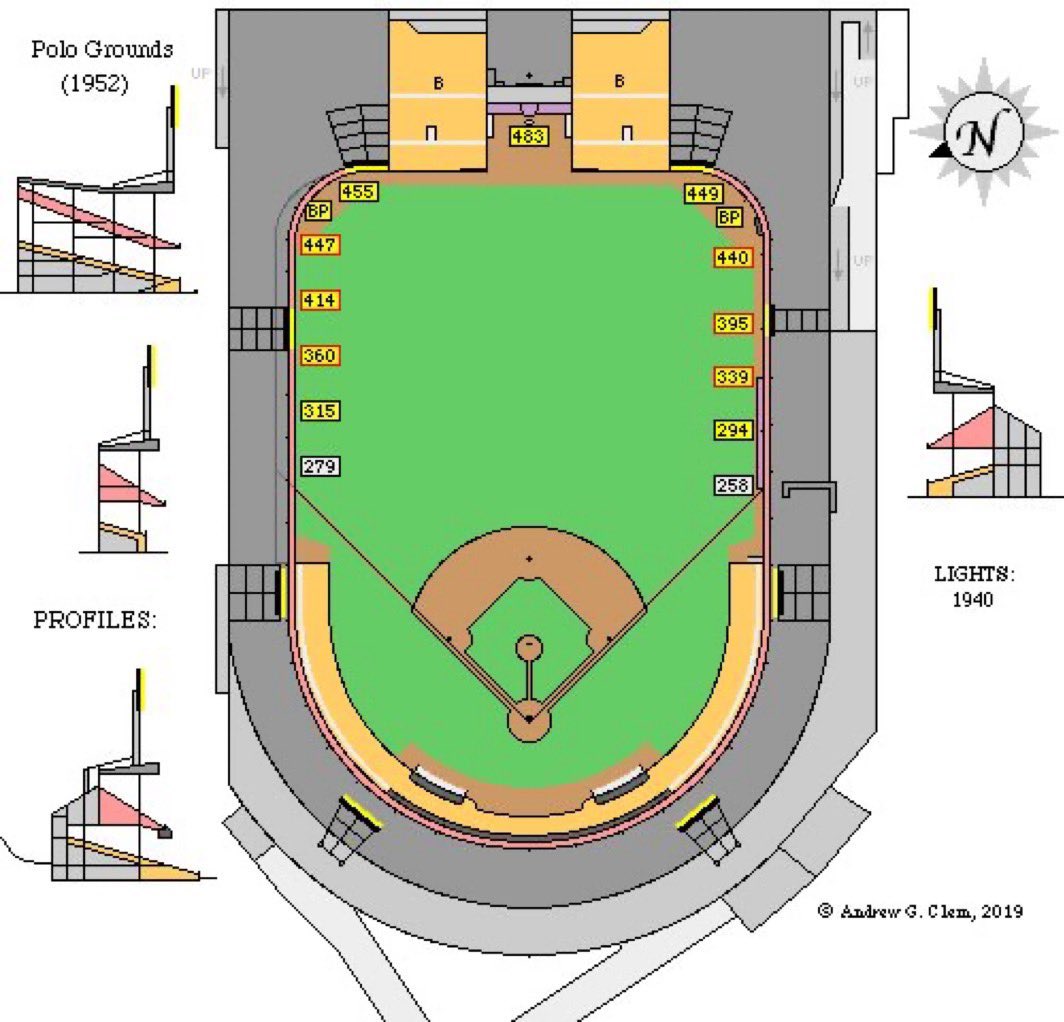
This shows the unusual configuration and dimensions of the playing field.
Image 

 What that configuration looked like:

Image 

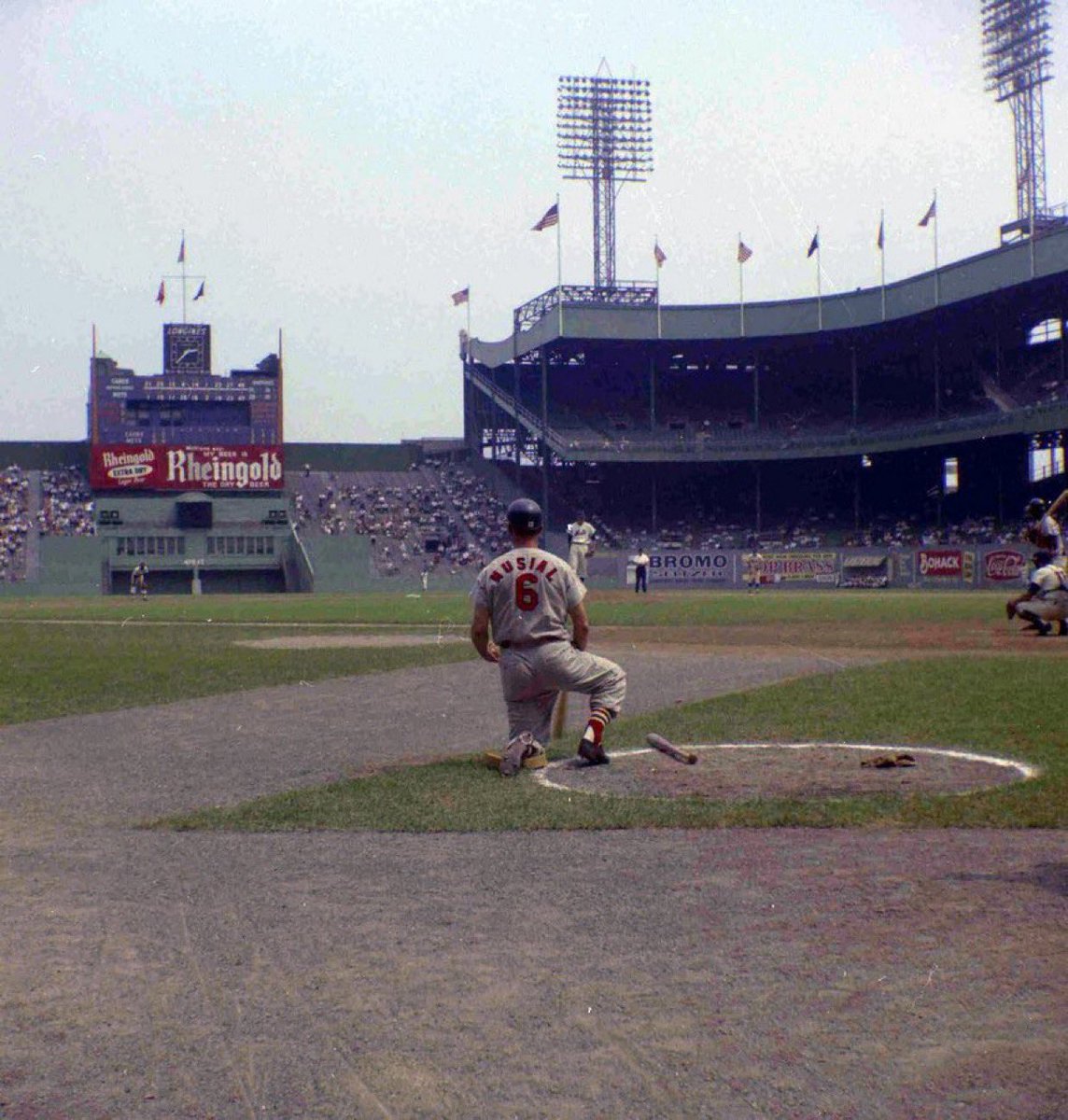
Stan Musial at the Polo Grounds, his favorite park for hitting home runs: 49 in 171 games while also batting .343.  Because of its unusual configuration, the Polo Grounds was the only one of the ten parks in which Stan had at least 100 at bats where he had fewer doubles than home runs - 24 v 49.  It's also the place where he had the second highest on base (.438) and slugging percentage (.633) of the ten.  Ebbetts Field was his favorite - Stan the Man had 100 extra base hits in 161 games at the home field of the Dodgers, batting .359 with a .660 slugging percentage.
Image 

Thursday, June 26, 2025

Roots And Trees

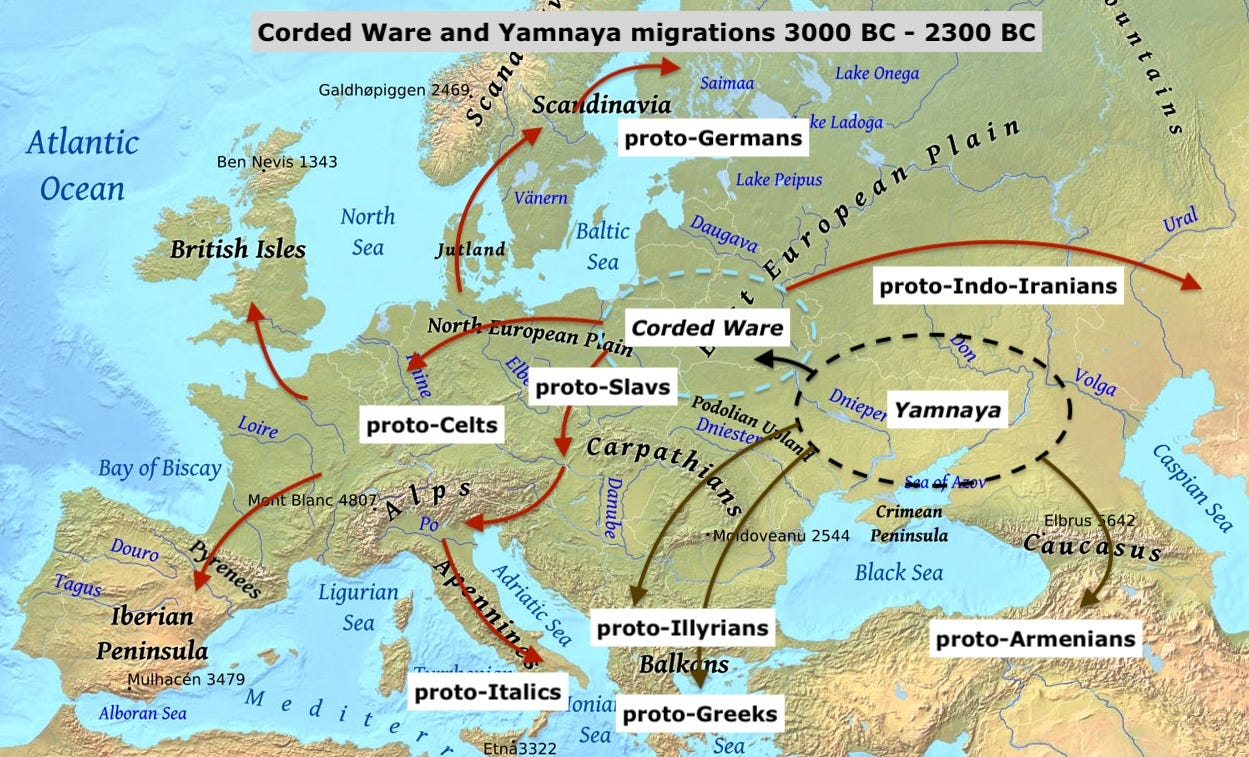
On how new DNA findings reinforce a linguistic hypothesis about the origin of Indo-European languages and of the peoples behind that origin and growth.  From Razib Khan's Unsupervised Learning, We are what we speak: Indo-European phylogenetic and linguistic trees concur.

Here's the opening:

The ancient-DNA era for the human species is not yet 15 years old. It kicked off with the 2010 paper Paleo-Eskimo genome (followed by blockbusters on Neanderthals and Denisovans). Today, remains from tens of thousands of ancient humans offer us decipherable DNA information, each contributing to fill in gaps in our understanding of prehistory.

No matter the brilliance and insight of its practitioners and theorists, human prehistory’s age of genetic inference, when we were limited to examining modern genomes to learn about ancient peoples, was like trying to comprehend the world’s oceans solely from the activity observable in its brightly lit uppermost layers, the photic zone that reaches down at most about 200 meters. Though some key insights date to the before times, the paleogenomic era after 2010 has been absolutely revolutionary and transformative. Name a superlative, and it probably isn’t strong enough.

Razib's essays on human origins are uniformly well written and informative.  His podcasts are less well organized and his political ones not particularly well done. 


Words Of Wisdom

Endorsed 100%