Showing posts with label Painting. Show all posts

Friday, December 19, 2025

Moonlight At Wharfedale

Another painting by an artist I discovered only a couple of years ago, John Atkinson Grimshaw (1836-93).  Wharfedale is one of the Yorkshire Dales and is north of Leeds.  A master at capturing light in the evening.

Image 

Sunday, July 20, 2025

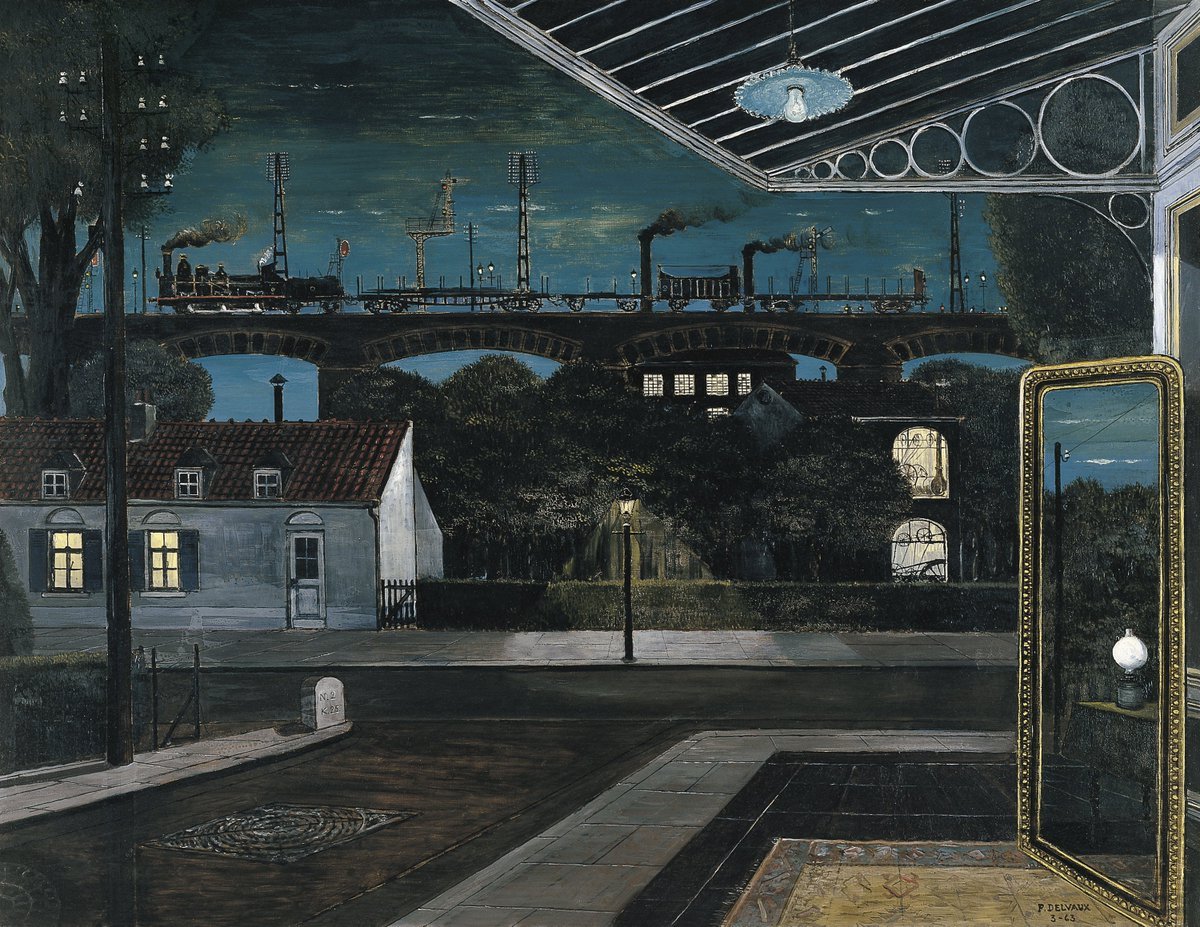
The Viaduct

 By Belgian artist Paul Delvaux (1897-1994).  The train makes it.  Via Marysia.

Image

Monday, June 30, 2025

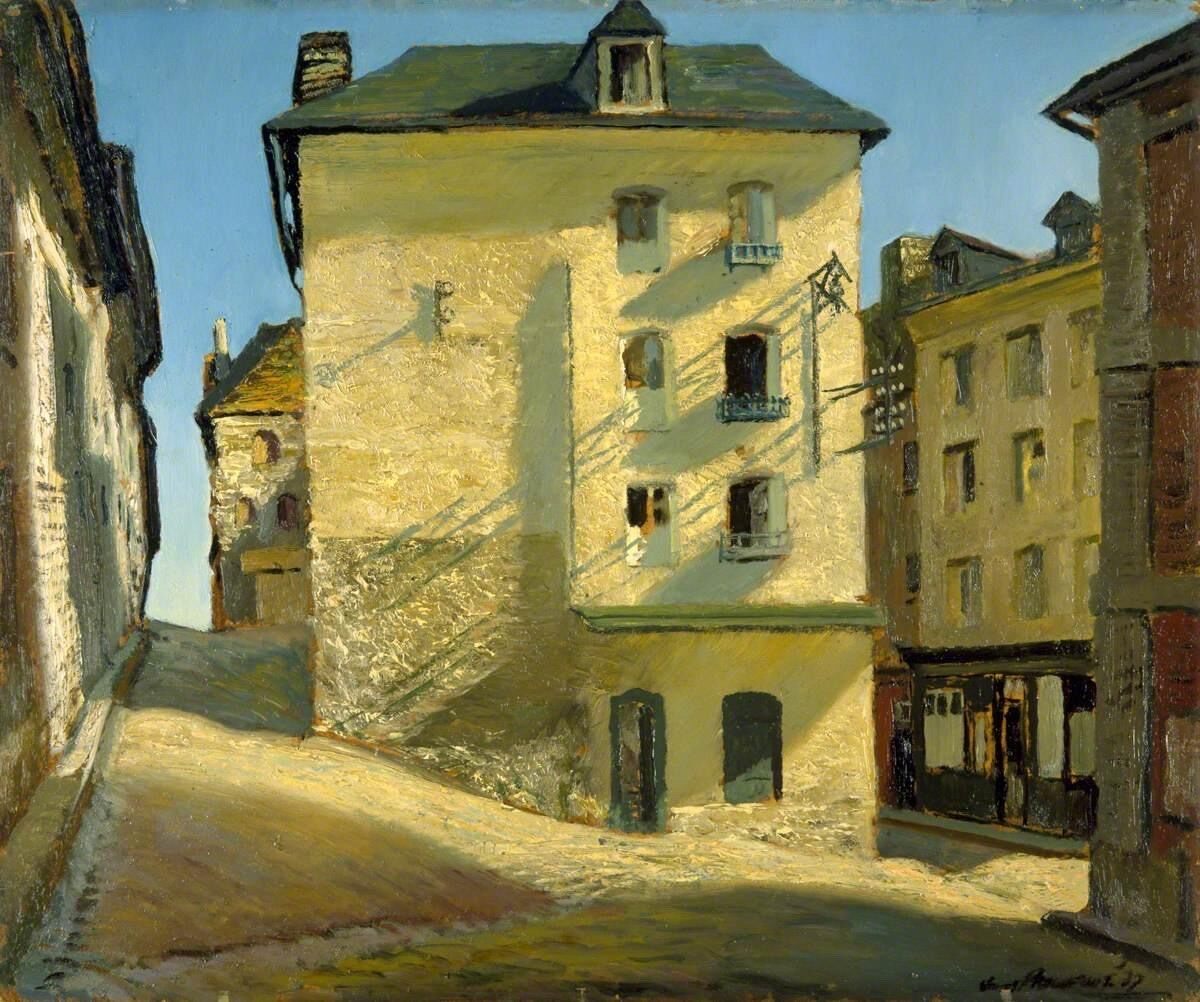
Sun On A House

Sun On A House, Dieppe (1937) by Scottish painter James Proudfoot (1908-71) I really find his use of light here captivating.  However, unlike a couple of other artists I've come across recently, John Atkinson Grimshaw and Joseph Wright, I've not found any of Proudfoot's other work appealing.
Image 

Monday, December 18, 2023

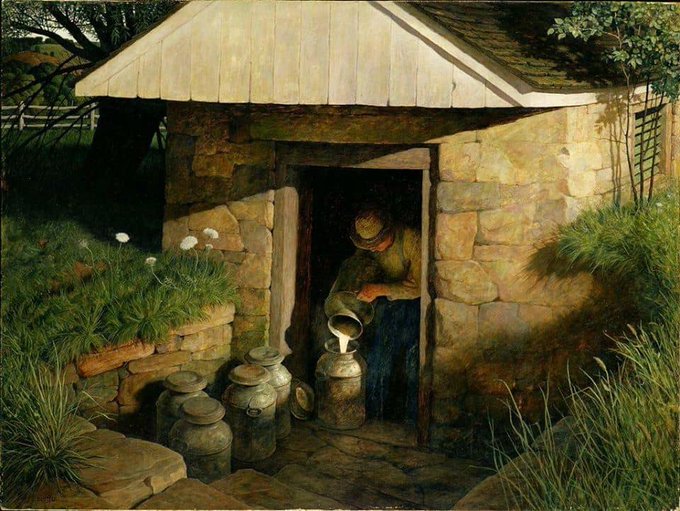
The Spring House

By NC Wyeth, a year before he passed in 1945.  This work draws me in.  It is mesmerizing and subtlety moving the longer I look.
Image

Friday, November 17, 2023

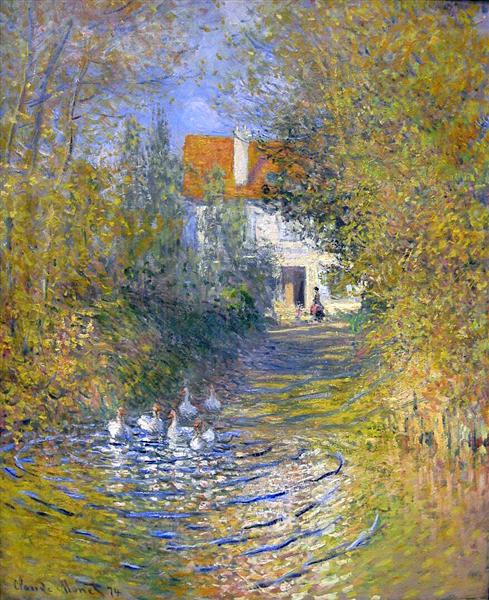
Geese In The Creek

 Claude Monet from 1874.  Think I'll just imagine myself here.

Geese in the creek, 1874 - Claude Monet

Tuesday, August 22, 2023

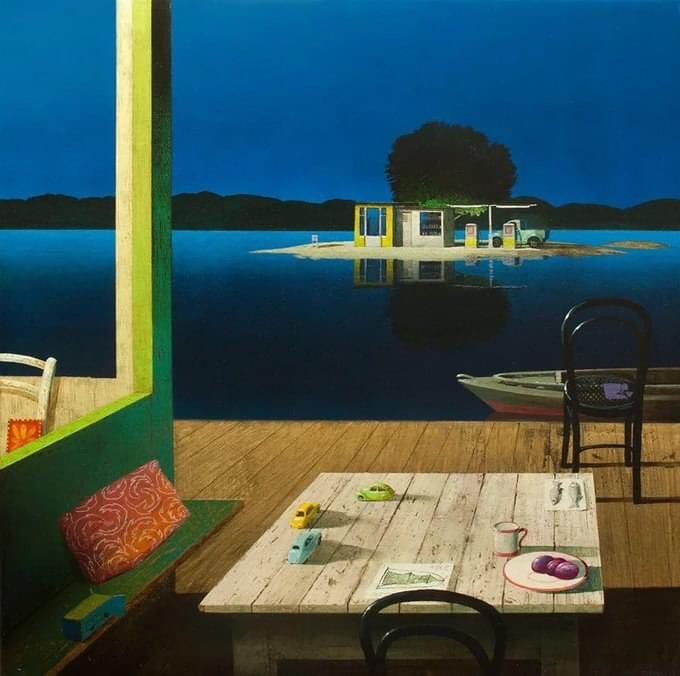
Tofanelli

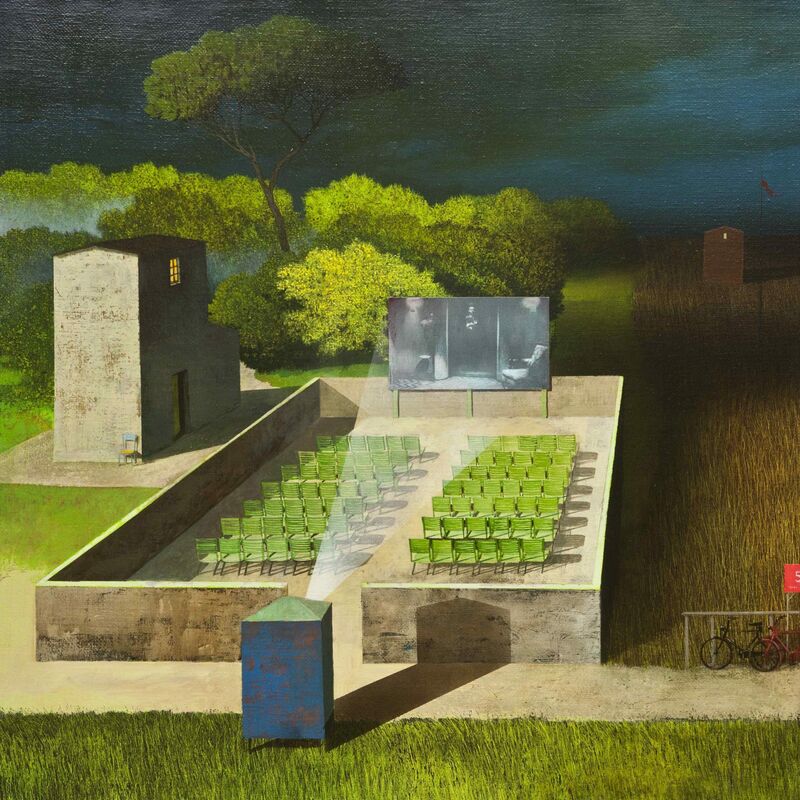
Via Olga Tuleninova, I came across Italian painter Alessandro Tofanelli, and was very intrigued by his imagery.  A few samples below.
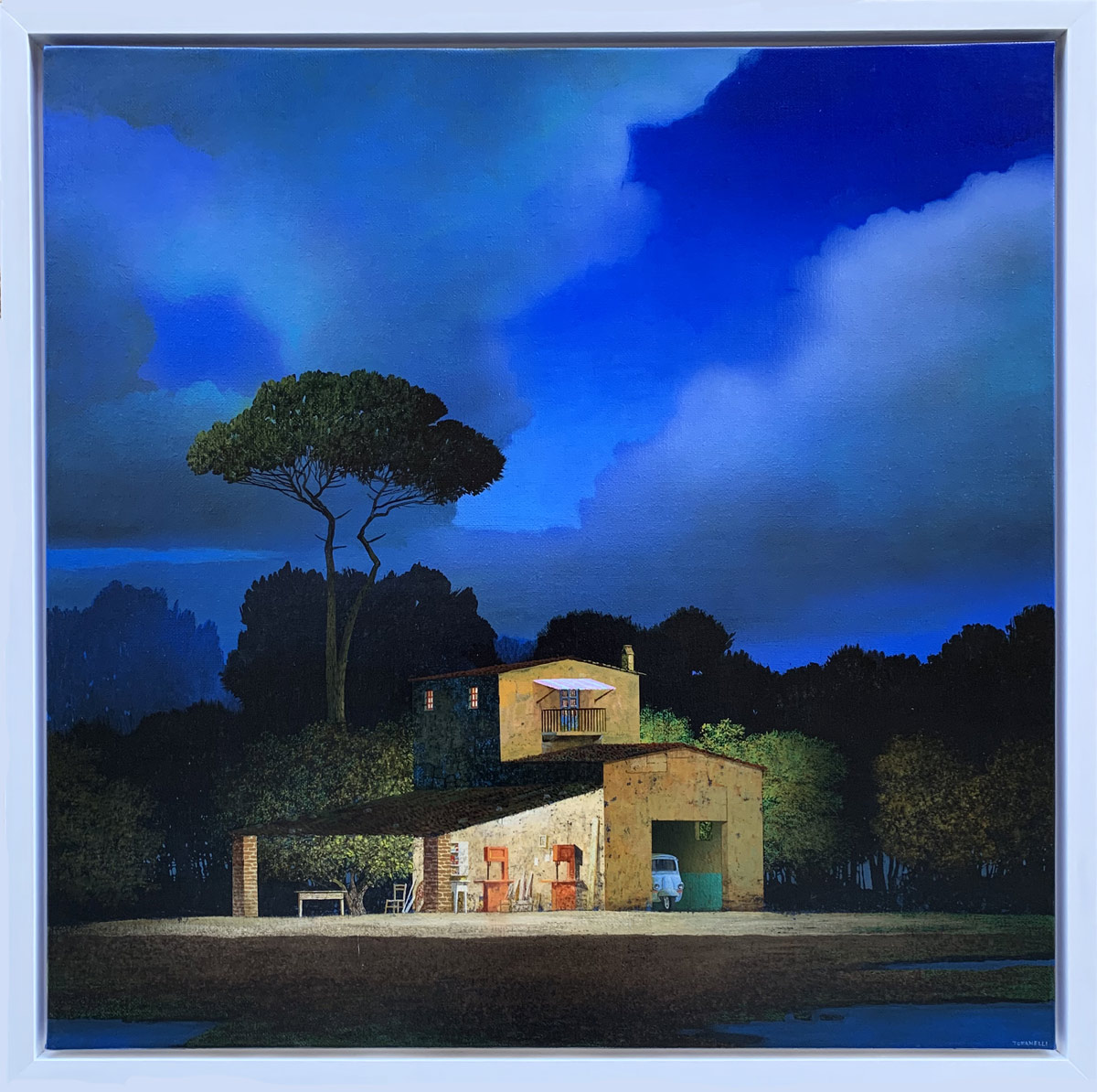
Image Alessandro Tofanelli | CINEMINO (ca. 2019) | Available for Sale | Artsy  And here.

SERA D'AGOSTO by the artist Alessandro TofanelliImageImageImageTestaments to the Boom Times to Come — fravery: Alessandro Tofanelli (born  1959,...

Wednesday, July 5, 2023

Meadow

After one of her paintings won acclaim at the 1884 Paris Salon, demand grew for Anna Billing's work.  I enjoy the perspective and feel of this.


Monday, April 3, 2023

Hopper Along

Someone made this lovely video of Edward Hopper's paintings from 1935 to 1941.  All are set in New York or the surrounding area (some look very much like the Connecticut shoreline).


Sunday, November 13, 2022

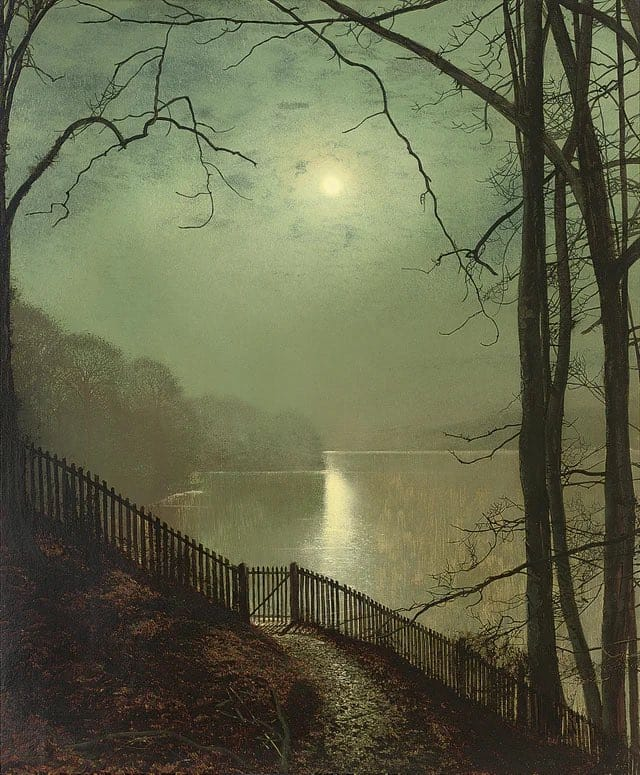
Moonlight On The Lake

Image

I first encountered the work of English artist John Atkinson Grimshaw via the twitter account of Darrell Epp, which is full of fascinating and interesting cultural tidbits.  I so enjoy his use of light.
Sunday, October 2, 2022

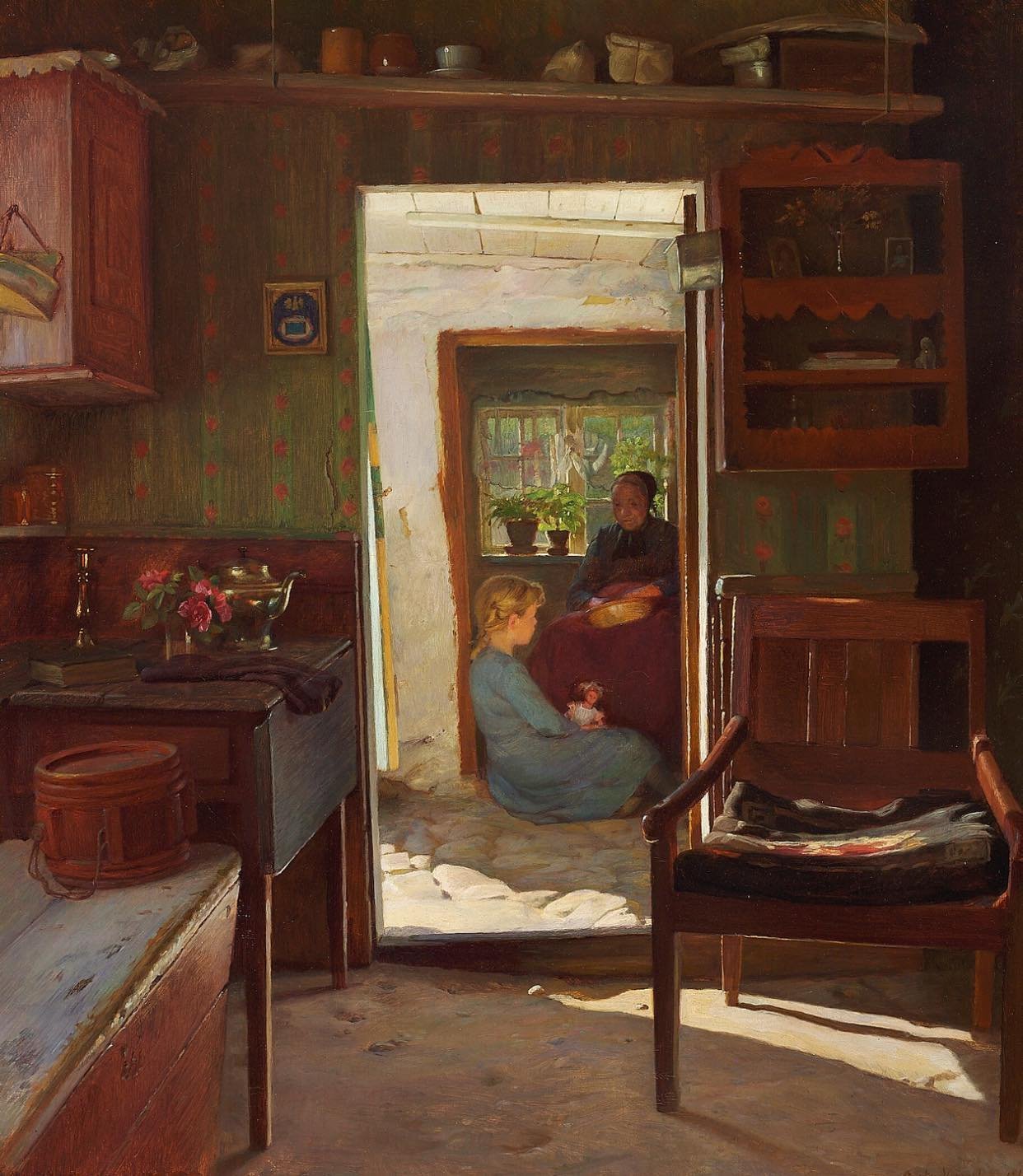
Peaceful Easy Feeling

Image

By the Danish artist Gustav Vermehren (1863-1931); titled, A Little Girl and Her Grandmother, Seen Through a Doorway.  What, you thought I'd post an Eagles song?  This is much better.


Wednesday, August 17, 2022

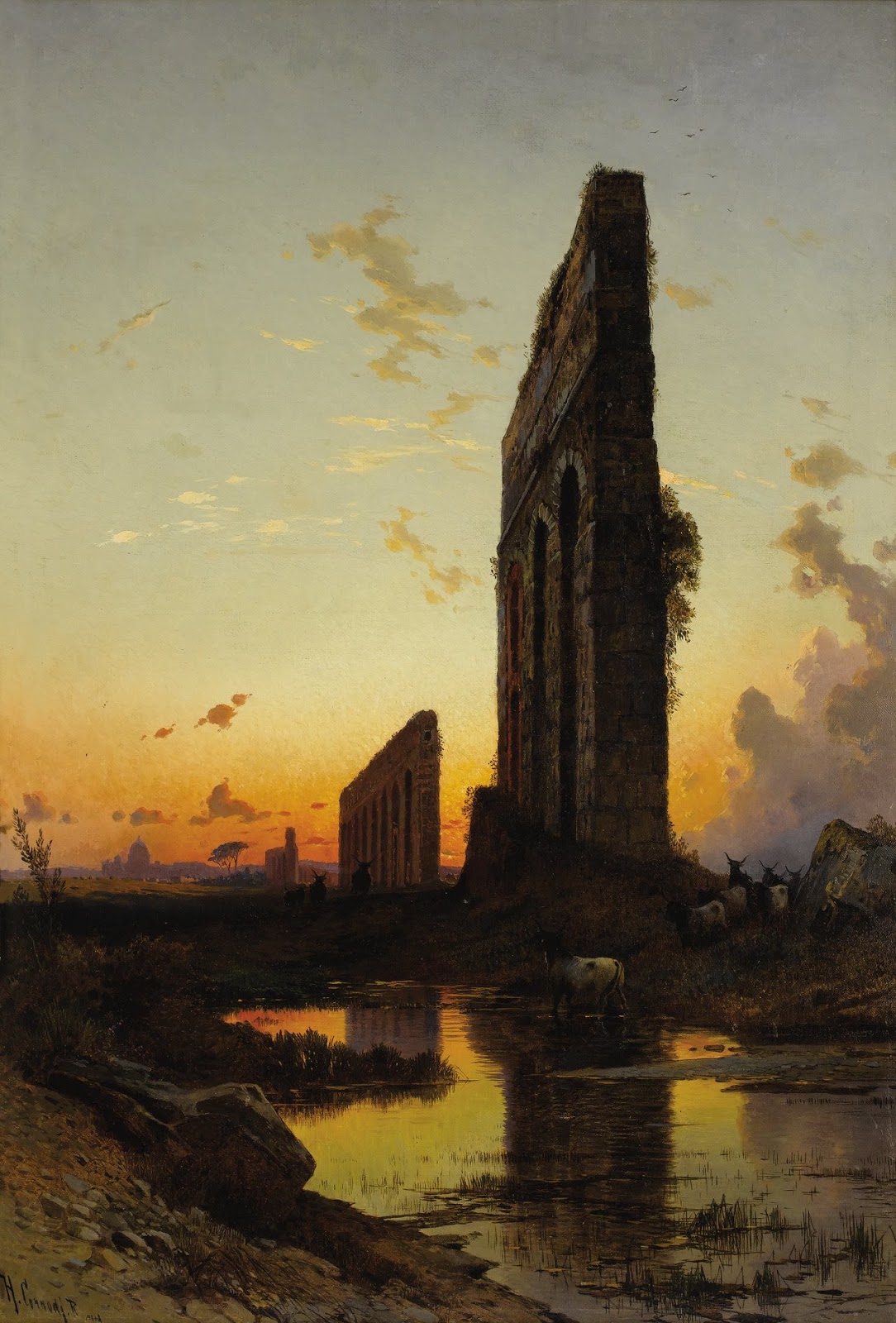
Sunset At Aqua Claudia

 Image

By Hermann Corrodi, an Italian painter; done sometime in the 1870s.  The remnants of a vanished world.  

The Aqua Claudia was one of the largest capacity aqueducts supplying water to Rome.  Started under Emperor Caligula (37-41 AD) and completed in the reign of Emperor Claudius (41-54 AD), it eventually extended to most of the districts of Rome, including the Imperial Palace on the Palatine Hill.  Most of its 43 mile length was underground until it emerged on the plains outside Rome from where it was carried on arches the last few miles into the city.   The cutting of Aqua Claudia and the other aqueducts during the 6th century siege of Rome by the Goths accelerated the decline of the classical city, prompting the abandonment of the Palatine Hill, and migration of the city's remaining population to other locations in Italy or closer to the Tiber River.

From Wikipedia, this is a current view of the largest remaining section of the aqueduct.


Friday, August 5, 2022

California Scene Painting


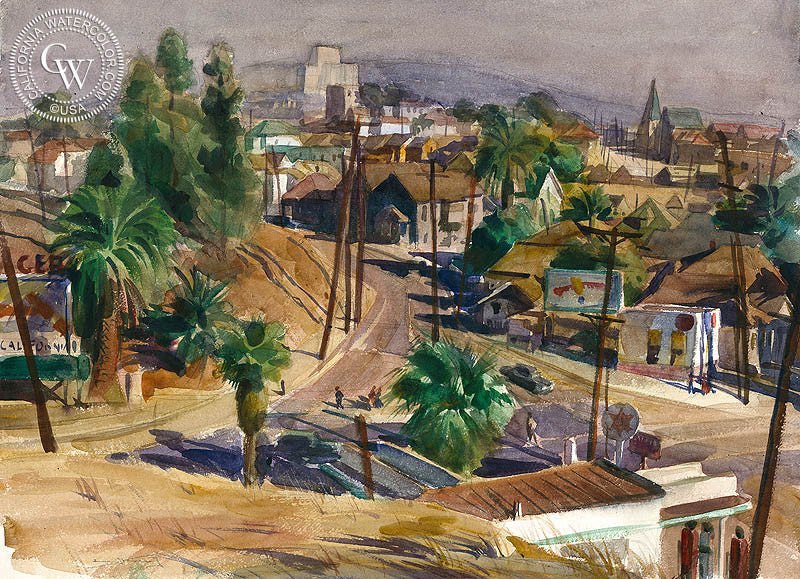
Junction at Acton, a limited edition lithograph by Emil Kosa Jr.. Rare vintage art print for sale at CaliforniaWatercolor.com - original California paintings, & premium giclee prints for saleCalifornia Scene Painting is defined in Wikipedia as "a form of American regionalist art depicting landscapes, places, and people of California. It flourished from the 1920s to the 1960s."

One of its leading practitioners was Emil Kosa Jr, whose paintings are featured in this post.  Born in 1903 in Paris, his family moved to the U.S. and then to Czechoslovakia in 1912.  Returning to the U.S. in 1921, Kosa moved to California where, in 1933, he joined the newly formed special effects department at 20th Century Fox where he was soon named art director, a position he held until his death in 1968.

In 1964, Kosa won the Academy Award for Best Visual Effects for his work on Cleopatra and is credited with designing the famous logo of 20th Century Fox.

20th Century Fox Logo PNG Transparent & SVG Vector - Freebie Supply

Emil Kosa, Jr. (1903-1968). Telegraph Hill, San Francisco. Oil on Canvas, 25 x 30 in. The Irvine Museum.Welcome to California, c. 1940's, watercolor art by Emil Kosa Jr. –  California WatercolorEmil Jean Kosa Paintings & Artwork for Sale | Emil Jean Kosa Art Value  Price Guide

Sunday, September 5, 2021

Nighthawks

 Nighthawks by Edward Hopper 1942.jpg

I quite enjoyed this video essay on Edward Hopper's 1942 painting Nighthawks.  Very insightful.  Via Open Culture.


Tuesday, June 4, 2019

A Life

Rembrandt van Rijn (1606-69) painted self portraits from his young adult years until just before his death.  A few years ago someone called LemurHeart created this short video showing all of Rembrandt's self-portraits morphing as the artist grows older.  I found it very moving and thought the artist seems more soulful as he ages, though that may because I'm now an Old Guy myself


Saturday, January 5, 2019

Artists On The Banks Of The Dordogne River


RxhPCpU

By Jules Gervais-Courtellemont (1925).  Near Beaulieu.  On our trips to the region we are never visited this location, having only been within about five miles.  Will get there on our next trip.

Monday, December 10, 2018

Arch Of Constantine

Painting by Giovanni Canaletto, a Venetian, who visited Rome in the 1720s.

https://upload.wikimedia.org/wikipedia/commons/4/44/Giovanni_Antonio_Canal%2C_il_Canaletto_-_Rome_-_The_Arch_of_Constantine_-_WGA03924.jpg Just to the right of the Arch can be seen part of the Colosseum.  The Arch was constructed in the early 4th century after the Constantine the Great's defeat of his rival Maxentius at the Battle of the Milvian Bridge in 312, just outside of Rome.  It was the last triumphal monument of the Rome Empire constructed in the city.  Even by that time the quality of monumental art had declined, with many of the statutes and facades of the Arch scavenged from monuments of prior centuries.

Within two centuries the city entered a period of sharp decline with the monuments, building, and palaces of the empire no longer being maintained and, in most instances, having their marble cladding removed or sometimes the very structure being dissembled for use elsewhere.

The city proper retreated to the banks of the Tiber with many of the outlying areas, including the former Forum and the area around the Colosseum left to decay, surrounded by agricultural lands, vineyards, gardens, and occasional churches, monasteries, villas, and strongholds for the quarreling families that dominated local politics for centuries.  For more on this period read Belisarius Enters Rome, which occurred on December 9, 536.

As late as 1870 much open land remained south of the Colosseum.

Monday, November 12, 2018

The Tower Of Katoubia Mosque

29_7575_1
 
Trying to find a calming escape from politics, Winston Churchill took up landscape painting between the two world wars.  Over his lifetime he completed several hundred paintings but during the Second World War he only attempted one.

At the end of the Casablance Conference in January 1943, Churchill persuaded President Franklin Roosevelt to accompany him to his beloved Marrakech to see the sun set over the Atlas Mountains.  Arriving in Marrakech, Churchill arranged for FDR to be carried in his wheelchair to the roof of their hotel to watch.

After Roosevelt left, Churchill spent two days in his rooms completing the picture you see above, and then had it sent as a gift to the President.

The mosque, built in the 12th century, is the largest in Morocco, and is considered a forerunner of the Moroccan-Andalusian style of architecture.  Non-Moslems are not permitted inside.


Wednesday, July 12, 2017

A Dutchman In Rome

Born in Amerfoort, Holland in 1653, Caspar van Wittel left the Netherlands in 1674 for Italy, residing primarily in Rome, where he died in 1736.  He became well known for his urban landscape paintings, many of which juxtaposed the remnants of imperial Rome with the reality of the shrunken city at the beginning of the 18th century.

I've always been taken with this particular piece which shows the Arch of Titus with the Palatine Hill on the left.  It's a reminder both of durability and fragility.  The structure, though damaged remains, but the city and Forum surrounding it are mostly long gone, as well as those who built it.  The humbleness of the inhabitants we see is also a reminder of the transitory nature of things.  The Arch straddles the Sacred Way.  Triumphal processions would approach it up a slight incline having just passed by the Colosseum, 300 yards away.  Straight in front of them, down another slight incline was the Roman Forum, the heart of the empire.

To the left, the Palatine Hill was crowned by an enormous sprawling complex of Imperial Palaces clad in marble.  In 1700 we see the Palatine covered in trees, and scattered people walking through the ruins around the Arch, with a horse walking down the path from the Palatine.  The once carefully paved Sacred Way reduced to a rough dirt path.  The Arch itself is no longer maintained and is slowly eroding away.  The monumental buildings surrounding it long ago had their marble cladding stripped and their exposed cores left to crumble.  For more on the deterioration of Classical Rome over the centuries read Belisarius Enters Rome.

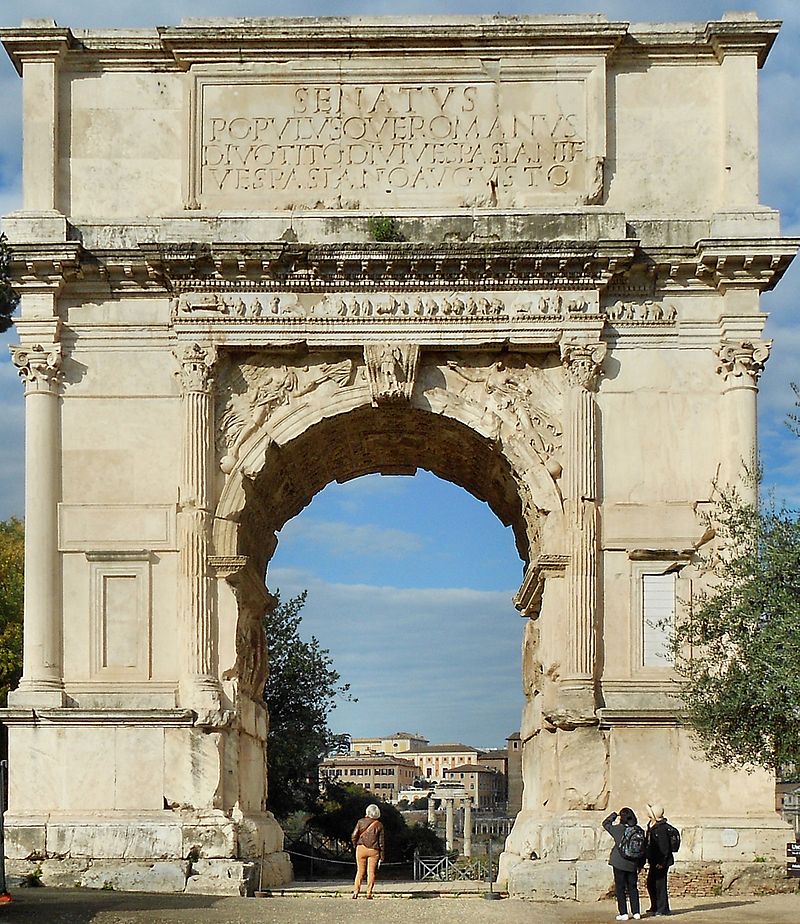
The inscription on the Arch reads:
The Senate
and the People of Rome
to the late revered Titus Vespasian Augustus
son of the late revered Vespasian
The monument was erected by the Emperor Domitian (81-96), the younger brother of the Emperor Titus (79-81), the sons of Emperor Vespasian (69-79), who constituted the Flavian Dynasty.  Vespasian, an experienced and stern soldier came to power in the wake of the overthrow and subsequent suicide of Nero (54-68) and amidst the turmoil of the Year of the Four Emperors when it was demonstrated that the legions far from Rome would be the decisive force in choosing the new emperor.

As a ruler, Vespasian was strict and personally austere, a complete contrast to the profligate,  undisciplined and disliked Nero.  Vespasian had his predecessor's hated palace, The Golden House, turn down, filled in its lake and on its former location had the Flavian Amphitheatre (better known to us as the Colosseum) built for the people of Rome.  Succeeding him, Titus was more charismatic and popular and his early death due to illness was a shock.  The Arch was built shortly after Domitian's accession to the throne.  Domitian was also initially popular but sank into paranoia and more and more irrational acts unlike he was assassinated in a conspiracy led by his own wife who feared for her life.

Much of the decorative aspect of the Arch commemorates the accomplishment for which he was most honored by Romans; his crushing of the Jewish Revolt in 67-70 and the sacking and complete destruction of the great temple in Jerusalem.  In the photo below the picture you can see a depiction of the great menorah being removed from the temple as a trophy of Rome's victory.  When I first saw the Arch in person it created quite a mixture of emotions for me.  Thousands of Jews were enslaved by the end of the rebellion and many of them brought to Rome where they worked as part of the labor force constructing the Colosseum.  Some may still have been around to work on the Arch of Titus.

Much of the exterior of the Arch a tourist sees today is not the same as that painted by Wittel three hundred years ago.  By the early 19th century there had been so much further degradation of the structure that in 1822, at the direction of the Pope, it was completely rebuilt in travertine.  The inscription, however, is the original.
https://upload.wikimedia.org/wikipedia/commons/thumb/c/c2/7_Rome_View_of_the_Arch_of_Titus.jpg/1008px-7_Rome_View_of_the_Arch_of_Titus.jpg

The menorah being carried away.
Image result for arch of titus location map

As it looks today:
By Rabax63 (Diskussion) - Own work (Original text: Eigene Aufnahme), CC BY-SA 3.0, https://commons.wikimedia.org/w/index.php?curid=31309658

Monday, June 19, 2017

I'd Like To Walk This Path

Painting by Paul Emile Pissarro (1884-1972), son of the French artist Camille Pissarro.

Displaying Attachment-1.jpeg