Showing posts with label Early American. Show all posts

Thursday, April 21, 2016

The Sudbury Fight


On April 21, 1676, somewhere between 500 and 1,500 Indian warriors made their closest approach to Boston during what became known as the Sudbury Fight.  It happened during Kings Philip's War of 1675-6, the bloodiest settler-Indian conflict in American history, as measured by the percentage of the male population killed or wounded (THC wrote of the origin, course and memory of the war in the post Bloody Brook).  King Philip (native name Metcomet), lived near the Rhode Island/Massachusetts border and an incident involving him triggered the war.
http://penelope.uchicago.edu/Thayer/Images/Gazetteer/Places/America/United_States/_Topics/history/_Texts/EAMKPW/map=large*.jpg
(Map from King Philip's War by George Ellis & John Morris (1906) via U of Chicago.)

By the late winter of 1675-6, Indian attacks had forced the abandonment of the towns of central Massachusetts.  Settlers in the Connecticut River Valley towns were huddled closely in several towns for protection and small settlements in Rhode Island, Connecticut, New Hampshire and Maine had come under attack.

In March a meeting of Indian warriors at Mt Wachusetts (see map above) resulted in a decision to attack settlements to the east in the direction of Boston, with Sudbury being the immediate objective (reportedly after rejecting an attack on Concord).  Marlboro, Groton and Lancaster were quickly overrun and burned and by the evening of April 20, the warriors were on the outskirts of Sudbury.

At the time, the boundaries of Sudbury were different than they are today, also embracing current-day Wayland as well as Maynard to the northwest. Most of the town's populace was located on the east side of the Sudbury River, in what is now Wayland.  Eastern Massachusetts has been densely settled for more than two centuries, but in the latter part of the 17th century, it was on the frontier.  Beyond the new town of Marlboro, immediately to the west of Sudbury, there were only scattered settlements in the midst of the woodlands until you reached the Connecticut Valley towns.

All of the frontier towns like Sudbury and Marlboro depended upon local militia for protection against Indian raids from the western wilderness and also upon "garrison" houses; selected homesteads strengthened for protection, well-provisioned to withstand sieges and with guns and powder available to which families could flee in times of trouble.  There were six garrison houses in Sudbury.

On April 21, there were about 200 defenders of the Sudbury settlement.  About 80 local militia along with several columns of militia from other towns were in the area that day.

The action opened with an early morning attack by the Indians on the garrison houses as well as a crossing of the Sudbury River and the burning of some homes in the eastern part of town.  The primary target was the Haynes Garrison house, just west of the river, where the siege began at 6 am.

The Sudbury Fight         Cowell and Wadsworth• Wadsworth draws off the Indians from Cowell, but  is drawn further into Su...
(screenshot from slideshare; an excellent presentation on King Philip's War in Marlboro, worth looking at, it can be found here)

Stationed in Marlboro was a company of about 70 under the command of Captain Samuel Wadsworth.  While most of the settlement had already been burned, Wadsworth's company was stationed at one of the garrison houses to which he had march through Sudbury without being aware of the gathering force of Indians.  Upon hiring firing, Wadsworth took about 50 of his men and began marching towards Sudbury.  On another road between Sudbury and Marlboro, a company of 18 mounted men under Captain Edward Cowell was ambushed, with four of his men killed before the Indians withdrew and he cautiously made his way into Sudbury.

Meanwhile, another company of about 40 from Watertown under Captain Hugh Mason mustered and began marching west to Sudbury's relief upon getting the alarm.  As they pushed into Sudbury they found the Indians on their front withdrawing.

The siege at Haynes Garrison house continued into early afternoon, with constant shooting and unsuccessful attempts by the Indians to set the house afire.  At one point, those in the house watched in horror as 12 Concord men, moving south along the river to help those in Sudbury were ambushed, with only one escaping.  Early afternoon saw the end of the garrison house siege as the Indians withdrew.

It was only later in the day that the reasons for the Indian withdrawals became clear; Wadsworth's company had fallen into yet another ambush and his force was big enough that all of the Indians in the area were needed to annihilate it.  Taking up a position on Green Hill near the Sudbury/Marlboro border, Wadsworth's men waged a desperate struggle that afternoon.

Samuel Wadsworth was already an experienced combat captain in the war.  He came from a distinguished family, arriving in Boston, as a two-year old, with his father Christopher aboard The Lion in 1632.  Christopher's older brother, William Wadsworth, arrived on the same ship and went on to become one of the founders of Hartford, Connecticut.  Young Samuel grew up in Duxbury, near Plymouth, before moving to Milton, southwest of Boston in 1656.  There, he and his wife Abagail raised eight children (five surviving into adulthood) on their 300 acre farm.  One of his sons, Benjamin, six years old in 1676, went on to become President of Harvard College from 1725 to 1737.  Wadsworth House at Harvard, built for Benjamin in 1726, still exists as the second oldest building at the University and served as George Washington's first headquarters when he arrived to take command of the Continental Army in July 1776.

Despite his experience, Wadsworth did not survive the battle - nor did 28 of his soldiers. The survivors were able to break out of the encirclement and seek refuge in the garrison houses.  Little is known of the details of the struggle on Green Hill.  This account is from the 1906 book by Ellis and Morris on the war:
In the evening the worst was confirmed. Captain Wadsworth had learned, soon after his already at Marlboro, of the storm gathering in the rear. Leaving the least efficient of his command in garrison, and taking with him Captain Brocklebank and the troops who had been relieved, he marched back without delay. He was expected. As he neared Sudbury by the south road, a few warriors appearing across the path ahead amid the trees, fled before him toward Green Hill. Experienced soldier though he was he believed that the main body of the foe had been seized with a panic on his approach, and, leaving the road, in eager pursuit rushed into the woods. The flitting of dusky forms and the roar of musketry from all sides soon undeceived him. The troops rallied and fought their way to the crest of the hill and, sheltering themselves behind the trees and rocks, held their own until the evening fell. Then the Indians fired the bushes and grass to windward, and as Wadsworth's weary men fell back in the dusk, blinded by the smoke, and their nerves shaken by the loss of many of their comrades, a panic seized them, the Indians closed in, there was a brief hand to hand conflict, and all was over. 
(Wadsworth monument on Green Hill from U of Chicago page on Ellis & Morris book)

[image ALT: On a flat clearing with a low rise behind it, a stone obelisk some 10 meters tall surrounded by a double row of well-kept fence. It is an early-20c photograph of the Sudbury monument near Green Hill, Massachusetts.]
That evening about 125 people - Sudbury families and surviving militia - huddled in the garrison houses on the west side of the river, anticipating a further Indian onslaught the next day.  But with dawn nothing happened.  The Indians had withdrawn to the west.

The Sudbury Fight was a tactical victory for King Philip's warriors.  They had successfully conducted three ambushes - on Cowell and Wadsworth's commands as well as on the Concord men, and destroyed much of Sudbury west of the river.  Fifty two militia were dead, while Indian losses may have been as few as four to six.  Why the withdrawal occurred remains unknown, but King Philip never resumed the offensive, the initiative quickly moved to the colonials, and the war was over by the end of the year. 

THC has always been interested in the events of the Sudbury Fight.  From 1973 to 1975 he lived in Sudbury and the foundations of the Haynes Garrison house were still visible along Water Row, adjacent to the river.  The Haynes Garrison House stood until 1876; this engraving is from a history of Sudbury (found via Along The King's Highway).  He and Mrs THC revisited the site earlier this year and took these photos:


Wednesday, April 22, 2015

Our Disposition, Not Our Circumstances

The greater part of our happiness or misery depends upon our disposition and not upon our circumstances

Martha Washington
http://upload.wikimedia.org/wikipedia/commons/thumb/f/f6/Martha_washington.jpg/210px-Martha_washington.jpg

Sunday, March 22, 2015

Decatur's Duel

Forty one years old, he was the most renowned naval hero of the early American republic, a man for whom cities in Georgia, Alabama and Illinois would later be named, when he was mortally wounded in a duel just outside the bounds of the District of Columbia on this date in 1820.  Stephen Decatur's name is linked with some of the most famous vessels in American naval history; Enterprise, Intrepid, United States and Constitution.  The circumstances of his death, at a time when most duels did not have fatal results, are still subject to much speculation.  Not only did his opponent and his second desire Decatur dead, but is it likely that Decatur's own second shared the same sentiment.
http://static.comicvine.com/uploads/original/10/100555/3547303-commodore-decatur-pic.jpg(Decatur)
Stephen Decatur was born in 1779 to a seafaring family that had fled the British occupation of Philadelphia and relocated to Maryland.  Following family tradition there was no question that the young man would go to sea and in 1795 he enlisted in the fledgling American navy.  He served with distinction during the Quasi-War with France (1798-1800) but it was the First Barbary War that gained him national recognition.

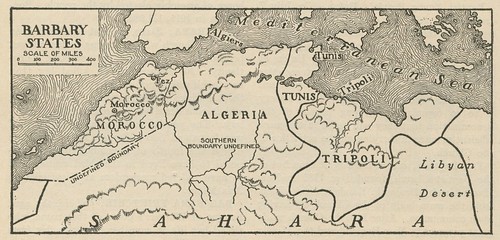
The various Muslim corsair states of North Africa (modern day Algeria, Tunisia and Libya) had been capturing European ships and enslaving crews and passengers for centuries.  In the 18th century, their depredations extended to American ships traversing the Mediterranean with captives being held to ransom.  In 1801 Thomas Jefferson received authorization from Congress to dispatch a fleet to deal with the worst of these states, Tripoli, which almost simultaneously declared war on the U.S.

In 1803, Decatur served as captain of USS Enterprise, a 14-gun schooner and later of USS Intrepid, a larger vessel renamed after he had captured it from the corsairs.  Late that year a large American frigate, USS Philadelphia, ran aground in Tripoli harbor.  The crew was imprisoned by the Tripolitans and the ship refloated by the corsairs leaving the US navy worried that it would be used against it.  Decatur volunteered to lead a party to try to recover or destroy the ship.  On the night of February 16, 1804, disguised as Maltese sailors, his party entered the harbor.  Decatur led the boarding party onto the captured ship overpowering the guards.  Unable to get the ship away, Decatur had it set afire resulting in its explosion when the fire reached the powder magazine.  Decatur and his men escaped without suffering any fatalities.  British Admiral Horatio Nelson declared it "the most bold and daring act of the Age" and reported widely in the American press, the exploit made the young sailor a national hero.
http://www.navy.mil/1812/images/1812_8.jpg(USS Philadelphia)

In August 1804, Decatur played an instrumental role in the American attack on Tripoli.  During the action his youngest brother was killed by a Tripolitan captain who had feigned surrender.  Stephen led an assault on the corsair ship, boarding it and killing the captain in hand to hand combat.

For his accomplishments Decatur was formally granted the rank of captain, the youngest in American naval history.

With the War of 1812, Decatur returned to action.  Commanding USS United States on October 25, 1812 he fought one of the most famous sea engagements of the war, defeating the British frigate HMS Macedonian.  In 1814 he became captain of USS President, flagship of the American fleet, and outgunned and outnumbered in a fight against British ships in January 1815 (after the peace treaty ending the war had been signed) he was forced to surrender the President, being held prisoner for a month in Bermuda before returning to America.
http://upload.wikimedia.org/wikipedia/commons/thumb/0/0c/BirchBattleBetweenTheUnitedStatesAndTheMacedonian.jpg/300px-BirchBattleBetweenTheUnitedStatesAndTheMacedonian.jpg(United States v Macedonian)

Immediately upon the end of the War of 1812, President James Madison embarked upon the Second Barbary War, this time against Algiers which had continued to harass and capture American ships and citizens.  Decatur commanded the American fleet, capturing the Algerian flagship and negotiating a treaty with the Dey of Algiers, bringing an end to the Barbary Wars.

Returning to the United States, he settled in Washington, serving on the Board of the Naval Commission until his death.  He built the first private home on Lafayette Square, near the White House and it was at an 1816 dinner party in the District that he gave the toast for which he is still known:
Our country - in her intercourse with foreign nations may she always be in the right, and always successful, right or wrong.
The origins of the duel in which was to die go back to 1807 when Decatur commanded the naval base in Norfolk, Virginia.  A British fleet showed up at the harbor entrance demanding the return of three alleged deserters who were serving on the USS Chesapeake, commanded by James Barron.  The Chesapeake set sail and encountered HMS Leopard which leveled a broadside killing three American sailors and forcing the surrender of the ship.  It was a humiliating experience for the young country and navy and one of the incidents that eventually led to the War of 1812.  Decatur served on the court-martial board which found Barron guilty and suspended him from the navy prompting the disgraced captain to leave America to live in Denmark.  At the start of the War of 1812, Barron petitioned to be readmitted to the Navy.  The petition was denied but Decatur unaware of the petition, publicly referred to Barron as a coward for remaining in Denmark during time of war.

Barron finally returned to the United States in 1819 and he and Decatur engaged in bitter correspondence resulting in Barron demanding a duel.  Decatur accepted and it was agreed that the duel would take place in Bladensburg, Maryland.
http://upload.wikimedia.org/wikipedia/commons/thumb/d/dc/James_Barron.jpg/280px-James_Barron.jpg(Barron)
Why was dueling and the preservation of honor so significant a part of American culture in the early 19th century.  The concept of the duel goes back to ancient literature (see, The Iliad) and in the West was revitalized and formalized in medieval Europe.  For background see this piece from, of all places, the office of the Secretary of State for Missouri.  Some excerpts:
The duel usually developed out of the desire of a gentleman to rectify a perceived insult to his honor.  It was thought better to die respectably in a duel over an insult than to live on without honor.  The goal of the duel was not necessarily to kill the opponent, as much as it was to gain satisfaction.  This meant restoring one’s honor by demonstrating a willingness to face death. Duels began as a way to settle personal disagreements outside of a court of law.  A gentleman did not go to the courts with a personal issue, but took care of it himself.
http://content.artofmanliness.com/uploads//2010/03/burr21.jpg
Only gentlemen were thought to have honor, and therefore eligible to duel.  To maintain status and social standing a gentleman had to be willing to take his chances on the field of honor.  On the other hand, the Code Duello frowned upon men of unequal social class settling their differences by dueling.  If a gentleman was insulted by a person of lower class he would not duel him, but might proceed with a caning or cowhiding to humiliate his opponent.

However, any man who refused to duel could be “posted,” in an attempt to goad him into accepting a challenge.  The dueling tradition of posting was unique to the United States. A statement or accusation of cowardice would be hung in public places or be published as a handbill or appear in a newspaper.  Tame language by today’s standards, such slurs as rascal, scoundrel, liar, coward, and puppy were considered extremely disrespectful and were sure to prompt a duel.
It was this gentleman's code that led in 1804 to the most famous duel in American history at Weehawken, New Jersey where the Vice-President of the United States, Aaron Burr, mortally wounded the first Secretary of the Treasury, Alexander Hamilton.  Other prominent duels of the age include Andrew Jackson's in 1806 with Charles Dickinson in which Jackson was shot in the chest and then calmly aimed and fired, killing his opponent and Secretary of State Henry Clay's 1825 duel with Senator John Randolph which ended with both combatants unharmed after an exchange of shots.

Why Bladensburg?  For about twenty years beginning in 1819 the Bladensburg Dueling Grounds were the favored terrain for duellists in the region though dueling was illegal in Maryland.  Just outside Washington, easy to reach, secluded and with level terrain it was an ideal location.   In the first duel known to have taken place there a former US Senator from Virginia was killed.  One of the sons of Francis Scott Key, composer of the Star Spangled Banner died in an 1836 duel.   In 1838 a duel between two sitting Congressman in which one died led Congress to ban dueling within the District of Columbia but it was only with the coming of the Civil War that the Bladensburg duels ended.

It is the role of the seconds that has raised the most interest about the duel.  In dueling the seconds negotiated the terms of the duel on behalf of the aggrieved parties; location, weapons, procedures and rules.  Among their obligations was an initial responsibility to try to mediate a settlement of grievances and apologies prior to a duel or, in some cases, during a duel, after the combatants initially failed to kill one or the other.  As we'll see, in Decatur's case that obligation was not fulfilled.

Barron's second was Captain Jesse Elliot.  It was Elliot who had reported Decatur's public remarks about cowardice to Barron and who worked continually to agitate him about it.  Elliot had his own, albeit bizarre, motives to hate Decatur.  During the War of 1812, Elliot had been accused of negligence by Oliver Hazard Perry, the American commander at the Battle of Lake Erie.  Though Perry had since died, Elliot was convinced he had passed on letters with incriminating evidence of his actions to Decatur and Elliot worried that they could be released at any time (in reality, it appears Decatur had no such correspondence).
Ed elliotJD.jpg(Elliot)
Decatur's second was Commodore William Bainbridge.  Bainbridge and Decatur had been friends for years until Decatur had been given command of the American fleet in the Second Barbary War.  Bainbridge, who'd had a distinguished career including commanding the USS Constitution in its famous victory over HMS Java (he was also captain of Philadelphia when it ran aground in Tripoli harbor), was convinced Decatur had unfairly connived to deprive him of the command of the fleet and he became his self-declared enemy.   Conveniently, Bainbridge reconciled with Decatur just before the duel and was thus available as a second when Decatur's initial choice declined because of his opposition to dueling.
http://upload.wikimedia.org/wikipedia/commons/thumb/f/f3/William_Bainbridge.jpg/200px-William_Bainbridge.jpg(Bainbridge)

There appears to have been no attempt by the seconds to reconcile their principals and the rules of engagement they agreed on maximized the potential lethality of the encounter.  Most duels with pistols started with the combatants standing back to back, taking ten paces with firearms by their sides and then turning, raising their pistols and firing.  With all of that movement and turning the firing was often inaccurate.  In contrast, Decatur and Barron were carefully stationed facing each other  eight paces apart, took time to level and aim their pistols and then, with the count by their seconds, fired simultaneously.  The outcome was predictable as described in this excerpt from a longer account that can be found here:
After the shots were fired, both men were wounded severely. Afraid of dying, they made peace with one other. Barron explained his reasons for staying in Denmark (a sense of honor had kept him from expressing it before) and Decatur regretted his careless words. Barron forgave Decatur “from the bottom of his heart” and Decatur returned the sentiment, declaring that he did not fault Barron for his death. There was a sense between the two that they might have been able to be friends, had they been clear with each other and not advised so fervently to violence.

Barron survived his wounds and lived to be 83. Decatur was brought back to his home and died in “terrible agony” ten hours later.
The funeral was attended by President James Monroe, justices of the Supreme Court and most members of Congress.

Five U.S. navy ships have been named USS Decatur


Monday, February 2, 2015

Mr Madison Gets Elected

James Madison is known to us as one of the key figures at the Constitutional Convention in 1787 and later as Secretary of State for eight years under President Thomas Jefferson and as a two-term President (1809-17).  What is less well-known is his fight to become a member of the first Congress after the Constitution was ratified, and in which he triumphed acting like a real politician.

Once the Constitution was ratified in June 1788, the states began setting up procedures for the election of the first Congress and Presidential electors.  It was a foregone conclusion that George Washington would be the first President; it was the only thing the Federalists and anti-Federalists could agree on.  Washington very much desired that Madison become one of Virginia's new senators.  It was not to be.

Virginia saw a long and close contest over whether to ratify the Constitution; a contest only won narrowly by the Federalists.  The anti-Federalist forces were led by Patrick Henry and George Mason and once they lost the ratification battle they were determined not to lose the fight over representation in the new Congress.  The selection for the two senators was by the Virginia legislature, not by popular election and Madison lost to two anti-Federalists, Richard Henry Lee and William Grayson.

This left Madison with only one alternative, running for the House in his newly created Congressional District.  However, Patrick Henry and his allies in the legislature plotted to thwart Madison's ambitions and the district he resided in was designed to include large areas of anti-Federalist voter sentiment.  If Gerrymandering existed as a term in 1788 that's the word that we'd use to describe how the district boundaries were decided.

Madison now had an uphill struggle and the man he was running against was an old friend, James Monroe.  Monroe, who would later follow Madison as the fifth president of the United States after serving as his Secretary of State for two terms, voted against ratification by Virginia.
http://cdn.theatlantic.com/static/newsroom/img/mt/2014/06/madison_monroe/lead.jpg?n79pz8(Madison (left) and Monroe from The Atlantic)

Let's pause for a minute to clarify what anti-Federalists believed.  Most of them supported a stronger central government believing the Articles of Confederation to be ineffective.  Their concerns about the proposed Constitution were that it lacked a bill of rights and gave too much power to the new central government.  With those amendments Virginians like Monroe and George Mason would have been satisfied. 
http://upload.wikimedia.org/wikipedia/commons/7/79/Bill_of_Rights_Pg1of1_AC.jpg
The election was set for February 2, 1789 with a month of campaigning before the balloting.  On his return to Virginia from the last session of the Continental Congress in New York, Madison stopped at Mt Vernon and stayed with Washington from December 19 to 25.  Undoubtedly they discussed Madison's campaign strategy which proved to be very creative.

During the campaign, in which Monro and Madison traveled together, debated and even, on occassion shared a bed at inns (a common practice at the time), Madison for the first time publicly called for a bill of rights arguing that as a leading Federalist in what was to be a Federalist dominated Congress he would be more effective than Monroe in ensuring that such amendments would be approved.  He went further implicitly suggesting he was an unsuccessful advocate for a bill of rights at the Constitutional Convention.  In making such claims Madison had a distinct advantage since the  proceedings of the Convention were held secret and his authorship of many of the essays that later became known as The Federalist was not known to the public (nor to Monroe who had not been at the Convention) helping obscure the reality that he had opposed the need for a bill of rights in both forums.

Madison's change of heart along with support from Baptist and Lutheran ministers prompted by his leading role in drafting and enacting Virginia's Statute for Religious Freedom was enough for him to win, receiving 1308 votes to 972 for Monroe.  Based on the number of voters Congressional campaigning was a very intimate experience in 1789.

Madison and Monroe remained friends and in the first Congress it was Madison who led the successful effort to draft and pass the amendments which later became known as the Bill of Rights. During that first session of Congress he remained a confidante of Washington, drafting his first inaugural address.  Though they later parted ways over disagreements about the scope of the powers of the new Federal government the work they did together from 1786 through 1789 served America well.