Showing posts with label WWII. Show all posts

Friday, December 28, 2018

The Allison V-1710

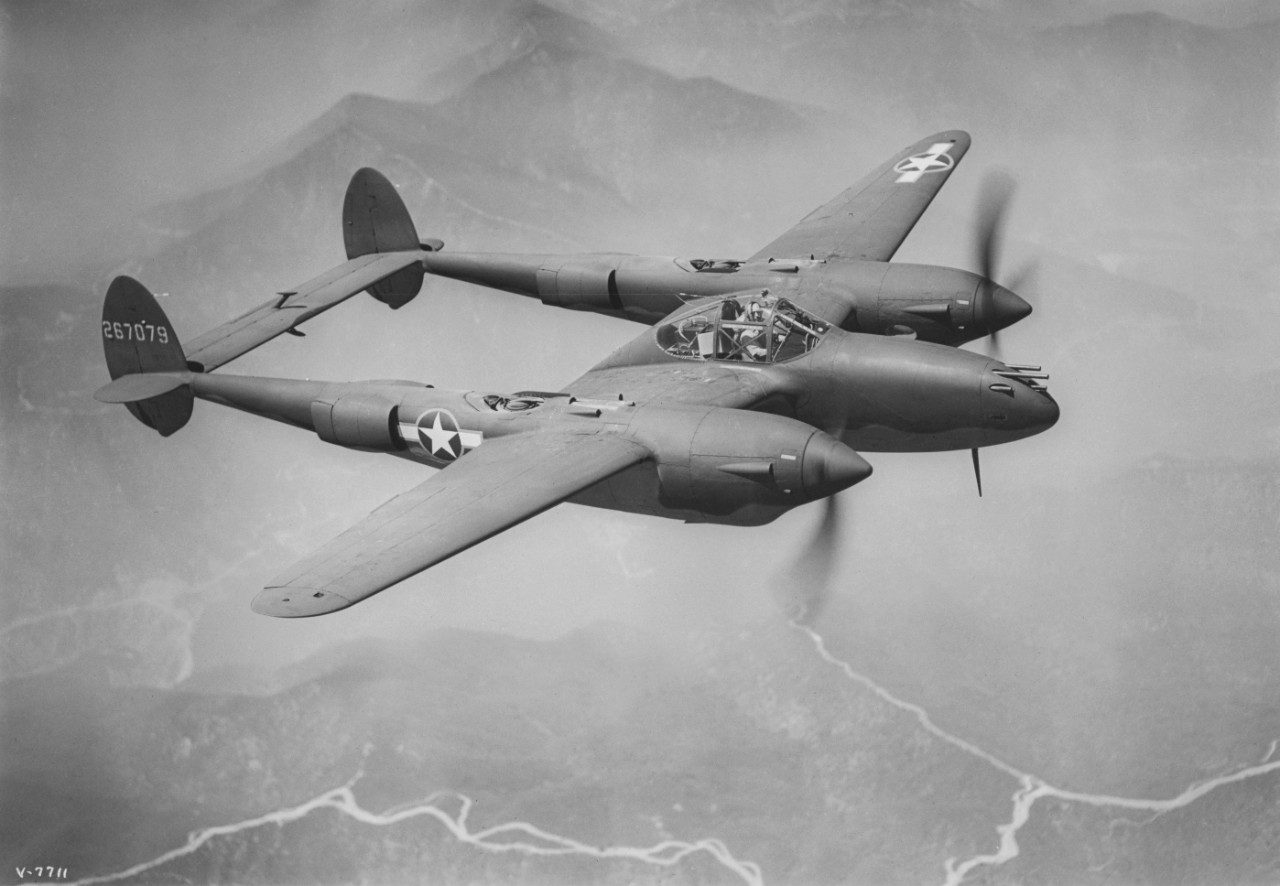
Image result for p-38 lightning

The P-38 Lightning, produced by Lockheed, was the most distinctive fighter plane of WW2 with its twin fuselage design.  While the plane saw action in all theaters during the war, its greatest success was in the Pacific where it was used by America's top aces, Richard Bong (40 victories) and Tom McGuire (38), as well as the shoot down of Admiral Yamamoto's (the architect of the attack on Pearl Harbor) plane over the Solomon Islands in 1943.

The distinctive configuration also prevented it being shot down by friendly fire, a fate that took all too many P-51s and P-47s.  There was no mistaking the P-38 profile for any enemy fighter.

The Lightning was powered by two liquid-cooled Allison V-1710 engines, fit with turbochargers, manufactured by the Allison Engine Company which was acquired in the 1930s by General Motors.  The Allison was a 12 cylinder engine with the initial models rated at 1,000 hp (later increased to 1,600 hp).  It was a perfect fit for the P-38.  Later in the war it was less successful when used in the early version of the P-51, a fighter which only achieved dominance in the European theater in 1944 when the Allison powerplant was replaced by the Rolls-Royce Merlin engine.

(Allison V-1710 on display at Commemorative Air Force Museum in Mesa AZ)

My 96-year old father in law was trained as a mechanic for the Allison 1710 in Long Beach, California and worked on P-38 engines in 1941 and 1942.  He still loves the P-38 and the Allison.  Recently we were was able to find online for sale an original 1942 maintenance manual for the engine and give it to him for Christmas.  Pictured below is the front cover. 


http://static.avialogs.com/media/k2/items/cache/9a7fd29ce4abe678798fd721c7cd2484_XL.jpg
  In September 1942 my father in law enlisted in the Navy and was trained as a pilot.  His initial training was on the Stearman/Boeing VN2S Kaydet biplane pictured below.


Once qualified as a Navy pilot he was based in San Diego and ferried Lockheed Ventura PV light bombers to Quonset, Rhode Island.  The Ventura was used for coastal defense by both the US and the UK's Royal Air Force and is credited with sinking several submarines.  Below is a photo of a Ventura PV-2 which I took on my recent visit to the Commemorative Air Force Museum in Mesa.

Monday, November 12, 2018

The Tower Of Katoubia Mosque

29_7575_1
 
Trying to find a calming escape from politics, Winston Churchill took up landscape painting between the two world wars.  Over his lifetime he completed several hundred paintings but during the Second World War he only attempted one.

At the end of the Casablance Conference in January 1943, Churchill persuaded President Franklin Roosevelt to accompany him to his beloved Marrakech to see the sun set over the Atlas Mountains.  Arriving in Marrakech, Churchill arranged for FDR to be carried in his wheelchair to the roof of their hotel to watch.

After Roosevelt left, Churchill spent two days in his rooms completing the picture you see above, and then had it sent as a gift to the President.

The mosque, built in the 12th century, is the largest in Morocco, and is considered a forerunner of the Moroccan-Andalusian style of architecture.  Non-Moslems are not permitted inside.


Tuesday, March 6, 2018

Finding Lexington

Microsoft co-founder Paul Allen has spent the last few years locating famous sunken warships, most notably the USS Indianapolis, the cruiser which carried parts of the first atomic bomb to Tinian and was sunk on its return, with several hundred sailors being killed by sharks (a story memorably told in the movie Jaws).

Two days ago, Allen's team found the aircraft carrier, USS Lexington, sunk during the Battle of the Coral Sea on May 8, 1942, the first time the Japanese rampage across the Pacific and East Asia had been successfully countered.  The wreck is located 10,000 feet below the ocean surface.

Since December 7, 1941, Japanese Imperial Forces had occupied much of the Central Pacific, the Philippines, Hong Kong, Malaya, Singapore, Burma, and the Dutch East Indies.  The Imperial Fleet had severely damaged the American flotilla at Pearl Harbor, destroyed the British, Dutch, and Australian fleets in Asia, and had roamed as far as Ceylon, where Japanese naval air wrecked Allied sea and air forces.  Air raids had been conducted even on Australia, where Darwin the Northern Territories had been attacked.

Japanese infantry had landed on the northern coast of New Guinea in early 1942.  The next stage of advance was over the Owen Stanley Mountains in order to capture Port Moresby on the southern coast.  With Moresby in their hands the way would be clear for an advance to Australia, and any Allied counterattack would be easy to thwart.

To provide air cover for the infantry advance, the Japanese sent two fleet carriers, Shokaku and Zuikaku (both part of the Pearl Harbor task force) and Shoho, a light carrier.  American intelligence was able to decode Japanese messages, and two carriers, Yorktown and Lexington, were sent to the Coral Sea.

With the American battleship fleet destroyed the four carriers in the Pacific were the only significant resource for our navy. Lexington, commissioned in 1927 and one of the oldest carriers in the American fleet, was needed in the crisis.

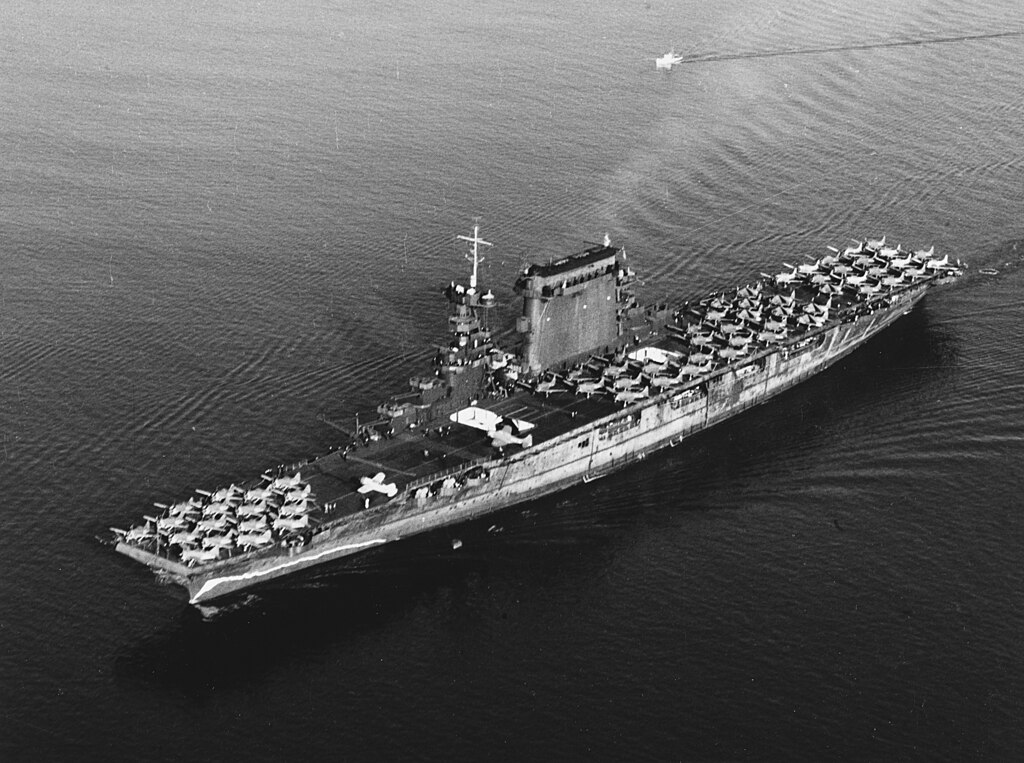
(Lexington, October 1941)
USS Lexington (CV-2) leaving San Diego on 14 October 1941 (80-G-416362).jpg  The battle, which took place on May 7 and 8, was the first naval action in history where none of the ships involved saw each other.  All of the action consisted of air attacks.  While the Americans drew first blood, sinking the Shoho, on May 8 the Japanese were able to badly damage Yorktown, and torpedo bombers hit Lexington several times, causing a series of explosions, and forcing the ship to be abandoned as it sunk.    Fortunately 2,735 personnel were rescued while 216 died.

(Explosions on the Lexington, May 8, 1942)
Large explosion aboard USS Lexington (CV-2), 8 may 1942.jpg
The Battle of the Coral Sea is considered a tactical victory for Japan since it lost one light carrier while the U.S. lost a heavy carrier and had another one badly damaged.  At the same time it's considered a strategic American victory, because in the wake of the battle the Japanese Imperial command ordered its naval forces to withdraw and Port Moresby was saved for the Allies.

Yorktown limped back to Pearl Harbor where it was estimated repairs would take three months before it could put to sea again.  But the American naval command had just become aware of the Japan's plan to attack Midway Island and force a decisive confrontation with the American carriers.  After only three days of repairs Yorktown put out to sea and was part of the overwhelming American victory at Midway in which four Japanese carriers were sunk, permanently crippling the Japanese navy, and ensuring ultimate American victory in the Pacific.  The only American carrier loss was Yorktown, hit by torpedoes from a enemy submarine.

Though Lexington was lost at the Coral Sea, the navy decided to give a new carrier under construction the same name.  The USS Lexington was commissioned in 1943 and served on active service until 1991.

Monday, January 1, 2018

Darkest Hour

"It is not given to human beings, happily for them, for otherwise life would be intolerable, to foresee or to predict to any large extent the unfolding course of events. In one phase men seem to have been right, in another they seem to have been wrong. Then again, a few years later, when the perspective of time has lengthened, all stands in a different setting. There is a new proportion. There is another scale of values."
- Winston Churchill, eulogy for Neville Chamberlain, November 12, 1940
"The actual day-to-day history of these two months, April and May 1940, is now known to everybody who can read . . . It makes a savage but coherent tale, one thing following ruthlessly and logically upon the next, but at the time . . .nothing seemed at all logical." *
- Margery Allingham, The Oaken Heart: The Story of an English Village at War (1941)
"Why should not Britain join the spectators who, in Japan and in the United States, in Sweden, and in Spain, might watch with detached interest, or even relish, a mutually destructive struggle between the Nazi and Communist Empires?  Future generations will find it hard to believe that the issues I have summarised here [negotiation of a separate peace with Germany] were never thought worth a place upon the Cabinet agenda, or even mentioned in our most private conclaves."
- Winston Churchill, Their Finest Hour (1949)

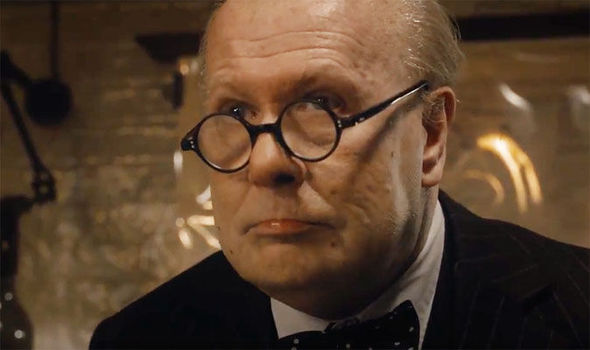
Despite the former Prime Minister's confident and reassuring assertion, the issue of peace negotiations with Germany was discussed over several days in late May of 1940, discussions at the center of the fine new movie Darkest Hour, featuring Gary Oldman, an actor who bears no natural physical resemblance to Churchill, in one of the most marvelous portrayals of the great man on film, assisted by a prosthetic transformation and his formidable acting talents.
https://cdn.images.express.co.uk/img/dynamic/36/590x/Darkest-Hour-trailer-Gary-Oldman-as-Churchill-859974.jpg(Oldman as Churchill)
http://ww2today.com/wp-content/uploads/2010/05/Churchill_portrait.jpg(Churchill as Churchill)

The film is tightly focused, beginning on May 9, 1940 with raucous Labour party and Conservative backbenchers calling for Prime Minister Neville Chamberlain's resignation.  On May 10 Churchill is summoned by King George, who reluctantly asks him to become Prime Minister; the same day Germany attacks Holland, Belgium, and France.  It ends on June 4 with Churchill's somber, yet stirring, speech to Parliament in the wake of the successful evacuation of British troops from Dunkirk and France on the verge of collapse.

Contrary to what I and many others thought for years, Churchill did not have broad political support in his cabinet when he became Prime Minister (PM) on May 10 (that unity would only come later in the summer).  Part of this misconception can be attributed to Churchill himself who deployed it in the course of his six volume history, The Second World War, written shortly after the conflict ended.  One should keep in mind that The Second World War provides a distinctly Churchillian view of events and be careful in taking it at face value; as Winston himself warned us, "I consider that it will be found much better by all Parties to leave the past to history, especially as I propose to write that history".

It was only at the insistence of the Labour opposition which proposed a national unity government but would only accept Churchill as its leader that Winston ascended to the role he had yearned after for decades.  For many he remained a rogue; a man of uncertain judgment, of impetuous and unpredictable temperament, an egoist who confused eloquence and verbal bombast with wisdom and maturity.   Some, more distant from Westminster, saw it differently; Nella, a Mass-Observation reporter from Bolton, wrote on May 11, "If I had to spend my whole life with a man, I'd choose Chamberlain, but I think I would sooner have Mr Churchill if there was a storm and I was shipwrecked", a sentiment reminiscent of Apsley Cherry-Garrard's, in his book The Worst Journey In The World (1922), regarding the Antarctic explorer Ernest Shackleton; "Scott for scientific method, Amundsen for speed and efficiency but when disaster strikes and all hope is gone, get down on your knees and pray for Shackleton" (it was Churchill, as First Lord of the Admiralty, who gave Shackleton permission to proceed with his most famous voyage in August 1914 amidst the outbreak of the First World War).

Darkest Hour is at its most splendid in conveying the atmosphere of those days; the continuous onslaught of disastrous news, the crushing pressures that members of the British War Cabinet laboured under without respite, the sheer uncertainty of what the future held.  We know how it turned out but the participants didn't when having to make decisions with momentous consequences.  Even the indomitable Churchill is seen to waver at moments.  It truly was a desperate time.  On May 19, General Ironside, chief of the Imperial General Staff, told Anthony Eden, "This is the end of the British Empire" (the following week, Churchill dismissed Ironside from his position because of his defeatist attitude).  The same day, Chamberlain wrote in his diary, "The scene . . . darkens every hour".  Two days later, Churchill's secretary John Colville, "It is clear the full horror of the situation is dawning on people".  These quotes and some of those below are from Five Days in London, May 1940 by the historian John Lukacs.  Lukacs is a good guide to the long-unknown cabinet debates, though I should add the author has, over the years, been erratic in the quality of his output, in particular making some remarkably silly observations about America and the Cold War.

Three days after becoming Prime Minister, General Ismay (chief military assistant to the PM) later recalled:
“I walked with him from Downing Street to the Admiralty. A number of people waiting outside the private entrance greeted him with cries of ‘Good luck, Winnie. God bless you.’ He was visibly moved, and as soon as we were inside the building, he dissolved into tears. ‘Poor people,’ he said, ‘poor people. They trust me, and I can give them nothing but disaster for quite a long time.’ ”
Churchill's distress is seen in the bluntness of his communications with President Roosevelt as he beseeched America for action.  On May 15 he messaged FDR:
"As you are no doubt aware, the scene has darkened swiftly.  If necessary, we shall continue the war alone and we are not afraid of that.  But I trust you realise, Mr President, that the voice and the force of a United States may count for nothing if they are withheld too long.  You may have a completely subjugated, Nazified Europe established with astonishing swiftness, and the weight may be more than we can bear."
Roosevelt had his own doubts about Britain's survival, contacting Canadian Prime Minister Mackenzie King on May 24, to propose that Canada and the other Dominions press Churchill to send the British fleet across the Atlantic before any negotiations began with Hitler.  King refused, and Churchill thankfully never became aware of the suggestion.

Seen from the British perspective the bleakness of late May is overwhelming.  Austria and Czechoslovakia were under the Nazi thumb by the outbreak of the war, and Poland destroyed in its first month.  Italy was a Nazi ally.  So were many of the Balkan states, now ruled by Fascist parties; Romania, Hungary, Yugoslavia, and Bulgaria, while Spain was controlled by the fascists.  The Soviet Union was a de facto Nazi ally, a primary supplier of raw materials to Germany, and had instructed Communist Parties in France and Britain (and the U.S. for that matter) to undermine resistance to Hitler.  In April the Germans occupied Denmark and Norway.  Now Holland was conquered, Belgium almost gone, the French army shattered with breath taking quickness, and the British Expeditionary Force falling back on Dunkirk.  It reinforced a broader sense of a revolutionary wave smashing against the faltering world of Old Europe, perhaps a fear, to borrow a noxious 21st century trope, that democracies were on the wrong side of history.  In a secret memo to the War Cabinet in March 1940, Richard Boothbay, a Conservative MP and Churchill supporter observed:
" . . . the incredible conception of a movement - young, virile, dynamic, and violent - which is advancing irresistibly to overthrow a decaying old world, that we must continually bear in mind; for it is the main source of Nazi strength and power"
In one sense Darkest Hour can be seen as a companion piece to Christopher Nolan's masterpiece Dunkirk (for my reviews go here and here).  Where Dunkirk focuses solely on the combatants during the evacuation, ignores issues of strategy, and Churchill makes no appearance (even his June 4 speech is merely read by a soldier), Darkest Hour is about strategy, statecraft, and rightfully dominated by the Prime Minister.  There is one crucial difference.  Though both films end with the June 4 speech, the critical events in Darkest Hour take place in the days leading up to and during the War Cabinet discussions of May 26, 27 and 28 on whether to seek Italy's, meaning Mussolini's, help in seeking to mediate a peace between Britain and Germany.  When the decision was finally made on the 28th not to seek settlement, but rather to fight on, the expectation was only a small fraction of the troops trapped at Dunkirk would escape.  It was only on May 29 that large numbers of British troops were evacuated for the first time with 338,000 British and French soldiers eventually making it across the Channel.  The decision to fight on was made before the "miracle" of Dunkirk.

The movie also captures many aspects of Churchill's odd behavior, usually in very effective, though brief scenes.  We see his wife Clementine's ability to influence her husband where others failed, as well as the strength of their relationship.  We see Winston's working pattern; up late and rising late, the strain he placed on his secretaries, his prodigious alcohol intake, the way his ornate and melodramatic speech could inspire, bore, or irritate depending on the circumstances in which he fired his verbal broadsides.  We see Churchill struggling at times with his elevation to the heights to which he always aspired but finally  attained only under the worst of circumstances.

There are also nice touches in small moments as when Winston charms Clemmie after an outburst and, most affectingly, a scene between Churchill and his secretary (played by Lily James) in which he learns about the fate of her brother, a soldier in France.  During the last part of the scene we keep waiting for one of them to speak but neither does, instead conveying all that is needed to be said through their expressions; abruptly halting Winston's normal torrent of words is a brilliant stroke of film making.

How historically accurate is the film?  The screenwriter and co-producer is Anthony McCarten, a New Zealand author, playwright and screenwriter, best known in film circles for his screenplay for A Theory of Everything, the recent film about Stephen Hawking.  McCarten, an admirer of Churchill, wanted to explore the "ability of words to change the world", which, as he makes clear in the film, many of Churchill's opponents characterized as his chronic confusion of fulsome rhetoric with coherent policy.  There's much for McCarten to work with; in the course of three months in 1940 Churchill made four of the greatest speeches in the history of the English language; "Blood, toil, tears and sweat" on May 13; the Dunkirk speech on June 4; "Their finest hour" on June 18; and "The Few" on August 20.

In a discussion with McCarten on making movies about historic events he remarks:
"There's a really fine line between artistic license and artistic licentiousness . . . History is a lousy filmmaker, it doesn't give you all the ingredients you need [for the medium of movies] . . . you are compelled to apply your imagination to a real-life story and if you don't it will be inert."
I think McCarten correct here.  As always, the question is where the line is drawn between what actually happened and what needs to be created or altered for purposes of making an effective motion picture.  For the most part, Darkest Hour gets it right, though there are certainly inaccuracies.  I didn't go to the film expecting a documentary; I went hoping it would, as Churchill said of Roosevelt's trusted confidante Harry Hopkins, "get to the root of the matter".  It did.  In this I dissent from the verdict of Kyle Smith, the fine film critic of National Review Online and the NY Post, who criticizes the movie for over emphasizing Churchill's wavering, "For the sake of a good yarn, it mistakes a lion for a jellyfish".  I might have changed a scene or two to lighten up on this theme, but I also know I'd make a really bad screenwriter or director.  Anyone watching Darkest Hour, without much prior knowledge of the man, will come away an admirer of Winston Churchill. And there's plenty of lion in the film.

Some inaccuracies are merely putting other's words into different mouths.  Towards the end of the film, Lord Halifax, Churchill's antagonist, says of the June 4 speech, "he mobilized the English language and sent it into battle", words actually used by the American broadcaster Edward R Murrow introducing a compilation of Churchill speeches a decade after the end of the war.  At another point during a heated War Cabinet discussion an exasperated Churchill says to Halifax, "stop interrupting me when I'm interrupting you!", words Churchill did say, but not to Halifax and not in 1940.

Of course this being Churchill the movie also shows him saying things that sound strange to our ears today, as though they were the invention of an overwrought screenwriter, but which the Prime Minister really did utter as with his May 28 declaration to a meeting of his Outer Cabinet (the thirty ministers not part of his War Cabinet):
"If this long island story of ours is to end at last, let it end only when each of us lies choking in his own blood upon the ground."
There are more substantial inaccuracies including a preposterous invented scene in which the Prime Minister rides the Underground and seeks advice from passengers about what to do.  Churchill never rode the Underground, though he did visit houses struck by German bombers during the Blitz and was seen to get teary-eyed speaking with their occupants.  Oddly enough, I found the scene worked even as I thought "this is ridiculous".  I understood dramatically why it was done because it followed immediately a scene between Churchill and King George VI** in which the King gave the same advice as the subway riders, allowing the film to make the point that both royalty and the common people stood with Churchill.

The film also engages in a simplification of the politics.  It portrays Churchill as initially only supported by Labour and not by any Conservatives, with the exception of Anthony Eden.  The  Parliament of 1940 had been elected in November 1935 (and continued to sit until July 1945), and was overwhelmingly Conservative (386 seats) compared to 154 Labour and 33 Liberal.  But there was also a faction of Conservative backbenchers (not members of the party's leadership) who supported Churchill or, at least, opposed Chamberlain.  On May 8, with the vote on an Opposition motion for censure of the Chamberlain government, the nominal Conservative majority of 200 shrunk to 81, with more than thirty Conservative MPs supporting the motion and sixty more abstaining from supporting their party.  Though the movie portrays Labour leader Clement Atlee's attack on Chamberlain, many felt the most memorable moment of the debate came when Leo Amery, a Conservative backbencher, quoting Oliver Cromwell, said to Chamberlain, "You have sat too long here for any good you have been doing. Depart, I say, and let us have done with you. In the name of God, go."

Darkest Hour also simplifies the conflict between Chamberlain, Halifax and Churchill.  Churchill kept Chamberlain and Foreign Secretary Halifax, in his War Cabinet, adding Atlee and another Labour leader.   In the film, Chamberlain and Halifax plot to get Churchill to accept mediation and, failing that, to maneuver him out of the Prime Ministership.  In reality, Chamberlain and Halifax were not aligned during this period (and the movie reveal, in which Chamberlain confesses to Halifax that he's been diagnosed with cancer, didn't happen as he was not diagnosed until a month later; he died in November).
1st Earl of Halifax 1947.jpg(Halifax)

Chamberlain and Halifax had been political allies for years.  Both opposed rearmament in the mid-1930s, and in February 1938 Chamberlain appointed Halifax as Foreign Secretary after dismissing Anthony Eden who disagreed with the Prime Minister's policy of appeasement.  Though for many years after WWII appeasement was regarded as a completely negative term Halifax biographer Andrew Roberts reminds us:
"Although today it is considered shameful and craven, the policy of appeasement once occupied almost the whole moral high ground.  The word was originally synonymous with idealism, magnanimity of the victor and the willingness to right wrongs."
Though both were ultimately to break with the policy of appeasement and change their attitudes about Hitler; Halifax in the fall of 1938 after Munich, and Chamberlain in March 1939, after Hitler betrayed  the Munich Agreement and occupied Czechoslovakia, both considered themselves realists and were horrified at the thought of another large-scale war in Europe and a repeat of the slaughter of 1914 to 1918.  It is why, even after Britain's declaration of war on Germany in September 1939 it refrained from vigorous prosecution of the war, as Chamberlain retained hope of some resolution short of another all-out struggle on the Western Front.

Nonetheless, by the time of the War Cabinet debates in late May, Chamberlain was mostly, though not entirely, in Churchill's corner, convinced that further approaches to Hitler would be fruitless, though at times expressing a willingness to at least hear what was on offer.  If Chamberlain had  allied with Halifax the outcome of the debate may have been different.  It was now Halifax alone who was Churchill's main opponent.  Lukacs describes Halifax as being as different a personality from Churchill as possible; "calm and cool, perhaps even cold; shy rather than sensitive; always in control of his emotions".

Halifax found Churchill incomprehensible, confiding to his diary in late May, "I am coming to the conclusion that his process of thought is one that had to operate through speech", an appalling thought for a man who carefully calculated everything before he spoke, and referring to those Churchill brought into the government as "gangsters".

For dramatic purposes Darkest Hour telescopes the discussions on mediation in the War Cabinet, combining events and altering their sequence.  There were nine cabinet meetings over four days in which mediation was discussed, in addition to which we know Churchill had separate one on one meetings with Halifax and Chamberlain of which no record or account has ever surfaced.  Indeed, for part of one cabinet meeting no record was kept.

The days were jammed.  On Sunday May 26, the War Cabinet met at 9am.  An hour later, Churchill was at Westminster Abbey briefly attending a National Day of Prayer service.  At noon, Halifax met the Italian Ambassador and then lunched with Chamberlain.  Meanwhile, Churchill lunched with French Prime Minister Paul Reynaud*** who had flown in that morning for consultations with the British government.  The War Cabinet met again at 2pm.  Churchill asked Halifax to meet with Reynaud.  Churchill and Chamberlain joined the two of them shortly thereafter.  The War Cabinet met again from 5 to 630pm.  Churchill dined with Chief of Staff Ismay and Eden.  The dinner was miserable with the Prime Minister eating and drinking little and sitting in silence, an unprecedented event.  At the end he stood up, told his colleagues he felt sick and left.  Events were weighing heavily. That night Chamberlain confided to his diary, "Blackest day of all."

Though Churchill approved Halifax's conversations with the Italian ambassador and though, as portrayed in the movie, he carefully avoided ever completely ruling out any negotiation (prior to the events of May 28), he had also carefully prepared the ground ahead of time.  Several days before the War Cabinet meetings on May 26 asking the military chiefs of staff to prepare a paper on the situation if France dropped out of the war.  He had the paper distributed to the War Cabinet at the Sunday morning meeting in the form of a document obliquely entitled, "British Strategy in a Certain Eventuality".  The paper presumed France out of the war, Italy in on the Axis side, Europe and French North Africa under German control and the loss of British troops in France.  The military concluded that Britain could survive if the Royal Air Force and Navy remained in control of the Channel and the skies, and if the United States would increasingly support Britain and eventually enter the war.  Still, by the end of the 26th, Churchill and the War Cabinet agreed that Halifax should prepare a draft of his "Suggested Approach to Italy".  But it was also the day that made clear that while Chamberlain might, at times, take a position between Halifax and Churchill, he would not join his former ally in opposing Winston.  One reason was Chamberlain's complete mistrust of Hitler by this point, and it is also possible that Churchill's magnanimous treatment of the former Prime Minister since May 10 may have had an impact.  Though Chamberlain had treated Churchill shabbily for years, Churchill did not respond in kind when the tables were turned, handling him with respect, seeking his advice, and letting he and his wife remain in 10 Downing for several weeks (and his eulogy for the man in November was a magnificent, and honest, tribute, a textbook example of graciousness; relevant to the War Cabinet discussions Churchill remarked, "The same qualities which made him one of the last to enter the war, made him one of the last who would quit it before the full victory of a righteous cause was won".)

The following day saw three more and more lengthy War Cabinet meetings, at the second of which, in late afternoon, the conflicting approaches of the Prime Minister and Foreign Secretary were laid out most clearly.  On its surface the discussion, and that of the following day, were about efforts to keep the French in the war and how to respond to an inquiry from Reynaud regarding their stance on negotiations, but the context was really whether Churchill would agree to negotiate under any circumstances. Every mention by Churchill to Reynaud or the French should be read as a reference to Halifax [the decision in Darkest Hour to leave out the Reynaud/France aspect of the debate is a good example of how to simplify a factual narrative to make the story telling more effective]. According to the minutes:
"The Prime Minister said that he was increasingly oppressed with the futility of the suggested approach to Signor Mussolini, which the latter would certainly regard with contempt . . . The whole of this manoeuvre was intended to get us so deeply involved in negotiation that we should be unable to turn back . . . The approach proposed was not only futile, but involved us in a deadly danger."

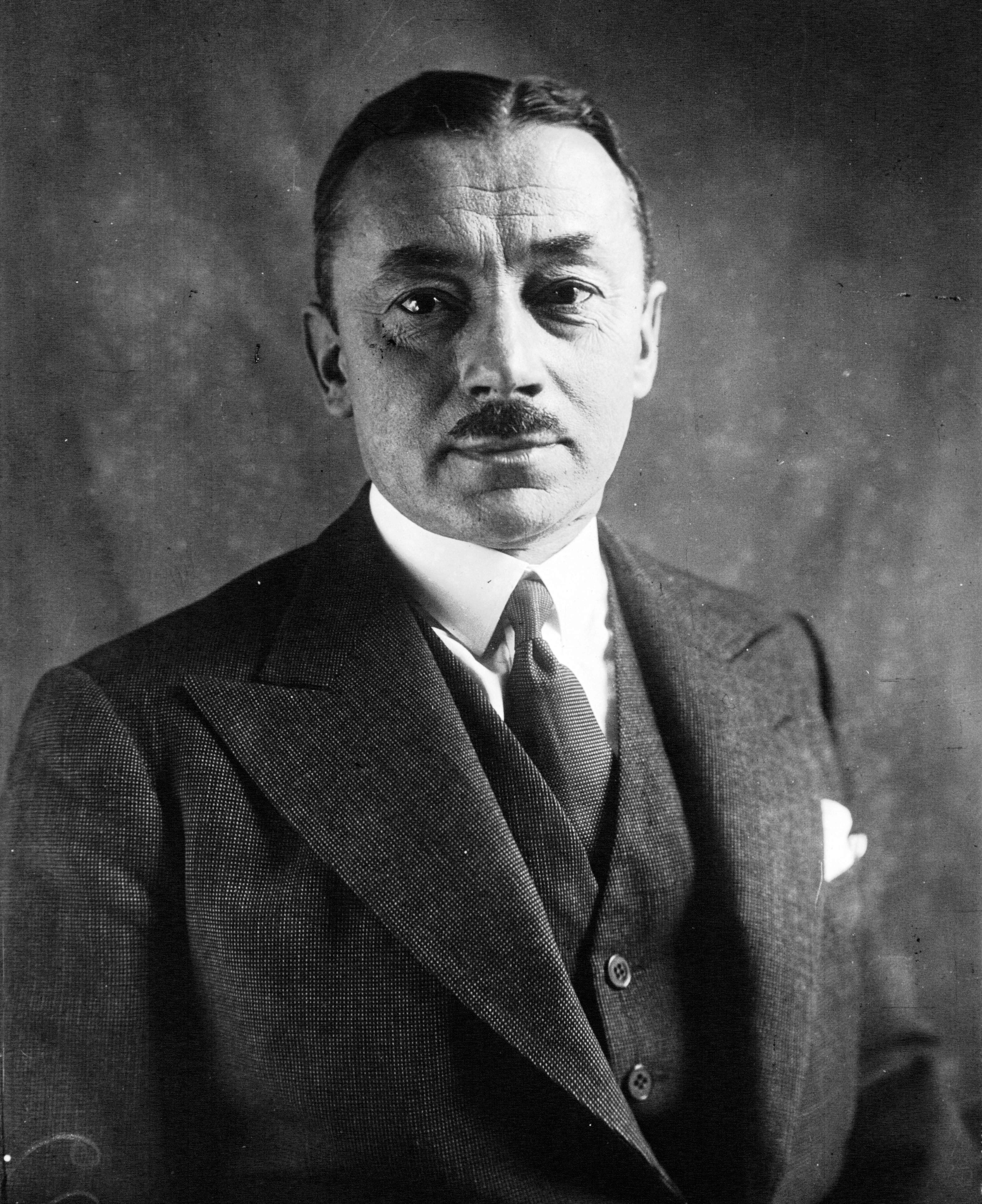
Paul Reynaud 1933.jpg (Reynaud)

Chamberlain suggested a middle position:
"While he agreed that the proposed approach would not serve any useful purpose, he thought that we ought to go a little further with it, in order to keep the French in good temper.  He thought our reply should not be a complete refusal".
But he suggested that the approach to Mussolini be made by Roosevelt, not by the British, which would buy them some needed time.

Halifax said that while he agreed with Chamberlain he was now "conscious of certain rather profound differences of point of view".  As the Foreign Secretary went on, it became clear that whereas Chamberlain saw holding out the prospect of talks as a tactic to help the French and give Britain time, Halifax saw talks having the possibility of holding some, however small, chance of resolving the conflict between Germany and Britain, a chance that he believed needed to be preserved.
". . . the Prime Minister seemed to suggest that under no conditions would we contemplate any course except fighting to the finish. . . If, however, it was possible to obtain a settlement which did not impair those conditions [fundamentally important to Britain], he, for his part, doubted if he would be able to accept the view now put forward by the Prime Minister . . . He was prepared to take that risk [of destruction] if our independence was at stake; but if it was not at stake he would think it right to accept an offer which would save the country from avoidable disaster."
He then went on to bluntly raise the key question:
"Suppose Herr Hitler, being anxious to end the war through knowledge of his own internal weakness, offered terms to France and England, would the Prime Minister be prepared to discuss them?"
Churchill responded:
"He would not join France in asking for terms; but if he were told what the terms offered were, he would be prepared to consider them."
The upshot of the meeting was that the Cabinet agreed that Prime Minister Reynaud should get a response along the lines suggested by Chamberlain but that if the Germans merely invited Britain to talks without terms being established beforehand the response should be no. 

As the meeting ended Halifax asked Churchill to join him in the garden for a talk.  Neither participant left a record of their private conversation.

The final War Cabinet meeting of the day, at the unusually late hour of 10pm, was dominated by more bad news.  Belgium was surrendering to the Nazis, its King would remain and not flee to Britain, and the Belgian army would lay down its arms creating a hole in the shrinking Allied lines falling back on Dunkirk.

May 28 began with yet another War Cabinet meeting focused on the Belgian surrender and the deteriorating situation at Dunkirk.  Churchill doubted more than 50,000 soldiers could be evacuated.  The Prime Minister then went to the House of Commons, from which he'd been absent for a week, to tell the MPs of the war situation and the Belgian surrender.  He ended his brief report with these words:
"Meanwhile the House should prepare itself for hard and heavy tidings.  I have only to add that nothing which may happen in this battle can in any way relieve us of our duty to defend the world cause to which we have vowed ourselves; nor should it destroy our confidence in our power to make our way, as on former occasions in our history, through disaster and through grief to the ultimate defeat of our enemies."
At 4pm the War Cabinet met in a room at the House of Commons.  I'll quote at length from the minutes because they demonstrate how all the participants were agonizing over the right course of action:
The Prime Minister said that it was clear that the French purpose was to see Signor Mussolini acting as intermediary between ourselves and Herr Hitler.  He was determined not to get into this position.

The Foreign Secretary said that the proposal discussed with M Reynaud . . . had been as follows: that we should say that we were prepared to fight to the death for our independence, but that, provided this could be secured, there were certain concessions that we were prepared to make to Italy.

The Prime Minister thought that the French were trying to get us on to a slippery slope . .

The Foreign Secretary said that we must not ignore the fact that we might get better terms before France went out of the war . . . 

The Prime Minister then read out a draft which expressed his views . . . If we once got to the table, we should then find that the terms offered us touched on our independence and integrity.  When, at this point, we got up to leave the Conference-table, we should find that all the forces of resolution which were now at our disposal would have vanished.

The Foreign Secretary said that he still did not see what there was in the French suggestion of trying out the possibilities of mediation which the Prime Minister felt so wrong.

The Lord President [Chamberlain] said that . . . it was right to remember that the alternative to fighting on nevertheless involved a considerable gamble.  The War Cabinet agreed that this was a true statement of the case.

The Prime Minister said that nations which went down fighting rose again, but those which surrendered tamely were finished.

The Minister without Portfolio [Greenwood of Labour] said that any course which we took was attended by great danger.  The line of resistance was certainly a gamble, but he did not feel that this was a time for ultimate capitulation.

The Foreign Secretary said that nothing in his suggestion could even remotely be described as ultimate capitulation.

The Prime Minister though that the chances of decent terms being offered to us at the present were a thousand to one against.
The meeting ended without resolution.  It was now 5pm and the Prime Minister moved to another room in the Commons to meet, for the first time, with his Outer Cabinet, a meeting portrayed rousingly, and accurately, in Darkest Hour.  It was at this session that Churchill made his "choking on his own blood" remark.  The Prime Minister laid out the dire circumstances facing the nation, reiterating he felt that no more than 50,000 could be evacuated from Dunkirk.  According to one of the attendees (we have no transcript of the meeting), the PM then went on to say:
"I have thought carefully in these last days whether it was part of my duty to consider entering negotiations with That Man."
He then went on to reject that notion, saying the Germans would demand the British fleet and install a puppet government; "We should become a slave state".  Better to use reserves and advantages and go on fighting.  And better to die than surrender. There was not "even the faintest flicker of dissent" and many went up to Churchill at the end, patting him on the back and giving encouragement.

A jubilant Prime Minister returned to the War Cabinet at 7pm to inform them of his meeting (which they had not known about) and its outcome:
"They had not expressed alarm at the position in France, but had expressed the greatest satisfaction when he had told them that there was no chance of our giving up the struggle.  He did not remember having ever before heard a gathering of persons occupying high places in political life express themselves so emphatically."
Halifax knew he was beaten.  The debate was over. Churchill sent Reynaud a cable that evening informing him the War Cabinet decided there was no reason to offer concessions to Mussolini, in order to induce him to mediate, at the present time.

Churchill's judgment was correct.  Under the circumstances, once mediation or negotiation were entered into it would be nearly impossible to rekindle the fire of resistance, and withdrawal, no matter how harsh the enemy's demands, difficult to accomplish.  And given the history of Hitler, both up to that point and in the future, it is difficult to see how in the long-term Britain could survive other than as subservient to the Nazis.  A decision to enter into negotiations takes us into a dark alternative world with unthinkable implications for Western Civilization.  We should also pause a moment and add thanks and praise for the Labour Party leadership which insisted it would only serve in a government led by Churchill and to those Conservative Party backbenchers who, at great political risk, broke with their own leadership.

Halifax's biographer provides a charitable summing up:
"Churchill's instincts proved correct.  Halifax had attempted to bring logic and reason to a problem long since devoid of either . . . "
While Lord Halifax's position is presented in Darkest Hour, the power of its substance is undercut by the screenplay presenting him as a personally unappealing man (played by Stephen Dillane), and emphasizing his Machiavellian plotting against Churchill.  I think Halifax wrong but his position had a certain logic under the circumstances and presenting it a bit differently could have heightened the conflict in the film.  The deficiencies of appeasement were irrelevant to the crisis at hand.  What, realistically, were the chances of Britain's survival if France fell?  It took a series of misjudgments by Hitler to assure the island's survival - slowing the Panzer advance on Dunkirk; switching from airfield and radar targeting during the Battle of Britain to area bombing of cities; the catastrophic decision to invade the Soviet Union under the delusion that Britain would only enter into peace talks if the communist state was eliminated as a potential English ally; and declaring war on the United States after the Japanese attack on Pearl Harbor, an unforced error for which Germany had no treaty obligation.  Posing the issue that way would also have raised questions of war and peace, confrontation and negotiation, and the costs of each that would have resonated with discussions we've been having in the 21st century.

Neville Chamberlain went on to serve as loyal cabinet member and supporter of the war effort until his death in November.  Churchill finally got Lord Halifax out of the way by appointing him ambassador to the United States in December 1940, privately remarking that he "would never live down the reputation for appeasement which he and the F.O. had won themselves here. He had no future in this country.".  He proved effective in that role though he lacked the ability to build close personal relationships due to his reserved nature.  Halifax was still serving as ambassador when Churchill, now out of office, gave his famous speech in Fulton, Missouri in February 1946 warning that an Iron Curtain had descended across Europe.  Halifax thought the speech too confrontational and urged Churchill to be more conciliatory to the Soviet Union.  Some things never change.

Darkest Hour ends with a little timing illusion, making it seem that the Prime Minister's Dunkirk speech occurs rights after the resolution of the War Cabinet debate.  Instead, a week passed between May 28 and the speech on June 4.  Nonetheless it remains memorable and a fine way to close the picture.  Two passages from the speech not shown in the film are important because they show Churchill no longer concealing the magnitude of the disaster on the Continent:
We must be very careful not to assign to this deliverance the attributes of a victory. Wars are not won by evacuations.

Nevertheless, our thankfulness at the escape of our Army and so many men, whose loved ones have passed through an agonizing week, must not blind us to the fact that what has happened in France and Belgium is a colossal military disaster. The French Army has been weakened, the Belgian Army has been lost, a large part of those fortified lines upon which so much faith had been reposed is gone, many valuable mining districts and factories have passed into the enemy’s possession, the whole of the Channel ports are in his hands, with all the tragic consequences that follow from that, and we must expect another blow to be struck almost immediately at us or at France.  
Finally, we come to the unforgettable closing of the speech.  Note the last phrase; Churchill, unlike most of the British establishment, had great faith in the capabilities of the United States.
I have, myself, full confidence that if all do their duty, if nothing is neglected, and if the best arrangements are made, as they are being made, we shall prove ourselves once again able to defend our Island home, to ride out the storm of war, and to outlive the menace of tyranny, if necessary for years, if necessary alone. At any rate, that is what we are going to try to do. That is the resolve of His Majesty’s Government-every man of them. That is the will of Parliament and the nation.

The British Empire and the French Republic, linked together in their cause and in their need, will defend to the death their native soil, aiding each other like good comrades to the utmost of their strength. Even though large tracts of Europe and many old and famous States have fallen or may fall into the grip of the Gestapo and all the odious apparatus of Nazi rule, we shall not flag or fail.

We shall go on to the end, we shall fight in France, we shall fight on the seas and oceans, we shall fight with growing confidence and growing strength in the air, we shall defend our Island, whatever the cost may be, we shall fight on the beaches, we shall fight on the landing grounds, we shall fight in the fields and in the streets, we shall fight in the hills; we shall never surrender, and even if, which I do not for a moment believe, this Island or a large part of it were subjugated and starving, then our Empire beyond the seas, armed and guarded by the British Fleet, would carry on the struggle, until, in God’s good time, the New World, with all its power and might, steps forth to the rescue and the liberation of the old.****
--------------------------------------------------------------------
*  Several decades later a similar observation was made by the philosopher Joseph Walsh:
"You know, there's a philosopher who says, 'As you live your life, it appears to be anarchy and chaos, and random events, nonrelated events, smashing into each other and causing this situation or that situation, and then, this happens, and it's overwhelming, and it just looks like what in the world is going on.  And later, when you look back at it, it looks like a finely crafted novel.  But at the time, it don't."
 ** Nor have I found any evidence the scene between the PM and King occurred during this time period.

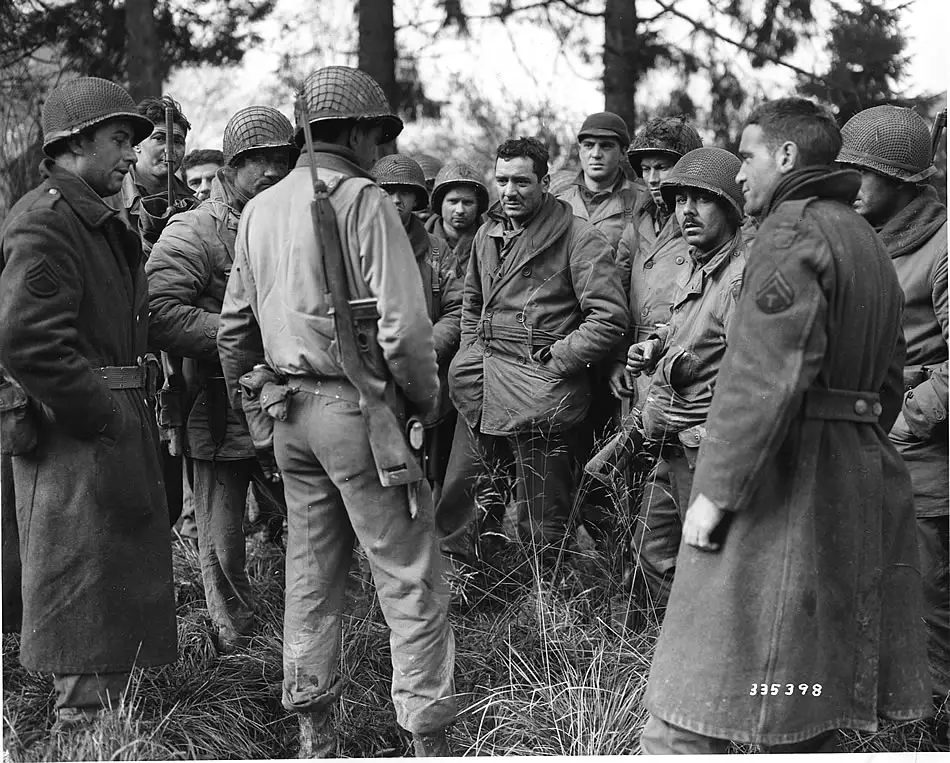
*** Prime Minister Reynaud resigned on June 16 rather than sign an armistice with Germany.  Imprisoned by the Vichy regime, he was turned over to the Germans in 1942 and initially imprisoned at Sachsenhausen concentration camp before being sent to Castle Ittr in Austria where he was held with other prominent French political prisoners.  On May 5, 1945 he was involved in one of the most bizarre battles of the war in which an improvised assemblage of American soldiers, French prisoners, and German army personnel successfully repulsed an attack by a Nazi SS detachment.  The German commander was killed while protecting Reynaud.  This was the only time during the war when American and German soldiers fought side by side.  Returning to France, Reynaud also returned to politics, serving in various positions until the early 1960s.  He died in 1966 at the age of 87.

**** Early in my career I had a job requiring a lot of writing and a boss who crusaded unrelentingly against run-on and compound sentences.  I taped the last sentence of Churchill's speech to his door one day.


Saturday, September 2, 2017

Japan Surrenders


General Douglas MacArthur remains a controversial presence in American history.  Franklin Roosevelt was wary of the man, distrusting his ambitions, while Harry Truman fired him (for more, read Truman Fires MacArthur).  His fellow generals, even those who admired his military talents, could not abided his naked ambition and unceasing self-promotion.  Amidst the turmoil and controversy of his career, his rule of Japan from 1945 to 1950 stands as an undisputed high point.  It all began on September 2, 1945, aboard the USS Missouri in Tokyo Bay.

Japan announced its capitulation on August 15 but the official surrender ceremony and signing of the documents took two weeks to arrange.  General MacArthur's words on that occasion were thoughful, measured, and worthy of the best in the American tradition.

We are gathered here, representatives of the major warring powers—to conclude a solemn agreement whereby peace may be restored. The issues involving divergent ideals and ideologies, have been determined on the battlefields of the world and hence are not for our discussion or debate.

Nor is it for us here to meet, representing as we do a majority of the people of the earth, in a spirit of distrust, malice or hatred. But rather it is for us, both victors and vanquished, to rise to that higher dignity which alone befits the sacred purposes we are about to serve, committing all our people unreservedly to faithful compliance with the undertakings they are here formally to assume.

It is my earnest hope and indeed the hope and indeed the hope of all mankind, that from this solemn occasion a better world shall emerge out of the blood and carnage of the past—a world founded upon faith and understanding—a world dedicated to the dignity of man and the fulfillment of his most cherished wish—for freedom, tolerance and justice.

The terms and conditions upon which the surrender of the Japanese Imperial Forces is here to be given and accepted are contained in the Instrument of Surrender now before you.

As Supreme Commander for the Allied Powers, I announce it my firm purpose, in the tradition of the countries I represent, to proceed in the discharge of my responsibilities with justice and tolerance, while taking all necessary dispositions to insure that the terms of surrender are fully, promptly and faithfully complied with.


Saturday, August 5, 2017

Hardy As Churchill

Further to my post of a couple of days ago about the passing of British actor Robert Hardy, some more interesting aspects of his life and career:

His tutors at Magdalene College, Oxford were CS Lewis and JRR Tolkien!

Entering the Royal Air Force late in World War II, he was sent to Texas to train as a fighter pilot.  The war ended before he was deployed.

He never had any training as an actor.

I ran across this edited clip of Hardy giving some of Churchill's famous speeches in the BBC series, The Wilderness Years, the period from the late 1920s to 1939 when Churchill was an outcast within his own Conservative Party, and mistrusted by the opposition.  I'd seen the series when it was broadcast in the U.S. (I think in the early 1980s) but had forgotten just how good Hardy was as Churchill.  It's the finest Churchill I've seen on screen.  Hardy captures everything about the man - his speech patterns, his gestures, the way he carried himself.

The clip is also interesting as a window onto Churchill.  His rhetoric was always formidable, but one of the reasons he ended up in the wilderness is that we could deploy recklessly, in forlorn and unworthy causes.  The first speech we see here is his opposition to any attempt by the British government to alter the existing arrangements under which India was part of the Empire.  On this issue, Churchill was simply wrong.

It was with the coming to power of Adolph Hitler and the Nazi Party in 1933, that the man and his rhetoric were matched to the perfect issue.   Listen to excerpts from speeches in 1933 and 1934.  The '34 speech is on Germany's growing strength in the air.  Along with his main point, the need for Britain to maintain air superiority, two other aspects struck me.  The first was his perceptive point on the use of deterrence; the second his, in retrospect, overestimate on the damage enemy bombers could cause Britain.  In this, Churchill represented the conventional wisdom that "the bomber always gets through" and would inflict unthinkable and catastrophic damage in very short time.  The reality in the early years of the war was that however horrific the physical destruction and loss of life was during the Battle of Britain, it was only a small fraction of what had been projected, and the effect was not to destroy morale, but rather to strengthen it.

The excerpts close with Churchill's 1936 speech in the wake of German reoccupation of the Rhineland and his magnificent speech after Britain and France sold out Czechoslovakia at the Munich conference in the fall of 1938.  If you do nothing else, listen to that speech which starts about 18 minutes in to the video.

Sunday, July 30, 2017

Dunkirk Revisited

Further thoughts prompted by discussions I've been having about the movie.

Common themes between Christopher Nolan's The Dark Knight and Dunkirk are becoming more apparent to me.  In my prior post I referred to The Dark Knight as the finest superhero movie ever made.  My reasons?

It's a serious film (while being entertaining at the same time), unlike most of the DC and Marvel comic book movies which are more about plotting to get characters A, B, and C to points D, E and F, and thus ready for the next sequel.

It contains a monumental, and very disturbing, performance by Heath Ledger as The Joker.  We'd become used to The Joker in the TV series (played by Caesar Romero), or by Jack Nicholson in the early Batman films as an evil, but mostly comic character, and certainly not very frightening. The Dark Knight strips away the comic element and we are left only with an evil core which Ledger inhabits unnervingly well, making it hard to watch at times.  This Joker would leave Romero and Nicholson in an alley with their throats slit.  Anthony Hopkins as Hannibal Lechter in The Silence of the Lambs look like the junior varsity in comparison.

Most importantly, it is the best movie about the War on Terror.  It asks us, when faced with evil that seeks to destroy our society and knows no boundaries to its behavior, how is a civilized society to respond, what are our options, and what are the costs of each course of action in human terms and for the future?  It does so not by preaching about a specific answer, or by setting up straw men.  It does so by making us unflinchingly confront those actions, the consequences, and the costs; both for society and individuals.  It leaves it to the viewer to render their judgment.

And what about Dunkirk?

WARNING: If you are still planning to see the film don't read further as it contains plot spoilers.


In a more subtle way, Dunkirk also explores themes related to sacrifice and the costs of decisions that must be made.  It arises in the relationship between the actions of the Spitfire pilot and Tommy, the soldier, raising questions about the duty to obey orders/rules and the consequences of both obedience and disobedience. 

Both characters disobey orders, and exchange physical locations in the course of the film. The pilot disobeys for noble reasons, ending up on the beach that Tommy has spent the movie ignobly trying to escape, and is captured by the Germans, thus sacrificing himself. Tommy ends up back in England, where the pilot started his day, where he begins to understand the significance of what he has endured and we see the possibility he might act differently the next time.

Kenneth Branagh’s expository role lays out the dilemma Churchill and the War Cabinet faced and why the rules were in place. They needed to rescue as many soldiers as possible from Dunkirk, but also to minimize the loss of ships, planes and pilots so desperately needed for the Battle of Britain, which is why so little of the RAF was committed to air cover over the beaches, and why the Spitfire pilot is ordered to return to Britain after a set amount of flying time.  The Spitfire pilot disobeys in order to destroy a German bomber and is lost, though his very actions while disobeying, allow for Tommy, who has disobeyed the entire movie in his desperation to escape the beach, to ultimately return to Britain and fight on.


Thursday, July 27, 2017

Dunkirk

Christopher Nolan's Dunkirk is not a good movie; it is a great movie, which I became aware of only a few minutes into viewing.  That was unexpected for me.  I found it well told, intense, and very moving.  And you are on the edge of your seat for the entire film.  Go see it in a movie theater, preferably an IMAX.  Seeing it on the small screen will not do it justice.

Nolan is a talented film maker going back to his debut with Memento.  He's also made Inception, Interstellar, Insomnia and The Dark Knight trilogy (the second of which, The Dark Knight, is by far the best superhero movie ever made).  Like those films, Dunkirk looks amazing (there is apparently no, or very little CGI) and it also contains Nolan's trademark intertwined, time twisting plots (in this instance, three such) which ends up working in this context, though there were a few minutes late in the film where I thought it might end up too much.

What we see, for the first time, is Nolan bringing his touch to real events; The miraculous evacuation from May 26, 1940 through June 4, 1940, of 338,000 British and French troops surrounded by the German Army in (late May 1940, which at the same time was a military disaster for Britain.  This is not The Longest Day or A Bridge Too Far where we go back and forth between the battlefield and grand strategy discussions.  Nolan is focused on the soldiers, aviators and sailors (including the civilians who took their craft into danger at Dunkirk).   He utilizes Kenneth Branagh sparingly as a senior British naval officer for a few quick bursts of exposition scattered throughout, but that's it.  At one point we hear the famous conclusion of Churchill's "we shall fight them on the beaches" speech, but via a young soldier reading it aloud from a newspaper.  The exposition is enough to alert us to the terrible decisions Churchill and his War Cabinet made during those days, and the human costs of those decisions, specifically to withhold much of the Royal Navy and Air Force from support of the evacuation because of the need to conserve precious resources for Hitler's anticipated invasion of Britain.

Nolan has come in for some criticism for his approach.  We never see the Germans.  No one talks about Nazi horrors.  There is not much historical context. Not all of his British characters (and this is a very British film) are heroic or noble.  But it is a noble and patriotic film, filled with love of country, love of Britain.  By the end, even those characters who are confused about the meaning of what they've endured, at least glimpse its significance when they return home.

Dunkirk also captures another aspect of the war.  We know how WW2 ended.  In late May 1940 no one knew how it would end, nor what would happen next and the movie is true to that.  There is a contingent aspect to history, as their always is moving forward, though hard for us to grasp looking back.  Unbeknownst to most of Britain at the time, Churchill's War Cabinet debated from May 25 to May 28 whether to respond positively to Mussolini's offer to mediate between Britain and Germany.  Churchill, who only became Prime Minister on May 10, was adamantly opposed to negotiations (see Churchill Ascends).  He finally carried the day, telling a meeting of his full Cabinet on May 28:
If this long island story of ours is to end at last, let it end only when each one of us lies choking in his own blood upon the ground.
The emotional heart of the movie are a Spitfire pilot played by Tom Hardy, who probably says fewer than 50 words during the movie, and Mark Rylance as a father who takes his small pleasure boat, along with his son and son's friend to Dunkirk.  Rylance's character (who I found from listening to my friend Titus's splendid podcast on the film, is based on Charles Lightoller, second officer of Titanic, who performed heroically during its sinking in 1912 and in 1940 set off on his yacht to rescue soldiers at Dunkirk) is laconic but he proves as eloquent as Churchill with his few words.  The  most interesting role choice by the director is Tommy (Fionn Whitehead), an unheroic soldier desperately seeking a way off the beach.  Nolan takes some risks with the audience here but pulls it off.

Excerpts from Winston Churchill speech in Parliament, June 4, 1940

When, a week ago today, I asked the House to fix this afternoon as the occasion for a statement, I feared it would be my hard lot to announce the greatest military disaster in our long history. I thought-and some good judges agreed with me-that perhaps 20,000 or 30,000 men might be re-embarked. But it certainly seemed that the whole of the French First Army and the whole of the British Expeditionary Force north of the Amiens-Abbeville gap would be broken up in the open field or else would have to capitulate for lack of food and ammunition. These were the hard and heavy tidings for which I called upon the House and the nation to prepare themselves a week ago.

Nevertheless, our thankfulness at the escape of our Army and so many men, whose loved ones have passed through an agonizing week, must not blind us to the fact that what has happened in France and Belgium is a colossal military disaster.

Even though large tracts of Europe and many old and famous States have fallen or may fall into the grip of the Gestapo and all the odious apparatus of Nazi rule, we shall not flag or fail. We shall go on to the end, we shall fight in France, we shall fight on the seas and oceans, we shall fight with growing confidence and growing strength in the air, we shall defend our Island, whatever the cost may be, we shall fight on the beaches, we shall fight on the landing grounds, we shall fight in the fields and in the streets, we shall fight in the hills; we shall never surrender, and even if, which I do not for a moment believe, this Island or a large part of it were subjugated and starving, then our Empire beyond the seas, armed and guarded by the British Fleet, would carry on the struggle, until, in God’s good time, the New World, with all its power and might, steps forth to the rescue and the liberation of the old.

Tuesday, April 11, 2017

A Burial At Sea

An unusual war story, from 72 years ago . . . 

April 11, 1945.  The U.S.S. Missouri, the largest American battleship, was offshore Okinawa, providing support for the fleet and troops ashore.  American forces had landed on the island on April 1.  Before the battle ended in mid-June, 12,000 Americans and 75,000 Japanese would be dead.  Five thousand of the U.S. dead were from the Navy which had been subject to unrelenting kamikaze attacks by Japanese pilots on suicide missions.

At noon on April 11, radar spotted a "Zeke" (Japanese Zero aircraft), nearing Missouri.  The pilot is believed to be 19-year old Setsuo Ishino or Kenkichi Ishii, volunteers given rudimentary pilot training, sitting wedged between two 550-pound bombs.  Hit by anti-aircraft fire, the Zeke seemed to falter, then picked up speed before hitting the side of the battleship, with much of its wreckage ending up on Missouri's deck, though it fortunately caused no American casualties.  While cleaning up and pushing the wreckage into the sea, sailors came across the body of the pilot.  About to push the remains into the sea, the sailors were halted by the Missouri's commanding officer, Captain William M Callaghan. Callaghan ordered the ship's medical team to prepare the body for burial.  A Japanese flag was sewn, placed over the body, and the following day the Japanese pilot was given a formal burial at sea with a salute from the American crew who the pilot had been trying to kill the prior day.

You can see photos of the incident below:


On April 12, 2001 a memorial service was held aboard Missouri at Pearl Harbor to commemorate the 56th anniversary of the funeral for the remains of the pilot found on the ship. . The memorial service attendees included retired Admiral William Callaghan, Jr., son of Missouri's Captain Callaghan, and two relatives of 5th Kemmu Squadron pilots other than Ishii and Ishino, who also died in battle on April 11, 1945.

Monday, January 9, 2017

The Fighting Band

Strategy Page continues its fine series of photos from the Battle of the Bulge (December 1944 - January 1945).  The photo below is of members of the 28th Infantry Division Band and Quartermaster Company.  For their story, read on.


The German surprise attack on December 16 initially overwhelmed American forces in the Ardennes sector of Belgium and Luxembourg.  The 28th Infantry Division was one of the outfits in the direct path of the advancing Fifth German Panzer Army.  During those desperate days, the 28th did everything it could to slow the advance of German tanks on the vital crossroads at Bastogne.

The climax occurred on December 18-19 around the small town of Wiltz, which also served as Division headquarters.  Outnumbered and undergunned, everyone pitched in for the defense.  The band members dropped their instruments, picked up carbines and went into the front lines.  Though the defenders were finally forced to retreat the official military history concludes:
The fall of Wiltz ended the 28th Division's delaying action before Bastogne. Other American troops now had to take over the actual defense of that all-important road center, but without the gallant bargain struck by the 110th Infantry and its allied units-men for time-the German plans for a coup-de-main at Bastogne would have turned to accomplished fact. The cost had been high, much higher than American units expected to pay at this stage of the war: the 110th Infantry virtually destroyed, the men and fighting vehicles of five tank companies lost, the equivalent of three combat engineer companies dead or missing, and tank destroyer, artillery, and miscellaneous units engulfed in this battle.
Of the 60 band members, 47 were killed or captured.  Of 13 survivors, 11 were wounded.  For its gallant efforts, the band was awarded the Meritorious Unit Commendation.

In 1994, the 28th Infantry Division Band was invited to play at ceremonies honoring the 50th anniversary of the liberation of Luxembourg and Belgium.  Among the locations they played was at the graveside of one of the musicians killed during the action at Wiltz. 

Friday, December 16, 2016

The Bulge


(Soldier of 101st Airborne Division on guard outside Bastogne, December 23, 1944; photo via strategy page)

On this date in 1944, Nazi Germany launched its last offensive operation on the Western Front, an attack in Belgium and Luxembourg designed to split the Allied front and capture Antwerp.  By the time the battle ended on January 25, 1945, 19,000 American soldiers were dead, 47,000 wounded and 23,000 missing or captured, the most costly clash in our nation's history.  Their sacrifice led to the destruction of the remaining offensive capabilities of the German Wehrmacht, opening the road to the Rhine and the final defeat of Hitler.

Tuesday, December 13, 2016

Japan Decides On War

"The navy cannot afford to fight.  There is a feeling that, if possible, the navy would want to avoid a Japanese-American war.  If we pass up this opportunity, war will be impossible to avoid."

- Rear Admiral Takamatsu Nobuhito to his brother, Emperor Hirohito; November 30, 1941, seven days before Pearl Harbor
The die was cast nearly three months earlier.  On September 6, 1941, an imperial conference was held in Tokyo with the Emperor, prime minister, foreign minister, finance minister and the army and navy ministers, along with their chiefs of staff.   The outcome was Hirohito's approval of "Essentials for Carrying Out the Empire's Policies", a document agreed to three days earlier by the members of his government.  It provided:
1.The empire would not refrain from war with the United States, Britain, and the Netherlands and would prepare for war.
2. While those preparations moved forward, the empire would try its utmost in diplomatic efforts with the United States and Britain, guided by an attached document.
3. If diplomatic efforts did not succeed by early October, the empire would launch a war at the end of October with the United States, Britain, and the Netherlands.
The attached document contained Japan's negotiating demands and limits of concessions, including:
Noninterference by the United States in Japan's war settlement with China
A request to close the Burma Road [Nationalist China's main line of supply to the outside world]
Japan's promise not to use French Indochina as a base for further military advances into SE Asia
As long as the Soviet Union remained neutral regarding Japan, Japan would not use force against it.
By placing war preparations ahead of diplomacy, the September 6 conference set Japan on the path towards Pearl Harbor, despite the private misgivings of many of those in attendance, including Hirohito, a story told in riveting fashion by Eri Hotta, in her 2013 book, Japan 1941: Countdown To Infamy.  While most of the author's research is not new, she has pieced it together into a compelling narrative.

https://images.randomhouse.com/author/119452(Eri Hotta, from Random House)

Ms Hotta is clearly distressed by her story; of a government blundering its way into a conflict with the United States, making choice after choice that narrowed its options, panicking when faced with deadlines it had needlessly imposed upon itself, with no coherent strategy for achieving victory and with most of the major players having little confidence in achieving it in any case.  With its emphasis on not saying publicly and directly what many thought privately, the system as described by Hotta, led to disaster for Japan, as she concludes:
Japan's leaders must be charged with the ultimate responsibility for initiating a war that was preventable and unwinnable. 
By the summer of 1941, Japan had been at war in China for four years; a conflict it anticipated winning quickly.  Instead, its army was bogged down, inflicting defeat after defeat on Chaing Kai-Chek's forces, but with little long-term gain to show for it, while suffering significant losses, and at great economic cost.  The thoughtless way Japan entered into war in 1937 was to be duplicated in 1941, even as the principals in those discussions knew the 1937 decision was a mistake and refused to draw the obvious lessons.

In preparation for the September imperial conference, the army and navy chiefs of staff were called to a meeting with Hirohito on the prior afternoon to explain the war plan.  Hotta reports the following interchange between Army Chief of Staff Sugiyama and Hirohito, whom she describes as "displaying the incisiveness he was capable of when utterly compelled - which did not happen often", when the emperor inquired of the duration of the planned war: 
Sugiyama:  Sir, we intend to complete [our mission] in the South Seas in three months.

Hirohito: When the China Incident broke out, you were our army minister.  I remember you telling me then that the conflict would be over in about a month.  But after four long years, it hasn't ended!

Sugiyama: China has a huge hinterland.  That was why we couldn't carry out our plans as we had originally envisioned.

Hirohito: If you say that China has a huge hinterland, the Pacific Ocean is even bigger.  On what basis are you now telling me three months?
Sugiyama had no good response yet, once again, the implications were not engaged by the participants.
http://www.history.com/s3static/video-thumbnails/AETN-History_Prod/82/148/History_Speeches_3031_Japan_Unconditional_Surrender_still_624x352.jpg(Emperor Hirohito)

How had Japan reached this situation in September 1941?  Partly due to its baffling governmental structure which seemed designed to maximize the ability of its members to avoid clear responsibility, and to the role of the "all-powerful" emperor, which, in reality, was limited by his courtiers who wished to shield Hirohito and the reputation of the throne from the dangers of Japanese politics.  Government cabinets consisted of both civilians and military, and technically all ministers reported individually to the emperor, including the army and navy ministers.  Parliament had been neutered through a series of actions in the 1920 and 30s, and the military carried inordinate power in decisions.

Partly due to history.  Since the late 1800s, Japan sought territorial expansion on the Asian mainland.  In 1910, it annexed Korea, beginning a brutal occupation that only ended in 1945, and which Koreans resent to this day.  In 1931, the army launched a coup in the northeastern China province of Manchuria (see The Mukden Incident), taking over the entire region and establishing a puppet government.  Six years later, the army used an incident near a bridge outside Peking to launch an attack on the rest of China.  That war was to last eight years, creating a quagmire for Japan and resulting in the death of more than ten million Chinese soldiers and civilians due to combat, torture, massacre, biological warfare, starvation and flooding.

Throughout the 1930s, the United States became more disenchanted with Japan.  It furiously denounced the occupation of Manchuria, and the China war that began in 1937 evoked a great deal of American sympathy for the Chinese (don't underestimate the impact of Pearl Buck's 1931 novel, The Good Earth, the best selling novel in America for two years, and its successful 1937 film adaptation, in creating a favorable image of China).

At the same time, the militarization of Japan proceeded apace, fed by a growing fear of encirclement by its perceived enemies; the United States, the British Empire, the Netherlands and the Soviet Union.  To neutralize this threat, Japan grew closer to Nazi Germany.  After the fall of France in June 1940, Japan saw an opportunity to improve its position in Southeast Asia and occupied the northern part of French Indochina (what was later North Vietnam and Laos) on September 23, 1940.

Japan's move prompted immediate retaliatory action by the United States just three days later - increasing economic support to China and embargoing scrap metal exports to Japan.  The following day, Germany, Italy and Japan signed the Tripartite Pact,  After realizing it would not be able to invade Britain, Germany became the driving force in arranging the Pact, seeing an alliance with Japan as a way to deter the U.S. from entering the European war, while Japan viewed it as providing a balancing alliance against its enemies and improving its negotiating position with the U.S.  Initially opposed to the alliance, the navy assented once it was clear that the Pact did not automatically require Japan to participate in a war if Germany was attacked, and by the promise of a large budget increase.

It was an enormous miscalculation.  Japan's membership in the Tripartite Pact convinced the American government that Japan was an enemy and the goal of U.S. negotiations became to obtain Japanese repudiation of the Pact.  These miscalculations were only to grow over time, a curious situation in light of the American connections of many senior government officials.  For instance:
https://media1.britannica.com/eb-media/40/100940-004-BAE1EEFE.jpg(Prime Minister Konoe from britannica)
  • Prime Minister Konoe, head of government for most of the period from 1937 to 1941, whose  eldest son attended Lawrenceville Prep and then went on to Princeton.
  • Foreign Minister Matsuoka emigrated to America as a 13-year old, living in Portland and Oakland with American families, with whom he remained close, converting to Methodism and obtaining a law degree from the University of Oregon, graduating second in his class.
  • Admiral Yamamoto, planner of the Pearl Harbor attack, attended Harvard from 1919 to 1921, was posted to Japanese embassy in Washington from 1926 to 28, a great admirer of the U.S., who personally identified with Abraham Lincoln. 
And how did America view Japan in 1940-1?  The public was sympathetic towards China, as was President Roosevelt personally.  He viewed Japan as a threat in Asia and the Pacific, particularly in light of the Tripartite Pact, and wanted a settlement of the China War and Japan's withdrawal from the Pact.  At the same time, FDR and American military leaders viewed Nazi Germany as the much more serious threat to the United States, convinced that American involvement in the European War was coming, the only unknown being the timing.

For that reason, FDR did not want to trigger a war with Japan and, in the event of war involving both Germany and Japan, it was already agreed that America's primary effort would be directed to the defeat of Germany (the figure often used was 85% of American resources for the European conflict).  Even within this framework, there was an ongoing tension between FDR and the military.  FDR's aggressive diplomacy, including embargoes, raised fears among the military that our diplomatic actions were too far ahead of our relatively weak military capacities in the Pacific, and they worried that if war did come, our forces would be overwhelmed.

The critical turning point was July 1941.  On June 22, Germany, to Japan's surprise, attacked the Soviet Union.  Initial reports anticipated a decisive Nazi victory and the attack also eliminated the risk of any Soviet attack against the Japanese army in Manchuria (for more on this, read The Secret of Khalkin Gol).  The government saw an opportunity to further bolster its strategic position in Southeast Asia, deciding to occupy the southern portion of Vichy French Indochina.  It was viewed as a low risk, high return operation that would provide access to more natural resources and bringing Japanese forces within range of the strategic British naval base at Singapore and the oil fields of the Dutch East Indies.

Even then, not every element of the government did not agree with the Indochina action. Though the language of the document approved at the imperial conference on July 2, included this stirring passage, "The Empire shall not flinch from war with Britain and the United States", the navy was not in agreement, though it did not voice its dissent at the conference.   After the meeting, the Vice Navy Minister recorded this conversation:
"I was surprised [at the 'shall not flinch' passage] and asked Navy Minister Oikawa about it.  He said he was against war, but considering the army's general preoccupation with the north . . . we had to say that much to stop the policy from slipping out of [the traditionally south-inclined] navy's control."
Throughout these months, Minister Oikawa was to repeatedly express his reservations about the drift towards war, but mostly privately, and even when doing so in conference, always tempering his comments.  Though constantly complaining, he refused to resign, which would have sent a strong signal to the emperor, and triggered the fall of the cabinet.
Oikawa koshirō.JPG(Navy Minister Oikawa)

In advance of the formal occupation, President Roosevelt met on July 24 with Nomura, Japan's Ambassador to the U.S., telling him that if Japan refrained from entering southern Indochina, he would obtain declarations from China, Britain, the Netherlands and the U.S., declaring all of Indochina neutral and thus reducing Japan's fear of encirclement.  This proposal never reached the cabinet in Tokyo.

The Japanese were taken aback by the ferocity of the American response; freezing Japan's assets in the U.S., naming General Douglas MacArthur to head the new U.S. Army Forces in the Far East command and, most importantly, embargoing petroleum exports from America to Japan.  This was potentially devastating, as more than 90% of Japan's oil supplies came from the U.S., and without adequate supply its navy would be immobilized.

Though many in government realized a mistake had been made, and a withdrawal could have be done easily, particularly as no blood had been spilled in the occupation, no one person took it upon themselves to push for it.  Hotta writes:
Despite surface bravado, there was now a growing sense within the military that the southward advance had been an error in judgment.  Although no leaders would assume blame for the mistake, they would have conceded to a reversal, especially if diplomatically arranged.
Typical of the confused and contradictory approach were the statements of Navy Chief of Staff (and former Navy Minister) Nagano to the emperor, when they met to review the war plan on July 31.  Nagano told Hirohito he was opposed to war with the U.S., as well as to Japan participating in the Tripartite Pact, but also said, "If our petroleum supplies were cut off, we would lose our stock in two years", so there was "no choice but to strike", though "I am uncertain as to any victory".

Misgivings and bad news continued to mount in August.  Prime Minister Konoe told a confidant :
I have made a big mistake on Japan's relations with China. I am so ashamed and cannot face up to my ancestors. I do not want to repeat such a mistake.  And I want to avoid war with the United States at all costs.
The same month, Army Minister Tojo, who became Konoe's successor as PM on October 17, received a report from the War Economy Research Office finding that America's industrial economy was 20 times the size of Japan's (other estimates placed it as much as 50 times bigger).  A prolonged war with the U.S. was unwinnable for Japan.

Near the end of the month, a team from the Total War Research Institute met with the cabinet at Konoe's home.  For six weeks they had investigated the country's war making capabilities and run a simulation of a U.S.-Japan war.  Over a period of more than ten hours, they reviewed, in detail, their findings with the top government officials, concluding that Japan would definitely lose a war with the United States after winning a few initial battles.  Yet this unwinnable war was made inevitable by the imperial conference decisions just ten days later.

The dual track thinking and a growing sense of panic continued beyond September 6, as government ministers realized they had trapped themselves by the war encouraging decision made at the imperial conference.

Even as the plans for Pearl Harbor were advancing, Admiral Yamamoto was telling naval staff, "a war with so little chance of success should not be fought."  On September 29, he told Chief of Staff Nagano:
. . . it is evident that a U.S. - Japanese war is bound to be protracted.  The United States will not give up fighting as long as Japan had the upper hand.  The war will last for several years.  In the meantime, Japan's resources will be depleted, battleships and weaponry will be damaged, replenishing materials will be impossible . . . Japan will be impoverished.
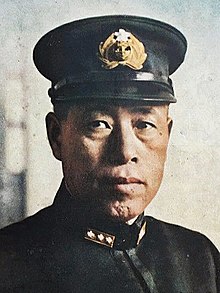
https://upload.wikimedia.org/wikipedia/commons/thumb/4/48/Yamamoto-Isoroku.jpg/220px-Yamamoto-Isoroku.jpg(Yamamoto)

Hotta writes that the liaison conferences between the services "were becoming a tragic farce of keeping up appearance for appearances sake".   Chief of Staff Nagano told Minister Oikawa privately on October 2 that he preferred to avoid military confrontation, but at October 4 liaison conference demanded, "We should [set a timetable for war] right away!".

Two days later Navy leaders met and agreed it was "folly to start a war with the United States" and the army should begin withdrawing forces from China.

On October 7, the Army and Navy Ministers met.  Regarding the war plan, Tojo told Oikawa, r"If the navy is not confident, we must reconsider it."  The following day, Tojo lamented to the Navy Minister:
"We've lost tens of thousands of lives over the China Incident.  To withdraw seems an unbearable option.  And yet if we do go to war with the United States, we will lose tens of thousands more.  I am thinking about withdrawing troops, but I just cannot decide."
At almost the same time, the commander in chief of Japan's army in China sent a message to Tokyo urging it to accept U.S. demands and settle the war with China.

"We must continue to seek a diplomatic settlement", PM Konoe said on October 12, "I have no confidence in a war such as this".  The same day, Foreign Minister Toyoda, who succeeded Matsuoka in August, bluntly told Konoe, "If I am allowed to be brutally frank, the imperial conference resolution [of September 6] was impetuous."
 
In a climatic meeting on October 14 Konoe met with Tojo, informing him:
I am greatly responsible for the China Incident. . .  I simply cannot agree to starting yet another great war whose outlook is very vague.  I suggest that we now concede to the U.S. withdrawal formula and avoid opening fire between Japan and the United States.  We really need to end the China Incident.
https://upload.wikimedia.org/wikipedia/commons/7/70/Prime_Minister_Tojo_Hideki_photograph.jpg(Hideki Tojo from wikimedia)

By now, Tojo had made his decision - no withdrawal from China.  It was a matter of honor, in light of the thousands of dead Japanese soldiers in the war, as well as the disgrace if the army admitted it could not win the China war, and was thus responsible for Japan backing down to the demands of the United States.  As Hotta puts it:
The navy would not say it did not want war . . . The army, which would bear the bulk of public humiliation of troop withdrawal . . was accusing the navy of not clearly stating its opposition to the new war so that the army, too, would have to admit its weakness by saying it could not fight.
Tojo endeavored to find another path towards the same result, without the army making the recommendation, visiting the imperial palace to meet with Lord Kido, Keeper of the Privy Seal, and eminent advisor to the emperor.  Tojo urged Kido to seek resignation of the entire cabinet and they agreed, according to Hotta, "that to avoid war they had to ensure that the next prime minister would move away from the problematic imperial resolution".  Tojo recommended Prince Higashikuni for the position since the Prince was known to have strong antiwar views and, as the emperor's uncle, the prestige to carry out a change in course.  Kido rejected the suggestion, not wanting the imperial family involved in such a controversial decision.  Once again, no one in power position - whether in the imperial family, the civilian leadership, army or navy, was willing to take the lead in changing what was seen as a disastrous course of action.

On October 17, Tojo, packing up his office in anticipation of the dismissal of the entire government, was summoned to meet with Hirohito and stunned to be asked to become prime minister.  Lord Kido's flawed reasoning in recommending the appointment was that since Tojo had been the most insistent the September 6 declaration, he would be best suited for the task of reversing and, indeed, Kido met with Tojo and Navy Minister Oikawa to inform them, "I must stress that it is the emperor's wish that in formulating the nation's policy, you would not be a slave to the September 6 imperial resolution." Seeming to further help things along, Tojo's picks for finance and the new navy minister (replacing Oikawa), only agreed to serve after being assured the new prime minister was committed to avoiding war with the U.S.

Yet Tojo was to prove incapable of changing course because he still resisted the army taking the initiative and blame for policy change, a failure compounded by his lack of insight into how Japan's negotiating strategy would be perceived by the U.S.

The September 6 decision was reconsidered in daily liaison conferences from October 23 through 30. Japan 1941 recounts the dreary, frustrating, and confused discussions, which seemed to constantly circle around the key issues, but never land.  It is as though the participants felt the decision was out of their control, though all of the deadlines and negotiating positions were of their own creation.  A final, 17-hour conference on November 1-2, set November 30 as the final deadline for negotiations.  In a final fittingly inept move, Japan's negotiators in America were given two plans, A and B, to present.  Only if Plan A was rejected (and it was clearly unacceptable to the U.S.), were the negotiators to present proposals from Plan B, and it was only explicitly with Tojo's permission that they were allowed to discuss the only aspect of Plan B which would get the attention of the other side - a pledge to immediately withdraw from southern Indochina (permission that was never granted, though the Japanese negotiators, disobeying instructions, informally presented it to Secretary of State Hull on November 18).  Further complicating the task of the Japanese negotiators is they were not initially told of the November 30 deadline.

On November 25, Secretary Hull prepared a response which provided for (1) a three month truce; (2) Japan's immediate withdrawal from southern Indochina; (3) reduction of northern Indochina forces to 25,000; (4) US unfreezing Japan assets; (5) resumption of economic relations.  But it was never delivered.  Instead, on November 26, the Japanese negotiators were presented with what is known as the Hull Note containing a series of stiff and uncompromising U.S. demands, which even if subject to negotiations would take months to resolve. Why the change?  Both China and the British opposed the terms in the November 25 draft but, more importantly, the U.S. had just received reliable intelligence that Japan was moving naval, air and army forces into areas south of Taiwan, in what was apparently the initial move of a military onslaught.  Combined with increasingly militant public speeches by Japan's cabinet members, and the interception of Foreign Minister Togo's message to the Japanese embassy that after November 29, events would proceed "in an automatic fashion", FDR viewed the entire Japanese negotiating position as a sham.  The President informed his advisers that Japan would likely attack the United States on December 1.
https://www.awm.gov.au/sites/default/files/exhibitions/underattack/images/maps/advance1.gif(Japan moves south)

Although the U.S. had uncovered Japan's move south, it failed to detect six Japanese carriers leaving northern Japan on November 26 under radio silence; their objective - Pearl Harbor.

At a November 29 lunch with emperor, Admiral Yonai, convinced of the disaster a war with America would bring, spoke up, "Excuse me for speaking my mind in crude ways, but I think we mustn't become utterly poor in our quest to avoid becoming gradually poor".  The following day, Hirohito's brother conveyed his warning, but the countdown to war was on, and those who could have stopped it believed they were powerless to do so.

In frustration over the failure of diplomacy, in which the key issue of contention, the war in China, was known by the Japanese government to be a mistake, Japan set a course for war, with the forlorn hope that initial success against the United States would drive it to further negotiations, demonstrating, as Yamamoto warned on September 29, a fundamental misunderstanding of the American psyche, and knowing that their country was doomed if the war was prolonged.


For more on the early phases of the Pacific War, read Tarawa.
For the ending of the war, read Downfall: Ending The War With Japan.
For the nature of the war in the Pacific, read With The Old Breed.