Thursday, June 30, 2022

Davy & The Indians

In Remember (My Visit) To The Alamo series, I wrote on the controversy surrounding how Davy Crockett died, in the course of which I mentioned his background along with his opposition to the Indian Removal Act while serving in Congress.

I've gone back to look at his speech on the Act, delivered on May 19, 1830.  

The Indian Removal Act, proposed by President Andrew Jackson, with the enthusiastic support of most of the white population in the south, was designed to remove members of the Five "Civilized" Tribes (Cherokee, Chickasaw, Creek, Choctaw, and Seminole) (1) from the southeast, moving them to what later became the state of Oklahoma.  The Jackson Administration required funding for the proposed action, which led to the Indian Removal Act.

David Crockett was first elected to Congress from Tennessee in 1827 and then reelected in 1829.  His Congressional district bordered Chickasaw lands, and he had a long acquaintance with many of the tribes, particularly the Cherokee and he'd fought the Creeks during the War of 1812.

Walt Disney's Davy Crockett series portrayed his opposition to the Act very prominently in the second part of the three part series that created a nationwide sensation in late 1954 and early 1955.  Here is how the speech is portrayed in that episode, broadcast on January 26, 1955.  I watched the entire series either when first broadcast or when it was rerun later in 1955 or in 1956.  And, yes, I had a coonskin cap.  Crockett was played by Fess Parker, who in the 1960s went on to star as Daniel Boone in a long-running TV series.  Davy's sidekick is played by Buddy Ebsen, who later went on to discover Texas Tea in The Beverly Hillbillies.

While the fact of Crockett's opposition is actually shown, the context and content of his speech was quite different, as was his appearance - in Congress, Rep Crockett dressed like his fellow representatives - he did not wear a coonskin cap.

You can find his actual speech, or more precisely a "Sketch" of his remarks, here.  Excerpts:

He did not know whether a man (that is, a member of Congress) within 500 miles of his residence would give a similar vote; but he knew, at the same time, that he should give that vote with a clear conscience.  He had his constituents to settle with, he was aware; and should like to please them as well as other gentleman; but he had also a settlement to make at the bar of his God; and what his conscience dictated to be just and right he would do, be the consequences what they might. 

He had always viewed the native Indian tribes of this country as a sovereign people.  He believed they had been recognised as such from the very foundation of this government, and the United States were bound by treaty to protect them; it was their duty to do so.

Mr. C. said that four counties of his district bordered on the Chickasaw country.  He knew many of their tribe; and nothing should ever induce him to vote to drive them west of the Mississippi.

No man could be more willing to see them remove than he was if it could be done in a manner agreeable to themselves; but not otherwise.  He knew personally that a part of the tribe of the Cherokees were unwilling to go.

It had never been known that white men and Indians could live together; and in this case, the Indians were to have no privileges allowed them, while the white men were to have all.  Now, if this was not oppression with a vengeance, he did not know what was.

If he should be the only member of that House who voted against the bill, and the only man in the United States who disapproved it, he would still vote against it.

The vote was close, but the Act passed the House by a vote of 102 to 97.  Rep Crockett was the only member with the tribes either in their district or adjacent to their lands to vote against the bill.  David lost his bid for reelection in 1831, due in large part to his vote on the Removal Act.  He regained his seat in 1833 before being defeated again in 1835.  Following this defeat, and disgusted by the Jackson/Van Buren administration, he decided to stake his future in Texas.  He arrived in San Antonio on February 6, 1836 and died a month later, along with the other defenders of the Alamo.

And nearly two centuries later we are still grappling with the legacy of earlier treaties with the tribes resettled in Oklahoma as seen by this week's Supreme Court case which addressed the complications raised by the Court in its previous decision on those treaties and the nature of Indian sovereignty, issued only two years ago.

--------------------------------------------------------

(1) The term "civilized" is used to distinguish these tribes from those in other areas of the country and in different eras.  These tribes all had established treaty relations with the United States and they were in compliance with those treaties.  The treaties established them on lands across the southeast and each tribe had organized governance structures and were pursuing agricultural and settled ways.  There was also considerable intermarriage between whites and tribe members.  This was a very different scenario from federal relations with the nomadic tribes of the Great Plains like the Sioux and Comanche.

Based On A True Story

Read Norm MacDonald's 2016 book, Based On A True Story: Not A Memoir.  Funny, outrageous, bizarre - just like Norm.  Some is true, some not, and some you just can't tell.  If you like Norm's comedy you'll like this, as I did.  If not, you won't get it.  Definitely written by him.  The style and rhythms are pure Norm and you can hear his voice in your head as you read (and he does the audio book version).

Not knowing much about his early career I was interested to see how much credit he gave to Adam Sandler, "Without Adam, no career".

As we now know (but didn't then), Norm had already been diagnosed with the leukemia that would kill him in 2021.  Amid the wild tales, there are a couple of moments, when it seems, in retrospect, he's reflecting on his diagnosis:

"The only thing an old man can tell a young man is that it goes fast, real fast, and if you're not careful it's too late.  Of course, the young man will never understand this truth."

In the context of a hospital visit to a child who's been diagnosed with a fatal illness, most of which is very, very funny, he writes:

"Death is a funny thing.  Not funny haha, like a Woody Allen movie, but funny strange, like a Woody Allen marriage.  When it's unexpected, death comes fast like a ravenous wolf and tears open your throat with a merciful fury.  But when it's expected, it comes slow and patient like a snake, and the doctor tells you how far away it is and when, exactly, it will be at your door.  And when it will be at the foot of your bed.  And when it will be on your flesh."


Wednesday, June 29, 2022

The Motown Playlist

Recently I've been on a bit of a Motown binge (see, for instance, Holland-Dozier-Holland).  I was going to do a post on my Top Ten favorites but after #1 (Reach Out, I'll Be There) and #2 (Marvin Gaye's version of I Heard It Through The Grapevine), I couldn't make any further headway in the ratings because Motown produced so much great music from the early 60s through 1972.  

On a long plane flight a couple of weeks ago I listened to my personal Motown playlist and was reminded once again just how many outstanding songs came out of Detroit and how good the music makes me feel, so I decided to just post my playlist.  I listened through my Bose earbuds, which accentuates the bass, enabling me to further appreciate James Jamerson's playing as part of the Motown studio band.

A couple of omissions regarding Stevie Wonder and Marvin Gaye.  In the early 70s both transformed their music.  In the case of Wonder, it was elevating an already astonishing level of virtuosity into the stratosphere with a creative explosion that lasted the entire decade, so Talking Book and its single, Superstition, and subsequent albums are not included here, nor is Marvin's What's Going On? and its successors.

The Temptations
My Girl (1964)
Get Ready (1966)
(I Know) I'm Losing You
Ain't Too Proud To Beg
All I Need (1967)
I Wish It Would Rain (1968)
Cloud Nine
I Can't Get Next To You (1969) - The best of ensemble singing.  Everyone contributes.
Ball Of Confusion (1970)
Just My Imagination (1971)
Papa Was A Rolling Stone (1972)
 The Four Tops
Baby I Need Your Loving (1964)
I Can't Help Myself (1965)
It's The Same Old Song 
Something About You
Shake Me, Wake Me (1966)
Reach Out (I'll Be There) 
Standing In The Shadows Of Love
Bernadette (1967) - Levi Stubbs takes pleading vocals to another level
Walk Away Renee (1968) - Better than the original
Ain't No Woman (Like The One I've Got) (1972) 
Stevie Wonder
Fingertips, Part 2 (1963) - 12 year old harmonica playing Stevie in a dynamic live performance
Uptight (1965)
I Was Made To Love Her (1967)
Signed, Sealed, Delivered (1970)
Marvin Gaye
How Sweet It Is (1964)
Ain't That Peculiar (1965)
Ain't No Mountain High Enough - with Tami Terrell (1967) 
Ain't Nothing Like The Real Thing - with Tami Terrell (1968)
I Heard It Through The Grapevine - Isolated vocal.  Wow.
 Smokey Robinson & The Miracles 
You Really Got A Hold On Me (1962)
I Second That Emotion (1967)
The Tears Of A Clown (1970)
Martha & The Vandellas
Heat Wave (1963)
Dancing In The Streets (1964)
The Supremes
Where Did Our Love Go (1964)
You Keep Me Hanging On (1966)
The Marvelettes
Mr Postman (1961)
Don't Mess With Bill (1966)- Underrated
Junior Walker & The All-Stars
Shotgun (1965)
 Edwin Starr
War (1970)

Monday, June 27, 2022

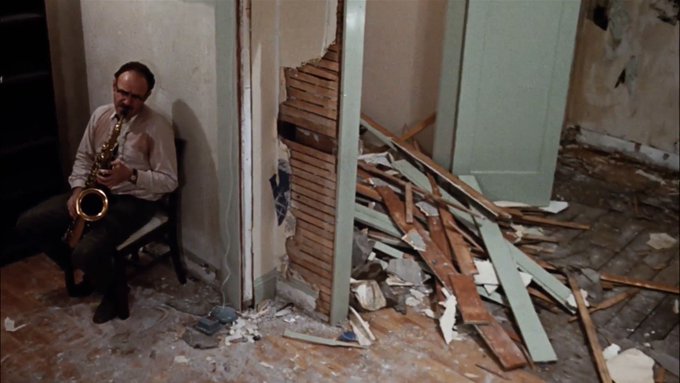
The Conversation

Image

Saw the still above which reminded me of the greatness of this film, made by Francis Ford Coppola in between Godfather I and II.  Starring Gene Hackman, along with John Cazale, Harrison Ford, and Cindy Williams, The Conversation deals with surveillance, privacy, media, and the difficulty of distinguishing fact from narrative, making it relevant even today.  I rewatched the film last year and it stands the test of time.

I came across the photo on the Twitter account of The Projectionist Woman, which features an impeccable selection of movie stills.

Regarding Dobbs

With the Supreme Court's recent abortion decision there has been talk in both parties about potential Congressional action.  For the Democrats it's been about codifying legislatively the precepts of Roe/Casey on a national level.  For the Republicans, in the event they gain control, it is passing a national ban on abortion after 15 weeks (or, for others, an absolute ban).

Apart from the intra-party political disputes each party would face in drafting legislation (1), I have my own problem with these proposed solutions because I do not believe Congress has any Constitutional authority to pass such legislation.  Past legislative proposals have invoked the Commerce Clause as the Constitutional justification but my view of that clause is that the decision of an individual to have an abortion does not constitute interstate commerce.  Some conservatives have made an alternative argument that Congress has authority to legislate on this subject under the 14th Amendment but it is a big stretch to do so, and moreover, it would mean effectively reading that Amendment as supporting substantive due process, which is otherwise anathema to conservatives.

If I were in Congress I would vote against any such proposals and that is why THC is never going to be nominated for public office by either party!

UPDATE:  For those interested in the underlying constitutional law issue, listen to this Bari Weiss podcast in which Akhil Reed Amar, a pro-choice Yale Law School professor, explains the constitutional deficiencies of the 1973 Roe decision.

--------------------------------------------------------------

(1) For the Democrats the problem is the party has moved way beyond Roe/Casey and takes the position that there should be no legal constraints on abortion - the Equality Act proposed by the party would Federalize abortion and allow it at any time until birth (though there are legislative proposals in California and Maryland to extend that for a bit after birth).  For Democrats, abortion has moved from the Clintonian formula of "safe, rare, and legal" to the Calhounian doctrine of a positive good.

For Republicans it is going to be extremely difficult to reconcile the differences between those supporting a European style 15 week limit, with appropriate health exceptions, and those who will strongly advocate for an absolute ban.  The former is roughly consistent with American public opinion, the latter opposed by most Americans.

Sunday, June 26, 2022

Belfast

This mostly black & white film is worth watching for the cinematography alone though that is not its only positive attribute.  Set in 1969-70, at the beginning of The Troubles in Northern Ireland, it is the story of a Protestant family living in a predominantly Catholic neighborhood in Belfast as told through the eyes of the youngest son.

Belfast is directed by Kenneth Branagh, who also wrote the screenplay.  Branagh, born in Belfast, was eight years old when The Troubles began.  His Protestant family lived in a predominantly Catholic neighborhood and his father, just like the dad in the film, was a plumber and joiner who traveled to England to find work to support the family.

The film swings between the idyllic parts of childhood and frightening outbreaks of violence, and it is very frightening when it starts on the screen.  Branagh has sympathy for all those caught up in the situation, and nothing but disdain for those who promoted sectarian hatred.  Because it is told through the perceptions of a boy too young to understand what is going on around him, some scenes are exaggerated and there are a couple that are clearly fantasies of how the child would like to remember those days and his parents.  Very moving and very disturbing at times.

As a young man, Branagh directed and starred in the finest Shakespeare ever put on film, Henry V.  If you haven't seen it, do so.  And watch it with a copy of the play with you to appreciate the brilliance of Branagh's adaptation.