Showing posts with label China. Show all posts

Wednesday, February 8, 2023

You Say You Want A Revolution

 I've written a couple of posts about China's Cultural Revolution (1966-76), see "We Thought Mao Was Doing A Wonderful Thing", and Destroy The Four Olds, while, more recently, a number of people have pointed out similarities between those years in China and the recent upheavals in the United States by those seeking to impose the doctrines of the New Racism and Transgender Mania (1), driven by their belief in a conspiracy theory that whites and Jews have conspired to manipulate the structures and the very language of society to attain and maintain their supremacy; see, for instance, Bill Maher's remarks on his show a couple of weeks ago or in the tale of a Georgetown Law School professor regarding the purges at her school, as told in Fighting Back.

But while there are similarities between the U.S. today and the days of the Cultural Revolution, the more I think about it, I believe there are also some distinct differences.  These are my initial thoughts on the subject.

To understand what those differences might be, we need to look back on the origins of the Cultural Revolution in China.

In the late 1930s, Mao Tse Tung emerged as the leading figure in the Chinese Communist Party and he maintained that role until the aftermath of the disastrous Great Leap Forward of 1958-62, which was both an economic failure and led to the deaths of tens of million.  In the wake of that failure, his position was weakened.  Though not sidelined, other party chieftains became more powerful.

In the early and mid-60s, Mao became disturbed as he believed the revolutionary momentum of the 40s and 50s was ebbing as a more "comfortable" class of cadres and bureaucrats emerged within the party.  In Mao's view complete destruction of "the old" was necessary and only those committed to a permanent revolutionary society could bring about a new order.  In achieving that goal, and regaining his full authority, Mao had an ace up his sleeve, because he remained a cult figure to the masses.  The Communist Party's revolutionary educational course consisted of 22 sets of writings, of which Mao was the author of 18.  To the Chinese people, he remained the face of the party, though his power base within it was diminished.

When unleashed in 1966, the Cultural Revolution was intended to undo both key institutions and those who controlled them (and, along the way, restore Mao to full authority).  

And that is the difference with what we see in the United States since 2020 with the emergence of these anti-democratic theories gestated in the belly of academia, until they burst forth in the wake of George Floyd, just like the creature bursting out of John Hurt's chest in Alien.

The George Floyd riots, which left in the short run, thirty dead and two billion in property damage (mostly in businesses owned by people of color) and, longer term, resulted in upsurges in violent crime and homicides, mostly impacting minority communities, occurred predominantly in cities governed for decades by progressives; cities that turned out to be hotbeds of racism, filled with failing school systems.  

Yet the response has been to strengthen the institutions in our society, whether governmental, academic, corporate, or NGO, whose failed policies led to this and, in fact, to double down.  We see the academic and teachers union trends of debasing and disabling effective education actually accelerating, telling us that, for instance, the solution to a subset of black children not performing well, is not to figure out how best to help them improve, but rather should be cured by lowering the standards for everyone else.  We see major cities and the homeless industrial complex doubling down on the same policies that have only increased homelessness and the descent into disorder.  We see academia increasing the purges in the name of diversity while, in reality, creating an intellectual atmosphere of stultifying conformity.

There is a Cultural Revolution in the United States but one driven by the institutions and those in control, one that had slowly increased its power in the first two decades of this century and saw with Donald Trump and George Floyd the chance to aggressively consolidate its power and to finally crush any opposition.  Just as in the 1920s and 1930s the communists labeled as fascists anyone opposed to them, today's ideologues needed to create an enemy and label that enemy as racist, fascist, and a threat to democracy, which is, in reality, what the proponents of the American Cultural Revolution stand for; they've revived racial essentialism, embrace the essence of fascism as defined by its original proponents - "everything inside the state, nothing outside the state, nothing against the state", and actively seek to suppress opposition within the institutions they control and by attempting to federalize elections under central control.

I witnessed the hysteria induced by Trump's election, with ravings about the dark night of fascism falling on America with brownshirts in the streets, all to mobilize "the resistance".  Strangely, in the months between the election and inauguration what we saw instead were a spate of fake hate crimes and violent threats against Trump supporters, followed in the first few months of his administration by numerous instances of speech suppression on campuses and elsewhere against non-progressives (even if they didn't support Trump) but no suppression by the new administration, all capped by the shooting of Republicans at a baseball practice by a Bernie Bros who was addicted to watching MSNBC.  That it was nonsense, didn't matter, the narrative was established and reinforced every day by the institutions.

Of course, Trump himself, being a repellent dolt, played right into it, reinforcing the narrative against him.  Whether remarking on Russia and Putin, or making bizarre authoritarian leaning remarks and wisecracks, he thought he was "owning the libs" but instead it was an self-own.  And the biggest monumental self-own was his behavior after the November 2020 election with stop the steal and his ratcheting up the rhetoric, all leading to January 6, and providing the perfect image for those who are the real oppressors to wave around in front of the public.

But here's the other strange thing.  Trump had bizarre behavior, outside the norm, with his remarks and tweets often rebounding against him.  But on substance, domestic and foreign policy, he was not outside those norms.  In fact, on domestic policy I would argue that he was overall a weak and ineffective president, presenting no risk or threat to democracy.  You might agree or disagree with his tax bill, which increased taxes on the wealthy by limiting the SALT deduction, but there was nothing abnormal or anti-democratic about it.  As I've written before, Trump's behavior and rhetoric undercut the substance.  Nonetheless, the drumbeat persisted and even became more heated during his administration.

And then we come to George Floyd.  After several attempts to build false narratives around people like Trayvon Martin, Freddie Gray, and Michael Brown (Omar Mateen was also false but that was a false gay, not black, narrative), with Floyd there was the perfect vehicle, that horrible 9 minute video portraying police action for which there was no excuse.  It wasn't just the short term impact when progressive mayors pulled back the police and unleashed their militias, but the institutions jumping on those events with a grand purge of anyone not fully on board with the conspiracy theory of the New Racism.

The American Cultural Revolution is not about disabling bureaucrats and institutions; they'd already gained control.  It is about purging the remaining opposition, an opposition that, while opposing the New Racists, lacks coordinated discipline and power.  It is a fragmented opposition.  It is not just on the right, but includes many centrists, and indeed a number of people who describe themselves as liberals, progressives, and even socialists, but who understand that the ideology behind the New Racism spells the end of democracy if it should succeed.  All of us in opposition are branded as the enemy; as racists, fascists, and enemies of democracy.  If this is "Revolution", it is revolution from above.

Another difference with China's Cultural Revolution is that the American version lacks a political icon.  In China, Mao towered over everything and everyone, the actions of the Red Guards and others were done with his blessing, and his followers waved Mao's Little Red Book.  There is no such political icon in America; Joe Biden and other Democrats just don't fit the bill (interestingly, for some of his supporters, Trump is such an icon)  There are cultural icons here, but primarily based on identity - if you are black and have the right ideas you fit the bill, but nothing similar to Mao.  That we are going through these times without such a political icon is an indication of the strength of the American movement within existing institutions.  This is happening without direction from a Mao-like figure.

One final difference is that the destruction of the Four Olds in China was about completely obliterating the past.  Though some of what we are seeing in America is applying strange ideas in new ways, the ideas behind all of it are a throwback, a weird mixture of pre-Enlightenment views on tolerance crossed with the bizarro-world resurrection of the pre- Civil War beliefs of John C Calhoun (who ever thought we'd see the King Cotton thesis revived!).

One aspect that Bill Maher didn't quite get and others have also failed, is that what we are seeing is not just a phenonomen of the far Left (indeed there a folks very much of the Left who strongly opposed all of this), but that it now the governing philosophy of our institutions and of the political party controlling the White House and Senate.  It's not just a matter of curbing the excesses of a few.

If you examine the details behind the New Racism and Transgender Mania one realizes it is full of contradictions and incoherence and will eventually run aground in the conflicts between its groups of adherents as they argue over who is most oppressed and who gets to play the oppressor in their new world.  The question is when will this occur and how much damage will they inflict on the rest of us in the process?

------------------------------------------------------------

(1) Regarding transgender issues, I am supportive of adults making informed decisions regarding transitions; historically a tiny percentage of the population.  What I am referring to with the term "Mania" are those, who believe that men and women are different, that gender is not a choice, that mothers should not be referred to as "birthing persons", that object to the use of convoluted language to avoid the truth, that one should be able to ask why men should not be allowed in girls restrooms or women's prison, and whether it is good policy to allow minor children to undergo chemical transitions, and are denounced as transphobic and run the risk of losing their jobs or educational opportunities due to attacks from the maniacs.  For more on the worst of this, the transitioning of children read this piece.

I used to think the New Racism and Transgender Mania were independent issues, but after delving into the literature, I realize their proponents believe they are linked.  Specifically, they believe that the gender binary was invented by Europeans in the 17th and 18th century in order to maintain white supremacy.  The same is believed regarding the nuclear family, supposedly also invented in the same time period in support of white supremacy.  In their view, destroying traditional gender roles and the nuclear family are essential to reforming society and overturning white supremacy.  It is why the platform of BLM included the abolition of the nuclear family.

Saturday, February 4, 2023

Things Change

Via Tanner Greer's outstanding blog, The Scholar's Stage, we learned that Japan's 2022 National Security Strategy, published on December 16, ends with this startling statement:

At this time of an inflection point in history, Japan is finding itself in the midst of the most severe and complex security environment since the end of WWII. In no way can we be optimistic about what the future of the international community will hold.

And the document starts with this:

The international community is facing changes defining an era. We are reminded once again that globalization and interdependence alone cannot serve as a guarantor for peace and development across the globe. The free, open, and stable international order, which expanded worldwide in the post-Cold War era, is now at stake with serious challenges amidst historical changes in power balances and intensifying geopolitical competition…
Japan, once the epitome of a country basing its policy on globalization and a global community within which it would be integrated, has concluded that vision is gone, a point emphasized in this passage:

Japan will work to achieve a virtuous cycle of security and economic growth, in which economic growth promotes the improvement of the security environment surrounding Japan. Concurrently, Japan will ensure the self-reliance of its economic structure, as well as advantages over other countries and ultimately the indispensability of its technologies.
Japan clearly blames this change on China and Russia:

largely due to the fact that nations, not sharing universal values, or political and economic systems based on such values in common, are expanding their influences, thereby manifesting risks around the globe. Specifically, some states, which do not exclude the policy of increasing their own national interests at the expense of others, are expanding their influence through both military and non-military means, attempting to unilaterally change the status quo, and accelerating actions to challenge the international order. Such moves have sharpened competition and confrontation among states in wide-ranging areas, including military, diplomatic, economic, and technological fields, and have shaken the foundation of the international order.
Greer writes of his own reaction:

I find myself strangely affected by this document. There was once a dream that globalization might save the world. As the fortunes and culture of the great human hive grew ever more intertwined, we dreamed that we could be one with all the globe. We would no longer just be citizens of soil or state, but citizens of the species! With hearts knit in unity, love, and enlightened self interest, old hatreds would melt away. Many millennia of chaos and strife might end. America would form the living kernel of this new commercial order. Her enterprise would provide the connecting tissue that wrapped together the prosperity and liberty of the entire human race. 

And he concludes with these words:

I believe the Japanese have judged correctly; I support the Biden administration’s attempt to blunt China’s technological edge. But it is difficult to see these things play out in real life and feel any sense of victory. We are sliding into a darker world order. The Chinese got there first; we should have followed long ago. There is little sense in keeping to old forms that do not match present realities. But the old forms will not go unmourned. It is always sad to watch a dream die.

Though there are still some in American academia, government, and business, and many in Western Europe, who still refuse to face the present realities and want to keep the old forms, the world really has changed and the dream is fading.

In December, Morris Chang, founder of Taiwan Semiconductor Manufacturing Company, which is making a $12 billion investment in the Phoenix area, proclaimed in a speech here that globalization and free trade were "almost dead".

Though both Russia and China actions have led to this, Russia is, by itself a nuisance, but nothing more, but for China's support.  It is China's disruption that is at the heart of this.  

Those more knowledgeable than me are still debating whether this was China's plan all along or is really attributable to the changes under Xi Jingping, who took control in 2012.  What I do know is that during my time traveling frequently to China from 2000 through 2011, I was cautiously optimistic, though as the years passed less so.  In retrospect, the Clinton/Bush policy of integrating China into the world economy and agreeing to China's entry into the World Trade Organization without additional conditions backfired.  

The unraveling of globalization will be painful and risky for everyone.  This is much different than our confrontation with the Soviet Union, a military superpower but economic basket case.  Unlike our relationship with China, the United States and Soviet economies were not integrated; in fact the Soviets deliberately isolated themselves among their communist satellites and allies.(1) 

It was also a different world militarily.  During the Cold War, there were two superpowers.  For two decades after the end of the Cold War, America was the sole hyperpower.  Those days are over, both militarily and economically.  The U.S. is still the strongest individual nation but can no longer dominate the world in either aspect.  We must be more selective in choosing our priorities and where to spend our monies.  We need to end the illusion that we should, and can, influence everything in the world.

------------------------------------------------------

(1) I don't think ending globalizations means the U.S. will produce everything here, but I think you will see rival trading blocs formed and decisions made to encourage local production in certain key areas. 

Wednesday, December 8, 2021

Chaos Under Heaven

Josh Rogin (1) is a foreign policy opinion writer for the Washington Post, a self-declared "agnostic Democrat" and a China hawk.  We listened to Bari Weiss interview Rogin on her podcast and which got me intrigued enough to read Chaos Under Heaven, his book on U.S.-China relations during the Trump administration, a book I recommend to others.

Rogin's starting point is that the China regime is a threat to the U.S., a threat that has greatly accelerated under Xi Jingping, and a threat that has compromised many U.S. institutions and public figures.  The author puts it this way:

Virtually everyone I interviewed for this book had an awakening story; a moment in their personal or professional lives when they realized that the grand strategic competition between the United States and China was the most important foreign policy issue in the world and the most important project they would work on in their lifetime.  Many also said this was an awakening to the aggressive and malign character, behavior, and strategy of China's leadership: the Chinese Communist Party (CCP), a hundred-year old revolutionary organization that is determined to expand its influence and increase its power, and which has few limits to the methods it will use to advance its own interests.

Put simply, a China that is militarily expansionist, economically aggressive, internally repressive, and increasingly interfering in democratic societies poses enormous challenges for the United States along with all of our allies, friends and partners.  The effects are already seen in our national security, our investments, our industries, our schools, our media, and even our elections.

. . . Washington had lost the bet it made twenty years ago, when it had granted China permanent normal trade relations in the hope that helping China expand economically would cause it to liberalize politically and that would lead to peaceful coexistence.
I largely agree with this assessment though it was not my view twenty years ago.

The author views the Obama administration as being "played" by China into viewing the relationship being between competitors with room for cooperation while, in reality, China is inherently hostile to the U.S. 

We saw this play out in the relative evaluation of Russia v China between the Obama and Trump administrations.  The incoming National Security Advisor for Trump, Michael Flynn (2), thought China a bigger threat than Russia; the Obama administration thought the opposite.  In her House Intelligence Committee testimony of September 8, 2017 Susan Rice, Obama's NSA, complained about her meeting with Flynn:

"We spent a lot more time talking about China in part because General Flynn's focus was on China as our principal overarching adversary. He had many questions and concerns about China. And when I elicited - sought to elicit his perspective on Russia, he was quite, I started to say dismissive, but that may be an overstatement. He downplayed his assessment of Russia as a threat to the United States. He called it overblown. He said they're a declining power, they're demographically challenged, they're not really much of a threat, and then reemphasized the importance of China." (pp.46-47)

I suppose Rice thought, particularly in the context of 2017, that her anecdote was clever.  It doesn't look that way now.

After that setup we move quickly to the Trump administration.  Early on, Rogin writes of his invitation to join meetings of mid-level bureaucrats trying get the administration to take a tough line on China, with Josh acknowledging both his sympathy toward them and his access being based on his willingness to write in support of their desired policies.

I'd summarize his take on the Trump administration as making some of the right steps to reverse the course set by the Bush and Obama administrations but beset by flawed implementation due to the erratic nature of Donald Trump and his inability or unwillingness to spend the time needed to understand the details of the relationship between the two countries, though the president's instincts seemed supportive of the hard liners, as well as unresolved conflicts between those in his administration promoting a much harder approach and those, primarily linked with Wall Street, who favored a more accommodating stance.  The hardest of the hardliners were people like Peter Navarro, Steve Bannon and Michael Flynn who, according to Rogin, were willing to blow up the entire relationship while another group centered around Mike Pence, Mike Pompeo, Matt Pottinger and Robert O'Brien in promoting a more aggressive approach towards resetting the relationship.  The Wall Street crowd was lead by Treasury Secretary Steve Mnuchin, Gary Cohn, a 25-year Goldman Sachs executive who headed Trump's National Economic Council for two years, Larry Kudlow, and other friends of Trump from the Street like Blackstone Group CEO Stephen Schwarzman who were outside the administration but had the President's ear at times. (3)

Rogin describes the policy arguments and political infighting all under the eye of the unpredictable and erratic President.  Given Rogin's personal policy preferences and the nature of this type of reporting generally I can't say whether he gets it all accurately portrayed in every detail but given the personalities involved and what I saw of the administration's actions his overall picture rings true to me.

The book reaches its climax with the Covid-19 pandemic, for which Rogin condemns the China government's obfuscation and obstruction during the initial phases of the outbreak and then in preventing an investigation of the causes (Rogin thinks a lab leak is the most likely source).  

Rogin reports that during the early phase (January-February) China and the U.S. tried to cooperate but he relates a February 6 call between Xi and Trump that is startling.  According to Rogin, in that call Xi "asked Trump not to take any more excessive actions that would create further panic".  He "also told Trump that China had the coronavirus outbreak under control, that the virus was not a threat to the outside world, and that it was sensitive to the temperature and therefore would likely go way when the weather got warmer".  Four days later, at a White House meeting with state governors, Trump said, "Now, the virus that we're talking about having to do - you know, a lot of people think that goes away in April with the heat - as the heat comes in", without revealing that "a lot of people" meant Xi.

At the same time the administration was being very careful in its public statements because in private discussions China diplomats were threatening the halt of exports of badly needed medical supplies if the U.S. said the wrong things.

Finally becoming aware that he was being misled by Xi, on March 18 President Trump referred to Covid-19 as "the Chinese virus", although it was only in mid-April that administration officials first stated publicly that a leak from the Wuhan lab was a possible origin of the pandemic (statements triggered by a April 14 column in the Washington Post by Rogin based upon his obtaining a document leaked from his government sources).(4)

It remains unclear to me what the Biden administration posture on China is.  In fact, it may be unclear to the participants.

What is the nature of the threat?

I spent a lot of time in China between 2000 and 2011.  At the start I was cautiously optimistic, but by the end of the decade my views were changing.  And since the ascension of Xi Jinping it has become evident that rather than China becoming part of the existing world economic system it is seeking to reshape that system to both protect the role of the Chinese Communist Party and to dominate that system.  The levers it controls are much broader and more effective than the Soviet Union, which was a military power but an economic and technological pygmy.  

The intertwining of China with the global economy has enabled China to make global companies advocates for its policies, continually promoting even deeper economic ties.  This was a phenomenon I recognized during the decade I spent involved with that country.  My responsibility was running global environment and safety programs that were consistently applied no matter where we operated.  In that role, I was increasingly interacting with social responsibility "stakeholders".(5)  In our meetings they seemed to believe that multinational companies would be able to influence China government policies on environment and safety.  After a few years on the ground in China, my view was the opposite.  I knew that any global company would, if China said "jump", ask "how high?".  These NGO stakeholders had the power equation reversed.  It remains true.  American and European companies fear the China government much more than that of the United States.  They've been converted into lobbyists for China.

It is difficult enough for manufacturing companies to disentangle from complex global supply chains centered on China, even if they want to, but the American financial services sector is engaged in active collaboration with the regime (as for the tech sector, see this recent article on Apple's arrangement with China that allows it to continue to do business there). Americans investing their savings and retirement accounts into managed plans are often investing in China companies whether they know it or not.  Virtually every large American bank and financial services company is strongly linked to China or working to improve those links.  And they know who calls the shots.  Recently, Jamie Dimon, CEO of JP Morgan, quickly apologized for making a joke that offended the Chinese Communist Party, something he would never do in similar circumstances in the United States.

Just as in the Trump administration, the Wall Street crowd wields power in the Biden administration.  In the case of Biden, while Goldman Sachs plays a role, as it does in all administrations, it is BlackRock execs who are most closely tied to both the administration and China.  BlackRock, the largest money manager in the world with $7.8 trillion under management, was recently approved as the first foreign-owned company to operate a wholly-owned business in China's mutual fund industry, a move that drew criticism from George Soros who called it a "tragic mistake" that would "damage the national security interests of the U.S. and other democracies".  Brian Deese of BlackRock (I worked with his mother many years ago) runs the National Economic Council and Adewale Adeyemo is #2 at the Treasury Department.  The White House Office of Presidential Personnel, which manages all political appointments for the administration, is run by Catherine Russell.  From 2009-13, Russell was Chief of Staff to the Second Lady, Jill Biden, and began working as a staffer for Joe Biden in 1987.  Russell is married to Tom Donilon, National Security Advisor to President Obama from 2010 to 2013 and currently Chairman of the BlackRock Investment Institute, the firm's global think tank.  Donilon's brother Mike is a Senior Advisor to President Biden.

The issues around disentangling ourselves from China are complex.  I don't understand all of them, nor their implications.  I hope someone does.  Just as we have levers with China, China has levers with us.  I do know the failure to take control of our own actions will just result in a deeper dependence on China.  Here is one example.  If the U.S. were to try to greatly expand its development of solar and wind power and the use of batteries, technologies requiring enormous quantities of metals and rare earths, it will face a choice.  Either expand domestic mining and milling operations or become dependent upon China, particularly for rare earths, letting that country determine our future.

For further reading on China:

Balding's World

Tanner Greer 

Michael Pettis 

Henry Gao

China - U.S. Relations in the Eyes of the Chinese Communist Party 

Groping the Elephant of Common Prosperity 

The Triumph and Terror of Wang Huning 

 -------------------------------------------

(1)  Let's get this out of the way right now.  I'm continually getting confused between Josh Rogin, Seth Rogen, and Joe Rogan.  They need to caucus and decide who has to change their name.  Please guys, do this for me.

(2)  Yes, I know, he's nuts.  How much of that was always there and how much induced by the Mueller gang's persecution which broke him financially and apparently emotionally, I can't tell.  But he was correct in his relative assessment of Russia and China.

(3) Jared Kushner and Ivanka Trump make only passing appearances in the book but my sense is that their views were probably closer to the Wall Street crowd.  One can only imagine what a real press would make of Hunter Biden's China connections.

(4) The chronology also undermines the retroactive attempt to pin discussions of the lab leak theory on Trump's "xenophobia".  We now know that on January 31, 2020 virologists were communicating among themselves, and with Dr Anthony Fauci, that a lab origin was possible.  After Fauci arranged a conference call (the details of which remain unknown) a couple of days later, the same scientists, on February 4, completely ruled out a lab origin and then began the media campaign denouncing anyone believing such a release was a possibility as a conspiracy theorist and racist.  With the revelations of NIAID's relationship with the EcoHealth Alliance it is evident that the conspiracy and racist charges were deliberately made to divert attention from the connections between the Alliance, Fauci and the Wuhan lab.  All of this happened before references by Trump to the Wuhan or China virus.

The technique of accusing anyone critical of the Chinese government as being racist is not limited to this circumstance, and it is one China is well aware of and uses in its own propaganda.  For a recent example see this op-ed by Michele Bethel in the Wall St Journal.  Bethel's stepfather founded MIT's McGovern Institute for Brain Research in 2000 and Michele had been a Board member for the past seven years, lived in Shanghai for several years and speaks Chinese.  Ms Bethel became concerned that the Institute's work with Chinese institutions could "unwittingly . . . be aiding the country’s repressive security apparatus or its military, whose officers have published articles declaring biology a new domain of warfare."

According to Ms Bethel,

When I first aired these concerns a few years ago, other board members took offense. One said that any serious inquiry into the ambitions of the Chinese Communist Party would be “racist.” A key member of the institute asked me to “stick to science” and not to mention China again.

On reading the Reuters article last month I raised my concerns again. Board members again dismissed the issues I cited, saying scientific progress is paramount. One characterized my motives as “political”—a head-scratcher, given that I don’t wear my centrist political views on my sleeve. 

Do any of these Board members really think these concerns are "racist"?  I doubt it, but it is a convenient tool to bludgeon anyone who raises questions.  The bigger issue is the extent to which the academic world has been compromised by the flood of Chinese money into its institutions.

(5) "Stakeholders" in this context refers to self-appointed NGOs who actually don't care about the future of a particular company but have larger ideological goals in mind.

Wednesday, April 28, 2021

This Really Is Your Future

 I've been paying closer attention to events in China over the past year, primarily because of the convergence between what is happening there with events in the United States - see, for instance Biden And Xi Agree About America; Reading For Pleasure; The New Leninists; Destroy The Four Olds; and the recent remark of progressive Georgetown Law School professor Lama Abu Odeh about events at that formerly respected institution; "If this echoes a Maoist take-over, that’s because it is. It passes the sniff test".

It's a neck and neck race between China and the U.S. as to which will be first to institute a social credit test for its citizens and which will prove the more successful in quashing dissent.

Surviving will require mental dexterity, situational flexibility, and an ability to manage language, all of which struck me reading an article today from Radio Television Hong Kong, the public broadcasting service in that formerly semi-independent territory.  It reports an interview with Elsie Leung, former justice secretary of Hong Kong.  Follow the twists and turns:

Calls for an end to one-party rule in China could be illegal – or they might not be – but in any case there is no one-party rule, a former justice secretary told Hongkongers on Wednesday.

She then stressed that China has a multi-party system, which is led by the Chinese Communist Party (CCP). At the same time, the CCP is the ruling party, and this is set out in the constitution, she said.

People should respect the constitution, and they should not say anything that challenges it, she added.  

Watch and learn, folks.  You'll need to know how to toe the line even though the line will be constantly moving.  Remember, once you take the knee you will never be allowed to stand on your own two feet again.

Sunday, March 3, 2019

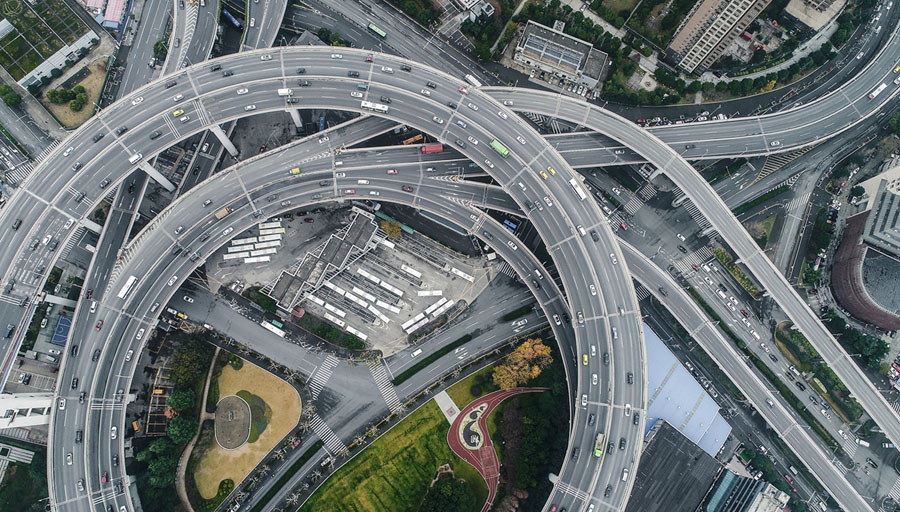
Nanpu Bridge

This is the spiral approach to the Nanpu Bridge in Shanghai.  The bridge spans the Huangpu River between Puxi (the older central portion of the city) and Pudong, on the eastern side of the river, an area that was farms and fields in 1990 and is now a booming city. 

Shanghai, which I visited many times between 2000 and 2011, is one of my favorite cities; it's like New York on steroids.  I've been on the Nanpu spiral many times.

Wednesday, November 29, 2017

Things I Had Not Known Part 781

The United Postal Union (UPU) was founded in 1874, currently has 192 member countries, and is now run under the auspices of the United Nations.  The UPU meets every four years to set terminal fees for postage between its members with each country getting one vote.  Under the UPU scheme countries that are considered poorer or less developed pay less for shipping to countries considered richer or more developed.

The result, as reported in a recent eye-opening article in Forbes, has created an astonishing situation in which freight rates from China to the United States are less than shipping within the United States created a huge competitive advantage for Chinese manufacturers and shippers because, under current UPU rules, China, the second largest country in the world, is in the same category as poor countries in sub-Saharan Africa!

According to Forbes: “The cost to ship a one-pound package from South Carolina to New York City would run nearly $6; from Beijing to NYC: $3.66.”  At the same time, the shipping rates from the U.S. to China are outrageous, and often preclude American customers from returning defective products.  That same one-pound package would cost about $50 to send via USPS International Mail from New York City to Beijing.

American merchants, already facing higher production costs, are further penalized even in dealing with their American customers.  Here's one example:
Becca Peter from Lopez Island in Washington state is in a similar situation. She sells something called Washi tape via a website called PrettyPackagesTape.com “at some of the lowest prices of any U.S.-based small business.” But these low prices are nothing compared to what Chinese competitors can sell at. While Peter must charge a flat $3.50 for shipping, Chinese merchants are selling versions of the product with all fees and and shipping charges included for a total price of $2.
And shipping internationally?  Fugeddaboudit!
It costs less than $4 to mail a 9-ounce parcel from China to Toronto or London. If I want to mail a 9-ounce parcel to Toronto it would cost me $14.73. If I wanted to send that same package to London it would cost me $21.38. 
As the author points out: 
As you browse through the listings on sites like Amazon and eBay it is almost impossible not to be amazed at how cheaply China-based merchants are selling products for: xlr cables for $.99, a necklace for $.78, 10 watch batteries for $.78 -- all with postage included.
My default position on international commerce is to favor free trade.  And I don't begrudge China becoming more prosperous and more people moving out of poverty, and am happy for my friends there.  But it is very clear that the existing trade rules, whether involving the UPU or the WTO are simply not "free" trade and have been successfully manipulated by China to the detriment of American citizens.  When China gained admission, with U.S. approval (in an enormous miscalculation by the administration of President Bush), to the WTO in 2001 it was supposed to herald a new day of trade benefiting both nations.  Instead, China has been skillfully able to use the WTO rules and its tribunals to pry open U.S. markets while keeping theirs relatively closed.

As several studies have pointed out it is the sheer scale of China's production boom that makes it unlike any other country which entered the WTO.  Some estimates are that up to 2 million U.S. manufacturing jobs were lost to China's onslaught in the first decade of the 21st century.  The suddenness and scale of China made it impossible for the U.S. to adjust gradually to change.  That's why a free trade agreement with countries with much small economies and manufacturing sectors are much easier to deal with.

And that doesn't even get to the intellectual property (IP) issues American companies face with China.  Those seeking to do business in that country are forced to turn over IP to the government in order to obtain access, and the outright theft of IP by Chinese companies is rarely punished by that country's legal system.

I saw some of this first hand during my many trips to China.  It's a fascinating place and I'd like to visit again.  But something has gone terribly wrong in our trade relations.


Saturday, January 7, 2017

Droning The Great Wall

During my many business trips to China, I was fortunate to get to the Great Wall north of Beijing on three occasions.  Taking a cable car up to the mountain ridge on which that part of the wall is sited, walking the ramparts, and watching the wall sinuously wander over the hills and valleys in both direction as far as you can see is an overwhelming experience.  The section of the wall, I've walked is at Mutianyu (photo below).

https://upload.wikimedia.org/wikipedia/commons/c/c8/Great_wall_of_china-mutianyu_3.JPG

It's also an experience that inspires the question, "What the heck were they thinking?".  Why build a wall on top of a mountain?  A mountain is a pretty effective wall in itself.  Enemy armies and raiders don't climb razor edge mountain ridges in order to attack.  They move through valleys, fields and low open hills.  One can be impressed by the structure, in awe (and horrified) at the difficulty, material and human cost of its construction, and simultaneously appalled that it was built just to demonstrate it could be done.  Of course, we should remember the Wall also crosses many of miles of desert and lowlands.

I recently learned of an Englishman, William Lindesay, who's spent the last 30 years exploring the entire length of the Wall, from its eastern end on the Manchurian coast to the edges of the Gobi Desert (the total length is 3,000 to 4,000 miles).  Most recently, he was given permission to fly a drone above the wall as he and his family trekked its length, which has provided us with some amazing footage.  You can find the BBC story with an embedded video here.   His website with stunning photos can be found here.  And below is a video containing spectacular footage from Lindesay's drone.

Friday, July 29, 2016

Seeing China's Past

(from Historical Photographs of China)

A fascinating story from the BBC . . .

Until recently, few photographs of pre-1970s China were available for public viewing anywhere and were even more difficult to find in China.  Many photo archives and personal collections were lost in the war, revolution and repression that engulfed China from the 1910s into the 1960s, with the crowning blow of the Cultural Revolution, launched in 1966 by Mao Tse Tung, with his youthful Red Guards purging archives, books and libraries in an effort to erase China's pre-communist past and open the way to perfecting a true communist society.  Their fanaticism and violence led Chinese descended from pre-revolutionary bourgeois families to fear for the safety of themselves and their families prompting them to destroy "Holiday snapshots, studio portraits of weddings and babies" as they were "dangerously incriminating. So people destroyed their own family collections, rubbing out over 150 years of photographic history in the process."  For more on the Cultural Revolution, read "We Thought Mao Was Doing A Wonderful Thing".

The BBC story recounts the efforts of Professor Robert Bickers, a specialist in Sino-British relations at the University of Bristol in the UK, to reassemble a photo archive of China from the mid-19th through mid-20 centuries.  Professor Bickers' effort began twelve years ago with a visit from a student from Peking University seeking old photographs of the school since the university had none.  It is exciting to see how many old photographs have been uncovered since that time.

You can hear more about how the project started, how it has grown with the discovery of archives held in private hands outside of China by watching below and view the archive here.   The project has had a very positive reception in China.

Monday, May 16, 2016

"We Thought Mao Was Doing A Wonderful Thing"

May 16, 1966, fifty years ago today, is generally considered the day China's Cultural Revolution was initiated by Mao Tse-Tung.  Over the next three years, 2 million Chinese may have died in the upheaval, with millions more punished and/or internally exiled.  While the worst of the violence was over by 1970, aspects of the Cultural Revolution lasted until 1976 when Mao died and the Gang of Four (which included his wife) were deposed.
The problem with revolutions is that you have to keep them going, otherwise, as Chairman Mao¿s ¿faithful dog¿ Zhou Enlai pointed out, ¿every time the situation improves a little, the people move back towards capitalism
(Mao, from the Daily Mail)

Having only a few years earlier (1958-61) subjected to populace to the madness of the Great Leap Forward which led to perhaps 20 to 40 million deaths from starvation and regime-inspired violence, Mao feared his subjects were beginning to show too much personal initiative and losing their revolutionary ardor to achieve the Communist state.  Or, as Zhou Enlai, Mao's comrade, observed, "every time the situation improves a little, the people move back towards capitalism".

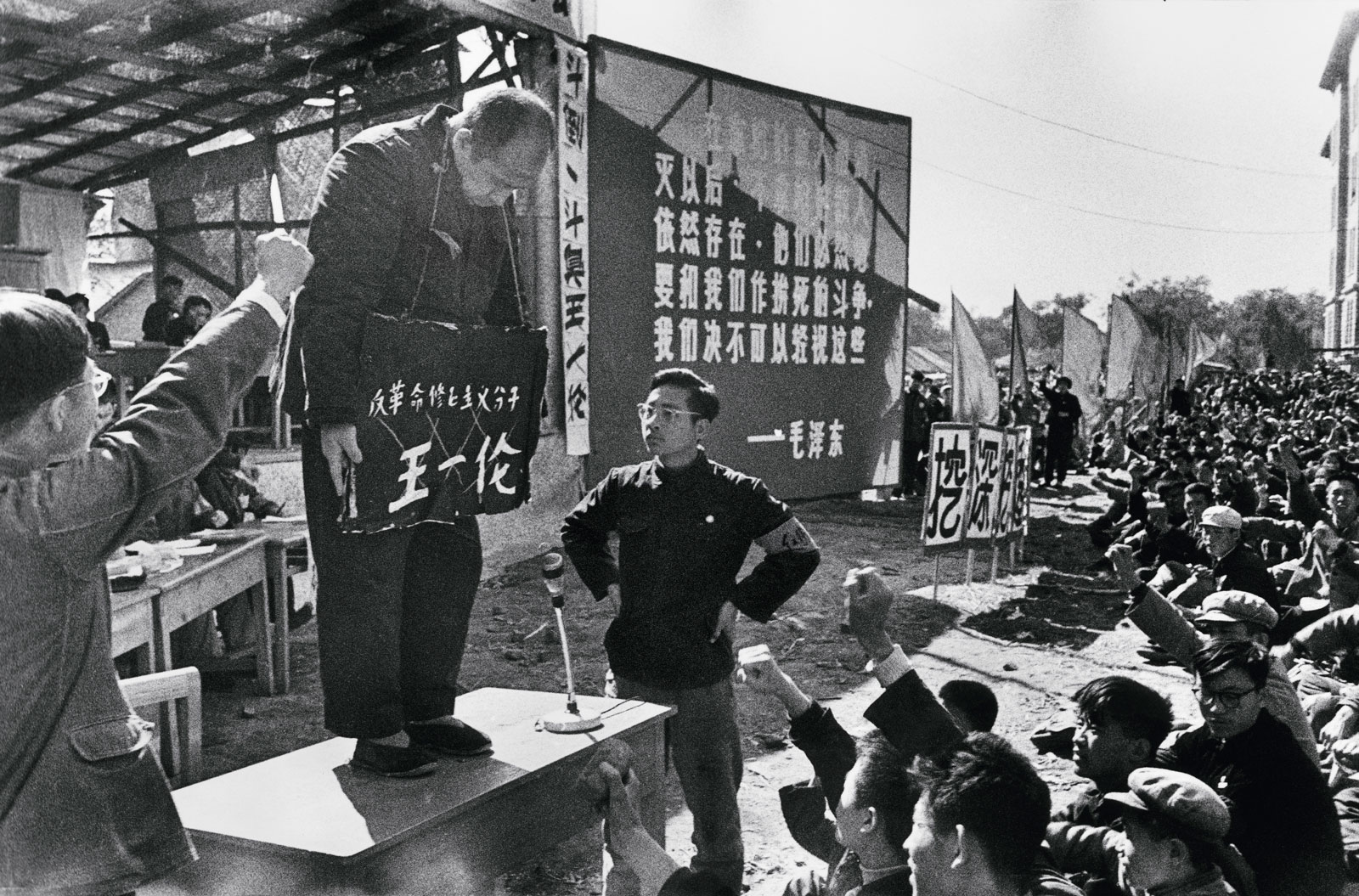
The Cultural Revolution was Mao's way of shaking things up, particularly with those he thought might thwart progress, mid-level officials at the city, village and province levels, those related to the former pre-1949 capitalist classes and, most of all, educators.  In preparation, 60 million copies of Mao's Little Red Book were distributed and realizing that young students were the most impressionable and easily manipulated he and his comrades created the Red Guards who they then let loose on the country to indulge in an orgy of harassment, public humiliations, torture and murder.  Mao's instructions were to attack the "four olds" - old ideas, old culture, old habits and old customs.

As Frank Dikotter, a professor of history at Hong Kong University and author of The Cultural Revolution: A People's History 1962-76, observes in the Daily Mail:
Higher education was a particular target. Professors were spat upon and made to wear placards around their necks identifying them as ‘imperial spies’. Lecturers were beaten with nail-spiked clubs, made to crawl over broken glass and had boiling water poured over them.

‘There were even cases of people being buried alive,’ writes Dikotter.

Pensioners and those on sick leave were flung out of the cities, along with China’s ‘most eminent scientists, physicians, engineers and philosophers, who were made to clean toilets.

‘What stinks is not so much the excrement as your own ideology,’ intellectuals were told. A ‘counter-revolutionary’ came to mean anyone who ‘likes freedom’ — freedom of speech, movement, expression. It was a death sentence to be found listening to a foreign radio station. 

Military drills were held in the middle of the night. ‘Class enemies’ had their tongues ripped out or eyes gouged from their sockets. The offspring of former landlords or vaguely bourgeois sorts were electrocuted. Children were hung from their feet and whipped.

In the district of Wuxuan, 60 people had their heads bashed in with hammers.
https://hansimann.files.wordpress.com/2015/06/1966-persecution-cultural-revolution.jpg(from hansimann.files)
Yet, there are those for whom it was all worthwhile.  The Telegraph (UK) recently ran an article which features the quote heading this post.  It's from Michael Crook, who was a 15-year old Briton in 1966, living in China where his Communist father had moved before World War Two.  His father had fought for the Communists during the Spanish Civil War (1936-9) and served as a Soviet spy in order to unmask Trotskyites in the communist ranks - who were then promptly executed.  Speaking to The Telegraph, Crook still doesn't think the Cultural Revolution was so bad:
“We all thought it was a wonderful thing that Mao was launching,” Mr Crook, now 64, told the Telegraph, in his first interview with a British newspaper. “It would guarantee that China would take the socialist road.”

While mistakes had been made during the Mao period, he argued, the free-market economics on which China has since prospered had led to just as much upheaval, creating a “tremendous imbalance” between rich and poor.

“Letting greed drive development – well that certainly does bring about development – but it also brings about polarisation, so what price social harmony?” he said. 
What can be said about such an appalling person?   It reminds me of the last century of Western "idealists", who first thought the Russian Bolsheviks, then the Chinese communists, then the Vietnamese communists, then the Cuban communists, then the Nicaraguan communists and most recently the Chavistas in Venezuela would herald new dawn for humanity.  They so prided themselves on their idealism that they constantly looked ahead and towards the horizon and never bothered to look down and notice they were wading through a blood filled swamp.
http://www.nybooks.com/wp-content/uploads/2016/01/li-zhensheng.jpg
(from nybooks.com)

Reading Mr Crook's words reminds THC of the passage in Solzhenitsyn's Gulag Archipelago in which he relates the sorrowful tale of the Baltic-White Sea Canal built in the early 1930s. Stalin demanded the building of a canal that would allow the passage of Soviet naval vessels from one sea to the other in order to avoid the Arctic Ocean, setting a 20-month deadline for completion.  Hundreds of thousands of prisoners were assigned to its construction.  The canal was dug by hand without any mechanical equipment under terrible physical conditions and brutal oversight from abusive guards with 250,000 dying during its construction.  The canal was poorly designed and never functioned as planned. Solzhenitsyn is unsparing in his portrayal of this debacle and near the end of the chapter recounts a visit he made to the canal in 1966 as he was completing the book and of the official tour he took:

"It's so shallow", complained the chief of the guard, "that not even submarines can pass through it under their own power, they have to be loaded on barges, and only then can they be hauled through."
And what about the cruisers?  Oh, you hermit-tyrant!  You nighttime lunatic!  In what nightmare did you dream up all this?

And where, cursed one, were you hurrying to?  What was it that burned and pricked you - to set a deadline of twenty months?  For those quarter-million men could have remained alive.  Well, so the Esperantists stuck in your throat, but think how much work those peasant lads could have done for you!  How many times you could have roused them to attack - for the Motherland, for Stalin!

"It was very costly", I said to the guard.

"But it was built very quickly!", he answered me with self-assurance.

Your bones should be in it!
 ------------------------------------------------------------------------------------------------------------
For those who grew up during those years in China and are now in their 50s and 60s, the fear of returning to those days of chaos and disorder remains and is why they value the relative stability of modern China, even with its repressions.

A few years ago, a Chinese friend gave THC a book called Red Memory, published in China and containing propaganda posters from the 1950s, 60s and 70s and subtitled "Posters of Cultural Revolution".  The English language introduction reads, "We hope that such crazy and flimflam years will never come again".

From Red Memory:
 If you are interested in learning more about events in China leading up to the Great Leap Forward, THC recommends reading:


Tuesday, September 1, 2015

Dangerous Roads

For those of you who enjoy driving, Dangerous Roads (which we've featured before) has redesigned and greatly improved its website so you can more easily explore some of the best and most challenging driving in the world.  Or if you don't like driving it's still fun to look at the pictures.

A couple of THC's favorites:

Tian Men Shan Big Gate Rd, Hunan Province, China
Tian Men Shan Big Gate RoadThe text mentions that "The driver should be extra careful during the drive. Taking it slow and paying attention to every curve and turn. Not being overly careful could make it too easy to junk a car, or worse injure and even kill passengers."

D915, Trabzond Province, Turkey
Bayburt Of Yolu-D915The text advises "there are many excellent photo opportunities"!  The road is in the same region of Turkey described in the post on the Sumela Monastery.

And this is a road THC has driven several times; the Amalfi Coast Drive in Italy.  Fold in your side view mirrors before attempting.
  Amalfi Coast Road

Tuesday, April 28, 2015

That 'Ol Liquid Mercury (Cast Its Spell On Me)

http://upload.wikimedia.org/wikipedia/commons/a/a1/Piramide_de_la_Luna_072006.jpg (Teotihuacan from wikimedia)

A Mexican archaeologist has announced the discovery of a large quantity of liquid mercury sealed in a chamber beneath the ancient city of Teotihuacan.  The ruins, which lay about thirty miles from Mexico City, were the largest city in the Americas from 100 AD to 700 AD with a population estimated at 200,000.  The location is a World Heritage Site and contains several stunning pyramids (THC had the thrilling experience of climbing one of them several years ago).
http://www.destination360.com/north-america/mexico/images/s/mexico-teotihuacan-s.jpg(Pyramid THC climbed)
Much of the history and purpose of Teotihuacan remains a mystery and the discovery of the mercury only adds to it.  It may very well be evidence of a royal burial chamber.  In this it may be strikingly similar to the burial tomb of the Emperor Qin in Xian, China, also the location of the Terracotta Warriors, which THC and the Mrs visited in 2004.
http://thumbs.media.smithsonianmag.com//filer/terra-cotta-soldiers-631.jpg__800x600_q85_crop.jpg(From Smithsonian)

The warrior figures were buried as part of the burial plan for the Emperor Qin, who died in 209 BC, after brutally unifying China.  A mile from the burial site of the warriors is the burial mound of the Emperor which stands several hundred feet tall.  It has never been opened.  Legend had it that within the burial chamber:
‘Mercury was used to fashion the hundred rivers, the Yellow river and the Yangtze river, and the seas in such a way that they flowed’.
http://www.dailygrail.com/sites/dailygrail.com/files/storyimages/huang_tomb.jpg (Qin burial mound from dailygrail)

While formerly dismissed as mere legend, measurements taken of the soil in the mound since the 1980s have shown unusually high levels of mercury.  We may not know the truth about the presence of mercury for some time as Chinese authorities have decided that no excavations will be permitted until such time as it is certain that whatever is uncovered can be preserved.  When the Terracotta Warriors, discovered in 1974, began to be excavated their brightly painted exteriors, which had survived 2,000 of burial, vanished when exposed to the air and the Chinese do not want a repeat of that with the Qin burial mound.

THC will keep you posted!

Wednesday, June 4, 2014

Tank Man

On the night of June 3-4, 1989 the China People's Liberation Army moved to end the non-violent democracy protests that had for several weeks rocked several Chinese cities, most prominently at Tiananmen Square in Beijing.  That night, hundreds and perhaps thousands of civilians were killed and the demonstrations crushed.

On the morning of June 5, on Chang'an Avenue just outside Tiananmen, a street that THC and every other tourist to Beijing has been on, the confrontation that most Westerners remember took place creating the indelible image of the event.  A man carrying two shopping bags and whose identity remains unknown twenty five years later placed himself in the middle of the road and for several moments blocked a long parade of tanks.  That solitary man remains the symbol, not just of what happened at Tiananmen, but of every person who has had the courage to stand and risk their lives against oppression and that is why the image endures.
(From Wikipedia)
Twenty five years later he is known only as Tank Man.  A Google search on "Tank Man Tiananmen" gives 584,000 results and Wikipedia has a Tank Man article but his name is still a mystery.

Below is a wider shot (also from Wikipedia) showing the entire column of tanks (Tiananmen is in the upper left and center of the photo) and Tank Man is in the lower left.
 
In 2009, a street level photo of Tank Man was published.  Taken by an AP photographer, Terril Jones, who did not realize for several weeks what his photo contained, it shows two young men fleeing the approaching tanks.  Just to the right of the running man on the left is the small figure of Tank Man, already standing in the middle of the road.
The video at this link which THC strongly recommends viewing contains more information on the confrontation. The tanks try to maneuver around Tank Man but he moves to block them and then, amazingly, climbs onto the lead tank and speaks with one of the crew members.  The video ends with him being hustled off of the street by bystanders.  Even that last event is shrouded in mystery - some observers say it was the State Security Police that hustled him off, others that it was concerned bystanders, friends or other protesters trying to save his life.

The Chinese government maintains it does not know who he is or what happened to him.  Is he alive?  Dead?  Imprisoned?  The images and videos linked here are all blocked in China (for that matter, all Google based blogs like this one, are blocked) and knowledge about what happened in Tiananmen in 1989, including the existence of Tank Man, is limited within the country.  China is a great country and THC has enjoyed his many visits and his friends there but the day must come when there is a government that tells what it knows about the identity of Tank Man or when he or those who know him feel free to disclose his identity.  We hope that is sooner rather than later.


Monday, May 19, 2014

Shanghai Time Shift

A quarter century of staggering change - Shanghai in 1987 and Shanghai in 2013 (from The Atlantic, by Reuters photographer Carlos Barria).  More precisely you are looking towards the east from the older Puxi section of Shanghai towards the newer Pudong district.  THC spent considerable time in Shanghai from 2000 to 2012 and the only thing about the 2013 picture that doesn't capture Shanghai is that the sky is clear and blue which is a rarity.  Though the air quality is bad and it can be a crazy place at times it remains one of THC's favorite cities.  It's like New York City on steroids.

The odd looking structure towards the left is known as the TV Tower, one of the first large structures built in Pudong.  The very tall building in the center that looks like a can opener is the Shanghai World Financial Center (1614' tall) which has the highest observation deck in the world.  Just to the left of it is the Jin Mao Tower which houses a Hyatt Hotel on the 53rd to 87th floors (THC stayed in it) and features an incredible buffet.

To the right (and under construction at the time of this photo) is the Shanghai Tower, the tallest building in China at 2073 feet and 121 stories.  In front of the Tower you'll see a building labeled Aurora.  Look to its left towards the river and there is a smaller golden colored building which is THC's favorite hotel in the city, the Shangri-La.

Along both sides of the river are very attractive and open walkways where you should take a stroll if you make it there.

Monday, September 9, 2013

A Little Walk

On Hua Shen mountain in the province of Shaanxi, China.  For more pictures of this little walk see Twisted Sifter

China’s Cliffside Plank Path Will Give you Goose Bumps

Tuesday, June 4, 2013

Yellow River

Riveting photos by Zhang Kechun of the Yellow River which flows through northern China.