Via the wonders of Dragontape, THC has compiled this audio of some of his favorite Neil Young guitar solos through the editing of YouTube videos (all guitars, no vocals). Neil certainly lacks the technical chops of the various Steely Dan guitarists (see Steely Dan Guitar Solos) but makes up for it with his emotive powers.
Track List:
Cowgirl In The Sand
Powderfinger
Down By The River
Mansion On A Hill
Leave (Buffalo Springfield)
Like A Hurricane
I've Been Waiting For You
Mr Soul (Buffalo Springfield)
Cinnamon Girl
Cowgirl In The Sand
You can listen here.
[UPDATE: If you are seeing this post on a PC or tablet you can
click either the video or the link to hear the mix. If you are seeing
it on a mobile device you are only seeing the link and it will not play
properly - sorry.]
Thursday, August 6, 2015

Wednesday, August 5, 2015
He's At It Again
A few weeks ago THC wrote about a rhetorical trick often employed by President Obama. Well. he's at it again using a rhetorical variant in today's speech at American University on the Iran Nuclear Deal.
He also mentioned that:


President Obama: I realize that resorting to force may be tempting in the face of the rhetoric and behavior that emanates from parts of Iran. It is offensive. It is incendiary. We do take it seriously. But superpowers should not act impulsively in response to talks… Just because Iranian hardliners chant ‘Death to America” does not mean that that’s what all Iranians believe. In fact, it’s those hardliners that are more satisfied with the status quo. It’s those hardliners chanting “death to America” who’ve been most opposed to the deal. They’re making common cause with the Republican Caucus.Yes, he’s just equated the Iranian Supreme Leader and head of the government with which we negotiated, a man who personally leads chants of “Death To America”, whose regime has for 36 years made a pillar of its policy the destruction of America, and which has killed Americans in fulfillment of that declared policy, with the Republican Caucus.
He also mentioned that:
many of the same people who argued for the war in Iraq are now making the case against the Iran nuclear deal.On the other hand many of the same people who argued for the war in Iraq, and play key roles in the Obama Administration, are now making the case for the Iran nuclear deal so value of that line of argument may be limited.
Lake Lucerne
Lake Lucerne, Switzerland painted by Albert Bierstadt in 1858. The painting went lost to art experts for over a century after being sold at an estate sale in 1882. It was rediscovered in a home in Exeter, Rhode Island in 1990; the current owner had no idea of its background. It now hangs in the National Gallery in Washington DC.
Bierstadt, born in Germany in 1830, later traveled to the United States where he became famous for his paintings of the American West. The Lake Lucerne painting previews many of the themes of his later American paintings.

Bierstadt, born in Germany in 1830, later traveled to the United States where he became famous for his paintings of the American West. The Lake Lucerne painting previews many of the themes of his later American paintings.
Monday, August 3, 2015
Controlling The Narrative: Climate Change
 It’s always interesting to watch how the media tailor news to support their favored agenda, and The Washington Post provided an excellent example just last week. Written by Chris Mooney, “Alaska’s scorched summer” carried the subtitle “A state already affected by climate change has seen 5 million acres – an area larger than Connecticut – burned by wildfires.” The article continued on to the last page of the front section, where it took up the entire page.
Mooney is an environment and energy reporter for the Post. He is also author of the best-selling The Republican War on Science, writes frequently on the importance of the proper framing for narratives in support of his views on environmental issues, and is a prime example of what Instapundit refers to as “Democratic operatives with bylines.” He is a man with a mission to convince you to take action.
My views on politics and environmental issues have been shaped by my experience in the field since the mid-1970s. It’s pretty simple actually: no one has a monopoly on “the war on science” and partisans across the political spectrum mold their approach to specific scientific issues to fit their political starting points (and don’t get me started on the difference between regulatory science and actual science).
I’ve followed Alaska temperature trends over the years, so I read Mooney’s article to see how he would fit the story of large-scale fires in Alaska into his larger narrative that human actions are leading to catastrophic climate change; that is, how he would transform a story about weather into one about climate. I didn’t have to look far:
Alaska has already warmed by more than three degrees in the past half-century, much more than the continental United States.Throughout the story, Mooney provides statements and quotes that link the fires to climate change, but his thesis hinges on the claims in that sentence. It’s both accurate and – at the same time — misleading. Let’s look at two charts from the Alaska Climate Research Center (ACRC), which is a part of the Geophysical Institute at the University of Alaska Fairbanks.

This chart shows temperatures from 1949 through 2014 and — if one takes a look at 1965 (a half-century ago) — average temperatures across the state have clearly increased by at least 3° F as Mooney asserts. However, if you look more closely, you’ll notice that the entire gain is attributable to changes between 1976 and 1978. The ACRC explains what happened at that time:
The stepwise shift appearing in the temperature data in 1976 corresponds to a phase shift of the Pacific Decadal Oscillation from a negative phase to a positive phase. Synoptic conditions with the positive phase tend to consist of increased southerly flow and warm air advection into Alaska during the winter, resulting in positive temperature anomalies.

This second chart shows what’s happened in Alaska in the 37 years since the phase shift of the Pacific Decadal Oscillation: annual temperatures have decreased by 0.1° F. There is a slight summer temperature increase of 0.4°, but that is largely attributable to summer and fall increases at Point Barrow which is above the Arctic Circle, well north of the fires.
As we can see, Mooney’s statement might pass a fact-checker but is completely misleading in context. His entire article is cleverly structured so that the individual facts are correct but are used collectively to serve a narrative that is not actually supported by those facts.
Mooney might respond that the ACRC itself states that 2014 was an unusually warm year with the average temperature 3° F above the post-1976 baseline, but the ACRC also points out that 2012 was 2.9° below that same baseline. Mooney’s problem is that he can’t argue that the warming in Alaska is indicative of “climate” unless he wants to allow that unusually snowy and cold winters in New England are harbingers of global cooling: either they’re both climate or they’re both weather. If the Alaska trend were to continue for several more years, it might support the thesis of longer-term climatic changes, but it’s premature to conclude that right now.
Indeed, Mooney misleads his readers regarding this distinction between weather and climate, implying that the most recent fires are part of a long-term trend:
Three of Alaska’s top-five wildfire seasons have occurred since the year 2004, with 16 million acres burned between them (2004, 2005, and 2015).But if you look at the first chart I provided, you’ll see that while temperatures increased in 2004 and 2005 they had been on a decreasing trend between 2006 and 2013. Once again, Mooney’s individual facts are correct but assembled in such a way as to give a misleading picture.
I have one observation of my own regarding the ACRC data. On the second chart, notice that Barrow — which lies on the Arctic Ocean, much further north than the other Alaska weather stations — has noticeably warmed since 1976 in contrast to the rest of the state. Carbon dioxide greenhouse gas warming theory predicts that the greatest temperature increases will initially be seen in the Arctic and Antarctic, so the Barrow data is intriguing. I’m not familiar with temperature trends in other areas of the Arctic, so can’t tell you whether this change is due to a local anomaly or is part of a broader trend. However, in the Antarctic there is no warming trend, with the exception of the Antarctic peninsula which extends farther north than the rest of the continent. It’s something I’d like to know more about but won’t trust anything Mooney might write about it.
Sunday, August 2, 2015
Chest Fever
 (via staticflickr)
 (from americansongwriter)
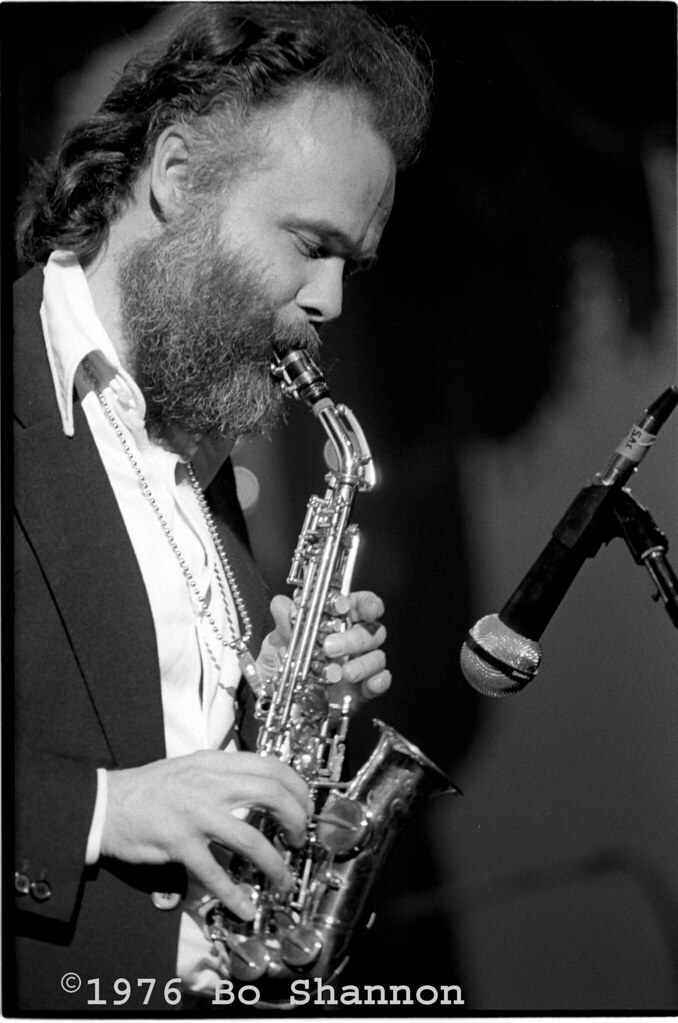
 Happy 78th birthday Garth Hudson! One of two surviving members of The Band (Robbie Robertson is the other) and a splendidly talented magician on keyboards, saxophone and accordion. Mention Garth to any fan of The Band and they will immediately respond "Chest Fever!" which features his memorable organ and keyboard work on a gloriously lyrically nonsensical song.
Garth is an interesting and odd character who dances to his own music. Here is he reminiscing just last year as he visits Big Pink for the first time since 1967 when The Band collaborated with Bob Dylan on the legendary Basement Tapes.Here is Garth in a recent rather zany interview. And this is Garth doing some beautiful onstage improvisation in 2007.
Saturday, August 1, 2015
Two Gentlemen Of Lebowski
Verrily, it tied the room together . . .
If William Shakespeare had written The Big Lebowski. Written by Adam Bertocci and performed by Brandon Hardesty, both of whom had a little too much time on their hands. Brilliant.
If William Shakespeare had written The Big Lebowski. Written by Adam Bertocci and performed by Brandon Hardesty, both of whom had a little too much time on their hands. Brilliant.
Subscribe to:
Posts (Atom)