Answering the question you never thought to ask: How did the fall of Constantinople in 1453 affect LeBron James' legacy?
This lunacy brought to you courtesy of DocuDubery.
Answering the question you never thought to ask: How did the fall of Constantinople in 1453 affect LeBron James' legacy?
This lunacy brought to you courtesy of DocuDubery.
The streets were dark with something more than night. It was as cool as a cafeteria dinner. It makes you think maybe we all get like this in the cold half-lit world where always the wrong thing happens and never the right.
- Raymond Chandler
The noir is off the charts in this late-1930s image of Lawry’s The Prime Rib on La Cienega pic.twitter.com/jg0wH6pmmP
— Vintage Los Angeles (@alisonmartino) March 31, 2023
The Prime Rib in Beverly Hills opened in 1938. For years the only entree on the menu was Standing Rib Roast.
Vintage Los Angeles is run by Alison Martino, daughter of singer Al Martino, who played Johnny Fontaine in The Godfather. Lots of good stuff on her feed.
"On planet Earth, the right is divided between the supporters of a sub- Berlusconi sociopath, the governor of a multiracial, multiethnic, high growth, high inmigration state, and a bunch of people who think Dubya did nothing wrong."
Peter Spiliakos (March 20, 2023)
I didn't get Jimmy Durante (1893-1980) when I was a kid seeing him on TV, but things have changed. Born on the lower East Side of New York to Italian immigrants, Jimmy worked his way up and from the mid-1920s until his retirement in 1972, starred in vaudeville, stage, radio, TV, and film. People just liked him and his brand of humor. He was also known for his extensive charity work.
Durante's gravelly singing voice was certainly not classically good, but like Fred Astaire he could deliver a song with meaning. In recent years, I started listening to some of his music. This is Make Someone Happy, recorded by Durante in 1964. Music by Jule Styne and lyrics by Betty Comden and Adolph Green. I've also enjoyed Durante's versions of Glory of Love and Smile.
And if you want to see peak performance Durante watch this clip from The Man Who Came To Dinner (1942). You won't regret it!
Well, it is, though it's an odd one - cooler and more rainy than any here in our experience since 2014. We could use the rain and it's been above normal since last June. On average the first 85 degree day in Phoenix is March 6. We haven't had one yet and the 10 day forecast shows nothing about 72.
Anyway, where was I? Oh, went to my first spring training game of the year last week. First time experienced the new pitch clock. I am now a big supporter. The game had a nice rhythm and moved along well. It was a well played 2-0 game at Salt River Fields with the Diamondbacks winning that only took 2:10.


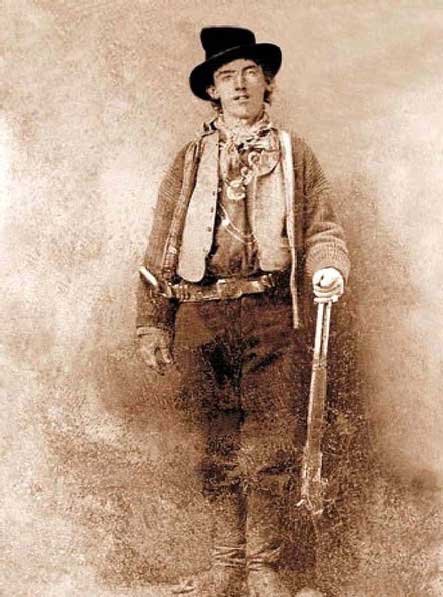
Evening. March 17, 1879. A short and slim young man makes his way quietly through the outskirts of Lincoln, New Mexico and knocks softly on the door of the house of JB Wilson. A voice answers "come in". Slowly entering the room with his rifle in one hand and pistol in the other, the young man recognizes Wilson and sees a bearded man sitting at a table. The man stands up and says, "I am Governor Wallace".
William Bonney (born Henry McCarty, aka "Kid", "Kid Antrim", and later "Billy the Kid") and Lew Wallace, Territorial Governor of New Mexico, noted Civil War General, and author of Ben-Hur, which he was writing at the time, begin their meeting.
The events leading to this remarkable encountered resulted from the Lincoln County War, a series of bloody clashes between rival factions in southeast New Mexico. I won't go through all the complicated details. Suffice it to say that whether you were nominally on the side of "the law" or not, you were a bad guy to some degree.
Though his reputation as a man-killer has grown over the years, it is likely that Billy killed perhaps six men. One of those was probably Lincoln County Sheriff William Brady (a criminal himself), killed in an ambush in Lincoln in April 1878 and the main reason Billy sought the meeting with Wallace.
Billy's road to the Wilson home began with his birth in New York City in 1859. His immigrant Irish widowed mother moved the family, first to Indiana and then, in 1870, to Wichita, Kansas. Three years later, after remarrying, the family headed west, eventually settling in Silver City, a mining town in the southwest mountains of the New Mexico Territory. After scrapes with the local law, Billy fled Silver City, crossed the Rio Grande to the southeast part of the territory and ended up in the area around Lincoln.
By the end of 1877, Billy was working for a local rancher, John Tunstall, a young English-born gentleman. Billy grew to idolize Tunstall who treated him well. Tunstall and his partner, Alexander McSween, were rivals of another business group led by Lawrence Murphy and James Dolan. That rivalry devolved into the violence that seemed endemic across much of the territory.
In February 1878, a posse, acting on dubious legal grounds and led by Sheriff Brady, an ally of Murphy and Dolan, murdered Tunstall, triggering the Lincoln County War, with Billy becoming a member of the self-proclaimed Regulators, seeking revenge and justice for Tunstall's death.
A series of violent clashes ensued, reaching a climax in July when a large gang of Regulators took over much of Lincoln for several days only to be driven out by the Murphy-Dolan faction with support of troopers from the nearby Army post.
Following the Battle of Lincoln, Billy and three others were indicted (probably wrongly) for the killing of the bookkeeper at the Mescalero Indian Agency in August.
Lew Wallace's path to Lincoln was very different. His father was governor of Indiana and later congressman, and young Lewis served in the Mexican War, going on to become a prominent lawyer in the state. When the war broke out he was asked to raise a regiment and by early 1862 was a general commanding a brigade. He performed outstandingly in the capture of Fort Donelson in February 1862, but at the Battle of Shiloh two months later his actions became controversial both during and after the war, and also led to US Grant becoming an enemy and sidetracking his further rise in the army. However, in July 1864 at Monocacy, Maryland he led his outnumbered forces in turning back Confederate General Jubal Early's raid which threatened Washington DC. Grant, who continued to be critical of Wallace's actions at Shiloh, was gracious in his memoirs about Monocacy, writing:
If Early had been but one day earlier, he might have entered the capital before the arrival of the reinforcements I had sent. ... General Wallace contributed on this occasion by the defeat of the troops under him, a greater benefit to the cause than often falls to the lot of a commander of an equal force to render by means of a victory.
In 1865 Wallace served as one of the eight military commissioners at the trial of the accused assassins of Abraham Lincoln and on the commission that sentenced Henry Wirz, commandant of the Andersonville POW camp, to death.
Going to Mexico he served as a military advisor to Benito Juarez in his successful campaign to oust the Emperor Maximillian. Returning to the U.S. and resuming his law practice, Wallace was named by President Hayes, whom he had campaigned for, as territorial governor, taking office in late September of 1878.
This was not a particularly prestigious appointment, Wallace preferring an important diplomatic position, and he must have wondered what he had gotten himself into when he arrived in Santa Fe. The entire territory was in turmoil, with the Lincoln County War and Apache raids being the worst of it.
Shortly after arriving, Wallace was informed by the U.S. Marshall that he held warrants for several men, including "William H. Antrim, alias Kid, alias Bonny" but was unable to execute them "owing to the disturbed condition of affairs in that county, resulting from the acts of a desperate class of men".
In November, the governor issued an amnesty proclamation for anyone involved in the war, excepting those under indictment or convicted, which meant the Kid was still an outlaw. And, despite, the amnesty, violence continued.
On February 13, 1879, the Kid was back in Lincoln, where he witnessed the killing of Huston Chapman, an attorney hired by the widow of McSween (killed in the Battle of Lincoln), by one of gunmen of the Murphy-Dolan faction. Billy managed to escape and went into hiding.
Governor Wallace was determined to finally get the county under control, arriving in Lincoln on March 5 with a detachment of soldiers. On March 11 he ordered the army detachment to arrest 34 men from both sides, including the Kid, prompting the Kid to come up with his own plan.
On March 13 he wrote Wallace, offering to provide information on Chapman's killer in return for dropping the indictments against him. The letter was headed:
To his Excellency the GovernorGeneral Lew WallaceDear Sir,
I was present When Mr. Chapman was murdereded and know who did it and if it were not for those indicements I would have made it clear before now. if it is in your power to Annully those indictments I hope you will do so as to give me a chance to explain. . . . I have no wish to fight any more indeed I have not raised an arm since Your proclamation.Waiting for an annser I remain Your Obedeint ServantW.H. Bonney
. . . I have authority to exempt you from prosecution, if you will testify to what you say you know.. . . To do that the utmost secrecy is to be used. So come alone. Don't tell anybody - not a living soul - where you are coming or the object.
Sir, I will keep the appointment I made but be Sure and have men come that You can depend on. I am not afraid to die like a man fighting but I would not like to be killed like a dog unarmed.
I tell you Gov that the prosecuting officer of this Dist is no friend to the enforcement of the law. He is bent on going for the Kid & notwithstanding he know how it is proposed to destroy his testimony & influence he's bent on pushing him to the wall. He is a Dolan man and he's defending him by his conduct all he can.
