Rosalyn Carter passed a few days ago at the age of 96. Husband Jimmy is hanging in there at 99. They were married for 77 years. I found this excerpt from a book they wrote both charming and right on point regarding different styles of writing.
In his memoir A FULL LIFE: REFLECTIONS AT NINETY, Jimmy Carter described “the worst threat” he and Rosalynn ever experienced to their marriage. It was when they tried to write a book together: pic.twitter.com/LnU6VCD0UI
The world was on fire and no one could save me but you
It's strange what desire will make foolish people do
I never dreamed that I'd love somebody like you
And I never dreamed that I'd lose somebody like you
That boy can sing! And the sinuous guitar riff is something else. And all so casual.
Today marks 160 years since the dedication of the National Cemetery at Gettysburg and of President Abraham Lincoln's little speech. Here are recitations by two glorious Americans, Louis Armstrong and Charles Laughton, the first born in Jim Crow New Orleans and who became a proud symbol of our country, the latter born in England, and who became an American citizen.
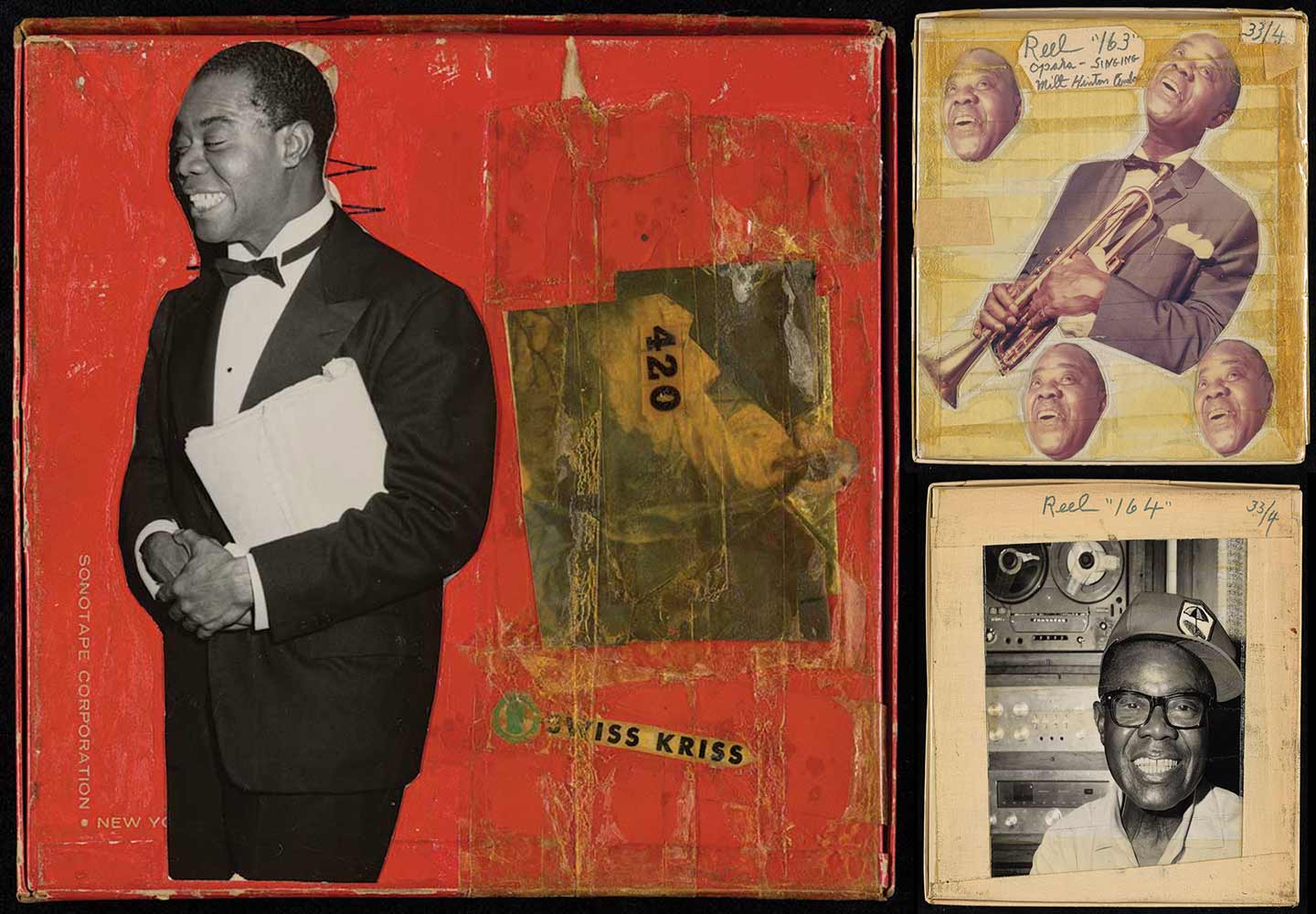
In The Archivist, we learned about Louis Armstrong's collection of tapes, recording whatever caught his broad interests. In 1958, on a tape that included music from Count Basie, Coleman Hawkins, and a Bing Crosby/Bob Hope single, Armstrong recorded what he wrote as "Abraham Lincoln's Gettysburg Speech. Narrated (by Louis Satchmo Armstrong)". You can listen to it here.
Armstrong always maintained he was born on July 4. While many researchers dispute this, I'm sticking with Louis.
In 1935, Laughton played the role of an English butler transported to backwoods America in Ruggles of Red Gap. As he learns about America he decides to strike out on his own. This is the famous scene in which he recites the address.
Speaking of Laughton, I must recommend viewing the only film he directed, The Night of the Hunter. Once seen, you will never forget it.
Four score and seven years ago our fathers brought forth on this continent, a
new nation, conceived in Liberty, and dedicated to the proposition that all men
are created equal.
Now we are engaged in a great civil war, testing whether that nation, or any
nation so conceived and so dedicated, can long endure. We are met on a great
battle-field of that war. We have come to dedicate a portion of that field, as a
final resting place for those who here gave their lives that that nation might
live. It is altogether fitting and proper that we should do this.
But, in a larger sense, we can not dedicate -- we can not consecrate -- we can not
hallow -- this ground. The brave men, living and dead, who struggled here, have
consecrated it, far above our poor power to add or detract. The world will
little note, nor long remember what we say here, but it can never forget what
they did here. It is for us the living, rather, to be dedicated here to the
unfinished work which they who fought here have thus far so nobly advanced. It
is rather for us to be here dedicated to the great task remaining before us --
that from these honored dead we take increased devotion to that cause for
which they gave the last full measure of devotion -- that we here highly resolve
that these dead shall not have died in vain -- that this nation, under God, shall
have a new birth of freedom -- and that government of the people, by the people,
for the people, shall not perish from the earth.
In October, I wrote two posts on Israel/Gaza and one on the
implications of the support on American campuses and elsewhere for
Hamas. Rather than do continued posts on those topics, for the past month, I've been adding additional material and doing some editing on an ongoing basis on
each post, particularly on the Equality/Equity post which has a lot of new material, including many additional footnotes, so I'm going to repost the links. From here on I don't expect to add or edit more. If I have anything further to say on the subject it will be in new posts.
A sweet article from The Nation on Louis Armstrong and his legacy. The photo above is from a collage made by Armstrong for the cover of one of the many boxes used to store his hundreds of hours of tapes.
The author, Ethan Iverson, writes about Armstrong's tapes:
Already an inveterate letter writer, Armstrong started recording home
audiotapes in 1950. On the road during that decade, doing hundreds of
one-nighters a year, Armstrong toted around a custom-made steamer trunk
with two tape recorders and a record player. He would record anybody and everybody while goofing off in his hotel room.
While he slowed down the relentless taping
for a time in the 1960s, Armstrong came back for a last act from 1969
until his death in 1971, partly because Lucille bought him two
state-of-the-art Tandberg reel-to-reel machines. Armstrong spent hours
and hours in his study, creating roughly 200 mix tapes on the Tandbergs
and writing down annotated playlists.
The total collection in the Louis Armstrong Archive numbers more than
60,000 items, including books, records, tapes, photos, letters, and
scores.
Iverson provides a warm appreciation of Armstrong's place in American musical history. More than a place actually, Louis was a pivotal figure. Read the article and enjoy some time with the great man.
I visited his home, now a museum, in the Corona neighborhood of Queens, a few years ago and highly recommend it. Earlier this year, the Louis Armstrong Center opened across the street so another visit may be in order.
I also learned that in 2012 the only film of an Armstrong recording session was discovered in a storage facility. From 1959, it's I Ain't Got Nobody. Accompanying musicians are Danny Barcelona (drums), Mort Herbert (bass), Billy Kyle (piano), Trummy Young (trombone), and Peanuts Hucko (clarinet). The song was composed in 1915 by Roger Graham and Spencer Williams. You can find all my Armstrong posts by clicking on the Armstrong tag at the bottom.