Friday, May 31, 2024

The Royal Scam


Can it be this sad designCould be the very same?A wooly man without a face

Can it be this sad design
Could be the very same?
A wooly man without a face
And a beast without a name
Nothin' here but history
Can you see what has been done?
Memory rush over me
Now I step into the sun

[Chorus]
Before the fall when they wrote it on the wall
When there wasn't even any Hollywood
They heard the call
And they wrote it on the wall
For you and me we understood

On this date in 1976, Steely Dan released its fifth album, The Royal Scam, with its best known songs being Kid Charlemagne (with THAT Larry Carlton guitar solo) and Don't Take Me Alive (with THAT OTHER Larry Carlton guitar solo).  My favorite is Sign In Stranger, with its humorous Eliot Randall guitar solo and Paul Griffen piano work.

One of the lesser known cuts is The Caves Of Altamira, from which the lyrics at top are taken.  The Cave of Altamira is located on the north coast of Spain in the small town of Santillana del Mar.  It is home to some of the most marvelous prehistoric cave art in existence.  Discovered in 1879 and now closed to the public, the cave contains a thousand meters of depictions of animals and of abstract designs.  Perhaps the only pop/rock song about cave art, but just another day in the rather odd life of Steely Dan. 

Monday, May 27, 2024

A Memorial Day Address

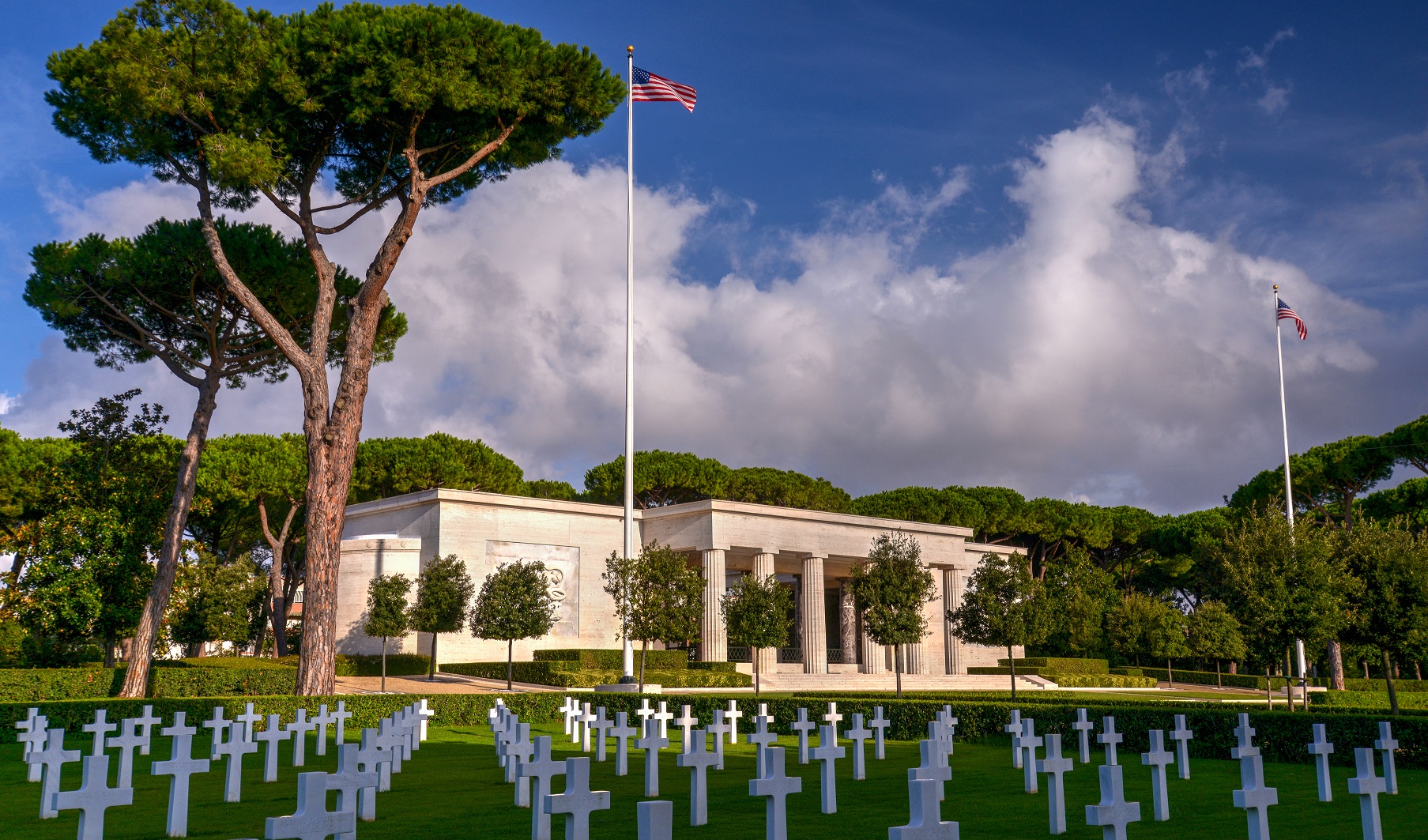
2024 Memorial Day Ceremony at Sicily-Rome American Cemetery | American  Battle Monuments Commission

Memorial Day 1945.  The location: the Sicily-Rome American Cemetery in Nettuno, Italy.  At the time, approximately 20,000 American soldiers were buried in the cemetery, killed during the campaign in Sicily and the first part of the subsequent Italian campaign (Sept. 1943 - June 1944).  Over the years, many American families had the bodies of their loved ones returned to the United States.  Among the 7,858 still in the cemetery is Captain Henry Waskow, subject of the most famous column written by an American journalist in the war; Ernie Pyle (killed by the Japanese in April 1945).

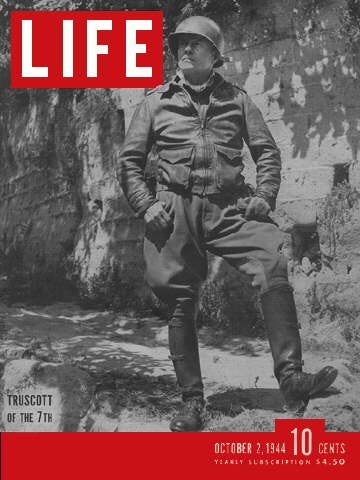
The speaker was General Lucien Truscott, commander of the Fifth Army.  When he rose to speak, Truscott turned away from the audience to face the dead who he addressed in his gravelly voice.  There is no transcript of his remarks.  The most complete account we have is from Bill Mauldin, the famous Army cartoonist, who was in the audience.  Mauldin was a GI favorite because he understood the soldiers and took pokes at the top brass.  This is what he later wrote:

“When Truscott spoke he turned away from the visitors and addressed himself to the corpses he had commanded here. It was the most moving gesture I ever saw. It came from a hard-boiled old man who was incapable of planned dramatics.

“The general’s remarks were brief and extemporaneous. He apologized to the dead men for their presence here. He said everybody tells leaders it is not their fault that men get killed in war, but that every leader knows in his heart this is not altogether true.

“He said he hoped anybody here through any mistake of his would forgive him, but he realized that was asking a hell of a lot under the circumstances. . . . he would not speak about the glorious dead because he didn’t see much glory in getting killed if you were in your late teens or early twenties. He promised that if in the future he ran into anybody, especially old men, who thought death in battle was glorious, he would straighten them out. He said he thought that was the least he could do,” 

Truscott commanded a division in the invasion of Sicily and later in the advance up the Italian peninsula.  His division participated in the landing at Anzio in January 1944 and he was promoted to Corps commander in March, leading the Allied breakout in May.  His Corps landed in the invasion of Southern France in August 1944 and in December he was promoted to command of the Fifth Army in Italy, leading it in its final campaign in the spring of 1945.  In October 1945 he took over command of Third Army in Germany after General George Patton's dismissal.  He retired in 1947 and died in 1965.

In a 2023 article, the general's grandson, Lucien Truscott IV, wrote about his grandfather and that day.  Of General Truscott's time in Germany, Lucien writes:

General Dwight D. Eisenhower relieved Patton of command of the Third Army and turned command over to Grandpa, appointing him Military Governor of Bavaria and putting him in charge of all the Displaced Person camps in Southern Germany. Under Patton, Jewish survivors of the Holocaust were being kept in camps in conditions not much better than they suffered in the Nazi concentration camps. Grandpa moved the Jewish survivors into housing at German army posts he seized and arranged for a dozen Army Rabbis to be sent to Bavaria to serve the survivors. Grandpa ordered that the first Seder in Germany in over a decade be held in Munich in April of 1946, and ordered that “A Survivors Haggadah” be compiled by survivors and printed by the Third Army for the occasion. 

He then recounts a discussion that General Truscott had with Lucien IV's father, when he was preparing to ship out for the Korean War:

I knew Grandpa growing up as a boy and spent several summers with him and Grandma, Sara Randolph Truscott, at their home in Northern Virginia. I don’t recall seeing Grandpa smile much when I was a boy. The war, and what he did as a commander of U.S. soldiers, and what he saw during and after the war, left him a broken man. The only time he ever said anything about the war was to my father on the night before he shipped out to serve in the Korean War. They were standing at night after supper along a fence behind a farmhouse Grandpa had bought for his retirement in Loudon County, Virginia. Dad asked Grandpa what advice he could give him before he went to war. Dad told me it was the only time in his life he ever saw his father cry. Dad said that Grandpa began sobbing so hard, he had to lean with his arms over the fence in order to remain standing. Every Memorial Day, I remember his words to my father that night: “The bodies, the bodies, all those dead boys, the bodies…”
Lucian King Truscott, Jr. - General, United States Army

Sunday, May 26, 2024

John Robert Fox

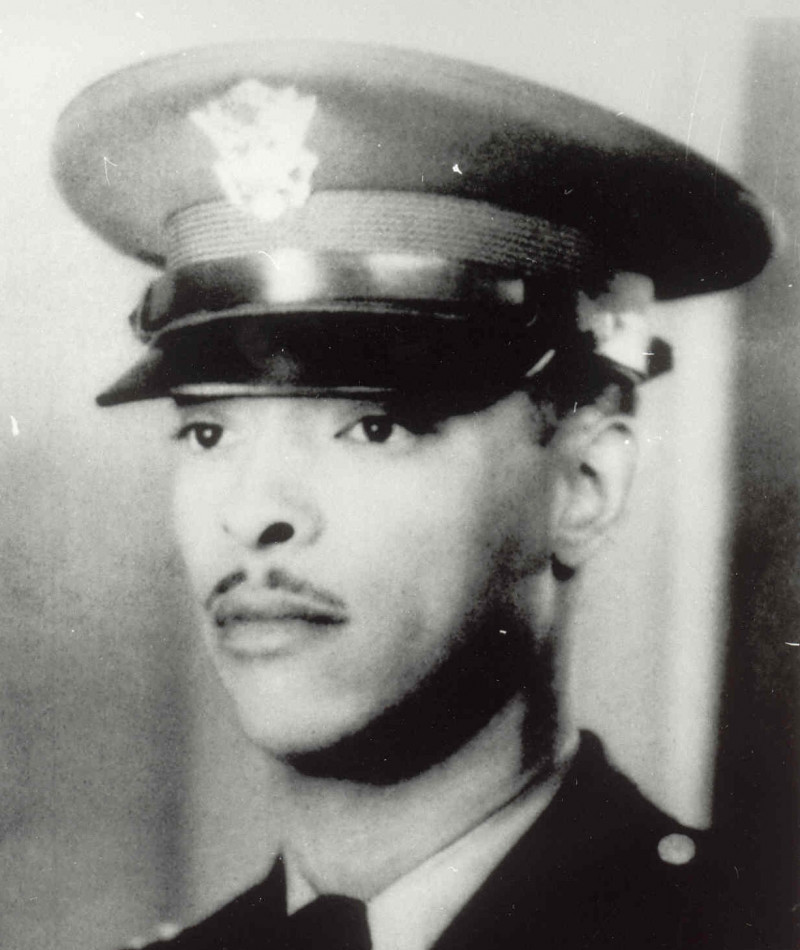
Medal of Honor Recipient John R. Fox John Robert Fox received the Medal of Honor for his actions on December 26, 1944.  Fox was a 29 year old first lieutenant and a forward artillery observer.  He was stationed, along with eight Italian partisans, in the small Italian mountain town of Sommocolonia, when it was overrun by German soldiers.  Calling in artillery as the enemy drew closer, he finally called in a strike directly on his position, despite the risk to his own life.  The resulting barrage killed Fox and the partisans, along with about 100 Germans.  His citation is below.

Negro soldiers, as they were called then, were denied Medal of Honor consideration during World War Two.  It was only in the 1990s that an Army review commission recommended several soldiers for our country's highest honor.  In 1997 President Clinton presented the Medal of Honor to seven recipients.  For six, including Fox, the award was posthumous and presented to family members.

For conspicuous gallantry and intrepidity at the risk of his life above and beyond the call of duty: First Lieutenant John R. Fox distinguished himself by extraordinary heroism at the risk of his own life on 26 December 1944 in the Serchio River Valley Sector, in the vicinity of Sommocolonia, Italy. Lieutenant Fox was a member of Cannon Company, 366th Infantry, 92d Infantry Division, acting as a forward observer, while attached to the 598th Field Artillery Battalion. Christmas Day in the Serchio Valley was spent in positionswhich had been occupied for some weeks. During Christmas night, there was a gradual influx of enemy soldiers in civilian clothes and by early morning the town was largely in enemy hands. An organized attack by uniformed German formations was launched around 0400 hours, 26 December 1944. Reports were received that the area was being heavily shelled by everything the Germans had, and although most of the U.S. infantry forces withdrew from the town, Lieutenant Fox and members of his observer party remained behind on the second floor of a house, directing defensive fires. Lieutenant Fox reported at 0800 hours that the Germans were in the streets and attacking in strength. He called for artillery fire increasingly close to his own position. He told his battalion commander, "That was just where I wanted it. Bring it in 60 yards!" His commander protested that there was a heavy barrage in the area and the bombardment would be too close. Lieutenant Fox gave his adjustment, requesting that the barrage be fired. The distance was cut in half. The Germans continued to press forward in large numbers, surrounding the position. Lieutenant Fox again called for artillery fire with the commander protesting again, stating, "Fox, that will be on you!" The last communication from Lieutenant Fox was, "Fire It! There's more of them than there are of us. Give them hell!" The bodies of Lieutenant Fox and his party were found in the vicinity of his position when his position was taken. This action, by Lieutenant Fox, at the cost of his own life, inflicted heavy casualties, causing the deaths of approxamately 100 German soldiers, thereby delaying the advance of the enemy until infantry and artillery units could by reorganized to meet the attack. Lieutenant Fox's extraordinarily valorous actions exemplify the highest traditions of the military service.

Danny Peterson


Danny Peterson's Medal of Honor citation:

Specialist Petersen distinguished himself while serving as an armored personnel carrier commander with Company B during a combat operation against a North Vietnamese Army  Force estimated to be of battalion size. During the initial contact with the enemy, an armored personnel carrier was disabled and the crewmen were pinned down by the heavy onslaught of enemy small arms, automatic weapons and rocket-propelled grenade fire. Spec. Petersen immediately maneuvered his armored personnel carrier to a position between the disabled vehicle and the enemy. He placed suppressive fire on the enemy's well-fortified position, thereby enabling the crewmembers of the disabled personnel carrier to repair their vehicle. He then maneuvered his vehicle, while still under heavy hostile fire to within 10 feet of the enemy's defensive emplacement. After a period of intense fighting, his vehicle received a direct hit and the driver was wounded. With extraordinary courage and selfless disregard for his own safety, Spec. Petersen carried his wounded comrade 45 meters across the bullet-swept field to a secure area. He then voluntarily returned to his disabled armored personnel carrier to provide covering fire for both the other vehicles and the dismounted personnel of his platoon as they withdrew. Despite heavy fire from 3 sides, he remained with his disabled vehicle, alone and completely exposed. Spec. Petersen was standing on top of his vehicle, firing his weapon, when he was mortally wounded. His heroic and selfless actions prevented further loss of life in his platoon. Spec. Petersen's conspicuous gallantry and extraordinary heroism are in the highest traditions of the service and reflect great credit on him, his unit, and the U.S. Army.

Peterson was 20 years old when he died.

Tuesday, May 14, 2024

The Third Man

 Great movie.