Showing posts sorted by relevance for query John Ford. Sort by date Show all posts

Saturday, January 17, 2026

The Autumn Of John Ford

Came across this reprint of an article Peter Bogdanovich (before becoming a director) wrote about John Ford, one of my favorite directors, for the April 1964 edition of Esquire.

Bogdanovich perfectly captures Jimmy Stewart's speech pattern here:

“I love ’im. That’s ... that’s first of all,” he began. “And that is, of course, intermixed with respect and….” He pursed his lips and nodded twice. “Admiration.” Stewart leaned forward in his chair. “He’s just ... he’s a genius. The way he’ll do a script. Gets it across visually. Hates talk. I just wish there were more people like him.” Stewart shook his head and pursed his lips. “Everybody’s always talkin’ about the Ford stock players, y’know.... I think it’s a helluva good idea! Wish everybody’d do it. The people know how to work together. They don’t have to … each film doesn’t have to be the first time. And a lotta directors … y’know … it’s a barrel a laughs on the set and ya have fun and … and then you see the picture and you say, ‘Where is it? Where’s the….’ But Ford gets it on the screen. And he’s a real leader. I think he is the best man doing the job.” He nodded vehemently.

Some other excerpts:

Monument Valley lies within the Navajo Indian Reservation, straddling the Arizona-Utah state line. The red cathedral-like buttes and mesas that form its landscape were created by erosion and are named for their shapes: The Mittens, The Big Hogan, Three Sisters; from minute to minute the shadows change their appearance. There is a timelessness to the country that makes it as remarkable a natural wonder as the Grand Canyon, but far more dramatic. John Ford has made several movies there, the most recent of which is Cheyenne Autumn, which tells a true story of the heroic flight of three hundred Cheyenne men, women and children from an Oklahoma reservation (where, because of neglect, they faced death from starvation and disease) to their native Yellowstone country, some fifteen hundred miles away. Pursued all the way by the Cavalry, only eighty survived to see their homeland.

Harry Goulding, the tall, aging Westerner who owns the lodge in Monument Valley, was standing nearby, watching. He shook his head once and spoke with a deep Western twang. “Certainly is somethin’, isn’t it,” he said quietly. Goulding was the person who first introduced John Ford to the valley, in 1938 when the director was searching for a location on which to film Stagecoach. “I didn’t know if I was goin’ inta the studio or inta the jail,” he said, grinning shyly. “The Navajos’d been hit pretty bad by the Depression an’, by God, if an Indian’d walked into our store an’ put a dollar on the counter, why Mrs. Goulding an’ I’d a fainted.” He shook his head. “So I got inta the studio and I showed a whole stack a pictures to Mr. Ford an’ three days later there was a score a jobs for the Navajos and a lotta lives was saved.” He took off his hat, ran his hand over his head, and replaced the hat. “Then you heard ’bout the Hay Lift,” Goulding went on. “In 1949, just after Mr. Ford’d finished shootin’ She Wore a Yellow Ribbon here, we had a blizzard that left the valley covered with ’bout twelve feet a snow. Army planes dropped food in. Thanks to that an’ the hundred fifty-two hundred thousand dollars he’d left behind, why, another tragedy was prevented.” Goulding looked off across the river. “An’ this year, he heard his friends was gonna have too little t’eat, an’ here he is again.”

“Now this thing,” he said, nodding at the script of Cheyenne Autumn lying on the table. “I’ve wanted to make this for a long time. Y’know. I’ve killed more Indians than Custer, Beecher and Chivington put together.” He raised his arm and pulled the sleeve down again. “People in Europe always wanta know about the Indians. They just see them ride by, or they’re heavies. I wanted to show what they were like. I like Indians very much,” he said warmly. “They’re ... they’re a very moral people. They have a literature. Not written. But spoken. They’re very kindhearted. They love their children and their animals. And I wanted to show their point of view for a change.” Ford pulled down on his cheeks. “S’amazing....” He paused. “It is amazing, working with them, how quickly they catch on despite the language barrier.” He rubbed his mouth with the handkerchief.

The article is packed with captivating stories about a talented man who liked to make things difficult and enjoyed it all the while.   

Saturday, February 6, 2021

Five Came Back

In 1941 William Wyler, Frank Capra, John Ford, George Stevens and relative newcomer John Huston were considered in the top echelon of Hollywood directors.  All five volunteered their film making talents to the U.S. military in support of the war effort.  Mark Harris' excellent account, Five Came Back, tells their story and of the impact their wartime experience had on their lives and movie making after WWII.

All saw action, particularly Ford, who was wounded at Midway in 1942, landed in Normandy shortly after D-Day, and followed the hedgerow fighting of the next few weeks, Wyler, who flew several bombing missions over Germany, losing most of his hearing on a bomber flight in Italy, and Stevens who landed on D-Day and also filmed the hedgerow fighting.

Over the course of their careers the five directors accumulated 33 Oscar nominations for Best Director and won 13 times, while Huston added eight best screenplay nominations and one win.

Five Came Back takes us back to a different time, when most of America made a weekly trip to the movies where they would watch double features, newsreels, and cartoons, making a day of it at the theater.  Many of the directors films were made to be shown as 15-40 minutes movies in between or before feature films. 

Ford was first up, volunteering his services to the Navy a year before Pearl Harbor and beginning to select and train a film unit in anticipation of America entering the war.  Born in 1894, Ford began his directing career in 1917, directing Spencer Tracy and Humphrey Bogart in their first films and "discovering" John Wayne, making him a star in Stagecoach (1939).  By the time of Pearl Harbor he'd already collected three Best Director Oscars for The Informer (1935), The Grapes of Wrath (1940) and How Green Was My Valley (1941).  On Midway atoll in June 1942 he was hit by shrapnel from Japanese bombers.  The Midway film, eventually shown in more than 75% of movie theaters, provided audiences with their first realistic view of combat.  He and his team also took the memorable footage of the 32 members of Torpedo Squadron 8, all but one of whom died in the attack on Japanese carriers.  This footage was later made into by Ford into a short film and hand delivered given to the families of the crew members (the movie was not seen publicly until the 1990s).

William Wyler directed Wuthering Heights (1939) and Jezebel (1938) and his last film before joining the military was Mrs Miniver, the tale of a stiff upper lip English family and community resisting the Germans, for which he won the Oscar for Best Director.  Wyler and his team flew several bombing missions from airfields in the UK over Germany including on the Memphis Belle, the subject of his 1944 film.  A Jewish immigrant from Alsace, who attempted to get his relatives out before the Nazis came, Wyler revisited his home town after it was liberated and found all his relatives "gone".  In 2019, recently restored footage taken by Wyler and his team, was released in a new documentary The Cold Blue.

Wyler's good friend, John Huston, already had a long career as a screenwriter including films such as Sargent York and High Sierra and had just directed his first movie, The Maltese Falcon, making Humphrey Bogart a star in the process.  Huston saw action in Italy in late 1943.  His film, The Battle of San Pietro, is mostly a recreation done with the assistance of the army, but provided a somber and unflinching account of combat shown to the American public in 1945.  San Pietro is also the battle that inspired the most famous column of Ernie Pyle's career, The Death of Captain Waskow.  Returning to the U.S later that year, Huston was given access to military hospitals where he made a documentary, Let There Be Light, about traumatized and psychologically disturbed soldiers and of how some of them recovered.  After obtaining initial approval from the military, after viewing the end product permission was revoked (in part because of understandable privacy issues) and the film suppressed until it was finally shown in 1981.

At the time Frank Capra was the best known of the group having already amassed six Best Director nominations and three wins, for You Can't Take It With You in 1938, It Happened One Night (1934) and Mr Deeds Goes To Town (1936).  Other films include many still frequently shown on Turner Classic Movies such as Lost Horizon (1937), Mr Smith Goes To Washington (1939) and Meet John Doe (1941).  Capra spent most of the war in Washington DC fighting the military bureaucracy and directing much of the work of the other directors.  He oversaw a series of films entitled Why We Fight  and designed to be shown to all soldiers in training, and also, again much opposition, created The Negro Soldier (1944).

While all the directors were affected by their wartime experience it was probably George Stevens on whom it had the most impact.  Before the war, Stevens specialized in light comedy and stylized action, directing Fred Astaire and Ginger Rogers in Swingtime (1936), Gunga Din (1939) and collaborating with Katherine Hepburn on three films, including the first Hepburn-Spencer Tracey pairing, Woman of the Year (1942).

Stevens landed with the British on D-Day and experienced the brutal hedgerow fighting in Normandy.  He and his crew followed the Allies across Northwest Europe.  Seeing combat up close led to him to regret making Gunga Din which he felt romanticized war.  In early 1945, Stevens accompanied the first troops to enter Nordhausen, the underground factory where V-2 rockets were produced by slave laborers working under horrible conditions.  But it was his final experience that was the most harrowing.  In April 1945 he accompanied the U.S army when it liberated Dachau.  He saw the stacks of bodies everywhere, prisoners dying even as they were freed and the skeletal conditions of the survivors.  Stevens felt he could not ask any of his crew to go into the boxcars full of the dead, so he did it himself in order to ensure it was documented for posterity. Stevens and his crew stayed at Dachau for two months, documenting everything, interviewing survivors and trying, as best they could, to help.  Harris spares no details in describing what they witnessed.

Only a small portion of what Stevens filmed was deemed suitable for American newsreels but edited his footage into a documentary that was used in the Nuremberg war crimes trials of the leading Nazis and it is this footage that most of us have seen in all the TV show documenting the horrors of the concentration camps.

Frank Capra never regained his popularity after the war.  His first film was It's A Wonderful Life, a tonally difficult movie starring Jimmy Stewart, who was still suffering post-traumatic stress after his stint as a bomber pilot and deputy wing commander.  The film received mixed reviews and was a financial failure, though today regarded as a classic.  Capra made only five more films, none commercially successful, before retiring in 1961.

John Huston went on to a long career, making films into the late 1980s, usually reflecting a rather sardonic and incriminating view of human nature.  His first film after the war was Treasure of the Sierra Madre (1948) and other well-known ones include Key Largo (1948), The Asphalt Jungle (1950), The Red Badge of Courage and The African Queen (both from 1951), the glorious The Man Who Would Be King (1975) and Prizzi's Honor (1985).  He also carved out a niche as a character actor, most notably as the malevolent Noah Cross in Chinatown (1974).

John Ford was the first of the directors to return to Hollywood, making They Were Expendable, a grim and fatalistic tale of a PT boat crew trying to survive the Japanese onslaught in the Philippines in early 1942.  The movie starred John Wayne and Robert Montgomery.  During the initial phase of filming Ford was brutal to Wayne, who had not served, until Montgomery, who had seen combat, intervened and told Ford to stop.  Ford went on to make many more films with Wayne, winning another Best Director Oscar for The Quiet Man (1952).  The theme of the two finest Ford/Wayne Westerns, The Searchers (1956) and The Man Who Shot Liberty Valence (1962) is of the need for tough, reckless and even lawless men to bring civilization about and how those men, because they remain barbarians, can never fit into that civilized life themselves.

William Wyler made the most acclaimed of post-WWII films, The Best Days of Our Lives (1946) which swept the Academy Awards (this is a very good interview with Mark Harris about the film). Reflecting Wyler's own experiences, it is an attempt to honestly deal with the struggles of returning veterans to daily life.  If you have not seen it, you should do so.  His other best known post-war film was Ben-Hur (1959) winner of twelve academy awards.

George Stevens refused to return to comedy.  Drinking heavily after leaving Dachau, he had difficulty adjusting upon his return to Los Angeles, initially expressing no desire to make movies.  His wife explained, "You can never be right after you've seen things like that.  He was just shocked.  He never got over it."  Stevens directed only eight films after the war, all with strong moral themes, including A Place In the Sun (1951), Shane (1953), Giant (1956), The Diary of Ann Frank (1959), and The Greatest Story Ever Told (1965).

Five Came Back is highly recommended.  This summary barely touches the complexity of the story and the challenges each director faced in their work during the war, including the obstacles from the military bureaucracy (though both FDR and George Marshall were very supportive of releasing their work to the general public).  My only criticism of the book is, unfortunately, an all too common one with newer books about this time period - the misunderstanding of the seriousness of communist activity in the United States prior to WWII and during the war years.

The book dismisses anti-communists as a general matter and in doing so commits three errors.

First, it erases the fact that in the 1930s there was a socialist left that was anti-communist.  Norman Thomas, leader of the Socialist Party was strongly anti-communist because the Communist Party was anti-democratic and run by a foreign power hostile to the U.S.

Second, it ignores the vexing period from August 1939 to June 1941 when American communists, under party discipline, campaigned vigorously against American involvement in the war against the Nazis and even against providing aid to Britain in its lonely struggle against Hitler, all because Stalin was an ally of Germany.

Third, it confuses the McCarthy period (1950-54) when the internal communist threat was highly exaggerated by the reckless Wisconsin Senator with the earlier period when the American Communist Party was a stronger force and there was extensive infiltration of the government and industry by commie spies.

Sunday, June 29, 2025

Stagecoach

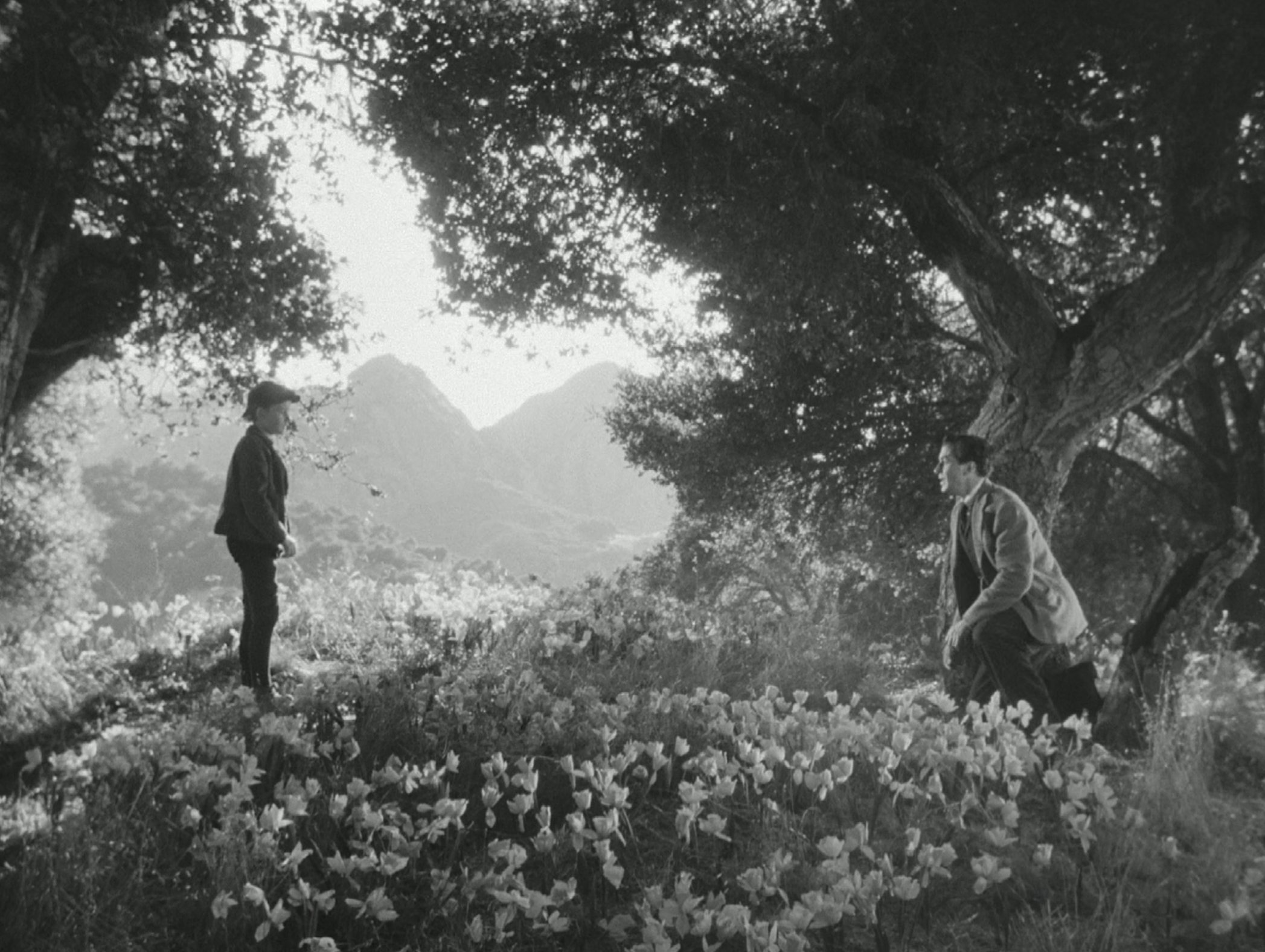
John Ford's 1939 film, Stagecoach, made John Wayne a star and got Ford an Academy Award nomination for Best Director.  It's also the first of Ford's many films set in Monument Valley on the Navajo Reservation along the Arizona-Utah border.  This shot from the movie captures the spectacular setting, which I have visited twice and plan on returning to again.


(2019)


Monday, November 25, 2013

Subtle

Not a word THC would normally apply to movie directed by John Ford and starring John Wayne but a recent viewing of The Searchers (1956) revealed more going on than seen in my earlier casual viewing.

Today, The Searchers is acclaimed as Ford's best movie and Wayne's finest performance as the dark, bitter and obsessive Ethan Edwards.  The American Film Institute voted it the best film Western (2007) and in 2008 the 12th best American film ever.  In 2012 the British Film Institute rated it as the 7th best film based on a survey of international film critics.

The movie starts with Ethan's return, in 1868 after eight years away in the Civil War and then Mexico, to the isolated Texas farmstead of his brother Aaron and Aaron's wife Martha, played by Dorothy Jordan.  After a Comanche raid in which Aaron and Martha are killed and their daughters, including 8-year old Debby kidnapped, Ethan embarks on a years long quest to find, and possibly kill, them.

Watching the movie recently what jumped out at me was the suggestion that Ethan and Aaron's wife, Martha, had a relationship and the possibility that Debby was Ethan's daughter.  There is no direct reference to this in the film but it all fits in with the Wayne character and his reaction to the murders and kidnapping.

Here is a very short scene from early in the film when Ethan and the Reverend Captain (of the Texas Rangers) Samuel Johnson Clayton (played by Ward Bond, who those of a certain age remember from the TV series Wagon Train) are preparing to leave in response to the report of a Comanche raiding party nearby.  Watch the interaction between Ethan and Martha and the studious way that Rev Clayton avoids looking at them.
And this is the opening scene of the movie when Aaron, Martha and their family welcome Ethan back after years away.

And just for the joy of watching great film making here are the opening and closing sequences which mirror each other.  Don't forget to watch John Wayne's pigeon toed walk away at the end.

An extra added bonus is, like many of the Ford westerns, it's shot in Monument Valley on the Arizona-Utah border.  The location is part of the Navajo reservation.  THC and family had the opportunity to visit Monument Valley in June 1998 and bounce around in the back of a Navajo pickup truck for three hours touring the Valley.  It was spectacular and we saw many locations clearly identifiable from Ford's films. Go there.

We stayed at Gouldings Lodge, the only motel within 30 or 40 miles and where Ford's cast would stay when shooting the films nearby.  When you step outside your door you felt you were in one of his movies.
Goulding's Lodge

Saturday, July 6, 2024

How Green Was My Valley

John Ford wanted to make the film in Wales, where the story is set in a small mining town at the end of the 19th century, and in Technicolor, but a world war intervened along with a shortage of color film, so 20th Century Fox built an 80 acre replica of a Welsh village in the Santa Monica mountains and the movie was black & white.

The movie won the Academy Award for Best Film of 1941, beating out Citizen Kane and The Maltese Falcon.

For anyone who has viewed How Green Was My Valley, the striking images are unforgettable.

Image 

ImageImage

HOW GREEN WAS MY VALLEY, 1941 Roddy McDowall, John Ford, Maureen O'Hara

The most indelible image occurs near the end.  You can watch it in the video below, starting around 1:30.  After a disaster in the mine, see the lift emerge with the body of family patriarch Gwilym Morgan (Donald Crisp), cradled by his young son Huw (Roddy McDowell), both under the gaze of pastor Merddyn Gruffydd (Walter Pidgeon).  Staged with Christian symbolism and the adult Huw's narration, "Men like my father cannot die, they are with me still", it never fails to move me.


Saturday, March 1, 2014

They Died With Their Boots On

The Misremembering History Series

THC recently rewatched, for the first time since childhood, They Died With Their Boots On, a 1941 film starring Errol Flynn as George Armstrong Custer.  Hollywood movies have always had a strained relationship with historical accuracy but this film may be the champion containing nothing even vaguely related to real events (with one exception noted below) though there was, indeed, a George Armstrong Custer and he wound up on the losing side at the Little Big Horn.

According to the movie, General Custer single-handedly turned the tide of the Civil War and won the battle of Gettysburg with his brave cavalry charge.  In his Western service he displayed faultless judgement.  The night before the Little Big Horn he knew he was doomed due to circumstances beyond his control but gallantly went ahead the next morning though, in reality, he did not even know there was a Sioux encampment nearby.

Along with the stunning historical fabrications there was another aspect that THC had not picked up the last time he watched the movie on TV as a child - the treatment of Indians.  It is much more sympathetic to the Indians than THC remembered and certainly more favorable than what has become the popular version since the 1970s; that prior to then Hollywood always portrayed Indians as as untrustworthy savages.

This is seen throughout the film but most pointedly in a scene that take place the night before the Little Big Horn when Custer attempts to send a British military observer attached to his command (Lt Butler) to the rear with a message.  Butler refuses and the following dialogue ensues.

Lt. Butler: Why are you asking me to go back with it?
Custer: Well, for one thing you're an Englishman, not an American.
Lt Butler: Not an American! What do you Yankees think you are? The only REAL Americans in this merry old parish are on the other side of the hill with feathers in their hair.
Custer: You're probably right about that. 

Butler stays with Custer and dies the next day.  Of course, there was not really a British military observer with Custer.  And, for that matter, George Armstrong Custer did not speak with an English accent, as Errol Flynn does in the movie!  

Indians are portrayed as honest and brave in the film. The villains are the corrupt white traders and politicians who are cheating the Indians and the plot of the film revolves around Custer's attempt to expose this chicanery and to help the tribes.  The movie sets the origin of the Little Bighorn campaign in a plot by the traders and politicians to trigger an Indian war so their land can be seized.  Come to think of it, that's probably the most accurate part of the film..

Here's the trailer for the film.  It's a hoot.

They Died With Their Boots On is not the only movie of the period that looks a little different when watched today.  John Ford's Fort Apache (1948), starring John Wayne and Henry Fonda, is also sympathetic to the Indians.   In the movie, a new cavalry commander arrives at Fort Apache.  Lt Colonel Owen Thursday (Henry Fonda) is a martinet who despises Indians and runs his command by the book. Capt Kirby York (John Wayne) has been at the post for many years and tries vainly to get Thursday to treat the Apaches, led by Cochise (Miguel Iglan) with respect, and to replace the corrupt Indian agent who is driving the Apaches to revolt.  And Shirley Temple is in the film!

You can watch below some scenes from Fort Apache, along with commentary from AO Scott of the NY Times that strains a little too hard for current day relevance.

Sunday, November 15, 2026

Six Minutes

 Ran across this very good, and brief, summary of the Battle of Midway (June 4-7, 1942) which turned the tide in America's favor during the war against Japan.  It was a close run thing that could have easily gone wrong for us.  The work of the code breakers at Pearl Harbor, the willingness of Admirals Nimitz and Spruance to risk their only carriers, and the bravery and sacrifice of those on Midway and of the carrier air crews, all contributed to the victory.

The U.S. committed its last three carriers in the Pacific to the battle, while Japan had four carriers present.  The initial American attacks fared poorly.  In six attacks, 83 aircraft, B-17s along with dive and torpedo  bombers failed to score a hit on any enemy ships with most of the aircraft shot down and the crews lost.

Then, at 10:25 on the morning of June 4, 30 dive bombers from USS Enterprise and 17 from USS Yorktown, all running low on fuel. found the Japanese carriers.  Within six minutes, three carriers - Soryu, Akagi, and Kaga - were on fire and all eventually sank.  Perhaps the most decisive six minutes of the Second World War.  Later that afternoon, dive bombers from Enterprise found and struck Hiryu, the last of Japan's carriers, which sank the following morning.

One of the aspects of the video I enjoyed is that it exclusively uses footage shot during the battle, much of it by director John Ford, who was on Midway and wounded in the Japanese attack on the island.  He had a few days earlier taken the footage of the ill-fated crew of Torpedo Squadron 8, which lost 29 of 30 men in the attack on the carriers.  For more on Ford and the other Hollywood directors who volunteered to make films to support the war effort read Five Came Back.

The remainder of 1942 still contained dark and dangerous days for America and its allies in the Pacific; at one point late that year the Enterprise was the operational carrier available in the theater, but the loss of the four carriers and a large cadre of its experienced pilots, crippled the Japanese war effort, and bought time for America's industrial might to come into play with a flood of carriers, submarines, and other naval vessels beginning to flood into the Pacific during 1943.

By the time of the invasion of Okinawa in April 1945, the U.S. fielded the largest fleet the world had every seen.  At Midway, Admiral Nimitz deployed almost every available asset, scraping together 3 carriers, 8 cruisers, and 15 destroyers, along with 360 aircraft (including the 127 based on Midway).  At Okinawa, the US fleet totaled more than 1,300 vessels, including 39 fleet, light, and escort carriers, 18 battleships, 32 cruisers, 177 destroyers, 103, minesweepers, 49 fleet oilers, and 1,900 aircraft. 

Saturday, December 27, 2025

Reading 2025: Fiction

My favorite novel of the past year is Lonesome Dove by Larry McMurtry.  It only took me 40 years to get around to reading, finally prompted to do so by this article by David Polansky in The Hedgehog Review.  I'd read the other book Polansky writes about, Cormac McCarthy's Blood Meridian, about twenty years ago.  Although admiring McCarthy's writing I much prefer Lonesome Dove.

Lonesome Dove is an epic tale, and much more hard and grim than I'd anticipated.  With its two compelling main characters, equally compelling side characters, and intersecting story lines it employs some of the sentimental tropes of traditional Westerns but tells an unsentimental, unyielding and, at times, brutal story.  It took about 75 pages to fall into its rhythm but since the novel is more than 800 pages that's an acceptable admission fee.

Woodrow Call and Augustus McCrae remind me of the characters played by John Wayne in John Ford's The Searchers and The Man Who Shot Liberty Valance, half-barbarous men needed to tame the frontier but who are unsuited to live there once it is civilized.  As Gus says to Woodrow, "Me and you done our work too well. We killed off most of the people that made this country interesting to begin with".

It had been many years since reading PD James crime novels featuring Inspector Adam Dalgliesh.  The Children of Men is not a crime novel, instead set in a near future England where children are no longer born.  Though full of action it is quite a reflective and pensive novel.  In some ways the future it predicts has already happened.  

Finding a new series of well-written historical novels is always a joy.  Alfred Duggan, an Englishman born in 1903, wrote 15 novels between 1950 and his death in 1964, and I read six this year.  While some are still in print, a couple I could only find secondhand as Ace Paperbacks, sold for 50 cents back in the 1950s!  Duggan's novels are all set in the classical or medieval eras.  The ones I particularly enjoyed were Conscience of The King, a speculative life of the founder of the Kingdom of Wessex in the sixth century, The Little Emperors, the story of the final chaotic years of Roman rule in Britain during the early fifth century, told from the perspective of a bureaucrat, and Knight With Armour, the tale of an ordinary English knight on the First Crusade.  Duggan is excellent in conveying the mental framework of his characters as reflecting the eras they lived in.  

Sink The Rising Sun is the debut novel by my friend Jon Gabriel.  Set in southwestern Australia in the opening months of America's involvement in World War Two, it is the tale of a submariner trying to stop the advance of Japan into the waters of Southeast Asia.  Well-researched and written, it's a gripping tale that accurately portrays the balance between boredom and action in the naval life.  Jon was a nuclear reactor technician on a submarine and brings his experience to this adventure.  

The High Crusade is 1960 science fiction by Poul Anderson, in which English knights and villagers during the Hundred Years War encounter an alien spaceship which they seize but then, in turn, find themselves hijacked and off to adventures in a distant galaxy.  How they cope and whether they succeed or fail in their new environment makes for an amusing tale.

Thomas Perry is a crime and mystery novelist.  Pro Bono, set in California with an well imagined and engaging plot, is the first Perry novel I've read. While writing this post I looked up his bio and found that he died in September 2025.  With thirty novels published I have a lot more ahead of me. 

Another historical novelist I enjoy is Robert Harris.  Precipice is set in the summer of 1914 when a British intelligence officer is assigned to find out how secret government communications were disclosed and stumbles across the affair between Prime Minister Asquith and the young Venetia Stanley.  A good read, but not his best.  If you haven't read Harris before I recommend starting with Fatherland; Act of Oblivion; Pompeii; or An Officer and a Spy.  His 2026 release is about Marcus Vipsanius Agrippa, the right hand man of Augustus, a great subject for a historical novel.

Finally, I read the latest installments by three crime novelists who I've collectively read more than 50 times.

The Lincoln Lawyer, Mickey Haller, features in Michael Connelly's The Proving Ground, involving a case in which artificial intelligence plays a role in the murder of a young woman.  Another solid entry from Connelly.

The 20th novel by Robert Crais starring Elvis Cole and Joe Pike, The Big Empty, is one of his best.  A mystery with some very unexpected twists.

Martin Walker's Bruno, Chief of Police series is set in the Vezere and Dordogne River valleys of France, a frequent destination for us over the years. I enjoy the settings for the novels, but the 18th in the series, An Enemy In The Village, continues the recent trend of a decline in quality in the stories.  If I had not enjoyed the earlier books so much I would stop reading the series.

Thursday, December 3, 2020

Gunsmoke

Over the past year, I've watched perhaps 15 episodes of Gunsmoke, the classic CBS Western series that ran for 635 episodes from 1955 through 1975.  Though I certainly knew about Gunsmoke growing up, I  didn't remember it clearly unlike a number of other TV Westerns I enjoyed as a kid.  Researching the background of the series it looks like the reason I didn't have a lot of memories was that for its first 12 seasons it ran at 10pm on Saturdays, too late for me as a child.  By the time it switched to 730 or 800pm on Mondays in 1967, I was older and too cool to watch what I considered an "old folks" western.

Until 1955, TV westerns were geared towards a children's audience with shows like Roy Rogers, The Cisco Kid and, my favorite, Hopalong Cassidy.  Then, in two weeks that fall, the first "adult" westerns premiered, The Life and Legend of Wyatt Earp (which ran for six seasons) and Gunsmoke.

Gunsmoke was immensely popular over the course of its 20 season run.  For the 18 years for which ratings are available it finished as the #1 show four times (all from 1957 to 1961) and in the top ten 13 seasons (1956-63, 1967-73).  It also had unusual stability in its cast with James Arness (US Marshal Matt Dillon) and Milburn Stone (Galen "Doc" Adams) in all 20 seasons, while Miss Kitty Russell (Amanda Blake) was there for the first 19.  Marshall Dillon's deputies, Chester B Goode (Dennis Weaver) and Festus Haggen (Ken Curtis) were there for 9 and 11 seasons respectively.

From 1955 through May 1961, Gunsmoke was a half hour show and after 1966 it was filmed in color.  All the shows I've watched are one hour black & white so between 1961 and 1966.

Watching it now, Gunsmoke reveals itself to be a much more complex and subtle show than I would have guessed.  Although its opening featured Matt Dillon drawing his gun on a bad guy, there has been relatively little gunplay in the shows I've seen. The scripts are strongly morally focused, but the characters and dialogue are not simple morality plays (watch for instance, two shows from 1964-5, Gilt Guilt and The New Society).  

Added: After initially posting this I watched a half-hour episode from the second season (1956-7), "Bloody Hands", which starts with Matt Dillon killing three outlaws, triggering what we would call PTSD today.  Unnerved, Matt rages that there will always be someone else he has to kill and decides he can no longer do it, resigning as Marshall and turning the job over to Chester.  A few days later Chester comes to find him, telling Matt a gunman has come into town, killed a bar girl, and no one can stand up to him other than Matt.  Dillon initially refuses and then comes this dialogue:

Chester: I been thinkin' lately a whole lot about all this and there's just somethin' that you been forgettin'!

Matt Dillon: That so.

Chester:  Yeah, that's so. It's men like Stanger and Brand, 'cause they got to be stopped! That's all. They gotta be! I'd do it if I could, but I can't. I just ain't good enough. Most men ain't, but you are. It's kinda too bad for ya that ya are, but that's the way it is and there ain't a thing in the world you can do about it.

The episode ends with Dillon putting on his gunbelt and riding back into Dodge. 

Many of the "bad" guys have a sympathetic side and some of the stories end in ambiguous ways, leaving the viewer to speculate on what happens next.  While it did not feature a recurring cast of characters like Gunsmoke, I found myself thinking of the similarities between Gunsmoke and The Twilight Zone, shot in similar black and white style, in the use of close-ups, and also telling stories with a point.  And just like Twilight Zone, there have been some unexpected twists near the end of some of the Gunsmokes.

Gunsmoke is also unsparing in its depiction of the inhabitants of Dodge City and, in particular, of the struggling settlers trying to carve out a living from the prairie, some honestly, some not so much.

The three main characters are strong and honorable, but they are not pushovers and totally unsuited for TV as it exists in the 21st century.  Matt Dillon always finds the right path but does not hesitate to use his size and fists to achieve it, even if involves bending, or sometimes ignoring, the law and remains stoic throughout, rarely giving way to sentiment.  Doc Adams is a cranky old guy who does not give an inch, while Miss Kitty, with whom Matt has a long-standing and ambiguous relationship, is the proprietor of a saloon and gambling hall with a hint of a shady past.  The lessons provided are delivered roughly with no sugar coating.  It is striking to compare it to modern TV which seems to know only two modes, providing gentle and trite lessons via one-dimensional characters or cynical, world weary observations.  Gunsmoke, by avoiding both, evokes an America that seems ever more distant in the past, but which might be helpful to revive.

Watching Gunsmoke prompted me to research the era of the TV western, an era I remember as a child, as it peaked during the years when I was between 5 and 15 years old (1956-66) and I watched a lot of them.  The peak was 1959, with thirty western series on the three networks and 8 of the top ten rated shows being of the genre.  Even Hollywood studios couldn't figure out why they were so popular.

Several of the shows provided career starters for actors who went on to become major movie and TV stars; Rawhide with Clint Eastwood practicing his squint, Maverick, with James Garner pioneering his brand of light comedy, and Wanted: Dead or Alive, starring Steve McQueen and his scattergun. 

Some of the others shows I watched:

The Lone Ranger, another big favorite, Wagon Train, with Ward Bond who played in so many John Ford and John Wayne films, Bonanza, the first color western, Have Gun - Will Travel, with Richard Boone (my parents considered this so adult I was only allowed to watch it a couple of times); Bronco, Sugarfoot, Cheyenne, with Clint Walker, and The Rifleman, with ex-Brooklyn Dodger Chuck Connors.

And let's not forget, Bat Masterson with Gene Barry, Death Valley Days, an anthology series running 18 years and 452 episodes, hosted by Ronald Reagan just before he became governor of California, Tales of Wells Fargo, Tombstone Territory, Zorro with Guy Williams, Laredo, Laramie, and Branded with Chuck Connors and its memorable theme song, a series portrayed somewhat fancifully in The Big Lebowski.


Along with Bat Masterson and Wyatt Earp, many other figures of the Old West were portrayed in series of at least 50 episodes including Wild Bill Hickok, Annie Oakley, Jim Bowie and Kit Carson.

There were also a number of hour-long successful "big" westerns, inspired by the success of Bonanza, which premiered in the fall of 1959 - The Virginian, The High Chapparal, and The Big Valley.  I didn't care for any of them, even on rewatching The Virginian and The Big Valley recently, though I've become a big fan of Barbara Stanwyck, who stars in The Big Valley, in her movie roles.

Monday, June 25, 2012

Official Policy Of This Blog

I've been asked a couple of times about whether an item posted on this blog is true . . . usually phrased as "come on, did that really happen?".  While this blog is fervently (if also moderately at times) interested in accuracy it is often hard to resist a good story even if of suspect provenance.  Therefore, this blog follows the policy set forth in John Ford's The Man Who Shot Liberty Valence (1962):


So, CAVEAT EMPTOR!

Monday, November 23, 2015

A Cruel And Shocking Act (Part 2)

A Cruel and Shocking Act: The Secret History Of The Kennedy Assassination
by Philip Shenon (2013)
WHAT WENT WRONG . . .
(For Part 1 go here)

http://www.adweek.com/fishbowlny/files/original/amazon.jpg

Warren Commission Members

Earl Warren (Chairman) - Chief Justice of the Supreme Court (1953-69)
Hale Boggs (D-La) - House Minority Whip
John Sherman Cooper (R-Ky) - Senator
Allen Dulles - CIA Director (1953-61)
Appointed by Eisenhower, fired by Kennedy after the Bay of Pigs fiasco.

Gerald Ford (R-Michigan) - House Minority Leader.
According to Shenon, Ford was "perhaps the most hardworking apart from Warren himself. . . [he] made a point of being present to hear the testimony of almost all important witnesses.  His questions were consistently well thought-out and reflected his close reading of the evidence".  The most thorough reviewer and commenter on the draft report of the commission.
John McCloy
One of the "Wise Men" who dominated the American foreign policy establishment from the end of World War Two until the mid-1960s.  McCloy served as High Commissioner of Germany (1947-49), President of the World Bank, Chairman of Chase Manhattan and Chairman of the Council on Foreign Relations.
Richard Russell (D-Ga) Senator.
Perhaps the most intelligent member of the commission, a friend of LBJ's and his opponent in the fight over what became the 1964 Civil Rights Act which was debated while the Warren Commission was underway.  Responsible for appointing the only woman investigator on the commission staff.  He and Warren despised each other. 
-----------------------------------------------------------------------------------------------------
http://www.wnd.com/files/2013/09/JFK_assassination.jpg(from wnd.com)

Philip Shenon's assessment:
The commission made grievous errors.  It failed to pursue important evidence and witnesses because of limitations imposed on the investigation by the man who ran it, Chief Justice Warren.  Often, Warren seemed more interested in protecting the legacy of his beloved friend President Kennedy, and of the Kennedy family, than in getting to the full facts about the president's murder.

. . . much of the evidence about the president's murder was covered up or destroyed - shredded, incinerated, or erased - before it could reach the commission.  Senior officials at both the CIA and the FBI hid information from the panel, apparently in hopes of concealing just how much they had known about Lee Harvey Oswald and the threat that he posed.
Overriding everything were the suspicions of President Lyndon Johnson that the Soviets or Cubans may have been behind the murder, even though he was not to learn the full extent of JFK's attempts to kill Castro until 1967 (see below).  If true, Johnson believed that public outrage would force the United States to respond in a way which could trigger events leading to a possible nuclear war which he wanted to avoid at all costs.  This concern led the White House to put limits on the investigation, pressuring to wind up its work as quickly as possible, and declare Oswald the sole gunman and calm public fears of a larger conspiracy.

In later years, LBJ spoke openly of his views.   In October 1968, after announcing he would not run for reelection, Johnson gave an interview to Howard K Smith of ABC News.  Off camera, LBJ told Smith something he could not use for broadcast:
"I''ll tell you something that will rock you.  Kennedy was trying to get to Castro, but Castro got to him first".
http://static1.1.sqspcdn.com/static/f/357927/12370963/1306262028880/LBJ+before+and+after.jpg?token=O%2FckeTGuQcHc4a3V4hINZIO%2B2Oo%3D(LBJ, 1964 & 1972)

The July 1973 issue of The Atlantic contained an article by Leo Janos, who spent time with the retired president before his death in January.  Janos recounts one conversation:
"During coffee, the talk turned to President Kennedy, and Johnson expressed his belief that the assassination in Dallas had been part of a conspiracy. 'I never believed that Oswald acted alone, although I can accept that he pulled the trigger.' Johnson said that when he had taken office he found that 'we had been operating a damned Murder Inc. in the Caribbean.' A year or so before Kennedy's death a CIA-backed assassination team had been picked up in Havana.  Johnson speculated that Dallas had been a retaliation for this thwarted attempt, although he couldn't prove it. " (from The Last Days Of The President, by Leo Janos, The Atlantic, July 1973)  
LBJ was not the only one with suspicions about a conspiracy;  Robert Kennedy also suspected it.  Shenon writes of Kennedy's political associates that
"They would admit years later that Kennedy had never stopped suspecting that there had been a conspiracy to kill his brother . . . Kennedy appeared worried, in particular, about the possibility that Castro or the Mafia was behind the assassination."
This suspicion weighed heavily on Bobby Kennedy who felt guilt that his involvement (RFK was the operational link between his brother and the CIA in the plots) in the attempts to kill Castro may have backfired and led to the death of his brother, a worry that haunted him until his death in 1968, according to some of his close associates.  In a final twist on the relationship between the Castro plots and the president's death, a CIA Inspector General reviewing the history years later:
"would determine years later that on November 22, 1963 . . . a CIA officer was meeting in Paris with a Cuban agent [who later turned out to be a double agent for the Castro regime] to hand him a poison pen".  The IG concluded "it is likely that at the very moment President Kennedy was shot, a CIA officer was meeting with a Cuban agent . . . and giving him an assassination device for use against Castro."
Testifying in front of Congress during the 1970s Richard Helms, who had personally approved the Castro plots and by then was CIA Director, said that he had determined, in his own mind, that the CIA's Castro plots had nothing to do with Kennedy's assassination, and therefore there was no reason to tell the commission about them.  "Besides, Helms asked later, why had it been his responsibility to tell the commission about the Castro plots, since he was certain that one of the commissioners - Dulles - knew all about them, as had Robert Kennedy?"
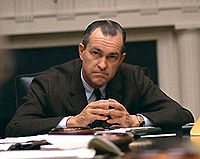
https://upload.wikimedia.org/wikipedia/commons/thumb/a/a1/Richard_Helms.jpg/200px-Richard_Helms.jpg(Helms, from wikipedia)

The Kennedy connection went on to taint the famous Church Committee investigation of the CIA in the mid-1970s, which publicly exposed many of its secrets, including the Castro plots.  The portrait painted by the committee's chairman, Frank Church (D-Idaho) was of a "rogue" agency and played down the directive role of President Kennedy and Attorney General Kennedy in the Castro matter.  This framing may not have been an innocent error, as Senator Church was a close friend of Senator Edward Kennedy, and the Kennedy family has been very protective of its legacy, being much more comfortable with the image of JFK as "the civil rights president" than as "the cold war president".

Chief Justice Warren had his own pressures.  An admirer of John F Kennedy and the family, he understandably wanted to spare his widow and brother as much pain as possible during the investigation process.  One of his most controversial decisions was to forbid the commission staff from seeing the autopsy photos and x-rays of President Kennedy, because of the horrible wounds suffered by the president, and the risk that they might end up part of the public record.  The staff was forced to rely upon sketches of the wounds made by doctors during the autopsy.  When the photos and x-rays were made available decades later it was realized that the sketches had major errors in the placement of the entry and exit wounds (the photos can be found on the internet; they are very disturbing and wish I had not seen them).  The discrepancies in the erroneous sketches fueled the critics and help kindle theories of more than one gunman being involved, whether the fatal shot came from the back or front, and about the supposed implausibility of the single bullet theory, all of which were debunked once the photos and x-rays became available.
http://www.michaelariens.com/ConLaw/justices/ewarren.gif(Earl Warren from michaelariens)

In addition to the White House pressure to quickly complete the commission's work, Warren may also have been asked to limit the look at possible Soviet or Cuban involvement.  According to the staffers Shenon interviewed, he proved particularly reluctant to pursue questions around Oswald's visit to Mexico City, in one instance refusing permission for a staffer to interview Silvia Duran, a young Mexican communist employed by the Cuban embassy who, it was alleged, had been seen with Oswald on several occasions, telling staffer David Slawson:
"You just can't believe a communist.  We don't talk to communists.  You cannot trust a dedicated communist to tell us the truth, so what's the point?"
Shenon reports:
"In light of what he later learned about the CIA, Slawson suspected - but could not prove - that Warren had been asked by the spy agency not to interview Duran."
Warren also exhibited a surprising naivete about the operations of government.  In an early meeting of the commissioners, John McCloy asked:
"Had the chief justice or anyone else been in touch with the CIA to determine what it knew about the assassination - and about Oswald and his travels in Russia and Mexico?"

"No, I have not" Warren replied, "for the simple reason that I have never been informed that the CIA had any knowledge about this."
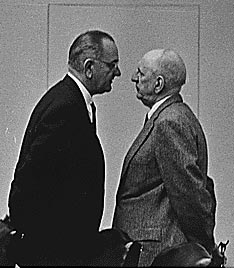
From the beginning, Senator Russell had his own suspicions about what was going on with the investigation, writing a note to himself after the first commission meeting in December "Something strange is happening", referring to the CIA and FBI investigation of Oswald's visit to Mexico, and to him there seemed to be a rush to demonstrate that Oswald was the lone assassin of which he wrote "This to me is an untenable conclusion."
http://www.digitalhistory.uh.edu/active_learning/explorations/vietnam/johnson_russell.jpg(LBJ & Senator Russell, December 1963 from digital history)

Which brings us to the final problem - the obstruction of the investigation by the FBI and CIA.  There were dual motives.  The first was avoiding bureaucratic embarrassment.  Both agencies, the CIA through its monitoring of the embassies in Mexico City, and the FBI, through its access to some of that information which was routinely forwarded to it by the CIA, had good reason to be concerned about Oswald.  Their failure to act on that information may have cost the president's life.  The second was the likely directive from the White House to both agencies to play down any possible Cuban or Soviet connection.  Both motives provided incentives to carefully manage the information flow to the Warren Commission, and the presidential directive provided a convenient excuse for the agencies to cover up their mistakes.

More mundane concerns also led to evidence destruction.  On November 24, 1963,  FBI Special Agent James Hosty (who handled the Oswald file prior to the assassination - as a returned defector the FBI kept an eye on him) was called to the office of Gordon Shanklin, his boss in Dallas.  Shanklin showed Hosty a note that Oswald had delivered personally to the FBI office in early November complaining of FBI harassment, writing "If you don't cease bothering my wife, I will take appropriate action" according to Hosty, who had contacted Marina Oswald in an attempt to interview her.  Shanklin said "Oswald is dead now,  There can be no trial" and told Hosty to get rid of the note which he shredded and flushed down a toilet.  Months later, a commission investigator decided to cross check the FBI's typewritten summary of Oswald's address book, provided to the commission as a courtesy since the agency said Oswald's handwriting could be difficult to read, against the original address book and was surprised to find that the FBI summary was missing Oswald's entry of Agent James Hasty (an obvious misspelling of Hosty) which included Hosty's office address, license plate number of his FBI car and was dated November 1, 1963.  Hosty later said that his name had been left off the summary prepared by another agent in the Dallas office in order to save him from Hoover's wrath.http://ak-cache.legacy.net/legacy/Images/Cobrands/DignityMemorial/Photos/fb31a73f-27f6-454d-94f2-91bfcf929d80.jpg(Hosty)

From the start, commission staff viewed J Edgar Hoover as uncooperative.  He blatantly tried to preempt the commission by producing his own report on December 9, 1963 which concluded that Oswald was the lone killer, which he then arranged to have selectively leaked to the press.  The report was shoddily done with obvious gaps, and the commission members who read it thought it made no sense.

Hoover later testified to the commission under oath that "There was nothing up to the time of the assassination that gave any indication that this man was a dangerous character who might do harm to the president" but, as Shenon notes, "Behind closed doors at the FBI, however, Hoover's views, shared with his deputies, was precisely the opposite. Within days of the assassination, he determined that the FBI had, in fact, bungled its investigation of Oswald before the assassination . . . "

Hoover went on to discipline 17 employees for "shortcomings in connection with the investigation of Oswald", including the decision not to place Oswald on the FBI's internal Security Index, a roster that would have been shared with the Secret Service ahead of Kennedy's visit to Dallas saying the failure to do so "could not have been more stupid".  The commission was never informed of his actions nor that the FBI knew of Oswald's visit to Mexico City and the embassies weeks before the assassination.

And it is the events in Mexico City that are at the center of the FBI and CIA obstruction.  Commission staffers knew that Oswald had visited Mexico City for five days at the end of September and beginning of October, entering the Cuban and Soviet embassies and unsuccessfully trying to obtain visas.  They had fragmentary reports about what Oswald was up to and who he might have seen.  They knew the CIA in Mexico City had both embassies under surveillance but when interviewed, CIA station chief Winston "Win" Scott insisted it had neither photographs nor any audiotapes of Oswald.
http://jfkfacts.org/wp-content/uploads/2013/10/Win-Scott-cropped.png(Win Scott from jfkfacts)

Perhaps one of the most intriguing leads was that Oswald had attended a party with Silvia Duran "attended by Cuban diplomats and spies, as well as Mexican supporters of Castro's government" at which "some of the guests had spoken openly of their hope that someone would assassinate President John F Kennedy, if only to ensure the survival of the revolution in Cuba that Kennedy had been so desperate to crush".  Win Scott poured cold water on these allegations and went out of his way to discredit those making them, and probably made efforts to avoid having some of the witnesses interviewed by commission staffers.

While commission staff realized as early as December 1963 that they were being played by the FBI, their view of the CIA was initially different.  It was only in February 1964 that they realized the CIA was also withholding information, including on Oswald's trip to Mexico City, which it justified by saying the commission "did not fully understand the implications of forcing the CIA to share everything it had on Oswald".  Yet it proved impossible for the staff to penetrate the agency's layers of obfuscation and, as Shenon reveals, many staffers were unaware of how badly they were misled until the declassification of many documents in the 1990s or in some cases, until Shenon in his interviews shared documents they had never seen.

Our ambassador in Mexico, Thomas Mann, was convinced early on that Cuba had something to do with the assassination and urged a thorough FBI and CIA investigation.  The FBI bureau chief reported Mann's conviction that the Soviet Union was "much too sophisticated" to be involved but that Castro was "stupid enough to have participated".  After much resistance Hoover sent an agent to investigate but, as that agent told Shenon "he came to understand years later that he had been part of a charade to avoid discovering the full truth about Oswald in Mexico".
http://www.lbjlib.utexas.edu/johnson/archives.hom/oralhistory.hom/images/mann_oh.jpg(Ambassador Mann & LBJ from U. Texas)

In 1977, Ambassador Mann was interviewed by investigators during the House of Representatives investigation into the JFK, RFK and King assassinations.  In the interview, which remained classified for years, Mann claimed he had been personally ordered by Secretary of State Dean Rusk days after the assassination to shut down any investigation in Mexico that would "confirm or refute rumours of Cuban involvement in the assassination" and that he believed the same "incredible" order was given to Winston Scott and the embassy's FBI legal attache by their superiors.

Shenon also reveals the existence of a mystery letter that turned up in the CIA files declassified in the 1990s.  On June 17, 1964 Hoover prepared a letter to the Warren Commission with explosive information.  It allegedly came directly from a conversation Fidel Castro had with a U.S. Communist Party member and confidential FBI informant Jack Childs, who was in Cuba that month.  Along with his old brother Morris, who was a senior official in the American Communist Party, Jack became an FBI informant in the early 1950s.  Because of their party connections, the Childs brothers received unusual access to international party leaders meeting with, among others, Nikita Khrushchev and Mao Tse-Tung.  Their information proved "remarkably accurate" according to Shenon and in 1987 the brothers received the Presidential Medal Of Freedom from Ronald Reagan.

According to Hoover's letter, Castro was quoted as saying "Oswald stormed into the embassy, demanded the visa, and, when it was refused to him, headed out saying, 'I'm going to kill Kennedy for this'".   Castro went on to say that Cuban diplomats did not take this seriously, believing Oswald might be some type of CIA provocateur and insisted that the Cuban government had nothing to do with the assassination.

The letter never reached the commission but a copy somehow ended up in the possession of the CIA.

In 1971 Win Scott died and CIA officials visited both his office and home in Mexico City to remove files.  Among his papers was a draft memoir declassified in the 1990 which stated:
"Above all, Oswald's visits at both the Communist Cuban Embassy and the Soviet Embassy in Mexico City during his brief five-day stay in September-October 1963 are, together, with what is known of what took place during these visits, sufficient to make him a suspect agent, acting on behalf of the Soviets, in several things, possibly, including the assassination of President Kennedy."

Despite his insistence to the commission that the CIA had no surveillance photos of Oswald, [Scott wrote that] the CIA had photos of him outside both embassies.  He also said that despite denials at the time, the CIA had audiotapes with Oswald's voice in his phone calls to the embassies writing that "His conversations with personnel of these embassies were studied in detail".
After the death of Hoover in 1972, his successors spent years cleaning up the mess he left behind and attempting to restore the agency's reputation.  In 1975, FBI Director Clarence Kelly met with reporters from the Dallas Times Herald who informed him they would be running a story about the letter from Oswald that FBI Agent James Hosty destroyed two days after the assassination.  It was the first Kelly had heard of the incident and, after internal inquiries, he told the paper the FBI had no objection to its running the story because it was true.
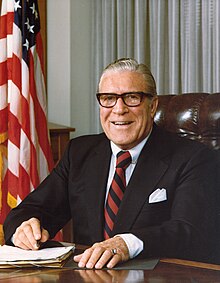
https://upload.wikimedia.org/wikipedia/commons/thumb/1/15/Clarence_M._Kelley.jpg/220px-Clarence_M._Kelley.jpg(Director Kelly, wikipedia)

The incident prompted Kelly to undertake his own investigation of the agency's action before and after the assassination and I'll quote at length from the book because of the significance of the Director's findings:
He found Hoover's undelivered June 1964 letter and other materials and became very troubled about the entire Mexico City visit of Oswald and the handling of evidence, including that one of the people he met with in the Soviet embassy was Valeriy Kostikov, a KGB agent known to be a specialist in assassinations.

Kelly concluded that in Washington the FBI and CIA "had enough combined information on Oswald's trek to Mexico City to put his name in lights on a presidential security list of threats" but that Agent Hosty in Dallas was kept in the dark.  Kelly found that the two missing memos of the Dallas file [dated October 18, 1963 about what the bureau knew of the CIA surveillance of Oswald in Mexio City and dated November 19, 1963 about contents of a letter written by Oswald to the Soviet embassy in Washington about his Mexico City trip] were removed days after the assassination in the hope Hosty had not yet read them.  Kelly believed the order to remove the memo came from the #3 man in the FBI, William Sullivan, and that he appeared to be working on orders from the White House which "seemingly considered the risk of a confrontation with the Soviet Union over the Kennedy assassination as too great".   Kelly's final conclusion was that if the information had been given to the Dallas office the President's death could have been easily prevented.
Shenon also reports that while doing his research he went to Mexico City and was able to interview Silvia Duran, several of her relatives and other people involved in the events of 1963 and is convinced that Oswald was at the party mentioned above despite the CIA insistence otherwise.
https://stevenhager420.files.wordpress.com/2013/09/duran.jpg(Duran, from stevenhager)

Finally, and most startling, is something Shenon claims was not known before his research, which is that, by January 1964, James Angleton had inserted himself as the person at the CIA controlling the flow of information to the Warren Commission.  I don't know enough about the literature around the assassination to judge whether Shenon is the first to discover this but, if he is correct, Angleton's presence in the middle of the investigation raises alarm bells.
http://spartacus-educational.com/00angleton8.jpg(Angleton)

Forty years after being fired by CIA Director William Colby, James Jesus Angleton remains the most controversial figure in the history of the agency.  Born in 1917 to a U.S. cavalry officer father and Mexican mother who met during General Pershing's 1916 expedition to punish Pancho Villa, Angleton spent most of his childhood in Milan, Italy.  He attended Yale where, as an aspiring poet, he was editor of the literary magazine Furioso and, according to Wikipedia, corresponded extensively with Ezra Pound, EE Cummings and TS Eliot.

Entering the American secret service during WWII, Angleton became friends with British intelligence agent Kim Philby while serving in London.  Philby was a Soviet double agent who did immeasurable damage to American and British intelligence efforts in the years immediately following the war, constantly promoted by the British and serving from 1949 to 1951 in Washington as British intelligence liaison with the CIA, where he continued his friendship with Angleton.  Suspicions about Philby's activities forced the British to recall him in 1951, and though in 1955 Foreign Secretary Harold MacMillan told the House of Commons there was no evidence Philby was a spy, in January 1963 he disappeared from Beirut, Lebanon, reappearing on July 30, 1963, when the Soviets triumphantly announced his presence in Moscow where he lived for the rest of his life.

Many believe that Philby's betrayal explains Angleton's own increasingly mysterious, complex, conspiratorial and suspicious attitude in his next role as CIA's Chief of Counterintelligence from 1954 until he left the agency twenty years later.  Over those decades, Angleton became increasingly convinced that the CIA had been penetrated by Soviet moles, and though he was never able to conclusively identify anyone, he ruined the careers of a number of CIA officers who became the target of his suspicions. His ongoing investigations served to tie the agency up in knots.

Informed opinions on Angleton differ widely which would probably please him.  CIA Director Helms held him in high regard, as does Edward Jay Epstein, himself a highly regarded author on intelligence matters.  Other experienced intelligence professionals and authors regard him as an incompetent alcoholic who paralyzed the agency and destroyed the effectiveness of the CIA operations directorate, an opinion shared by Director Colby, who forced him to retire.

Angleton's presence in the information stream to the commission adds yet another layer of obfuscation, since it was his nature to complicate things.  Everyone who has written of their interactions with him speaks about his obsession with nothing being as it seemed and of always seeing complicated and well-planned deceptions piled upon deceptions in any type of activity.  A  conversation with him was like entering a hall of mirrors.  Shenon suspects it was Angleton who prevented Hoover's June 1964 letter (a copy of which ended up in CIA files) from reaching the commission.  If Angleton was the culprit, my guess is that he thought Castro's statement was disinformation designed to deflect blame from Cuba, to which you might respond "but isn't that what the White House wanted?" and the answer being yes, but that is not necessarily what Angleton wanted and he knew best in his own mind.

It was also James Angleton who personally visited Win Scott's office and home in 1971 to collect his files, including the memoir declassified two decades later.  On top of a White House already interested in minimizing information on Mexico City, who knows what additional confusion and misdirection may have been sowed by Angelton's involvement?

I'd tell you about Angleton and the battle around the Soviet defectors Golitysn and Nosenko which also bears on the assassination but if we enter that hall of mirrors we would likely never find a way out.
------------------------------------------------------------------------------------------------------

What are we to make of all this?

The lack of access to the autopsy photos and x-rays led the commission to botch the analysis of the president's wounds and raise unneeded questions about the trajectory of the bullets.  If Justice Warren had allowed access it would have avoided errors and lessened the credibility of conspiracy theorists.

The pressure to speed things along led to gaps and mistakes that became an easy target for skeptics and should have been easily correctable with a little more time and a more experienced staff.

The Mexico City aspect is trickier.  The desire of the White House to avoid a nuclear confrontation is certainly understandable.  Perhaps the right course of action depends on what you think really happened there.  It is certainly possible that Oswald attended the party with Silvia Duran and heard comments about what a good thing it would be if President Kennedy was killed.  He may very well, as Castro supposedly claimed, made threats about killing the president while at the Cuban embassy.  Neither of these implicate Cuban officials, though if the CIA were aware of any of this, and failed to inform the FBI, it would have been an enormous failure on its part.

Even Oswald's meeting with KGB "wet work" specialist Kostikov at the Soviet Embassy that so bothered FBI Director Kelly can be explained.  Kostikov also had regular consular duties as part of his cover and, as the senior KGB man in the agency, it is understandable why he might meet with a U.S. citizen, a former defector to the Soviet Union who was now seeking to return there.  Moreover there was no clear motive for the Soviet Union to kill the president in the wake of the resolution of the Missile Crisis and the signing earlier in the year of the Nuclear Test Ban Treaty; the reaction of Soviet leaders to the news of his death was panic that they would be blamed for the assassination.

Cuba is another matter.  As information has dribbled out over the decades we now know that the Castro demonstrated some erratic personal behavior during the 1962 crisis, including urging a first strike nuclear attack on the U.S., and the Soviets took steps to limit his control of their weapons in Cuba.  He also had a motivation since the Kennedy brothers were trying to kill him, had issued a threat of retaliation, and we can assume he was aware of the meeting scheduled in Paris on November 22, 1963 between the CIA and the Cuban double agent.  Yet there is still no direct or even indirect link indicating that the Cubans were willing to place the future of their country in the hands of the unpredictable Lee Harvey Oswald who, at the time he was in Mexico City seemed to have no realistic path to carrying out such a task.  That's why, while a Cuban role is possible, I still think it highly unlikely.
 http://jfkfacts.org/wp-content/uploads/2013/04/Castro-speaks.jpg(Castro, from jfkfacts)

However, Kelly was right about Kostikov and Mexico City in the key respect.  In 1963, the process for a presidential visit involved the local FBI reviewing its files for potential security risks and forwarding those to the Secret Service which would examine each individual.   The CIA knew of Oswald's visits to the embassies and their purpose.  They may have had even more detailed and revealing information on his activities and conversations.  We know that some form of that information reached the CIA and FBI in Washington, but did not make it in usable form to the FBI Dallas Office (unless the still unexplained October 18 memo was sufficient).   If the local FBI knew that there was a Dallas resident, a former Marine who defected to the Soviet Union and returned to the U.S., engaged in pro-Castro activities in New Orleans in September, and then visited the Soviet and Cuban embassies seeking visas and meeting with a KGB assassination specialist, Oswald should have been placed on the security list and simple inquiries would have revealed he was working along the route of the presidential motorcade.  As Hoover concluded, the failure was "stupid" and as Kelly realized a decade later, proper handling of the information would have averted the tragedy.

Instead, geopolitical concerns provided a wonderful opportunity for both agencies to cover their blunders.  There is one constant about bureaucracies both inside and outside government.  Their priority is to protect themselves.