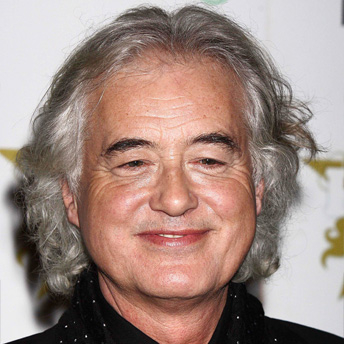
Showing posts with label Led Zeppelin. Show all posts

Friday, January 2, 2026

Becoming Led Zeppelin

On the recommendation of the THC Daughter (a huge Zep fan) I watched Becoming Led Zeppelin, a recent documentary covering the founding of the band and its first two album and initial tours.  The Daughter gets A+ for her recommendation.

Becoming features recent interviews with Jimmy Page, Robert Plant, and John Paul Jones, as well as a previously unheard late 1970s interview with John Bonham (who died in 1980) along with incredible footage of early Zeppelin gigs which I'd never seen before.

We get the origin stories for the band members, including Bonham and Plant who were friends before Zeppelin.  I knew about Page's background as a studio musician and Yardbird but little about the others and found it quite interesting - Plant was studying to be a chartered accountant!  I also hadn't been aware of the extent to which putting the band together and its initial recordings were a Jimmy Page driven project.

The performance footage shows Zeppelin as a overpowering sonic powerhouse right from the start and Bonham sure hits those drums hard.  The documentary is also a reminder that the rock critics, particularly the influential Rolling Stone, hated Led Zeppelin, but despite that the band quickly built a huge following. 

Page, Plant, and Jones were engaging in their Old Guy interviews and watching them listening to the Bonham interview (which they'd never heard) was touching.

I was also happy to see Page give a public nod to Jake Holmes as the inspiration for Dazed and Confused.  You can read about the specifics of how Page was "inspired" by Holmes here.

Thursday, May 14, 2020

Babe, I'm Gonna Leave You

I first heard this song on Led Zeppelin's 1969 debut album.  It became my favorite from that record, combining Jimmy Page's folk and electric guitar and Robert Plant's soulful and powerful vocal in an incredibly dynamic and dramatic fashion.  The song carried the notation - "Traditional; arr. by Jimmy Page".

It wasn't until many years later I learned the back story.  Babe, I'm Gonna Leave You was composed in the 1950s by Anne Bredon, a student at Berkeley.  After hearing Anne perform, Joan Baez made the first recorded version on a 1962 album.  It sounds very, very different from Zeppelin's.

It was not until 1990 that the credit on Zeppelin's album was corrected to attribute the composition to Bredon and she was paid back royalties at the time.  Zeppelin was known to take creative credit for modifying compositions originally done by other artists.  The most famous is Dazed and Confused which was actually composed by Jake Holmes.

Saturday, March 21, 2020

Stairway To Dolly

Until a couple of days ago I had no idea this existed - Dolly Parton performing her version of Stairway To Heaven from a 2002 tour!  Reportedly, this is Robert Plant's favorite cover of the song.  Dolly brings a different feel to the tune, a mix of bluegrass and gospel (with a revival feeling at the end), and makes it her own, less mystical, more religious and inspiring in tone than the original.  And stick around and listen to her band play Dolly off the stage at the end.

Monday, February 20, 2017

The Kashmir Riff

One of the most recognizable guitar riffs in rock history is from Jimmy Page on Led Zeppelin's Kashmir.  Here Jimmy tells The Edge and Jack White of its origin.


And here is the full recording.

Saturday, August 8, 2015

Guitar Masters

THC is really getting to like this Dragontape gizmo.  Here's his next confection featuring guitar artistry from Jimi Hendrix, Stevie Ray Vaughan, Eric Clapton, Jimmy Page & Joe Satriani.  It runs about 9 minutes.

Playlist:

Jimi Hendrix Experience - Voodoo Chile (Slight Return)
Stevie Ray Vaughan - Tightrope
Eric Clapton (Cream) - Crossroads
Jimmy Page (Led Zeppelin) - Since I've Been Loving You
Joe Satriani - Cortez The Killer
Jimi Hendrix Experience - Little Wing
  You can also listen to it here. [UPDATE: If you are seeing this post on a PC or tablet you can click either the video or the link to hear the mix.  If you are seeing it on a mobile device you are only seeing the link and it will not play properly - sorry.]

Saturday, October 11, 2014

Dazed And Confused

(This is not a reference to THC's mental state . . . at least in his opinion.  One of the first posts on this blog was The Evolution of Dazed and Confused.  Since the key embedded video in that post has been made inaccessible by YouTube and some additional information has come to THC's attention he is presenting a revised version today.)

http://innocentwords.com/wp-content/uploads/2014/01/jimmy-page.jpg (Jimmy Page from innocentwords)


Dazed And Confused from Led Zeppelin's debut album, released in 1969, remains one of the band's most popular tunes; an epic heavy tune showcasing the guitar riffs and screeching vocals for which Zeppelin came to be known.  The song's been used in many TV shows and movies (it even became the title of a movie with a great cast) and was a highlight in the band's concerts.  On the album the composition of the song is credited to Jimmy Page, Zeppelin's lead guitarist.  But was Page really the composer?
In 1967 a little known singer named Jake Holmes released his debut album oddly entitled "The Above Ground Sound" Of Jake Holmes.  It wasn't a big seller but one of its purchasers was 16-year old THC.  He liked it enough that he took the train from suburbia to see http://upload.wikimedia.org/wikipedia/en/5/58/The_Above_Ground_Sound_of_Jake_Holmes.jpegHolmes play two shows in August and September 1967 at The Bitter End, a small club in New York City's Greenwich Village and got to sit in the first or second row.  Holmes opened the August show for Neil Diamond, just starting his solo career with the hits  Solitary Man (on which he does a fine version about 12 minutes into the video linked below), Cherry Cherry and Girl, You'll Be A Woman Soon.  Holmes was terrific and Diamond proved to be a fine live performer.  You can listen to Diamond's set here (sorry for the bad audio quality) which includes I'm A Believer, the huge hit Neil wrote for The Monkees and Kentucky Woman, soon to be released as his next hit single. A warning note - though the YouTube video says it is from The Bitter End if you listen closely it appears possible two of the songs, including Kentucky Woman, may have been edited into it from other appearances, though THC remembers him playing it in his set.
http://fond.mineandsteve.co.uk/pics/cd_bitter2.jpg
(above and below from fondmineandsteve)
Holmes next opened for Van Morrison whose first solo hit, Brown Eyed Girl, was still riding high on the charts.  Much of Morrison's set consisted of songs later included on his 1968 album Astral Weeks which, for unexplainable reasons, was adored by the critics.  Morrison was unbearable, wandering around the stage with his eyes closed, hands on his head, yelling unintelligible lyrics accompanied by music which was mostly boring though on occasion it rose to the level where it became irritating.

At the time THC liked much of Holmes' repertoire but having recently listened to the album most of it does not hold up well with one exception, a song called Dazed And Confused, which stood out then and now for its weirdness and intensity.  As you can hear Holmes played with an unusual band lineup - Jake on acoustic guitar,  a bass, a very trebly lead guitar and no drums.  You can watch Holmes playing at what seems to be The Bitter End here.  And now take a listen to Dazed And Confused by Jake Holmes.
The lyrics are different than the Zeppelin version but the melody is the same as is the basic chord structure.  Even the guitar break bears some similarity.  Coincidence?  THC thinks not.

In August 1967, Holmes opened a show for The Yardbirds, a British band with a lead guitarist named Jimmy Page.  THC has written about The Yardbirds before and earlier lineups featured Eric Clapton and Jeff Beck as guitarists.  This is the 1966 version of the band featuring both Beck and Page, playing The Train Kept A Rollin' from Michaelangelo Antonioni's film Blowup (one of many hit movies from the era that are unwatchable today and among Vanessa Redgrave's first films).

The Yardbirds liked Dazed And Confused quickly incorporating it into their live set with Page embellishing the instrumental sections.  Appearing on French TV in March 1968 their revamped version still had Holmes' lyrics, sung horribly by Keith Relf, but with an arrangement sounding very much like that recorded by Zeppelin a year later.  Embedding of the video from French TV is disabled by YouTube but you can see it here.

Later that year The Yardbirds dissolved and Page started a new band, Led Zeppelin, a name bestowed by Keith Moon, The Who's drummer, who Page was trying to recruit to join his new group.  Page completed the transformation of Dazed And Confused by writing new lyrics and that's how it happened.  Dazed And Confused was not the only Zeppelin song to generate controversy over its composition - if you do a google search on "led zeppelin plagiarism" you'll come up with 89,600 hits and "led zeppelin song stealing" yields 159,000 results.

Jake Holmes released a second album but while his performing career quickly faltered he ended up becoming quite successful.  In 1969 he co-wrote the Watertown album for Frank Sinatra.  It was Sinatra's least commercially successful album but it was, after all, Frank Sinatra!  During the 1970s Jake became a phenomenally successful jingle writer.  Included among his credits are writing the music for "Be All That You Can Be" for the US Army, "Be a Pepper" for Dr. Pepper, "Best a Man Can Get" for Gillette, and "Aren't You Hungry for Burger King Now?" and doing the vocals on many of them.

All through these decades Jake never took action about Jimmy Page's writing credit for Dazed And Confused other than writing a letter to Led Zeppelin which was never answered.   Finally in 2010 he filed a lawsuit against Page claiming copyright infringement.  The case was dismissed with prejudice in 2012 (see Order of Dismissal) but it looks like that action was part of a settlement between the parties though neither has spoken publicly about it.  Shortly thereafter Celebration Day, a Zeppelin live album, was released with the credits for Dazed And Confused reading "Jimmy Page; inspired by Jake Holmes".

(Jake Holmes today from Broadwayworld)
(Jimmy Page today from local rhthyms)
http://localrhythms.files.wordpress.com/2008/11/jimmy-page.jpg

Friday, September 5, 2014

The Edge

http://jasobrecht.com/wp-content/uploads/2011/01/U2s-The-Edge-very-early-promo-photo1.jpghttp://quietus_production.s3.amazonaws.com/images/articles/1335/edge_1237552224_crop_353x405.jpg(Above, The Edge circa 1980, Left, The Edge as 21st century man)

We've posted before about some of the great classic rock guitar soloists like Eric Clapton (Double Trouble), Jimi Hendrix (Heavy Guitar and Little Wing), Steve Ray Vaughn (Little Wing & Couldn't Stand The Weather), Jimmy Page (Since I've Been Loving You), Duane Allman and Dickie Betts (In Memory Of Elizabeth Reed) and the strange brew of guitarists constituting the Steely Dan players (the 3-part Steely Dan guitar solo series).  Now we'll turn to a favorite guitarist who THC doesn't consider a classic soloist; he's really more of a creative pattern and sonic structure builder - The Edge (real name David Evans) who joined the band that eventually became U2 as a 15-year old in 1976. There is another guitarist THC considers a bridge between the classics and The Edge and that is Pete Townsend of The Who.  Townsend is not one of the great soloist as his efforts can be choppy but he is the greatest rhythmic and power chord player in rock history (as well as a tremendously exciting live performer and improviser during his prime) and the inventor of the "crash chord" where you hit the chord and then mute the reverberations so it sounds quick like a shot with no ringing left hanging (in more recent years while on tour Townsend is letting his chords ring). Just listen to the opening chords of I Can't Explain.

As for The Edge it is all about the sound and patterns he devises.  He's the driving musical force in U2 and gives the band its trademark sound.  A U2 song is recognizable soon as you hear it because it has that brilliant, shimmering glassy guitar sound which gives a haunting feel to much of their music. The man has a great aural sense of how to complete the mood of a song.

Since it's difficult to find isolated guitar tracks by The Edge on YouTube we'll use some covers by others so you can hear the guitar clearly and learn how he creates the sound.  It's about the use of feedback delays (so you'll hear the note 2 or 3 times after it's played), reverb and compression along with a Herdim guitar pick turned the wrong way round so the scratchy part of the pick is hitting the strings.

Let's start with two covers by James Fernando.  The first is Where The Streets Have No Name from the mid-80s a song which has probably THE classic edgiest sound.  The second is Beautiful Day from around 2001 (which has a beautiful shimmering part at about 1:54).  Both videos have helpful captions explaining some of the technical setting and playing styles utilized.

Next up is a video which goes into some detail on the techniques used by The Edge to build his sound.

Next up is one of THC's favorite early U2 songs, 11 O'Clock Tick Tock.  At around 1:25 you can hear the use of harmonics and at 2:40 and 4:00 are a rarity - Edge style lead guitar parts. 

Crumbs From Your Table is from the 2006 album, How To Dismantle An Atomic Bomb.  THC loves the  sound of this cover!

We'll close with Pride (In The Name of Love).  This shows you what you can do with a simple guitar riff that ended up driving a majestic song.  Plus the guy playing it has a young son who clearly is not impressed with what's going on as he appears to be doing his homework.

Sunday, September 15, 2013

Since I've Been Loving You

Live Led Zeppelin, recorded at a Los Angeles concert in June 1972, finally released as part of How The West Was Won in 2003.  This is the band at its peak, before Robert Plant lost his ability to hit the high notes, but the highlight is the transcendent guitar playing of Jimmy Page.  His playing is crisp and stunning throughout but reaches new heights during the solo which begins at 3:47 and roars along for the next 76 seconds managing to be both massive sonic assault and melodic.  A contender for the best live rock guitar solo.

Sunday, July 7, 2013

Immigrant Song

 UPDATED: July 8, evening

Valhalla, I am coming!

THC can understand why the Immigration bill currently in Congress is supported by Silicon Valley, Wall Street and big business.  After all, it's a two-fer for them.  At the high-end they get more visas to bring in folks to work for their companies.  At the low-end it guarantees them an endless supply of low-cost housekeepers and gardeners for their homes.

The question THC has is why would anyone else support it?

The most significant issue raised by the proposal(1) is not border security or the status of the illegal immigrants currently in the U.S. (and no, we are not going to (nor should we attempt to) forcibly deport the 10+ illegals in the U.S. today), which get most of the news coverage; it's the additional 30-50 million immigrants (depending on who is doing the estimating) who will enter the country legally over the next couple of decades under this proposal. Most of these folks will be poorly educated and relatively unskilled.  In the 19th and early 20th century we could absorb these immigrants in a growing economy heavily based on agriculture and unskilled industrial labor and THC is certainly happy about that as it's how his grandparents got here. But today, in a time when many are concerned about stagnant wages for lower-wage Americans is bringing in more competition the right policy?  Our economy faces two challenges.  The first is (hopefully) short-term; recovering from the deep recession of 2008-9 (though this seems to be taking much longer than it should), while the second is longer-term; the transition to a different economy with fewer lower-skilled jobs, a trend seen across the industrial world and similar to that of the first half of the 20th century when our workplace in 1900 was more than 50% agricultural and then went through the growth of an industrial manufacturing economy.  Both challenges pose problems for those less well-off in our society.

THC would like to see the number of legal immigrants increased but this proposal is a misguided way to go about it.


UPDATE:
After posting this THC ran across a talk by Mickey Kaus, making the same argument in a more eloquent way and from a different perspective. Kaus is an unconventional Democrat who ran a quixotic campaign against Barbara Boxer for the party's Senate nomination in 2010.  He's been covering the immigration proposal on his blog Kausfiles.  An excerpt from a recent speech by Mickey is below but it is really worth reading the whole thing linked here - you'll need to scroll down a bit to get to his speech.

"So the dream of the unending flow is still alive. Why should anyone give it up? This current amnesty will be followed by demands for a succeeding amnesty and a succeeding amnesty, each of them attracting another wave of illegal immigration. By this bill we’re locking ourselves into a cycle of amnesty after amnesty. It was one thing to do it once. It’s another thing to do it twice. 

So that’s why I get so excited. Schumer-Rubio is not like a tax law or even a welfare reform law that can be repealed or, in Obama’s case, waived. It promises to change America irrevocably and for the worse. It promises to make America an uglier place. We stand to lose what has made us Americans; namely our sense of social equality. In exchange we get a higher gross national product, more servants for the affluent, more transfer payments, and more Democrats. That’s not a good bargain and I hope it goes the way of the guaranteed annual income."

(1) My comments are based on what THC can figure out about the proposal.  Unfortunately, the bill is yet another example of runaway "comprehensive" legislation of behemoth length which is virtually impossible for anyone to understand "comprehensively", even those who must vote on it.  The accounts of what is in, or not in, the proposal are often contradictory because in a 1,000+ page bill the cross-referencing and cryptic legislative language are designed to obscure easy understanding (by the way, the original Social Security legislation of the 1930s was only 12 pages) and many of the key decisions are delegated to the executive branch agencies so it is impossible to predict what will actually happen.

Let's look at the last two "comprehensive" pieces of legislation.  With Dodd-Frank (see Surely, You Must Be Joking) we had a bill that states it is intended to end "too big to fail" but actually ensures it will continue and gives the biggest banks a competitive edge.  Plus, it created another huge bureaucracy, the Consumer Finance Protection Bureau (CFPB), to address a fabricated need that had nothing to do with the 2008 financial crisis.  On the other hand, the good news is that the CFPB is building a huge database containing personal information on mortgage applications, credit cards and bank accounts, sort of like a domestic version of the NSA!

And then we have the Affordable Care Act. It turns out Speaker Pelosi was absolutely correct when she said we needed to pass it to find out what was in it (although after telling her constituents that if they wanted to pursue careers as artists and writers that they would now have coverage she managed to ensure that 20% of the first round of waivers from the law's requirements went to high-end restaurants and entertainment venues in her own district!).  The Administration just postponed the employer mandate, one of the cornerstones of the legislation, and HHS officials have announced that their goal for the new individual exchanges scheduled to open later this year has been modified from being a "world class experience" to "avoiding a third-world experience" (the good news, for some, is that on July 3 the Administration also announced they will not verify eligibility for the individual exchanges and subsidies so it's now taxpayer beware). Senator Baucus, one of the main authors of the bill, admitted in 2010 that he never read it, now calls its implementation a "train wreck" and is retiring so he doesn't have to face the consequences and it also turns out that despite the President's assurances we will not see our premiums go down by $2500 and not everyone will be able to keep their current coverage "if they like it".

Today's version of policymaking is something the ancient Greeks had a better word for: hubris

Friday, August 24, 2012

Announcing Your Presence With Authority

Another good observation from Bull Durham (almost as meaningful as "if you can dodge a wrench, you can dodge a ball".

Of course if you are going to announce your presence you want to be more successful in the delivery than Ebby Calvin "Nuke" LaLoosh.

Some musical acts have done it successfully.  I'm talking about the ones where you felt the excitement upon hearing the first single or the first cut off their first album or CD from someone you'd never heard of before.  Not just a good song but something that immediately made you sit and and think - "listen up, this is something different".  You wanted to go out and tell your friends. In each case (except the last one), I heard the song before ever seeing the band or singer.

Five examples:

Purple Haze by The Jimi Hendrix Experience which I first heard on WNEW-FM (either Scott Muni or Roscoe played it).  The guitar sound unlike anything I'd ever heard  - are those actual notes he's playing? - combined with the bizarre lyrics.

Good Times, Bad Times by Led Zeppelin.  Not their best song (not even on that first album) but what a forceful way to "announce your presence".  Listen to the intro, Plant's voice kicking in and then the insane guitar break and the guitar riffs at the end.  All crammed into less than three minutes.

With A Little Help From My Friends by Joe Cocker.  His first release.  The voice overpowering and unique, converting a light-hearted Beatles pop romp into an anguished plea in 3/4 time.  Brilliant.


Smells Like Teen Spirit by Nirvana.  I first heard this on the car radio and it was electrifying -it literally sent a sensation up my spinal cord into my brain with the opening riff.  Who was this?  Where did that sound come from?  Then I saw the video.  The best song of the 1990s.  And if you really want to know what the words are check out this earlier post.

I Need More Love by Robert Randolph & The Family Band.  A more recent entry from 2005.  This was the song I used as the first post for this blog.  I happened to be skipping around the TV one day and momentarily stopped on VH1 Soul and was about to move on when this video started.  I got hooked by the opening bass riff and then the feeling was amplified when the whole band kicked in.  Next I started hearing a guitar but couldn't see a guitar player and then realized that incredible sound was from a steel pedal guitar!!   As soon as the song ended I googled these guys to find out who they were.  Then I started buying their records and finally saw them in concert - one of the best live acts you'll ever see.

Tuesday, April 17, 2012

The Evolution of Dazed and Confused

You know this tune from the first Led Zeppelin album, released in 1969.  An epic heavy tune showcasing the riffs for which Zeppelin came to be known.  The song's been incorporated into many TV shows and movies (it even became the title for a movie) and was one of the band's most popular live tunes.  On the album the composition of the song is credited to Jimmy Page, Zeppelin's lead guitarist.  But did Page really write the tune?