From the 2002 memorial tribute concert to George Harrison, organized by his friend Eric Clapton. This is a beautiful version of All Things Must Pass and Paul McCartney's vocal does it justice. That's George's son, Dhani, next to Paul. You can also see Ringo on drums and the late Billy Preston on piano. Also recognized Gary Brooker from Procol Harum on keyboards and Jeff Lynne and I'm sure there are some other well known names there.
Showing posts with label Clapton. Show all posts
Showing posts with label Clapton. Show all posts
Friday, April 9, 2021

Tuesday, January 5, 2021
I Was So Much Older Then, I'm Younger Than That Now
My Back Pages was the last song recorded by Bob Dylan for his album Another Side of Bob Dylan released in August 1964. Signaling the end of his "protest" song period, it is an acknowledgement that issues and life are more complicated than he had previously portrayed. His next album, Bringing It All Back Home in March 1965, included no protest songs and began his move into a new electric sound to the outrage of many of his earliest folk music fans.
Dylan never performed the song in concert until 1988. The version below is from a 1992 show at Madison Square Garden celebrating the 30th anniversary of the release of his first album (59 years have now passed!). You will notice many familiar faces; Neil Young, Tom Petty, George Harrison, Eric Clapton and Roger McGuinn of The Byrds who had a hit with the song in 1967. The back up band assembled for the concert is also outstanding, including 3/4 of the original Booker T & The MGs - Booker T Jones (keyboards), Donald "Duck" Dunn on bass and Steve Cropper on guitar. Cropper also composed Sittin' On the Dock of the Bay with Otis Redding and In The Midnight Hour with Wilson Pickett. On drums is Jim Keltner who played with John Lennon, George Harrison, Ringo Starr, Joe Cocker, Dylan, The Traveling Wilburys and a host of others. Musical director for the show was guitarist G.E. Smith (in the green suit), leader of the Saturday Night Live house band for many years.
Crimson flames tied through my ears
Rolling high and mighty traps
Pounced with fire on flaming roads
Using ideas as my maps
"We'll meet on edges, soon, " said I
Proud 'neath heated brow
Ah, but I was so much older then, I'm younger than that now
Half-wracked prejudice leaped forth
"Rip down all hate, " I screamed
Lies that life is black and white
Spoke from my skull, I dreamed
Romantic facts of musketeers
Foundationed deep, somehow
Ah, but I was so much older then, I'm younger than that nowGirl's faces formed the forward path
From phony jealousy
To memorizing politics of ancient history
Flung down by corpse evangelists
Unthought of, though, somehow
Ah, but I was so much older then, I'm younger than that nowA self-ordained professor's tongue
Too serious to fool
Spouted out that liberty is just equality in school
"Equality, " I spoke the word
As if a wedding vow
Ah, but I was so much older then, I'm younger than that nowIn a soldier's stance, I aimed my hand
At the mongrel dogs who teach
Fearing not I'd become my enemy
In the instant that I preach
My existence led by confusion boats
Mutiny from stern to bow
Ah, but I was so much older then, I'm younger than that nowYes, my guard stood hard when abstract threats
Too noble to neglect
Deceived me into thinking I had something to protect
Good and bad, I define these terms
Quite clear, no doubt, somehow
Ah, but I was so much older then, I'm younger than that now
Wednesday, April 15, 2020
Yer Blues
A Lennon-McCartney tune from the White Album but this is a unique version from the Rolling Stone's Rock n Roll Circus in 1968. John Lennon on guitar and vocals, Eric Clapton on lead guitar, Keith Richards on bass, and Mitch Mitchell (of the Jimi Hendrix Experience) on drums.
Heck of a pick up band.
Friday, November 16, 2018
Layla (Redux)
Eric Clapton, now retired from touring, has performed many variations of one of the greatest rock love songs, from the straight-forward explosive classic riff version of the 1970 Derek & The Dominoes recording, to a shuffle, to a fantastic New Orleans take (with Wynton Marsalis), and here's a quiet one from his final 2014 tour. A marvelous song any way he does it.
Thursday, March 15, 2018
George Songs
A couple of evenings ago I watched the Concert for George which was being broadcast by our local PBS station as part of its seemingly endless series of fundraisers. The show, which took place on November 29, 2002 in memory of George Harrison who had died the previous year, was much better than most of its type. George's longtime friend, Eric Clapton (such good friends they married the same woman!), was musical director and he evidently spent some time selecting songs and rehearsing the performers, who included Tom Petty, Ringo Starr, Paul McCartney, Jeff Lynne, Bill Preston, and Gary Booker, among others. George's son, Dhani, played guitar and sang harmony that night.
I'd forgotten how many good songs Harrison had written which prompted me to go back and compile my list of personal favorites for which I've done two posts. This first one consists of favorites from his time with The Beatles. There is, of course, one problem with embedding the songs, which is that The Beatles promptly take down from YouTube any posting of their songs unless they've done the posting so most of what is linked below are covers or live versions.
In chronological order:
If I Needed Someone from Rubber Soul (1965). Outstanding guitar sound and soaring harmonies. Which brings up an issue I had with George; his guitar playing. I liked the early rockabilly flavored style he employed (see, for instance, this cover of What Goes On) as well as the chiming, Byrds influenced guitar from 1965-66, but I never liked his slide guitar. Here's Harrison and Clapton playing it on a 1991 tour. And if you want to learn how to sing the harmonies, this guy in Bologna, Italy is your go-to man for all Beatles harmony singing.
Taxman from Revolver (1966). Cool and cynical lyric. I like a guy who doesn't like taxes. The guitar solo is by McCartney. Unfortunately, I can't even find a decent cover on YouTube but I did find the isolated guitar solo!
While My Guitar Gently Weeps from The White Album (1968). With Clapton on guitar. This is a live version from the 1980s with George, Eric, Ringo, Phil Collins, and Elton John. This is George's demo for the song (with the strings added in 2006 by George Martin), which gives the song a very different feel. Oh, and here's the 2004 version from the Rock n Roll Hall of Fame, with Prince's famous solo.
Long Long Long from The White Album. Very underrated song. Big booming drums from Ringo. Here's the best cover I could find.
Old Brown Shoe from Let It Be (recorded April 1969). This version from a cover band.
I want a love that's right
But right is only half of what's wrong
I want a short haired girl
Who sometimes wears it twice as long
Here Comes The Sun from Abbey Road (recorded July 1969). My favorite of his Beatles tunes. Another cover.
You may have noticed that many people's favorite George song, Something, is not on my list. Sorry, not a big fan of it, but The Concert for George featured a lovely version of the song, led by Paul McCartney on the ukulele, which I could not find but here's a shortened version from McCartney's 2002 concert tour.
Well, as long as I'm going down this path, here is a 2014 version of Something featuring Jeff Lynne, Joe Walsh, and Dhani Harrison (who looks and sounds strikingly like his dad). Paul and Ringo are in the audience. Joe Walsh's reference to being an extended member of The Beatles family is because he and Ringo are married to the Bach sisters.
I'd forgotten how many good songs Harrison had written which prompted me to go back and compile my list of personal favorites for which I've done two posts. This first one consists of favorites from his time with The Beatles. There is, of course, one problem with embedding the songs, which is that The Beatles promptly take down from YouTube any posting of their songs unless they've done the posting so most of what is linked below are covers or live versions.
In chronological order:
If I Needed Someone from Rubber Soul (1965). Outstanding guitar sound and soaring harmonies. Which brings up an issue I had with George; his guitar playing. I liked the early rockabilly flavored style he employed (see, for instance, this cover of What Goes On) as well as the chiming, Byrds influenced guitar from 1965-66, but I never liked his slide guitar. Here's Harrison and Clapton playing it on a 1991 tour. And if you want to learn how to sing the harmonies, this guy in Bologna, Italy is your go-to man for all Beatles harmony singing.
Taxman from Revolver (1966). Cool and cynical lyric. I like a guy who doesn't like taxes. The guitar solo is by McCartney. Unfortunately, I can't even find a decent cover on YouTube but I did find the isolated guitar solo!
While My Guitar Gently Weeps from The White Album (1968). With Clapton on guitar. This is a live version from the 1980s with George, Eric, Ringo, Phil Collins, and Elton John. This is George's demo for the song (with the strings added in 2006 by George Martin), which gives the song a very different feel. Oh, and here's the 2004 version from the Rock n Roll Hall of Fame, with Prince's famous solo.
Long Long Long from The White Album. Very underrated song. Big booming drums from Ringo. Here's the best cover I could find.
Old Brown Shoe from Let It Be (recorded April 1969). This version from a cover band.
I want a love that's right
But right is only half of what's wrong
I want a short haired girl
Who sometimes wears it twice as long
Here Comes The Sun from Abbey Road (recorded July 1969). My favorite of his Beatles tunes. Another cover.
You may have noticed that many people's favorite George song, Something, is not on my list. Sorry, not a big fan of it, but The Concert for George featured a lovely version of the song, led by Paul McCartney on the ukulele, which I could not find but here's a shortened version from McCartney's 2002 concert tour.
Well, as long as I'm going down this path, here is a 2014 version of Something featuring Jeff Lynne, Joe Walsh, and Dhani Harrison (who looks and sounds strikingly like his dad). Paul and Ringo are in the audience. Joe Walsh's reference to being an extended member of The Beatles family is because he and Ringo are married to the Bach sisters.
Friday, January 19, 2018
Why Does Love Got To Be So Sad?
Guitar greats Derek Trucks, Warren Haynes, and Eric Clapton at the 2013 Crossroads Guitar Festival. The song is from Derek & The Dominoes 1970 album Layla on which Clapton and Duane Allman shared lead guitar. This version features the final incarnation of the Allman Brothers Band. That's Greg Allman, Duane's brother, on keyboards and Derek is the nephew Butch Trucks, of one of the band's drummers.
Saturday, August 8, 2015
Guitar Masters
THC is really getting to like this Dragontape gizmo. Here's his next confection featuring guitar artistry from Jimi Hendrix, Stevie Ray Vaughan, Eric Clapton, Jimmy Page & Joe Satriani. It runs about 9 minutes.
Playlist:
Jimi Hendrix Experience - Voodoo Chile (Slight Return)
Stevie Ray Vaughan - Tightrope
Eric Clapton (Cream) - Crossroads
Jimmy Page (Led Zeppelin) - Since I've Been Loving You
Joe Satriani - Cortez The Killer
Jimi Hendrix Experience - Little Wing
You can also listen to it here. [UPDATE: If you are seeing this post on a PC or tablet you can click either the video or the link to hear the mix. If you are seeing it on a mobile device you are only seeing the link and it will not play properly - sorry.]
Playlist:
Jimi Hendrix Experience - Voodoo Chile (Slight Return)
Stevie Ray Vaughan - Tightrope
Eric Clapton (Cream) - Crossroads
Jimmy Page (Led Zeppelin) - Since I've Been Loving You
Joe Satriani - Cortez The Killer
Jimi Hendrix Experience - Little Wing
You can also listen to it here. [UPDATE: If you are seeing this post on a PC or tablet you can click either the video or the link to hear the mix. If you are seeing it on a mobile device you are only seeing the link and it will not play properly - sorry.]
Wednesday, January 28, 2015
Layla New Orleans Style
In 2011 Eric Clapton appeared at Lincoln Center in NYC with a group of jazz musicians assembled by Wynton Marsalis to perform New Orleans style jazz standards. The only "new" song was Layla, composed and recorded by Clapton in 1970 when he was part of Derek & The Dominoes, and it's a glorious version. Impassioned singing and guitar from Clapton followed by Marsalis on horn and trombone and clarinet solos. The song takes on new life in this arrangement. Extra added bonus: at the start Clapton speaks for a bit which is a rarity for him in concert; and you'll never hear him again as he's retired from touring.
Friday, September 5, 2014
The Edge

 (Above, The Edge circa 1980, Left, The Edge as 21st century man)
We've posted before about some of the great classic rock guitar soloists like Eric Clapton (Double Trouble), Jimi Hendrix (Heavy Guitar and Little Wing), Steve Ray Vaughn (Little Wing & Couldn't Stand The Weather), Jimmy Page (Since I've Been Loving You), Duane Allman and Dickie Betts (In Memory Of Elizabeth Reed) and the strange brew of guitarists constituting the Steely Dan players (the 3-part Steely Dan guitar solo series). Now we'll turn to a favorite guitarist who THC doesn't consider a classic soloist; he's really more of a creative pattern and sonic structure builder - The Edge (real name David Evans) who joined the band that eventually became U2 as a 15-year old in 1976. There is another guitarist THC considers a bridge between the classics and The Edge and that is Pete Townsend of The Who. Townsend is not one of the great soloist as his efforts can be choppy but he is the greatest rhythmic and power chord player in rock history (as well as a tremendously exciting live performer and improviser during his prime) and the inventor of the "crash chord" where you hit the chord and then mute the reverberations so it sounds quick like a shot with no ringing left hanging (in more recent years while on tour Townsend is letting his chords ring). Just listen to the opening chords of I Can't Explain.
As for The Edge it is all about the sound and patterns he devises. He's the driving musical force in U2 and gives the band its trademark sound. A U2 song is recognizable soon as you hear it because it has that brilliant, shimmering glassy guitar sound which gives a haunting feel to much of their music. The man has a great aural sense of how to complete the mood of a song.
Since it's difficult to find isolated guitar tracks by The Edge on YouTube we'll use some covers by others so you can hear the guitar clearly and learn how he creates the sound. It's about the use of feedback delays (so you'll hear the note 2 or 3 times after it's played), reverb and compression along with a Herdim guitar pick turned the wrong way round so the scratchy part of the pick is hitting the strings.
Let's start with two covers by James Fernando. The first is Where The Streets Have No Name from the mid-80s a song which has probably THE classic edgiest sound. The second is Beautiful Day from around 2001 (which has a beautiful shimmering part at about 1:54). Both videos have helpful captions explaining some of the technical setting and playing styles utilized.
Next up is a video which goes into some detail on the techniques used by The Edge to build his sound.
Next up is one of THC's favorite early U2 songs, 11 O'Clock Tick Tock. At around 1:25 you can hear the use of harmonics and at 2:40 and 4:00 are a rarity - Edge style lead guitar parts.
Crumbs From Your Table is from the 2006 album, How To Dismantle An Atomic Bomb. THC loves the sound of this cover!
We'll close with Pride (In The Name of Love). This shows you what you can do with a simple guitar riff that ended up driving a majestic song. Plus the guy playing it has a young son who clearly is not impressed with what's going on as he appears to be doing his homework.
Wednesday, June 5, 2013
Solo Solo
With the advent of YouTube, we now have access to a lot of isolated instrumental tracks for classic tunes which allow the listener to more clearly hear and appreciate the musicianship and see how the layers of a recording are produced.
This is Eric Clapton's guitar solo on The Beatles While My Guitar Gently Weeps, one of the most popular cuts from The White Album (1968). The song is a George Harrison composition and according to George none of the other Beatles showed much interest during its recording. Harrison was dissatisfied with his own attempts at a guitar solo and asked his friend, Clapton, to come and take a shot at the solo which became the version we're all familiar with. (Via Open Culture)
This is what George, Paul and John sound like as solo guitarists. It's from The End (Abbey Road 1969) when all three take turns soloing. This clip tells you who is playing when.
And finally, here is George Harrison's lovely demo for While My Guitar Gently Weeps. You'll notice two things. First, the last verse of the demo version does not appear in the final recording and second, George Martin overdubbed strings on the demo as part of the production of the Love album, released in 2006.
This is Eric Clapton's guitar solo on The Beatles While My Guitar Gently Weeps, one of the most popular cuts from The White Album (1968). The song is a George Harrison composition and according to George none of the other Beatles showed much interest during its recording. Harrison was dissatisfied with his own attempts at a guitar solo and asked his friend, Clapton, to come and take a shot at the solo which became the version we're all familiar with. (Via Open Culture)
This is what George, Paul and John sound like as solo guitarists. It's from The End (Abbey Road 1969) when all three take turns soloing. This clip tells you who is playing when.
And finally, here is George Harrison's lovely demo for While My Guitar Gently Weeps. You'll notice two things. First, the last verse of the demo version does not appear in the final recording and second, George Martin overdubbed strings on the demo as part of the production of the Love album, released in 2006.
Saturday, March 30, 2013
Rock Of Aged
Over the past 18 months or so THC has read four autobiographies by older rock geezers. Here's my Top 4 ranking (on a related note, see Songs For The Aged):
#1 - Chronicles I by Bob Dylan (71 years old)
#2 - Life by Keith Richards (69)
#3 - Who I Am by Pete Townsend (67)
#4 - Clapton by Eric Clapton (turns 68 today)
Before I write separately about each book there is one common shortcoming all of them have - they don't talk enough about the music. I want to know how the bands worked musically together, where they got the ideas for some of their songs and about choices they made in lyric writing. I really don't care about the drugs and the women or regrets they have about their lives - I want to know what it was like to write Highway 61, to come up with the riff for Brown Sugar, to improvise with Jack Bruce and Ginger Baker and to find out the real story behind the lyrics of I'm A Boy and Happy Jack and whether Baba O'Riley means anything at all (the subject of THC's forthcoming post Nonsensical Rock Anthems).
Chronicles I: An unexpected pleasure. I didn't read this when it came out and had no interest in knowing more about Dylan but it was strongly recommended by a friend so I took a chance. What a delightful and entertaining book! Very Dylanesque. Episodic, jumbled up, sometimes opaque and not a chronological telling of his career - for instance, nothing about his breaking on the national scene in 1963-64 as a folk music avatar, nothing on his 1965-66 explosion of creativity and move into rock (Bringing It All Back Home, Highway 61 Revisited and Blonde On Blonde all released within a 14 month period!). If you want to know the "truth" about the mysterious 1966 motorcycle accident this is not the book in which you'll find it out.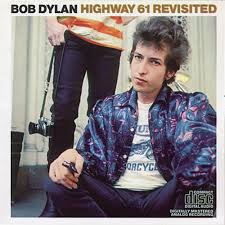
What it does provide is entertaining and insightful writing and glimpses of what might be the real Dylan (always hard to know for certain since he is the originator of his own myth). My favorite part is the first section when he tells of his start in Greenwich Village, the 1960-1 folk scene and how he read and absorbed musical and historical influences and how his ambitions changed from singing traditional folk songs to writing his own compositions. He also writes of his "retirement" period after the motorcycle accident and about recoiling from being treated as a "messiah" who was supposed to lead music and society to a new realm when all he wanted to do was spend some time with his young children. There's also a fascinating piece about his 1989 comeback album Oh Mercy, when, at the recommendation of Bono, he goes to New Orleans to record with Daniel Lanois, producer of U2's The Joshua Tree. Lanois advises Dylan that he should write songs like Mr Tambourine Man and Gates Of Eden for the new album and Dylan thinks "I'm not 23, I'm not that person, I can't do that anymore".
Life: It's Keith Richards, of course it's fun to read. In fact, as you read the book it sounds like Keith Richards talking. He certainly plays to his legend and you can learn quite a bit about various drugs and, in particular, the recording of Exile On Main Street (actually, that's the same subject as drugs) and his periodic feuds with Mick. You expect certain things from a Keith Richards autobiography and it delivers the goods.
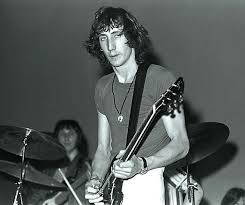
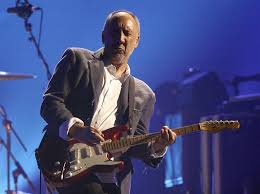
Who I Am: The Who remain my favorite band four decades later. Pete Townsend is "almost a genius" as he himself declared (the full quote is "Entwhistle was a genius, Moon was a genius, I was almost a genius, Roger was just a singer"). The best rhythm guitarist in rock, a great showman (see The Windmill) and songwriter. Articulate and very insightful about himself and others. Also irritating, arrogant, contradictory and frustratingly disagreeable at times (over the years and in the book). But without that combo we wouldn't have gotten the music.
Parts of Who I Am are quite good - on his childhood and the origins of the band and about his later life but there's too much about his failures as a husband and what a jerk he was over the years (yes, he was). One of the legends of Who history is how Townsend's ambitious Lifehouse Project failed but the songs written for it became the basis for Who's Next, their epic 1971 album (with Won't Can't Fooled Again, Baba O'Reilly and Behind Blue Eyes). I've seen interviews over the years with his fellow band members and others who worked with The Who at that time and all of them admit they had no idea what Townsend meant with the Lifehouse concept. After reading the lengthy explanation by Townsend in Who I Am, I still don't have a clue - but at least it gave us some of the best rock songs ever recorded.
I like his closing acknowledgement:
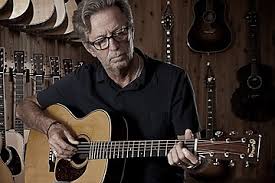
Clapton: The guitarist's sense of self-loathing overwhelms the book and obscures his musical achievements. A heroin addict for five years and an alcoholic for more than twenty who portrays himself as a pretty lousy person for most of his life (and it's a very convincing portrayal), this book may have been important for him to write but it is a difficult read. It is ultimately a story of redemption as he pulled himself together in the mid-1990s and found happiness in a new marriage and three new children. I'm happy for him but I didn't need to hear about it. Reading Life and Clapton it's interesting to think about different personality types and how they react in the similar circumstances. Keith and Eric follow similar trajectories with drugs and women but have completely different mental makeups and outlooks on life.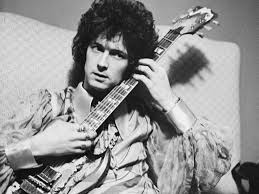
EXTRA BONUS TRACK
The Last Sultan by Robert Greenfield, a biography of music mogul Ahmet Ertegun which I read on the recommendation of alert THC reader GCP. Ahmet Ertegun was the son of the Turkish Ambassador to the United States during the Roosevelt Administration. As a teenager he fell in love with jazz and when his family returned to Turkey after WWII, Ahmet stayed, getting involved in the music industry and founding Atlantic Records in 1947. For its first 15 years, Atlantic focused on rhythm & blues and soul music and its top artist was Ray Charles. Ahmet co-wrote and produced Ray's first hit, Mess Around (if you've seen the movie Ray you can see this portrayed onscreen).
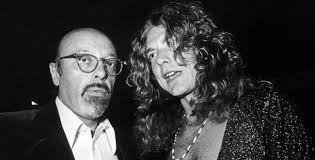 (Ahmet with Robert Plant)
In the 1960s, Ertegun moved into rock working with Sonny & Cher, Frank Zappa, Buffalo Springfield and eventually signing Led Zeppelin and The Rolling Stones. His career extended into the 2000s with his last big artist being Kid Rock with whom he became good friends (the book has a very funny story about Kid Rock calling Ahmet to ask him to join he and Pamela Anderson on their honeymoon because they wanted someone to talk with after they got tired of . . . well, you'll just have to read the book to find out). He was also the moving force behind the establishment of the Rock n Roll Hall of Fame.
Ahmet was one-part R&B and rock music lover (and apparently epic party animal) and one-part a well educated, well traveled and elegant Turkish gentleman who collected classic art. The Last Sultan shows the two parts of his life coming together in the 1970s when he introduces Wilson Pickett to Henry Kissinger. Appropriately enough, he died at the age of 83 in 2006 after a backstage fall at a Stones concert.
#1 - Chronicles I by Bob Dylan (71 years old)
#2 - Life by Keith Richards (69)
#3 - Who I Am by Pete Townsend (67)
#4 - Clapton by Eric Clapton (turns 68 today)
Before I write separately about each book there is one common shortcoming all of them have - they don't talk enough about the music. I want to know how the bands worked musically together, where they got the ideas for some of their songs and about choices they made in lyric writing. I really don't care about the drugs and the women or regrets they have about their lives - I want to know what it was like to write Highway 61, to come up with the riff for Brown Sugar, to improvise with Jack Bruce and Ginger Baker and to find out the real story behind the lyrics of I'm A Boy and Happy Jack and whether Baba O'Riley means anything at all (the subject of THC's forthcoming post Nonsensical Rock Anthems).
Chronicles I: An unexpected pleasure. I didn't read this when it came out and had no interest in knowing more about Dylan but it was strongly recommended by a friend so I took a chance. What a delightful and entertaining book! Very Dylanesque. Episodic, jumbled up, sometimes opaque and not a chronological telling of his career - for instance, nothing about his breaking on the national scene in 1963-64 as a folk music avatar, nothing on his 1965-66 explosion of creativity and move into rock (Bringing It All Back Home, Highway 61 Revisited and Blonde On Blonde all released within a 14 month period!). If you want to know the "truth" about the mysterious 1966 motorcycle accident this is not the book in which you'll find it out.
What it does provide is entertaining and insightful writing and glimpses of what might be the real Dylan (always hard to know for certain since he is the originator of his own myth). My favorite part is the first section when he tells of his start in Greenwich Village, the 1960-1 folk scene and how he read and absorbed musical and historical influences and how his ambitions changed from singing traditional folk songs to writing his own compositions. He also writes of his "retirement" period after the motorcycle accident and about recoiling from being treated as a "messiah" who was supposed to lead music and society to a new realm when all he wanted to do was spend some time with his young children. There's also a fascinating piece about his 1989 comeback album Oh Mercy, when, at the recommendation of Bono, he goes to New Orleans to record with Daniel Lanois, producer of U2's The Joshua Tree. Lanois advises Dylan that he should write songs like Mr Tambourine Man and Gates Of Eden for the new album and Dylan thinks "I'm not 23, I'm not that person, I can't do that anymore".
Life: It's Keith Richards, of course it's fun to read. In fact, as you read the book it sounds like Keith Richards talking. He certainly plays to his legend and you can learn quite a bit about various drugs and, in particular, the recording of Exile On Main Street (actually, that's the same subject as drugs) and his periodic feuds with Mick. You expect certain things from a Keith Richards autobiography and it delivers the goods.
Who I Am: The Who remain my favorite band four decades later. Pete Townsend is "almost a genius" as he himself declared (the full quote is "Entwhistle was a genius, Moon was a genius, I was almost a genius, Roger was just a singer"). The best rhythm guitarist in rock, a great showman (see The Windmill) and songwriter. Articulate and very insightful about himself and others. Also irritating, arrogant, contradictory and frustratingly disagreeable at times (over the years and in the book). But without that combo we wouldn't have gotten the music.
Parts of Who I Am are quite good - on his childhood and the origins of the band and about his later life but there's too much about his failures as a husband and what a jerk he was over the years (yes, he was). One of the legends of Who history is how Townsend's ambitious Lifehouse Project failed but the songs written for it became the basis for Who's Next, their epic 1971 album (with Won't Can't Fooled Again, Baba O'Reilly and Behind Blue Eyes). I've seen interviews over the years with his fellow band members and others who worked with The Who at that time and all of them admit they had no idea what Townsend meant with the Lifehouse concept. After reading the lengthy explanation by Townsend in Who I Am, I still don't have a clue - but at least it gave us some of the best rock songs ever recorded.
I like his closing acknowledgement:
" . . . to my greatest supporters and allies - my fans and those fans of The Who. Thank you for giving me a day job, and not sacking me when I didn't show up for work. You've been the best boss a man could have."
Clapton: The guitarist's sense of self-loathing overwhelms the book and obscures his musical achievements. A heroin addict for five years and an alcoholic for more than twenty who portrays himself as a pretty lousy person for most of his life (and it's a very convincing portrayal), this book may have been important for him to write but it is a difficult read. It is ultimately a story of redemption as he pulled himself together in the mid-1990s and found happiness in a new marriage and three new children. I'm happy for him but I didn't need to hear about it. Reading Life and Clapton it's interesting to think about different personality types and how they react in the similar circumstances. Keith and Eric follow similar trajectories with drugs and women but have completely different mental makeups and outlooks on life.
EXTRA BONUS TRACK
The Last Sultan by Robert Greenfield, a biography of music mogul Ahmet Ertegun which I read on the recommendation of alert THC reader GCP. Ahmet Ertegun was the son of the Turkish Ambassador to the United States during the Roosevelt Administration. As a teenager he fell in love with jazz and when his family returned to Turkey after WWII, Ahmet stayed, getting involved in the music industry and founding Atlantic Records in 1947. For its first 15 years, Atlantic focused on rhythm & blues and soul music and its top artist was Ray Charles. Ahmet co-wrote and produced Ray's first hit, Mess Around (if you've seen the movie Ray you can see this portrayed onscreen).
In the 1960s, Ertegun moved into rock working with Sonny & Cher, Frank Zappa, Buffalo Springfield and eventually signing Led Zeppelin and The Rolling Stones. His career extended into the 2000s with his last big artist being Kid Rock with whom he became good friends (the book has a very funny story about Kid Rock calling Ahmet to ask him to join he and Pamela Anderson on their honeymoon because they wanted someone to talk with after they got tired of . . . well, you'll just have to read the book to find out). He was also the moving force behind the establishment of the Rock n Roll Hall of Fame.
Ahmet was one-part R&B and rock music lover (and apparently epic party animal) and one-part a well educated, well traveled and elegant Turkish gentleman who collected classic art. The Last Sultan shows the two parts of his life coming together in the 1970s when he introduces Wilson Pickett to Henry Kissinger. Appropriately enough, he died at the age of 83 in 2006 after a backstage fall at a Stones concert.
Tuesday, January 22, 2013
Clapton Plays The Blues
Eric Clapton is a great guitarist but throughout his career in live performances it often sounds like he's mailing it in. This is one time when he doesn't.
The song is Double Trouble by Otis Rush and Clapton's guitar playing (and singing) is powerful and emotional from start to finish. It's from his February 2008 concert at Madison Square Garden with Steve Winwood.
The song is Double Trouble by Otis Rush and Clapton's guitar playing (and singing) is powerful and emotional from start to finish. It's from his February 2008 concert at Madison Square Garden with Steve Winwood.
Subscribe to:
Posts (Atom)